I had never seen a total solar eclipse. That's a strange thing to admit for the skywatching writer at Space.com, but the truth is that the opportunity had simply never come up.
When it comes to eclipses, I've always been beguiled by their beauty from afar. I've always hoped to see that strange moment when a black sun manifests to extend a glowing atmosphere into the fleeting twilight of totality. But after 37 years I hadn't once found myself in the path of the moon's inner shadow, and it was starting to feel like something that simply happened to other people.
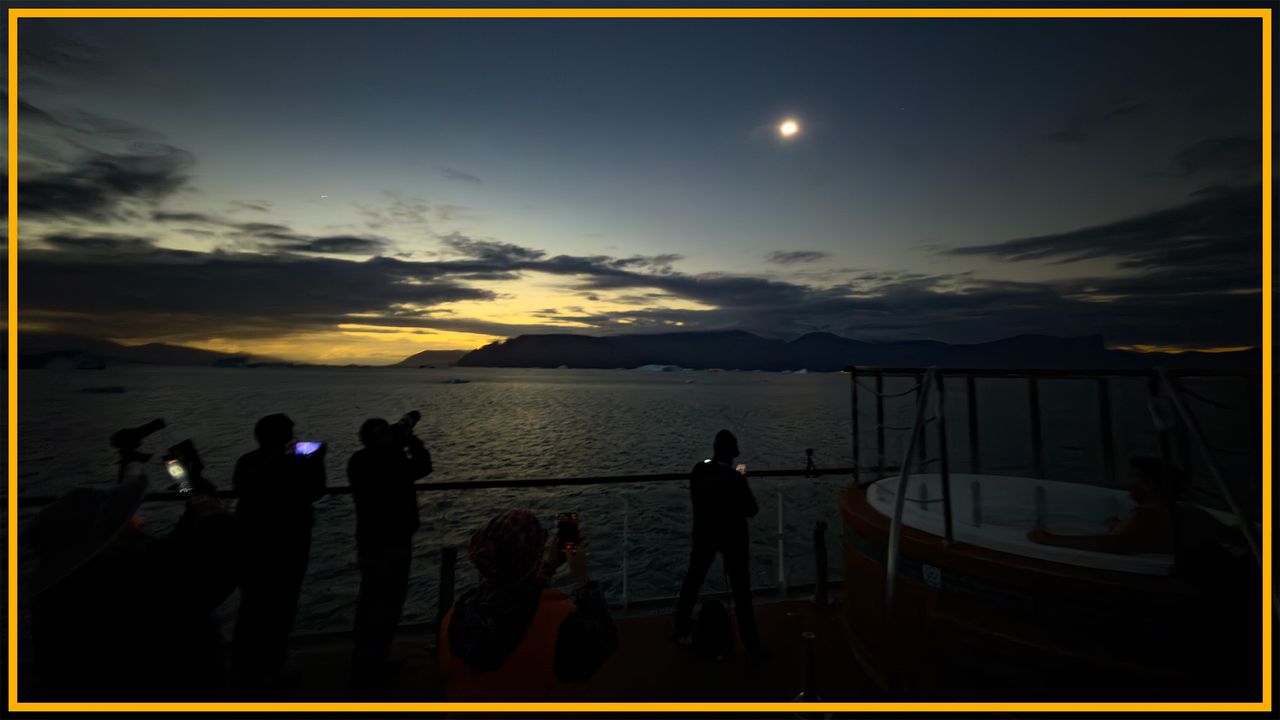
That all changed when I joined Space.com and my life became anchored in the movements of the planets, moon and stars. I was offered the chance to report on the 2026 total solar eclipse from Spain, while our skywatching editor, Daisy Dobrijevic, witnessed totality from an HX Expedition's cruise aboard MS Spitsbergen in East Greenland. In the end, my first eclipse experience would be everything I had hoped for and more. A perfect blend of science, awe, culture and faith, that I'll carry with me for the rest of my life.
I covered the Aug. 12 eclipse from the small village — or pueblo — of Valoria la Buena in central Spain. There, I joined a team of citizen scientists from the Dynamic Eclipse Broadcast (DEB) Initiative, a voluntary initiative guided by professional astronomers from Southern Illinois University and, where possible, part funded by grants from the NASA Science Mission Directorate and the National Science Foundation. For this eclipse, the DEB was tasked with capturing data on the sun's corona while transmitting a live feed to a NASA webcast from within the path of totality.
Months of preparation, writing and trading emails with the DEB team lead Charles Greenwald came and went. Before I knew it my bags were packed, my passport was in hand and I was standing in a taxi rank outside the Madrid-Barajas Airport in the heart of Spain.
Hours of mild embarrassment ensued as I used broken Spanish and hand gestures to negotiate my way across the city to the Chamartín-Clara Campoamor station. Then onto a high-speed train heading north to Valladolid — a beautiful city whose pronunciation I butchered for the entirety of my stay.
Into the path of totality
Upon arrival I was met by Charles' brother in law Santiago and nephew Andreas, who had travelled from Guadalajara, Mexico to witness the eclipse. Andreas led us on a short detour to hunt down some quality coffee beans — he's something of an aficionado. Then on to Valoria la Buena, by means of a final 30-minute car ride that would take us deep into the path of totality.
I had embraced Charles' idea of joining the DEB group not only for the citizen science, but also because of the unique opportunity to observe the eclipse with a multinational group hailing from Mexico, the U.S. and, more locally, members from Madrid and Valladolid.
Half of the group spoke fluent English while the other spoke none at all — a mix that set the stage for an intoxicating blend of meaningful conversation and rapt observation, as the group talked passionately in Spanish over magnificent home-cooked food prepared chiefly by Santiago, his wife Gaby and Andreas.
Once at the house in Valoria la Buena I finally got the chance to connect face to face with Charles, after months of sporadic video calls. In the months leading up to the eclipse Charles had dedicated precious down time to prepare his team and test new software for the solar telescopes.
Charles Greenwald photographed in front of the church in Valoria la Buena, Spain. (Image credit: Anthony Wood)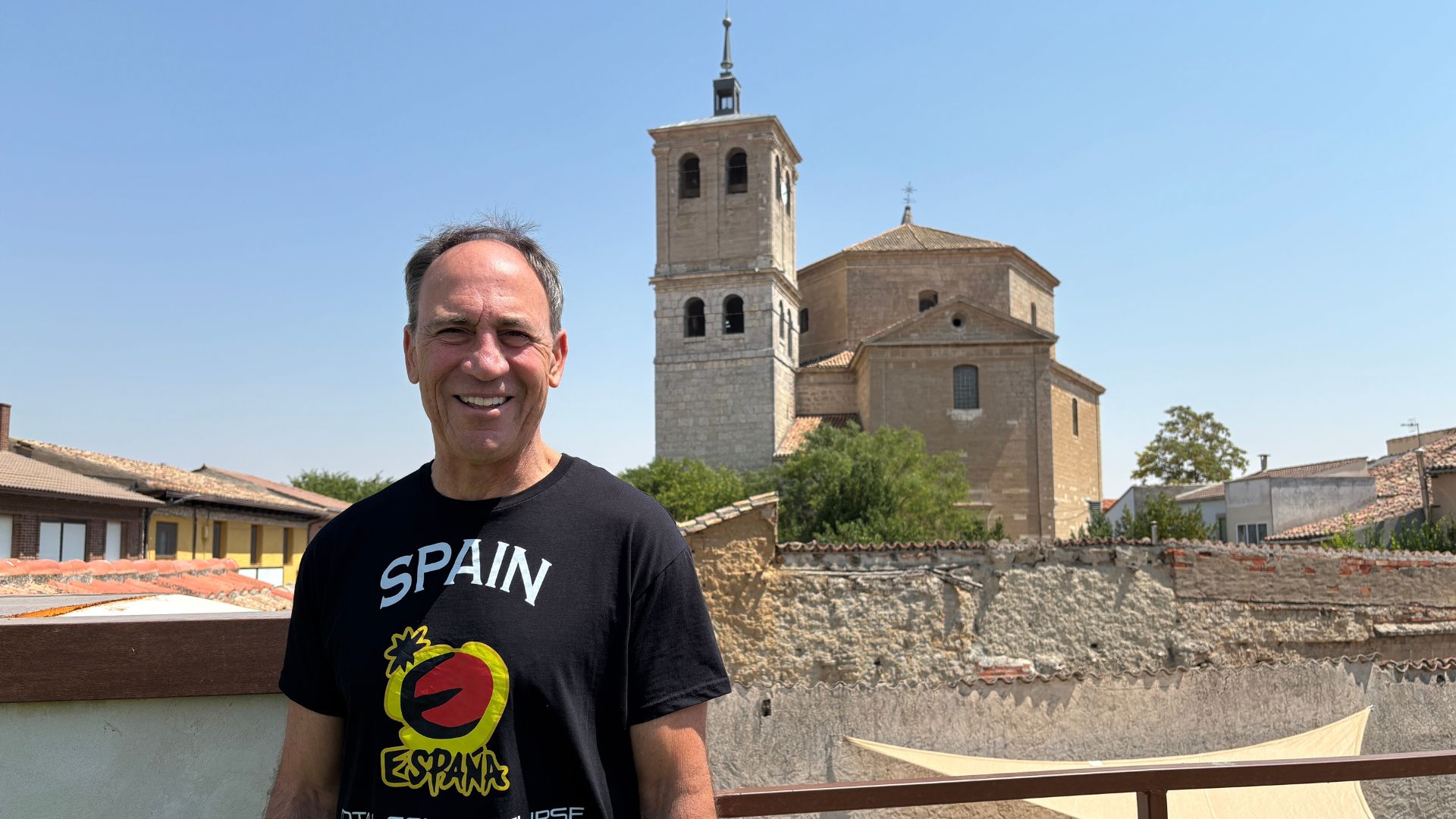
As an undergraduate, Charles had studied optics and physics before ultimately pursuing a career in aviation, which nowadays sees him fly around the world for the global shipping and logistics giant FedEx. Over dinner that first night I discovered that he was also a retired colonel in the United States Air Force, and had flown some 35 different aircraft ranging from an F15 fighter to a C-17 globemaster over the course of his military career.
He had first discovered the DEB in an article from Sky & Telescope during a brief FedEx stopoff in Sydney, Australia. After heeding the call for volunteers and spent the next year assembling a team of family and students to capture the Great American Eclipse of 2024.
Several members of the group, including Santiago, Andreas and Arath — a student at the Universidad de Guadalajara — are veterans of that first campaign. For others, like myself, it would be an incredible first. But Charles' passion is what brought it all together.
1 day to totality
In the blink of an eye it was Aug. 11 — and we had just one day to go.
With prep time running short, I packed my camera gear and headed out to our eclipse site, where the DEB team was busy practicing with their solar scope.
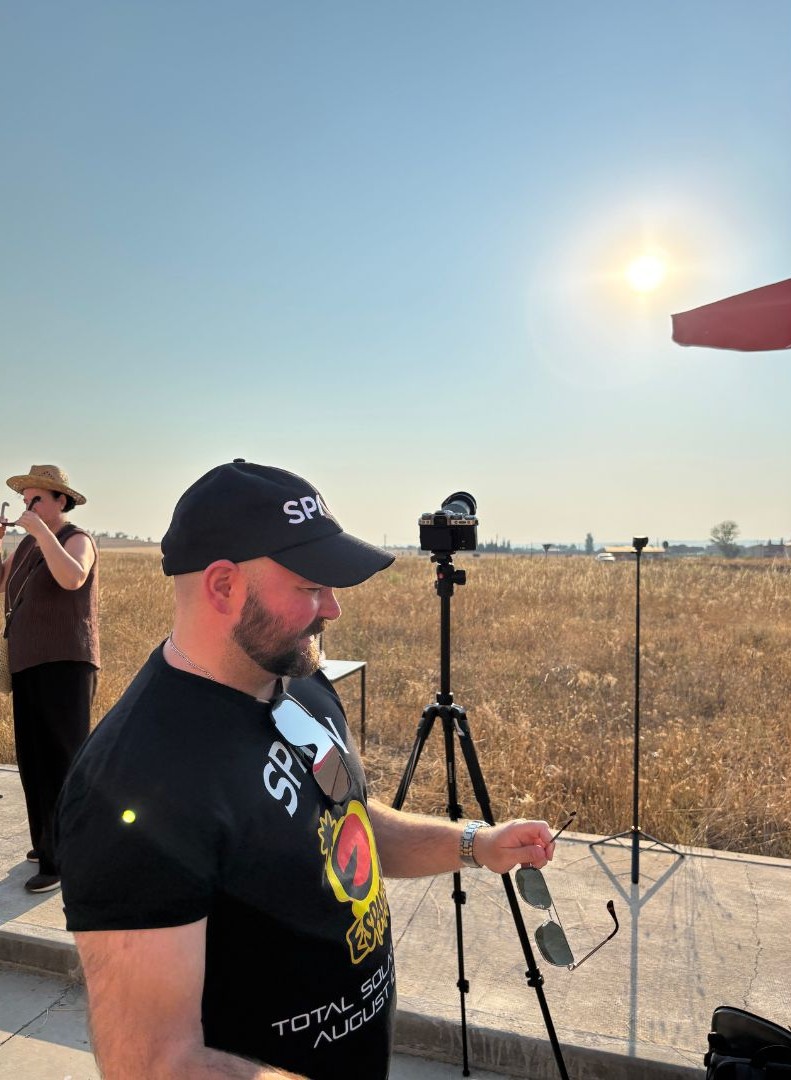
My goal was to observe and get the lay of the land. I also needed a little time to practice with my own humble setup — a Fujifilm X-T5 camera with a XF 70-300 mm lens, plus a Manfrotto tripod and a handy solar filter courtesy of Celestron, which worked magic with the aid of a little Blu Tack.
The team had managed to convince a kindly resident to let us set up outside their villa, and to use their internet to ensure connectivity for the NASA stream.
It was a perfect spot with a near-pristine view to the west — an important feature considering that the sun would be less than 10 degrees above the horizon at totality — less than the width of a clenched fist held at arm's length.
There had been a little commotion earlier that day. Upon hearing that his parents had agreed to let perfect strangers access their internet, the son had, understandably, cautioned against letting Charles use the Wi-Fi, fearing that his story was a little too fanciful, and that he was some kind of scam! Thankfully it all got straightened out with a quick Google search, and we didn't have the ethernet plug pulled on the operation.
A composite view of the Aug. 12 eclipse captured through the scope of a DEB telescope in Spain. (Image credit: Dynamic Eclipse Broadcast Initiative)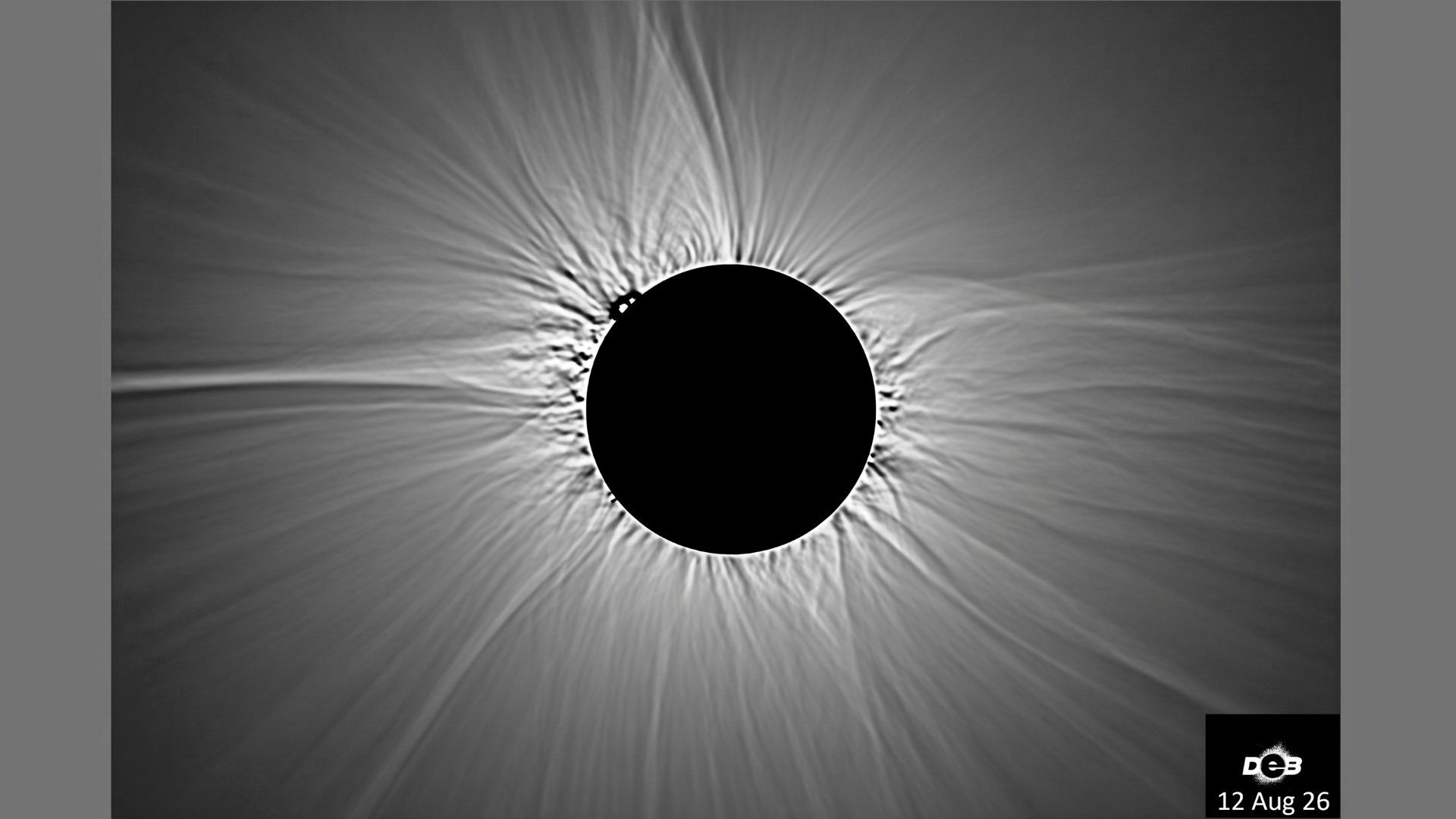
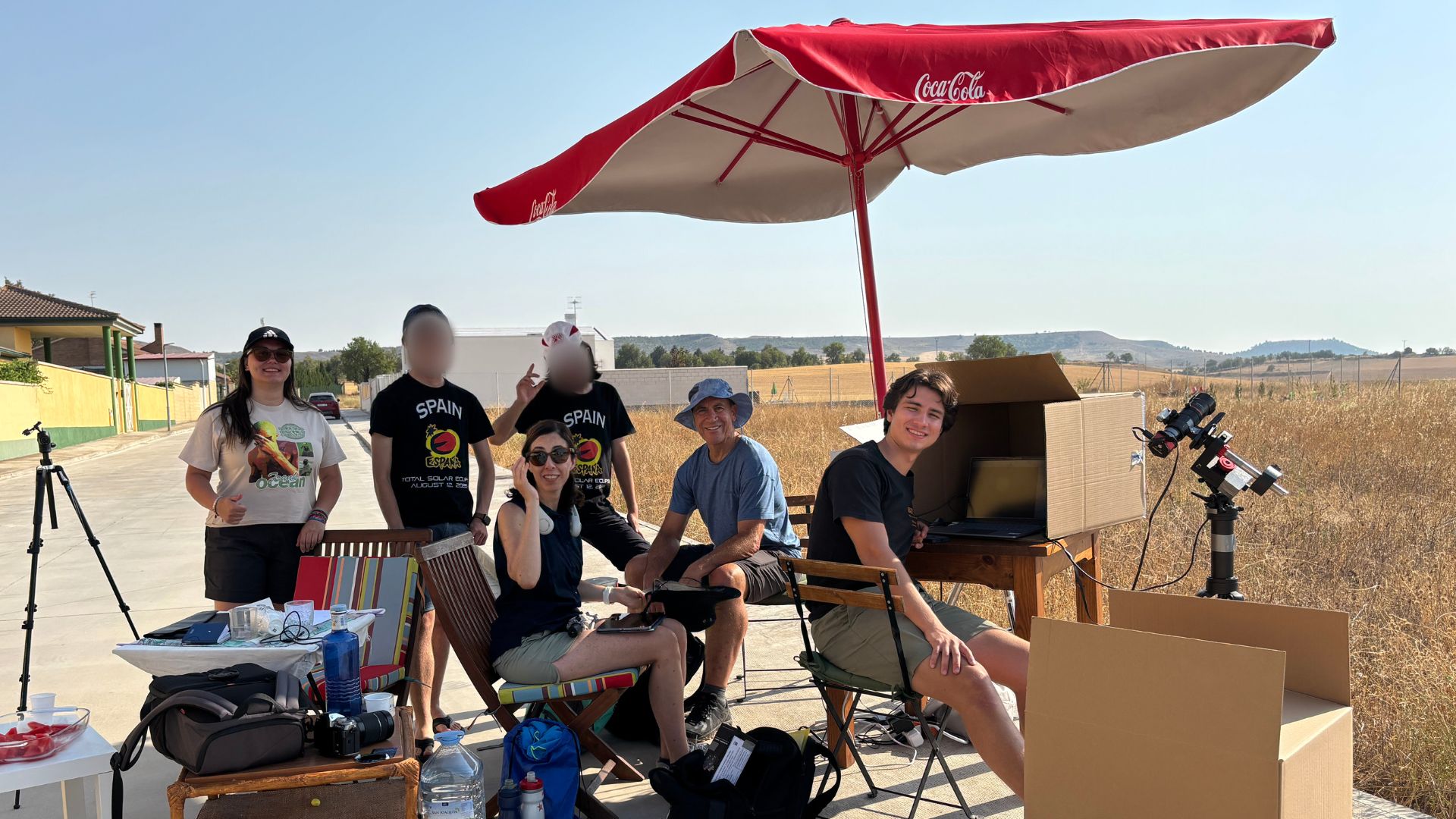
Charles and Arath were already getting the telescope to track the sun by the time I arrived. They'd also tested their uplink with NASA and the connection to the main DEB team 91 miles (147 kilometers) to the northwest in the city of Leon, which was looking stable.
I took the opportunity to catch up with Arath, who dreamed of pursuing a masters degree in mathematics at Cambridge University upon completing his studies at the Universidad de Guadalajara in Mexico. Nearby, Aimar and Aaron — a pair of passionate high schoolers from Spain — had their heads down as they worked on their own mathematical equations in the patch of shade cast by a solitary umbrella. They had reached out to join the group after hearing about the DEB on a university noticeboard, and later that day quizzed me on the best places to find the latest scientific studies. I'm 80% sure that they're already smarter than me.
All the while I was getting to grips with solar photography. I had — with a little help — managed to centre the sun in my frame and after 15 minutes of toying with settings had snapped my first crisp shot of the solar disk.
Everything was looking great. The weather, our greatest potential adversary, was playing nicely. As I noted earlier, the sun would be low in the sky around the time of totality, putting a lot of atmosphere between us and the eclipse for potential clouds to coalesce in.
But Charles had been tracking the forecasts closely, and everything he'd seen indicated that the western sky would be clear as the eclipse darkened the sky on the 12th. Only one unlikely threat to totality remained.
The summer had seen Europe endure an oppressively dry, hot summer, which had seen wildfires spring up across the continent. Having spent a week just north of the Spanish border in Carcassonne, France in July, I could testify to the colossal smoke clouds that billow up from such a fire, which could easily obscure the sun as firefighters worked to bring it under control on the ground below. Thankfully, no such threat materialized.
I sought a little solitude on that final night before the eclipse. The terrace was unoccupied, so I laid back on the astroturf, traced out the constellations above and allowed my anticipation to build. As I watched, a single Perseid raced through the stars of the Summer Triangle — a stunning opening act for the solar spectacle to come.
Eclipse day in Valoria la Buena
The day of the total solar eclipse had finally arrived — and with it a strange nervous energy that made me feel as if I was vibrating on a cellular level. I was hours from seeing something that had terrified and awed my ancestors, drawn adventurers half way across the globe and allowed scientists to understand the true nature of our parent star.
Charles, on the other hand, confessed to being rested and ready, despite working through a last minute technical glitch that had reared its head in the past few days.
The fan on the computer responsible for sending commands to the telescope and uplinking to NASA had simply given out. At the height of Spanish summer. In the middle of an oppressive heatwave. Ordinarily that would probably have been game over. But this is a team including physics heads, an engineer and all round brilliant people, so they came up with a plan. They built a DIY heatsink.
Greenwald and the homemade heatsink fight the Spanish heat. (Image credit: Anthony Wood)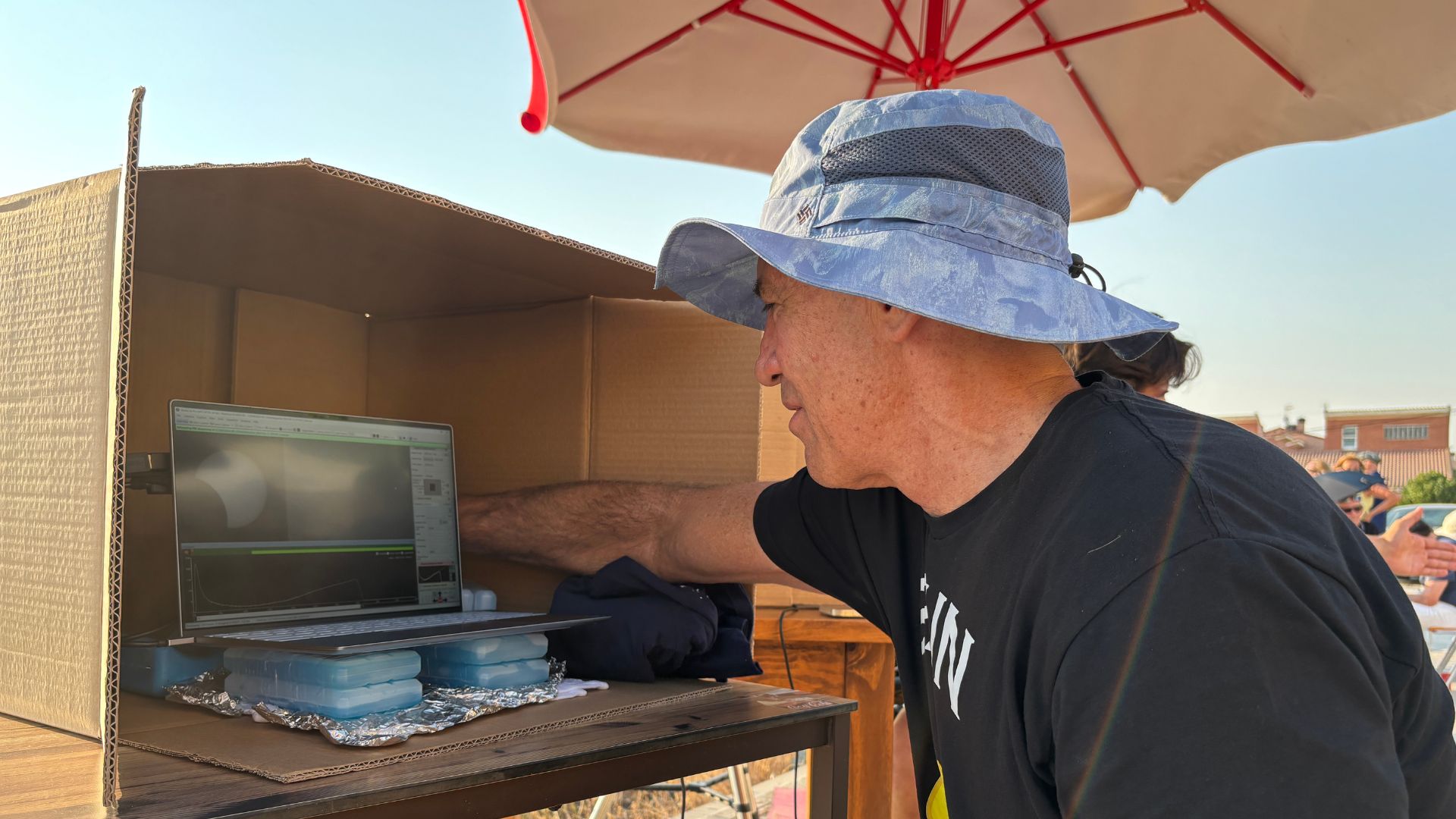
The gameplan went as follows: Andreas put a bunch of wet towels in the freezer overnight. Said towels were then transported in a cooler and placed at the bottom of a nice, shaded cardboard box at the observation site, with foil between the towel and the computer.
Add to that a hand fan and cooler blocks from the freezer and Viola, you've got yourself a homemade heatsink. Human ingenuity versus technology and a Spanish heatwave. We would know the victor soon enough.
The church at the heart of Valoria la Buena. (Image credit: Anthony Wood)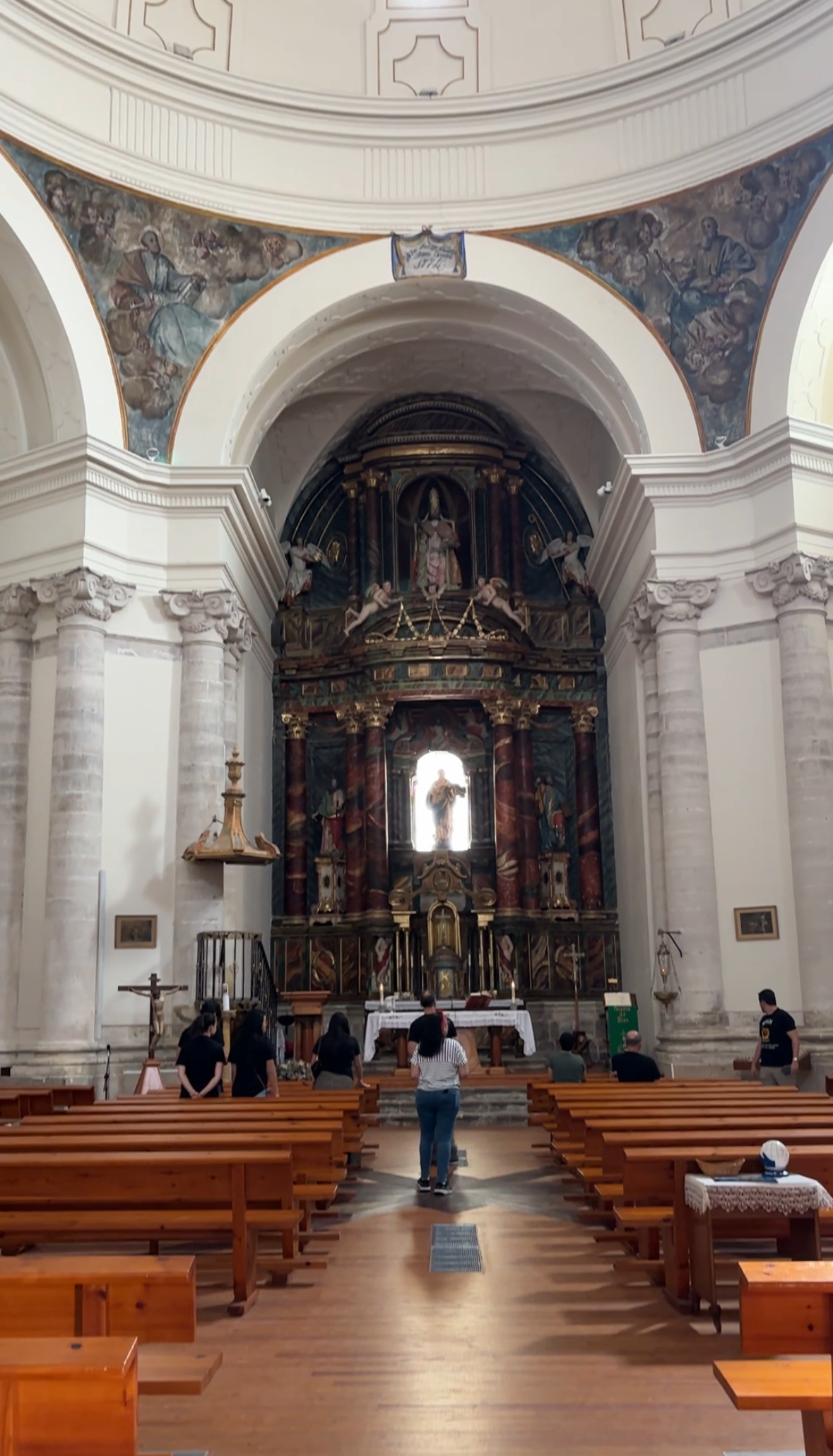
In the meantime I had another first to experience. Andreas had arranged for a local Catholic priest to hold a special Mass at the local church to mark the day of the eclipse. And I'd been invited to join them.
I am not a Catholic myself, but have always been taken with the beauty of European churches and cathedrals, and was keen to experience Mass. After quizzing Andreas on theology and triple checking it wasn't an imposition, I gratefully accepted.
The church bells had been a constant companion during my stay in Valoria la Buena, chiming every hour on the hour since my arrival. They emanated from a stunning 250-year-old church located at the heart of the pueblo, which had been constructed over three distinct phases.
During Mass, the priest remarked in Spanish on the incredible nature of the upcoming eclipse as the group listened attentively while wearing specially made eclipse t-shirts. A poignant moment of religion and science in absolute harmony.
A unique eclipse
After, I disappeared to prepare while Charles and the DEB team ferried the scope and equipment to our observing site. There was time for one final communication test with NASA.
Then it was time. And it wasn't just us.
Half the town must have turned out to experience the eclipse. Citizen scientists and family mingled with friends and locals as an impromptu block party got underway in Valoria la Buena.
I set up my camera close to Charles and the DEB scope, as the DIY heatsink worked to cool the fanless laptop in defiance of the Spanish heatwave.
Working to capture my first photo of the eclipsed sun. (Image credit: Anthony Wood)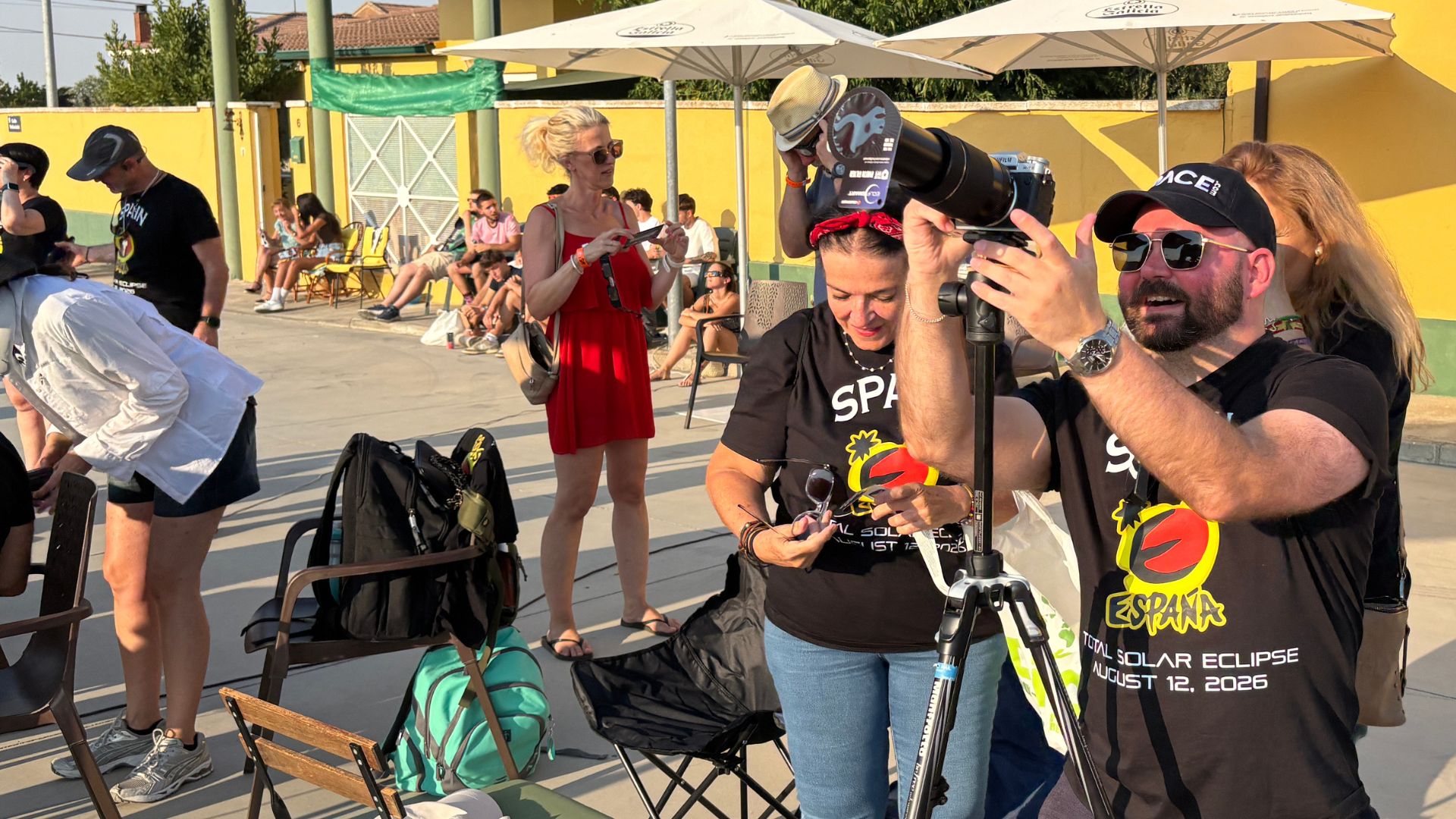
Aaron, Aimar, Rosa and Siempre watched on as I double-checked the solar filter and settings on my camera, while glancing paranoid at the eclipse timings on my laptop. We were quickly joined by a semi-circle of enthusiastic locals curious about everything from the eclipse and the DEB to science journalism and Space.com.
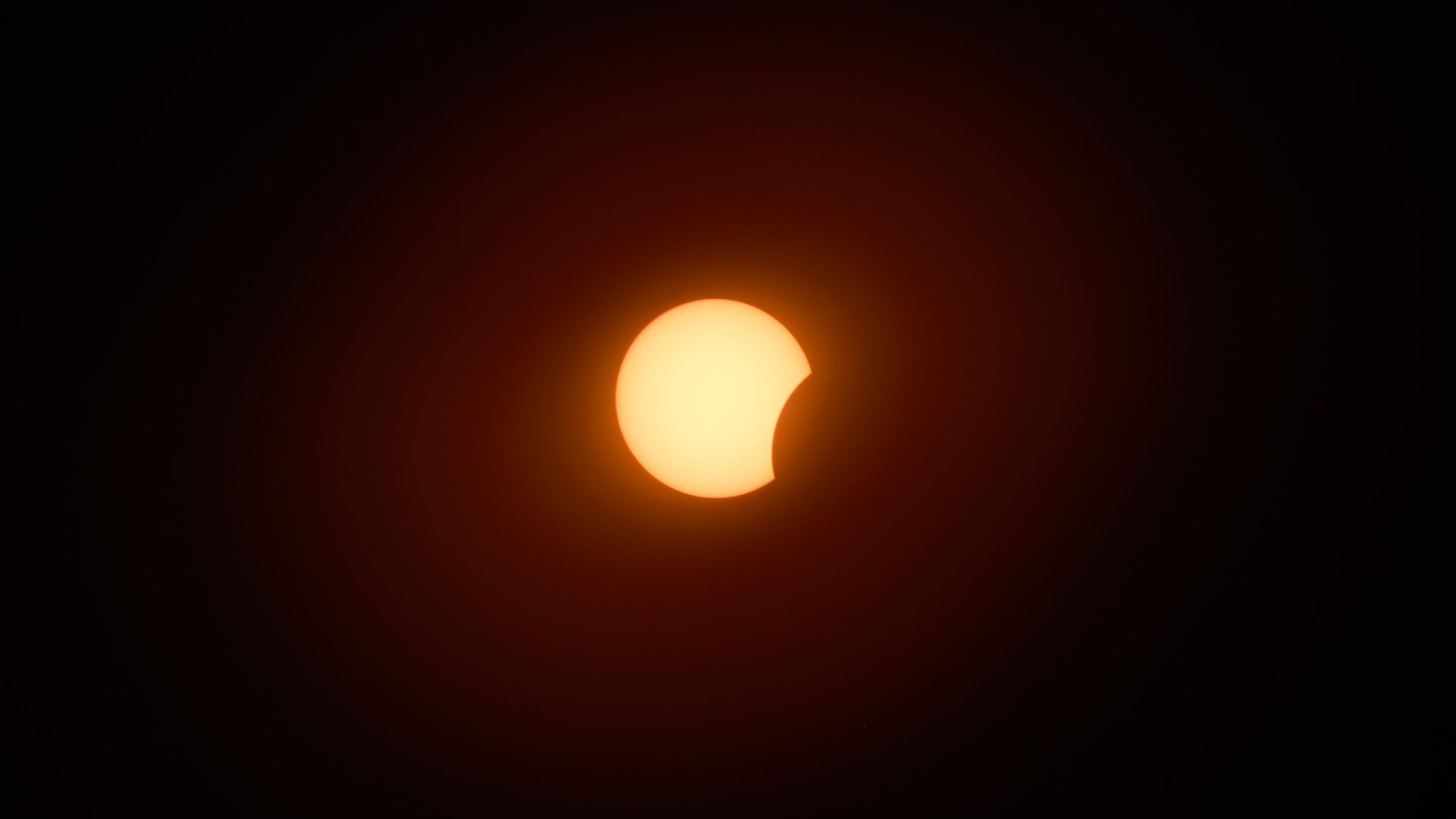
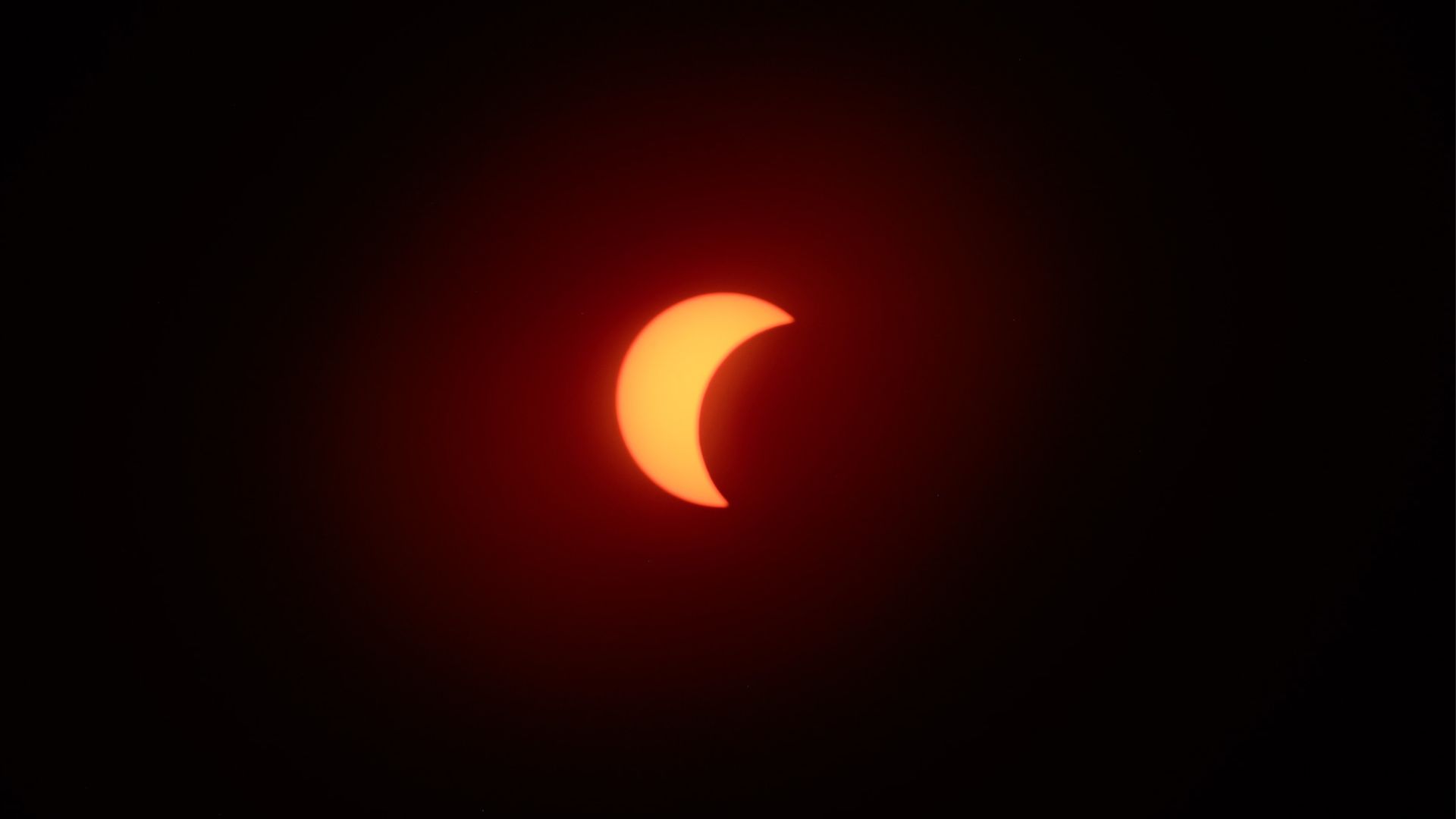
As a result I was lost in conversation as the moment of first contact arrived and the moon took its first tentative bite out of the sun. Someone shouted and I snapped to. I immediately forgot how to use a camera. Remembered. And snapped my first photograph of the eclipsed sun.
My first instinct was that something was ineffably wrong. The sight had activated an ancient and superstitious circuit in my brain that insisted the sun simply shouldn't look this way. That I should be doing something to make it whole again.
 Anthony Wood
 Anthony Wood
 Anthony Wood
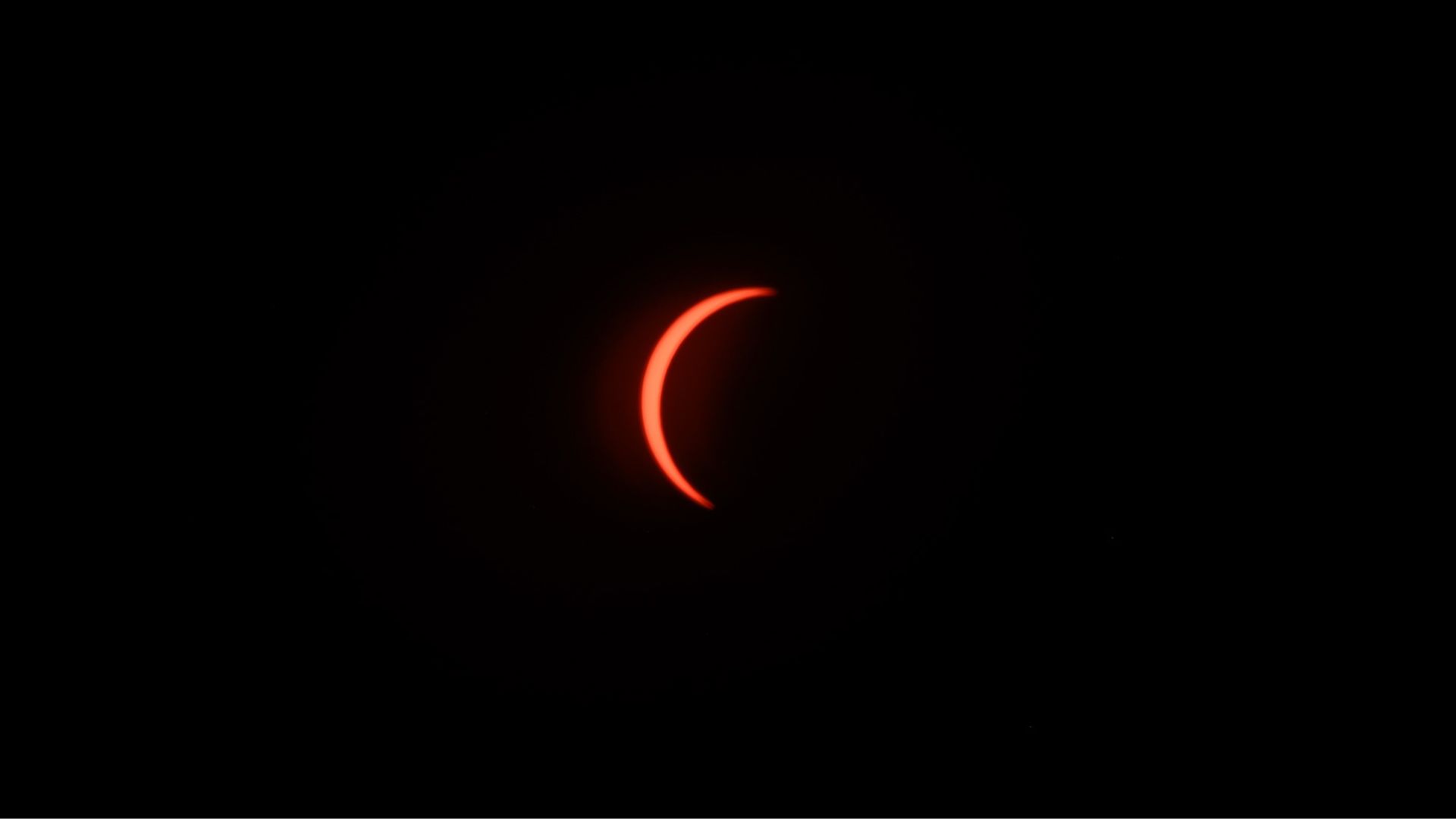
Nervous excitement waxed in time with the waning of the solar crescent, which grew thinner with each minute as the moon's silhouette sank ever deeper into the sun. It was spectacular, but in hindsight little more than a prelude to the wonder of totality.
As the last of the solar disk threatened to slip behind the moon I panicked. Alternating between eclipse glasses and my hastily retrieved solar binoculars, unsure which would provide the best experience.
The binoculars.
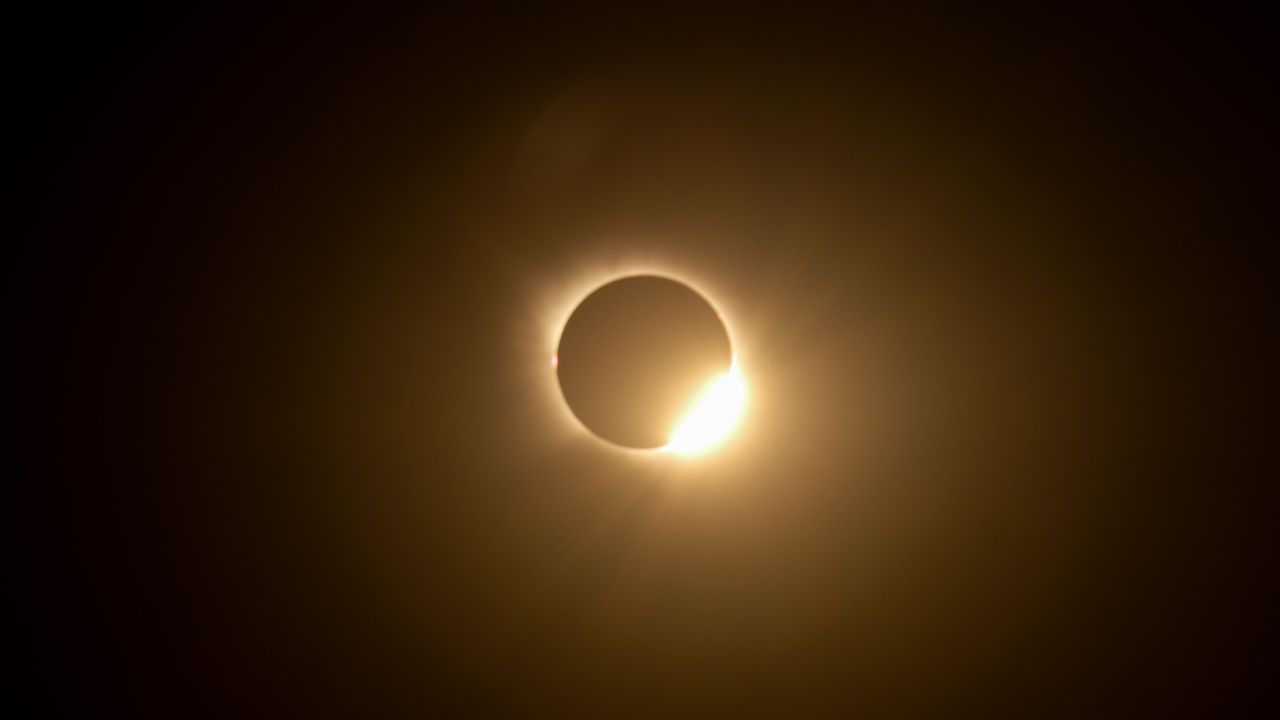
Shouts of awe echoed behind as the final shred of the solar disk created a magnificent Diamond ring flare effect on the trailing edge of the lunar disk. I ripped the solar filter away from my camera and lowered the binoculars from my eyes.
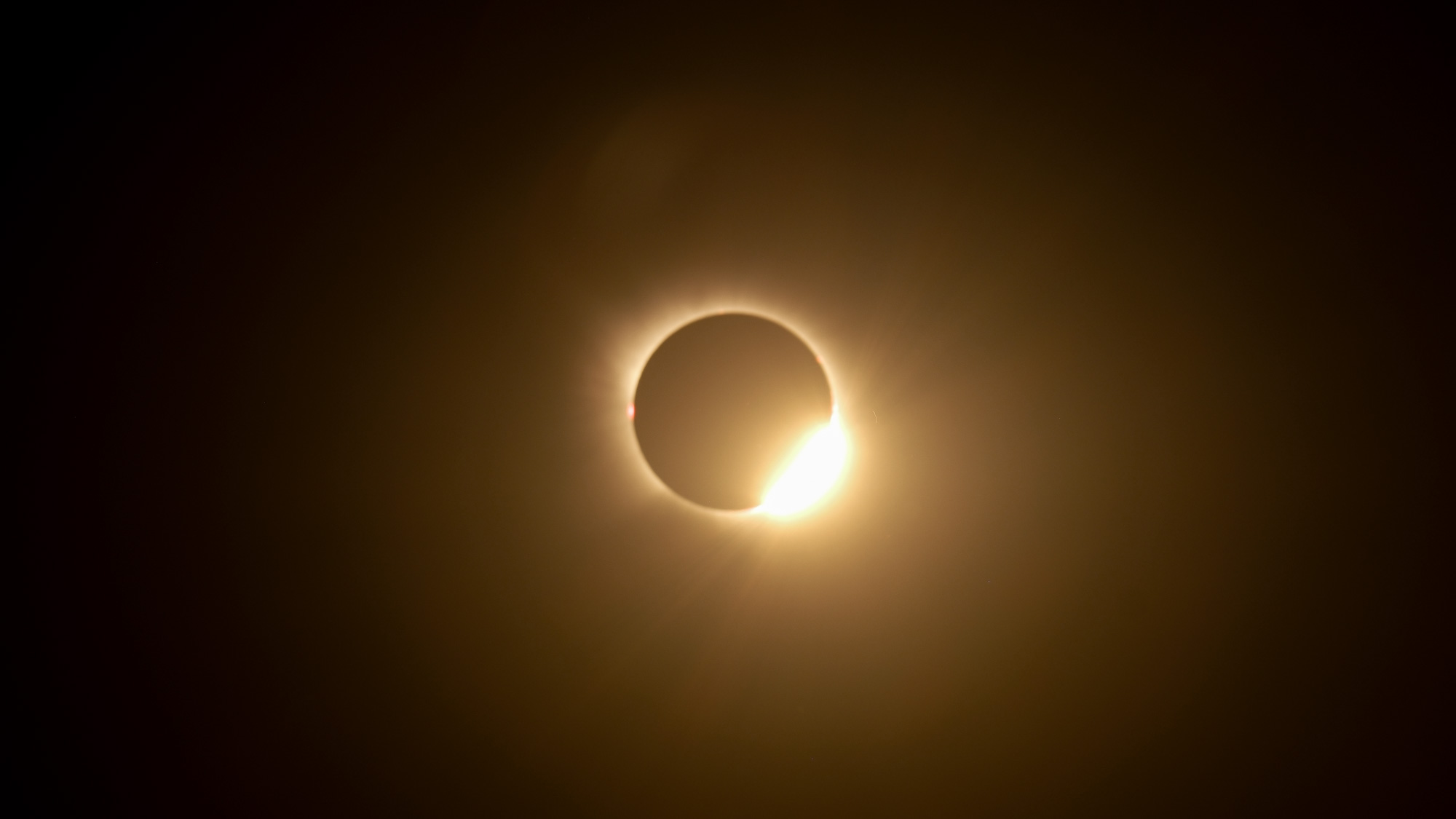
The moment I had envisioned for years in my mind's eye years had finally arrived, more spectacular than I could have hoped.
With my own eyes I saw the sun's atmosphere reach out from behind the moon's silhouette. A black star shining in a false twilight.
As before, the sight stroked a primal part of my psyche that told me it was all wrong. Like watching a leviathan pass just beneath the surface in a fathomless ocean. To my senses, the eclipsed sun seemed to fill the sky. Venus was visible gleaming star-like and brilliant above, but the impossible sun was our only focus.
I grabbed my unfiltered binoculars for a closer look - something that can only be done when the sun's photosphere is completely masked by the moon during totality. A bright prominence glowed to the left of the lunar disk, outshining the corona that surrounded the natural satellite.
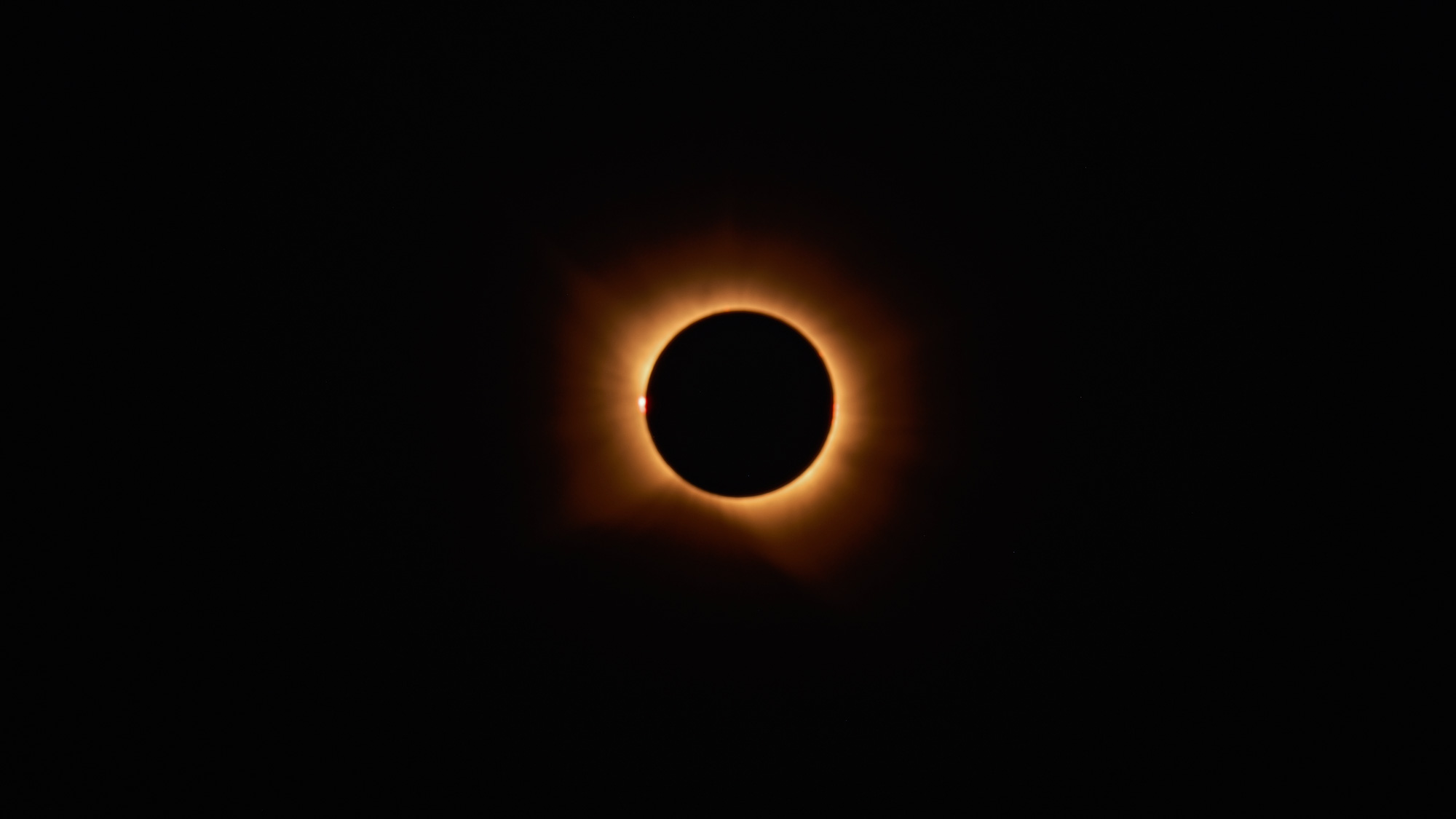
It was our eclipse. 1 minute and 37 seconds of totality. Another will follow in 2027, but it wouldn't be the same. It'll be a different corona, at a different altitude, enjoyed with different people. Utterly unique.
I triggered my camera shutter a dozen times. I'd knocked it out of focus upon removing the solar filter. It didn't seem to matter.
As the sun emerged from behind the moon I turned my eyes back to my camera, which had decided to stop talking to my phone at some point during totality. Ten minutes of berating the inanimate object later the connection was back, and my (out of focus) views of totality were on their way to our solar eclipse live blog.
Charles and the team had been diligently capturing data on the sun's atmosphere throughout totality, while streaming live views to NASA as they held their eclipse show in Leon.
A post shared by Space.com (@spacedotcom)
A photo posted by on
It was, to me, a shining example of citizen science, which had brought family, friends, locals and students together as one to enjoy one of the most spectacular sights that our solar system has to offer.
The partially eclipsed sun set over the western horizon as Charles accepted the cheers of the DEB group. Our last night in Valoria la Buena was spent among newfound friends, discussing the Strokes, love and coffee, all while enjoying a little rum.
My return journey was a malaise of delayed trains, a cancelled flight and a sea of unfamiliar faces. But none of that mattered. I was dwelling on that magnificent black sun at the moment of totality, of the unnatural twilight and of the people I met along the way.