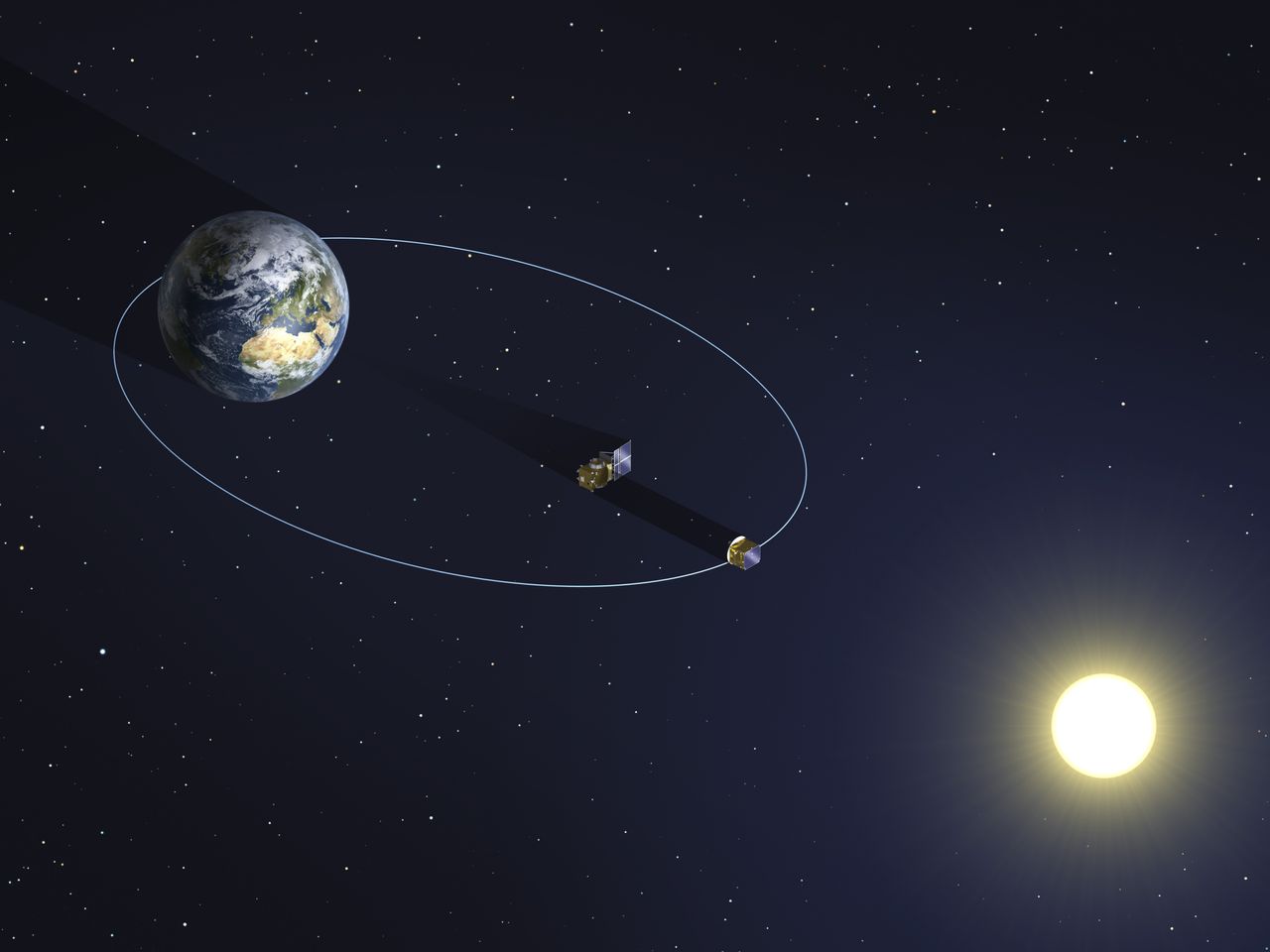
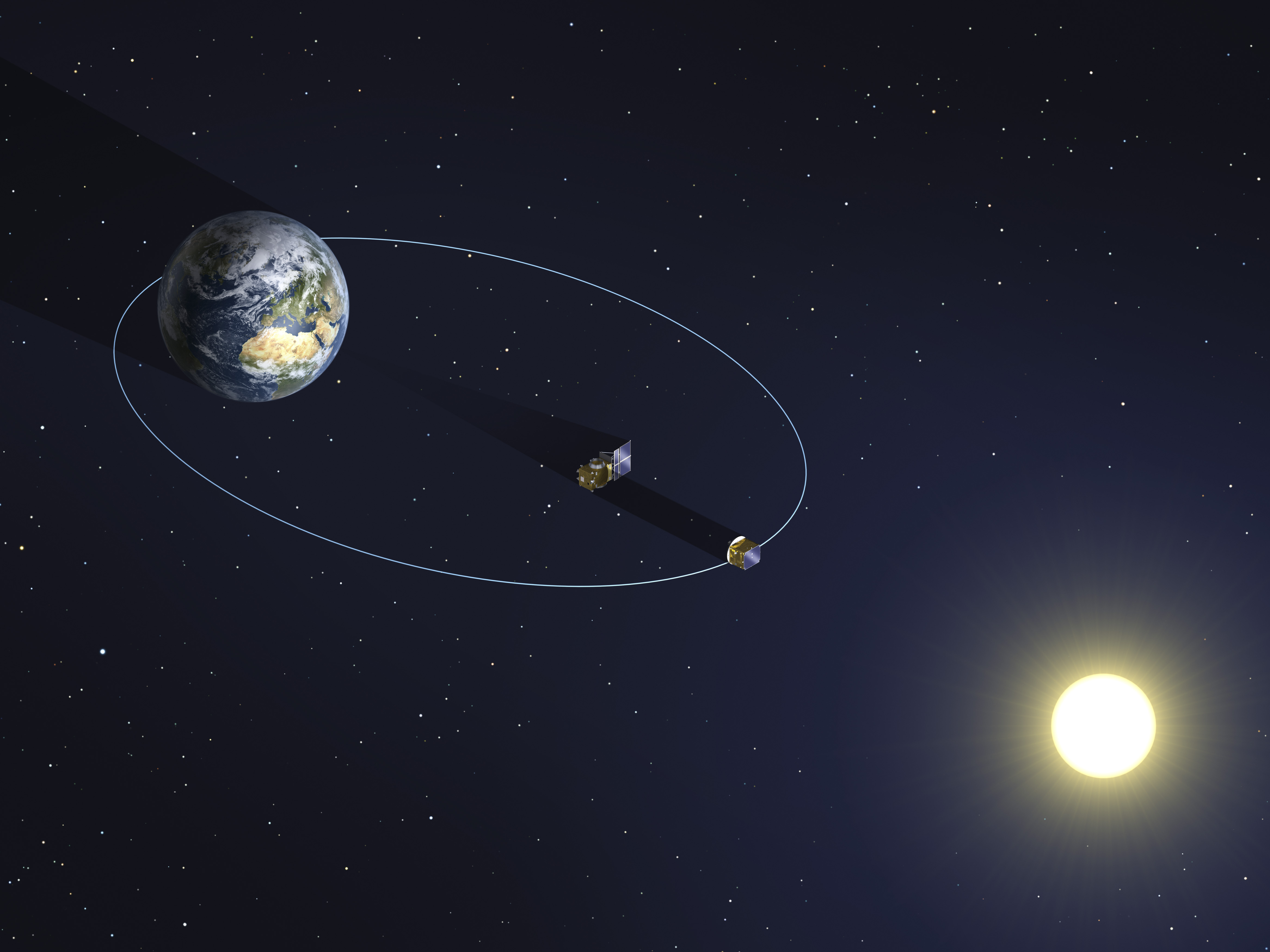
 Diagram showing the orbit of Europe's Proba 3 solar-eclipse mission. (Image credit: ESA - P. Carril, 2013) Share this article 0 Join the conversation Follow us Add us as a preferred source on Google Newsletter Get the Space Newsletter
 Breaking space news, the latest updates on rocket launches, skywatching events and more!
Contact me with news and offers from other Future brands Receive email from us on behalf of our trusted partners or sponsors By submitting your information you agree to the Terms & Conditions and Privacy Policy and are aged 16 or over.You are now subscribed
Your newsletter sign-up was successful
Want to add more newsletters?
An account already exists for this email address, please log in. Subscribe to our newsletterA satellite that generates artificial solar eclipses in space has reestablished contact with its handlers after a month of silence.
The European Space Agency (ESA) announced today (March 19) that it has gotten back in touch with the Coronagraph spacecraft, one of the two satellites that make up its Proba-3 mission. The Coronagraph had been silent since mid-February, when an anomaly knocked it offline.
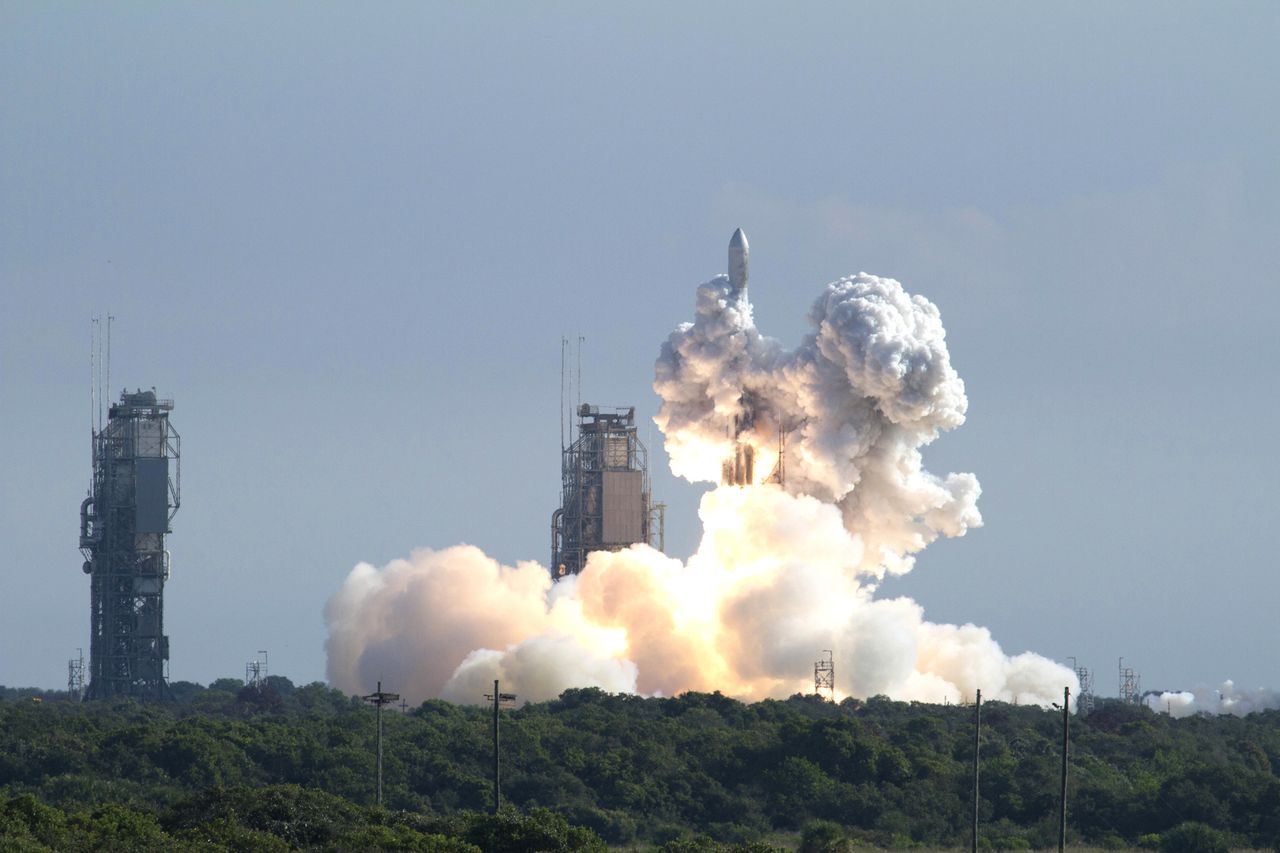
Article continues belowThe Coronagraph and its partner satellite, the Occulter, launched to Earth orbit together from India in December 2024.
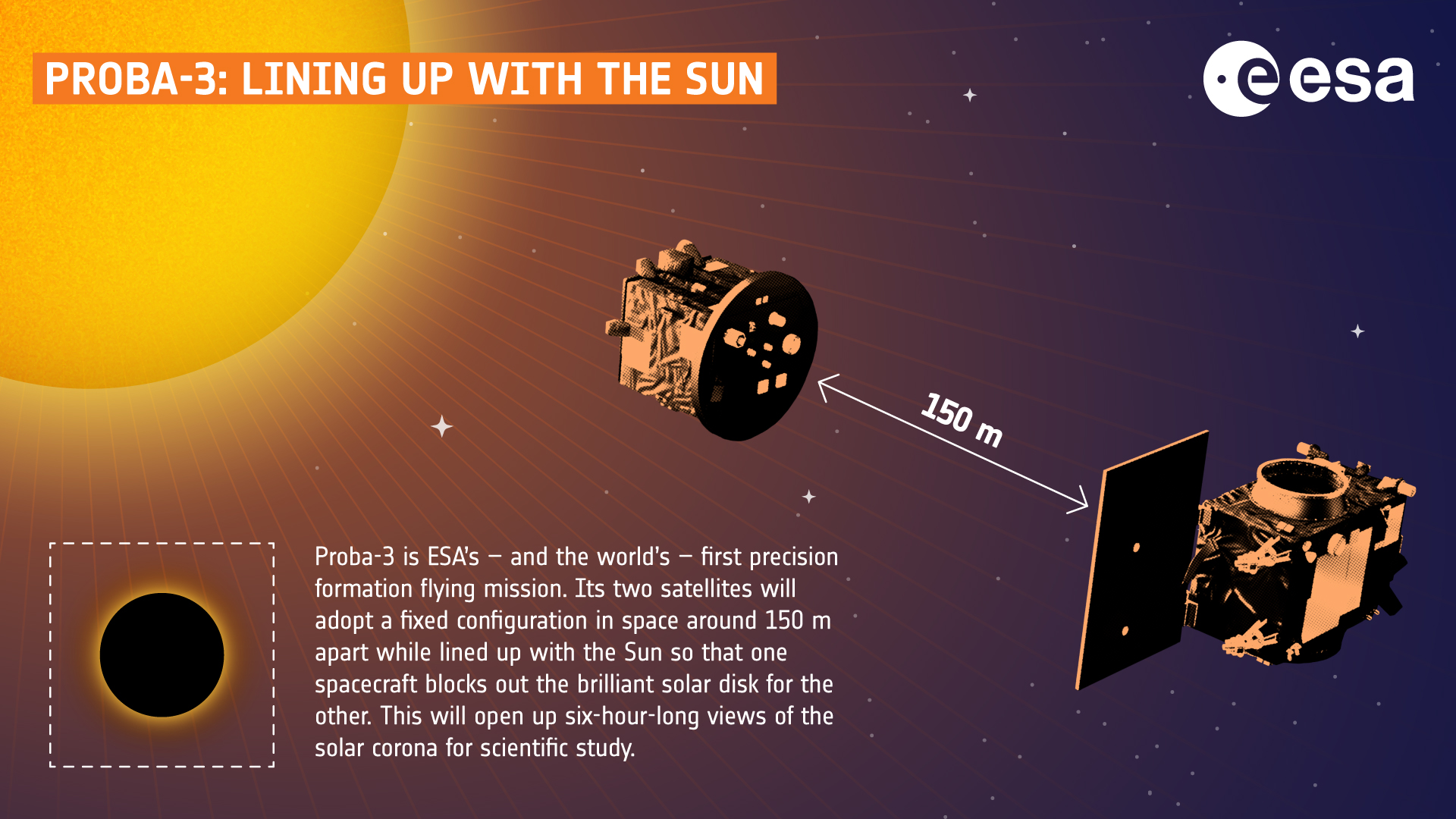
The two work together to generate solar eclipses. As its name suggests, the Occulter blocks out the sun's disk, allowing the Coronagraph to study the sun's faint outer atmosphere, or corona, which is usually drowned out by our star's overwhelming brightness.
This work requires incredibly precise formation flying: The two satellites cruise through space about 500 feet (150 meters) apart, maintaining their positions with an accuracy of 1 millimeter. If either the Occulter or the Coronagraph goes down, the mission is effectively over.
So, last month's events were bad news for the Proba-3 team. The Coronagraph anomaly "triggered a chain reaction that led to the progressive loss of attitude (spacecraft orientation) and prevented its expected entry into safe mode," ESA officials said in a statement on March 6.
Get the Space.com NewsletterContact me with news and offers from other Future brandsReceive email from us on behalf of our trusted partners or sponsorsBut things are better now, as today's update noted. ESA's ground station in Villafranca, Spain, received a packet of data from the Coronagraph, which provided information about the satellite's voltage and temperature, among other characteristics.
The satellite is stable and in a protective "safe mode" at the moment. But it's not out of the woods; the mission team is conducting health checks to determine if it suffered any damage, ESA officials said in today's update.
"The spacecraft’s solar panel is facing the sun, powering the essential electronics on board, and charging the battery with the remaining power," they said. "After a month of floating in space and exposed to extreme cold, onboard systems need time to warm up before any major actions are taken. "
 Mike WallSenior Space Writer
Michael Wall is a Senior Space Writer with Space.com and joined the team in 2010. He primarily covers exoplanets, spaceflight and military space, but has been known to dabble in the space art beat. His book about the search for alien life, "Out There," was published on Nov. 13, 2018. Before becoming a science writer, Michael worked as a herpetologist and wildlife biologist. He has a Ph.D. in evolutionary biology from the University of Sydney, Australia, a bachelor's degree from the University of Arizona, and a graduate certificate in science writing from the University of California, Santa Cruz. To find out what his latest project is, you can follow Michael on Twitter.
View MoreYou must confirm your public display name before commenting
Please logout and then login again, you will then be prompted to enter your display name.
Logout MORE FROM SPACE... 1Earthshine will reveal the moon's hidden face this week — here's how to see it
 - 2Private South Korean rocket exploded last December due to hardware failure, investigation finds
- 3Lego's first-ever Tintin set is coming next month and it's a space-themed Lego Tintin Moon rocket
- 4I talked to Andy Weir about the astrobiology behind 'Project Hail Mary'
- 5NASA peers inside an asteroid | Space photo of the day for March 19, 2026