The next crew, spacecraft and rocket to fly to the International Space Station are on schedule to meet their mid-September launch date, mission managers and the astronauts told reporters on Monday (Aug. 3).
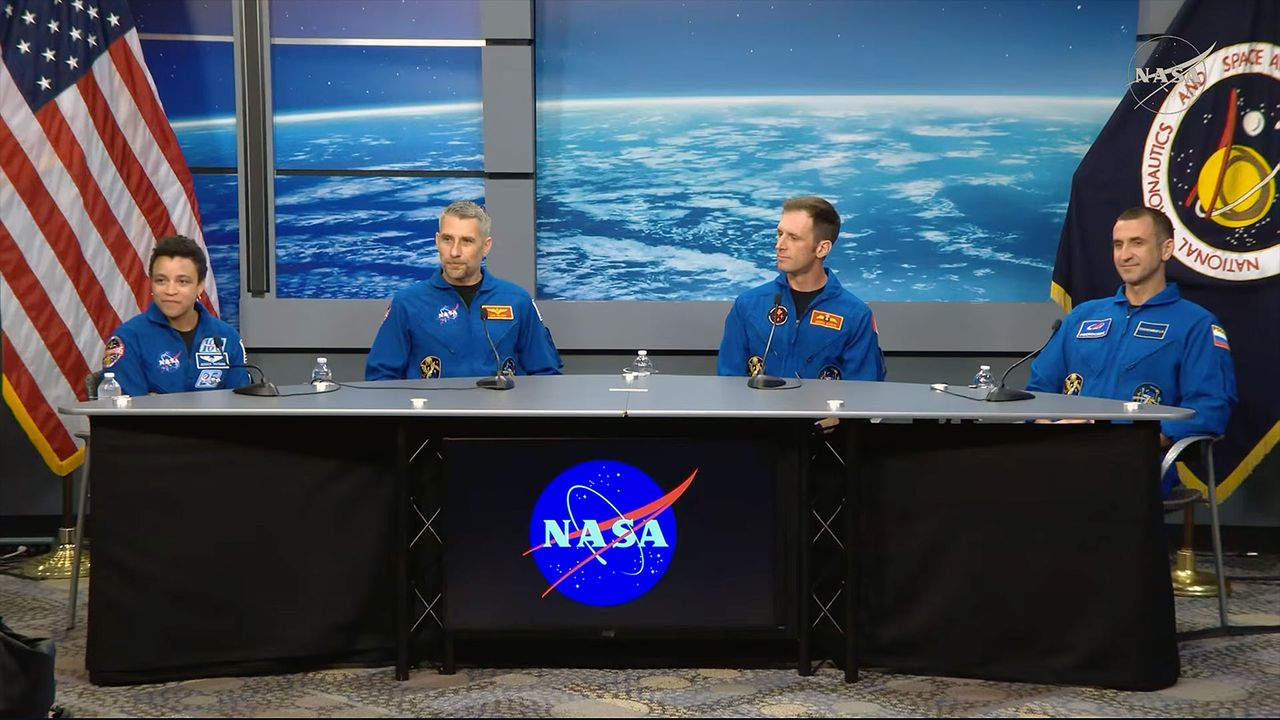
SpaceX's Crew-13 astronauts — commander Jessica Watkins and pilot Luke Delaney of NASA, mission specialist Josh Kutryk with the Canadian Space Agency and mission specialist Sergey Teteryatnikov of Russia's federal space corporation Roscosmos — will become only the second crew to fly aboard the Dragon spacecraft "Grace" when they lift off no earlier than Sept. 12 from Space Launch Complex-40 at Cape Canaveral Space Force Station in Florida.
They will then dock with the space station the following day to begin a seven-month stay on the orbiting outpost, as part of the Expedition 75/76 crew.
"We expect a very busy mission with lots of station maintenance, both internal and external, with a few EVAs [extravehicular activities, or spacewalks] on the docket," said Watkins, who is the only member of Crew-13 to have flown into space before and will become the first active NASA astronaut to fly on Dragon twice. "[We also expect] visiting vehicle capture and stowage operations, lots of science — very interesting science experiments that will be flying with us as well — and plenty of outreach."
Kutryk will be the fourth Canadian to serve on an ISS crew and the second from his country to fly this year, after Jeremy Hansen launched around the moon on the Artemis II crew in April.
"Personally, myself, I grew up on a cattle farm in Canada. It's a long way from being here with this mission in front of us, but the one thing that has resonated at every twist and turn in that journey has been the complexity of these missions and the enormity of the teams that go into pulling missions like this off," said Kutryk. "So, we need to say thank you to everyone."
Cybertrucks, spacesuits and mudflats
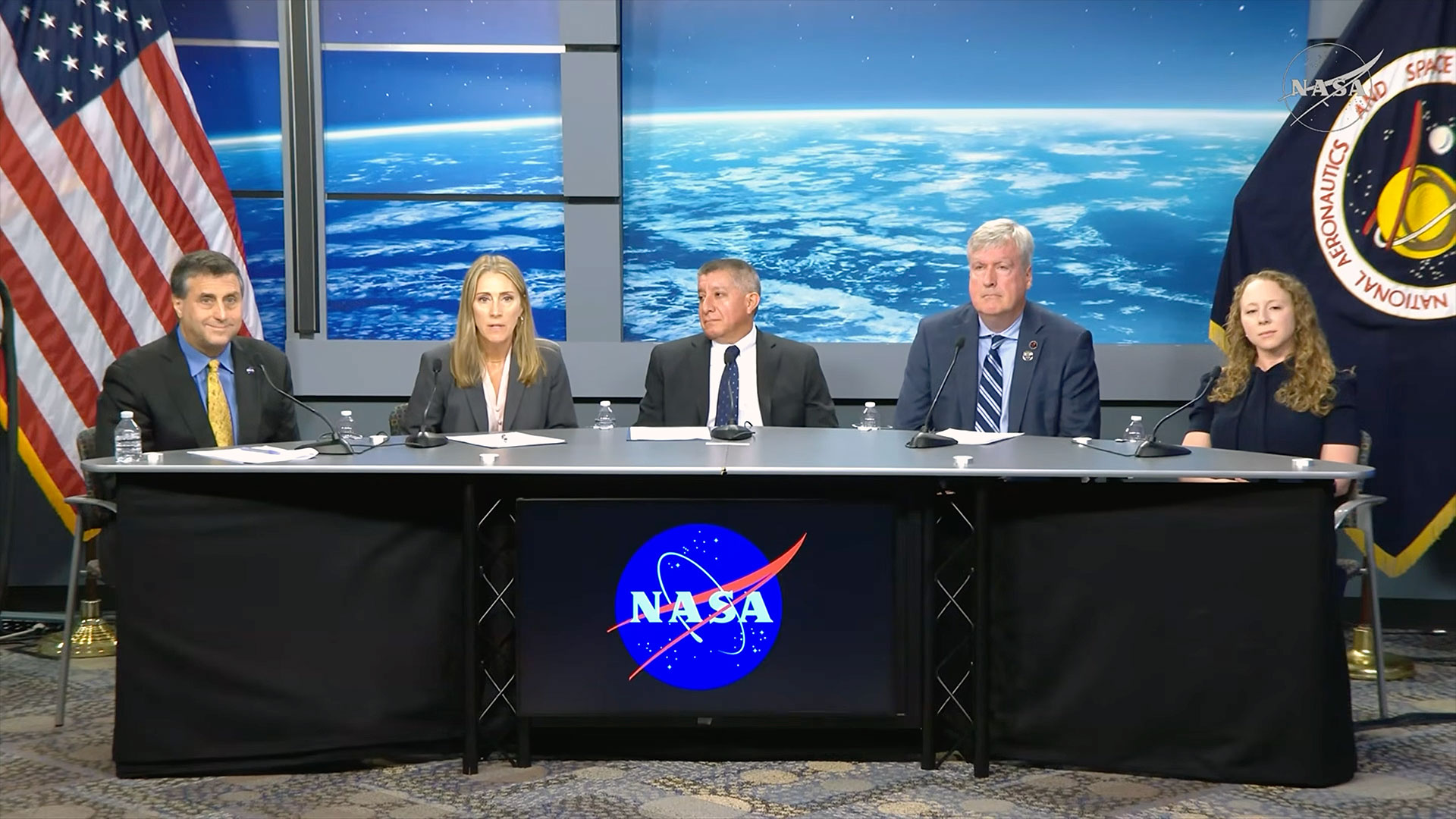
"Every time we do a human spaceflight mission, it gives us an opportunity to strengthen our understanding of low Earth orbit. It gives us an opportunity to broaden our international relationships and an opportunity to showcase to the world what we can do in low Earth orbit for human spaceflight," said Joel Montalbano, NASA's deputy associate administrator for human spaceflight.
During the mission, Watkins, Delaney, Kutryk and Teteryatnikov will take part in research to combat heart disease and Parkinson's disease by studying human stem cell-derived tissues. They will also explore crop production that's important for longer-duration spaceflight missions, and help improve scientists' understanding of blood flow abnormalities that are seen on long missions. The crew will also test new diagnostic medical equipment for keeping an eye on their overall health.
First, though, they must get to space.
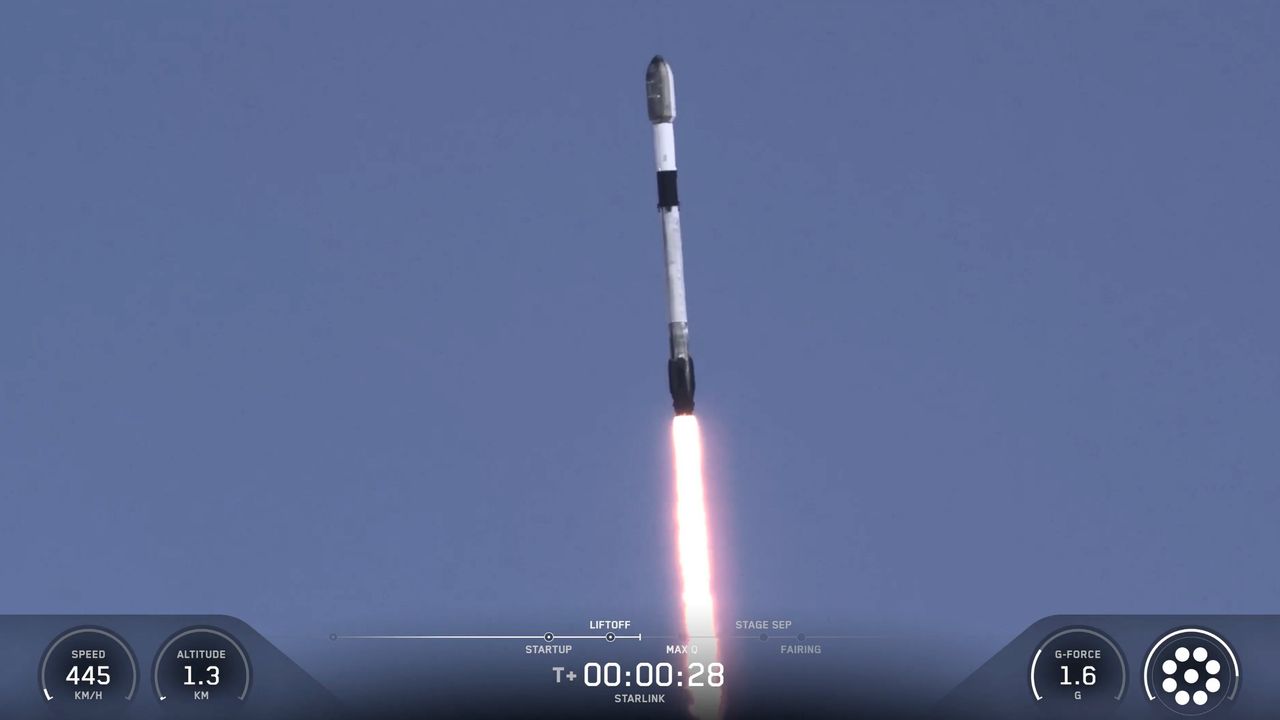
"Final integration of the Dragon is complete. The capsule was stacked on the trunk just last week and mission preparations are proceeding well for a mid-September launch," said Dana Weigel, NASA's manager for its low Earth orbit program. "Falcon 9 booster maintenance will kick off this month. That same booster was flown on Crew-12. We are not tracking any major issues for this mission campaign."
This Friday (Aug. 7), the crew will don their SpaceX suits — the first "Rev. 3" models with improved donning and doffing capabilities, as well as adjustments to account for spinal growth on orbit — and get their first chance to board "Grace," their ride into orbit and back. This "test drive" will help them gain some muscle memory — some familiarity within the the vehicle mission — and provide them a very big psychological boost, managers said.
"Grace" will also sport new metal "mud flaps" for its Draco abort thrusters, replacing earlier carbon fiber models. In addition, should the crew encounter an emergency before launch, they will be evacuated from the launch pad area for the first time by Tesla Cybertrucks operated by SpaceX, reducing conflicts when SpaceX and NASA want to launch crewed flights at the near or same time.
"There was a lot of certification that had to go into making sure those Cybertrucks would start up with a gloved hand. There were a lot of tests in terms of making sure you could egress the vehicle with a bulky suit on," Richard Jones, deputy program manager of NASA's commercial crew program, said in a response to a question from collectSPACE and Space.com. "All of those things were proven to be already intact, and they're going to configure those Cybertrucks to be ready."
Departures and arrivals
The four members of Crew-13 will be sharing their time on the space station with outgoing and incoming Russian Soyuz crews, who will launch and land with members of Delaney's astronaut candidate class, "The Flies," selected in 2021.
"It's really exciting to see the class fly," said Delaney. "We're going to be meeting Anil [Menon] up there. He's part of our class. Deniz [Burnham] will come up right behind to replace him. Working closely with both of those two throughout astronaut training, it's really just satisfying."
"I'm slightly hoping we get delayed a little bit, so we have some overlaps, so that way we can have three Flies back to back, he said.
For Kutryk, some timing just cannot be controlled.
"It's about midway through — pretty much perfect timing. That's sarcasm," said Kutryk, referring to the upcoming birth of his third child, who is expected to come into the world while he is on the space station.
"It's been done a couple times before," he said, referring to NASA astronaut Mike Fincke and Randy Bresnik, who both had children born while on the ISS. "I think that my family is ready. I have a wonderful, huge support network, from my wife outwards, around us, and we're looking forward to that challenge and to the uniqueness of this experience."