Ukraine wants its own satellite-communication system, which shouldn't be surprising given the events of the past week or so.
The Ukrainian military just signed a letter of intent with two Finnish companies — the telecom giant Nokia and satellite maker ICEYE — to look into developing a sovereign satellite-communications network for Ukraine.
"Ukraine needs secure, sovereign and high-performance satellite communications systems that it controls," ICEYE cofounder and CEO Rafal Modrzewski said in a statement today (Oct. 22). "We have a proven track record of delivering sovereign missions at speed to help build that capability. ICEYE has proudly supported Ukraine since 2022, and we remain committed to continuing that support today."
Ukraine relies heavily on satellite-based communications and data to defend itself from Russia, which invaded the nation in February 2022 and continues to attack it with ground troops, missiles and drone strikes.
But Ukraine does not own those satellites. It primarily uses the services provided by SpaceX's Starlink megaconstellation in low Earth orbit (LEO) and Starshield, a military-grade, jamming-resistant version of Starlink employed by the U.S. government and its allies.
Starshield in particular is crucial to Ukraine, as it allows the nation to operate fast-moving drones over large distances in war zones. Ukraine has gotten very good at drone warfare, employing these little robots both in offensive and defensive capacities.
On Oct. 14, however, Ukrainian soldiers and officials reported a severe throttling of their access to Starshield services — a speed limit on terminal-carrying drones, which caused many of them to fall out of the sky.
It's not entirely clear who's behind the throttling. Some U.S. officials have apparently said the order came from Elon Musk, but the billionaire SpaceX founder and CEO put the ultimate responsibility on the Trump administration.
"Starshield systems are owned and controlled by the US government. Any limits on speed or usage are decided by the US military and ultimately POTUS," Musk said on Oct. 14 via X, the social media platform he owns.
Whoever made the call, it certainly wasn't Ukraine. And the Starshield throttling — which apparently is still in effect — has doubtless reinforced the nation's desire to control its own satellite-communications infrastructure.
"Nations need communications they can rely on in every situation. Satellite networks extend and protect connectivity when networks on the ground are disrupted," Mikko Hautala, Nokia's chief geopolitical and government relations officer and chairman of Nokia Defense, said in the same statement.
"This makes them a key part of any secure communications system," he added. "Through this Letter of Intent, together with Ukraine and ICEYE, we will explore how trusted, sovereign satellite communications can strengthen Ukraine's resilience and give it control over the connectivity it depends on."
Nokia and ICEYE announced on Oct. 1 that they plan to work together to help nations develop such sovereign satcom systems. The partnership with Ukraine follows on from that earlier agreement.
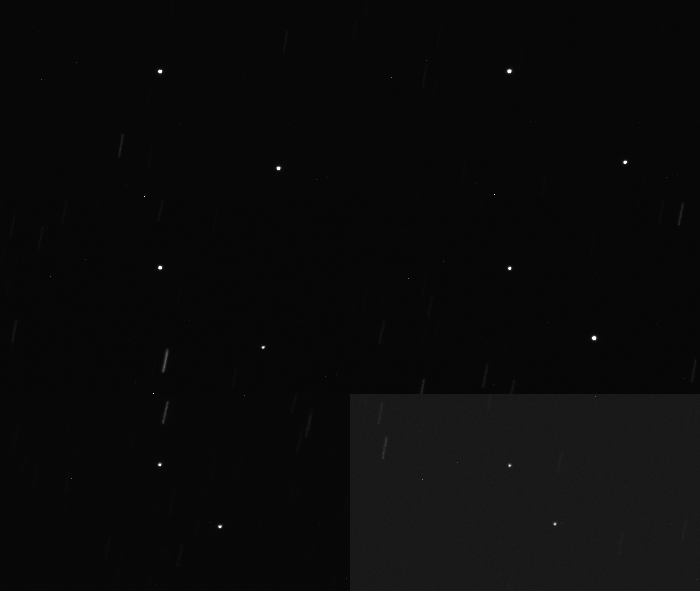
ICEYE has already been aiding the Ukrainian defense effort. The Finnish company and its U.S. subsidiary jointly operate a fleet of Earth-observing satellites in LEO, which study our planet using synthetic aperture radar. Ukraine uses data from the ICEYE constellation for intelligence and planning purposes.
This relationship has put ICEYE — or one of its satellites, at least — in Russia's crosshairs. A Russian inspector satellite called Kosmos 2612 recently made an extremely close approach to ICEYE-X36, which is operated by ICEYE US.
The goal of the unsanctioned rendezvous is unclear. Russia may have wanted to assess the satellite's capabilities or interfere with it in some way. Or perhaps the nation simply wanted to send a message, letting ICEYE (and Ukraine) know that it could mess with satellites if it wanted to.