NFL teams are becoming more comfortable extending the contracts of first-round picks at the earliest possible instance, in what is now an emerging trend. Draft-pick contracts can't be renegotiated until the conclusion of a player's third NFL regular season. Teams have an option for a fifth year with first-round picks that must be exercised by May 1 after their third season.
The extra contract year hasn't been an impediment to new deals in recent years. For the third straight year, a record number of first-round picks received extensions after playing three seasons. The number has reached double digits for the first time, with 10 first-rounders getting new deals so far in 2026. It could increase to 11 as the New England Patriots and cornerback Christian Gonzalez are engaged in contract negotiations.
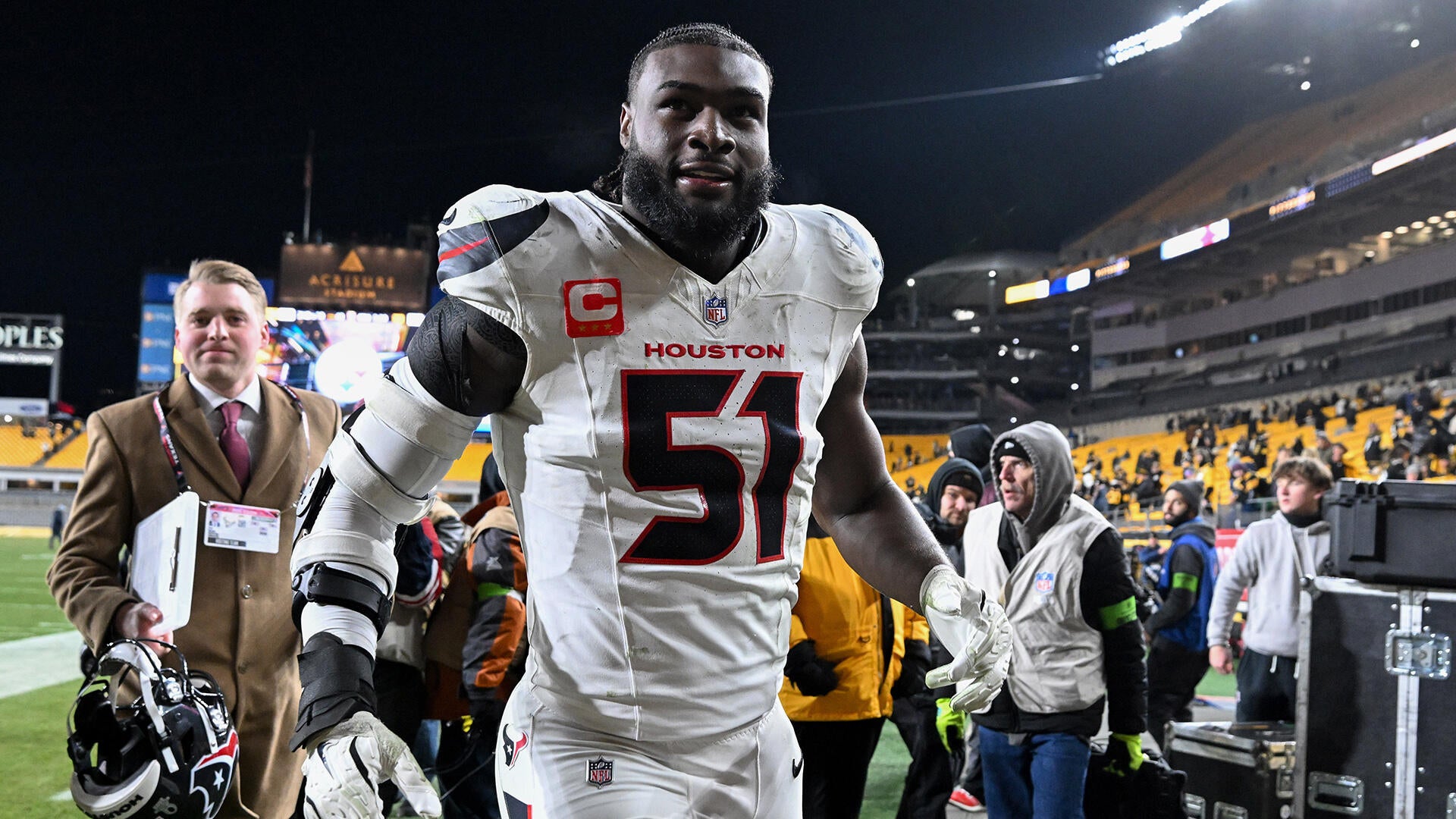
Seven of the 10 became the highest-paid player at their respective positions. The Houston Texans made edge rusher Will Anderson Jr. the NFL's first and only $50 million per year non-quarterback in April. Jaxon Smith-Njigba, the 2025 NFL Offensive Player of the Year, topped the wide receiver pay scale with the four-year, $168 million contract extension he received from the Seattle Seahawks in March. Seattle also established a new standard for cornerbacks last week with Devon Witherspoon's four-year extension, averaging $33 million per year.
Jalen Carter recently took interior defensive lineman compensation to new heights when the Philadelphia Eagles gave him a four-year, $152 million extension. Peter Skoronski just established a new benchmark for offensive guards at $25 million per year by signing a four-year, $100 million extension with the Tennessee Titans.
Bijan Robinson raised the salary bar for running backs a couple of weeks ago. He received a three-year, $66.75 million extension from the Atlanta Falcons. Jahmyr Gibbs surpassed Robinson by $250,000 per year in a matter of days when he signed a three-year, $67.5 million extension with the Detroit Lions.
The previous high was in 2025 when eight first-round picks got new deals without playing a fourth season. That bettered the high mark of seven from 2024.
Over the first 10 draft classes of the rookie wage scale implemented in 2011, an average of 2.8 first-round picks received new deals without playing a fourth year under a rookie contract. There were only three such extensions collectively for the final two years of those 10 draft classes.
All three players were quarterbacks. The only early extension went to the 2019 first overall pick, Kyler Murray, in 2022. Joe Burrow and Justin Herbert, 2020's first- and sixth-overall picks, respectively, got five-year extensions in 2023 from the Cincinnati Bengals and Los Angeles Chargers, making each the league's highest-paid player upon signing at $55 million and $52.5 million per year, respectively.
The yearly breakdown for first-round draft classes is as follows:
1st Round Draft ClassExtensionsSigning Year2011420142012320152013520162014020172015120182016320192017620202018320212019120222020220232021720242022820252023102026Denver Broncos offensive tackle Garett Bolles, whose fifth-year option was declined, has been excluded from the 2017 first-round picks. That's because his new deal came after the halfway mark of the 2020 regular season. Denver had played 10 games when he signed his extension. Vita Vea, who was 2018's 12th overall pick, also isn't included in the calculations. The Tampa Bay Buccaneers defensive tackle didn't sign a new deal until a day before the 2021 regular season ended. Quarterback Jordan Love signing a one-year extension with a base value significantly less than his fifth-year salary, prior to the deadline to pick up the option, isn't factored in either.
Why the fifth-year option matters
Obviously, early success on the field plays a major part in these extensions. A change in how fifth-year options operate with the 2020 Collective Bargaining Agreement may be a contributing factor to the upswing of deals after playing three years.
Fifth-year options are now fully guaranteed upon exercise instead of being guaranteed for injury only if picked up, as was implemented in the 2011 CBA. The options became fully guaranteed on the first day of the league year of the option year, giving a team an out as long as the player stayed healthy. This feature could have been a disincentive in some cases.
The 2014 1st round, being the only one without any extensions after three years, is hard to fathom. Four sure-fire Hall of Famers, defensive tackle Aaron Donald, wide receiver Mike Evans, edge rusher Khalil Mack and offensive guard Zack Martin, were selected in 2014's first round.
Donald earned first-team All-Pro honors in 2015 and 2016. He held out from the Los Angeles Rams for most of the 2017 preseason, trying to get a new deal before returning to play under the fourth year of his rookie contract.
Wide receiver Odell Beckham Jr. also fit the profile for an early deal. Outside of Randy Moss, nobody ever had a better first three NFL seasons as a wide receiver to that point than Beckham.
Which positions and teams are driving the trend
Quarterbacks lead the way with nine early extensions among the 13 draft classes. None of the 10 players signed this year are quarterbacks. The last quarterback was Trevor Lawrence in 2024, when the Jacksonville Jaguars signed him to a five-year, $275 million extension, tying him with Burrow as the NFL's highest-paid player at $55 million per year.
The positional breakdown for the extensions is below.
PositionExtensionsQB9OT8WR8CB7Edge6RB5OG3C2DT2LB2S1The extensions have skewed heavily towards offensive players by a margin of almost two to one. Only 18 extensions have gone to defensive players, while 35 have gone to offensive players.
The only position missing from the equation is tight end. There haven't been any first-round tight ends to get new deals after three seasons. The extension opportunities are limited with tight ends. Just 10 tight ends were first-round picks from 2011 through 2023.
There have been fewer centers during this span, with only seven going in the first round. Nonetheless, two (Travis Frederick, Cowboys, and Frank Ragnow, Lions) didn't have to play a fourth year on a rookie contract before getting a new deal.
The biggest gains have come from wide receivers, driven by the recent increase in early extensions. Tavon Austin (Rams) was the only wide receiver to get a new deal after playing three seasons before 2024. The uptick really shouldn't be much of a surprise given the explosion of wide receiver salaries over the last few years.
Just over a quarter of the 32 NFL teams haven't done an early first-round pick extension since 2014. The nine teams are the Green Bay Packers, Indianapolis Colts, the Patriots, New Orleans Saints, New York Giants, Pittsburgh Steelers, San Francisco 49ers, Tampa Bay Buccaneers and Washington Commanders.
The Colts waited until Andrew Luck and Quenton Nelson were entering contract years before negotiating new deals. Luck signed a five-year, $122.97 million extension in 2016, making him the NFL's highest-paid player. At age 29, he abruptly retired during the 2019 preseason. Nelson should have been a no-brainer for a deal after three seasons. He was named a first-team All-Pro in each of those years. When he did get a new deal in 2022, he became the league's first $20 million per year interior offensive lineman.
The 23 teams that have done extensions and the number of deals are below.
TeamExtensionsLions6Texans5Cowboys4Eagles4Rams4Ravens4Chiefs3Bears2Bills2Cardinals2Dolphins2Jets2Panthers2Seahawks2Bengals1Broncos1Browns1Chargers1Falcons1Jaguars1Raiders1Titans1Vikings1The top six teams are responsible for just over half (27) of the 53 extensions. The Lions lead the way despite being late to the extension party. Five of Detroit's deals (Campbell, Gibbs, edge rusher Aidan Hutchinson, offensive tackle Penei Sewell and wide receiver Jameson Williams) have come over the last three years.
Hutchinson is being included, although his $45 million per year extension, making him the NFL's second-highest paid non-quarterback, wasn't done until the end of October last season. The deal was signed before the halfway mark, seven games into Detroit's season.
There was more urgency with Campbell because his fifth-year option was declined over cost, not performance. He earned first-team All-Pro honors last season.
It's a little surprising that the Cowboys and the Rams are among the leaders for different reasons. The Cowboys have a reputation for dragging their feet in signing players to new deals. The only one of Dallas' deals in the last five years is the 2025 offensive guard Tyler Smith.
The Rams' "F** Them Picks" philosophy with premium draft selections limited the number of opportunities. After quarterback Jared Goff in 2016, the Rams didn't have another first-round pick until edge rusher Jared Verse in 2024. In 2019, Goff in 2019 was the last time the Rams extended the contract of a first-round pick. The wait will continue for the Rams because Verse was dealt to the Cleveland Browns as part of the package to acquire two-time NFL Defensive Player of the Year Myles Garrett at the beginning of June.
Among the teams with only one extension, the Falcons and Titans did their initial deals this year. The Seahawks first two early extensions are in 2026 as well with Smith-Njigba and Witherspoon.
The Bengals and Vikings have only done one did despite having elite wide receivers in Ja'Marr Chase and Justin Jefferson. Chase earned Pro Bowl honors with the Bengals in each of his first three seasons. Cincinnati's antiquated contract structure of signing bonus being the only form of true guaranteed money in veteran contracts besides Burrow's deal was a major sticking point that contributed to him playing his fourth year under his rookie contract. Jefferson's new deal didn't come until his contract year, despite his 324 receptions and 4,825 receiving yards being the most ever through three NFL seasons.
The next wave could be even more expensive
The trend of multiple extensions of first-round pick contracts after three years is likely to continue in 2027. The quarterback market could dramatically escalate as 2024 draft picks, Jayden Daniels, Drake Maye and Caleb Williams, will be eligible for contract extensions. At least one of the three should reset the quarterback market.
A major reset of the tight end market could come from the Raiders next year, thanks to Brock Bowers. If offensive tackle Joe Alt joins Herbert as the only Chargers first-round pick with an early extension, he will probably become the NFL's highest-paid offensive lineman. Cornerback Quinyon Mitchell, as the league's first $35 million defensive back, wouldn't be surprising given that the Eagles have a history of being proactive in locking up core players early with new deals.
Add CBS Sports on Google Join the Conversation comments