The United States has taken some significant steps into the final frontier during its first 250 years.
The nation has put people on the moon, helped build and operate a long-running space station in low Earth orbit (LEO) and sent fleets of robotic explorers to many corners of the solar system — and even beyond it, into interstellar space.
All of this work has been done relatively recently, as the space age didn't dawn until 1957; when the U.S. was born on July 4, 1776, humanity was still seven years away from even balloon-borne flight. Where might we be another 250 years from now, on the nation's 500th birthday, should it be fortunate enough to live that long? Trying to see that far into the future is so difficult as to be a fool's errand, but it's fun. So let's have a brief and far from exhaustive crack.
A vibrant in-space economy
The United States and other space powers have already established an off-Earth economy — one based on the activities of communications satellites. Companies like Vantor and Planet sell imagery to a variety of customers, for example, while others like SpaceX (via its subsidiary Starlink) and Viasat provide internet service from above.
That nascent industry will doubtless expand greatly over the next 250 years, and we're already seeing some of the directions it may go. For instance, space tourism has gotten off the ground; wealthy people can book trips to suborbital space, and the super-rich can fly all the way to Earth orbit, as the experience of NASA chief Jared Isaacman shows. (Isaacman, a tech billionaire, has funded and commanded two missions around our planet using SpaceX hardware.)
We've also seen the dawn of in-space manufacturing, with companies such as Made In Space making stuff off Earth and bringing it down for analysis (and eventually, if all goes to plan, sale). This is a field that could really explode over the coming years and decades, according to Dava Newman, director of the Human Systems Lab at the Massachusetts Institute of Technology, who served as deputy administrator of NASA from 2015 to 2017.
"If you give me a nice big time horizon to look at, I've actually always thought it would be a pharmaceutical breakthrough — manufacturing, more medical-related," Newman told Space.com.
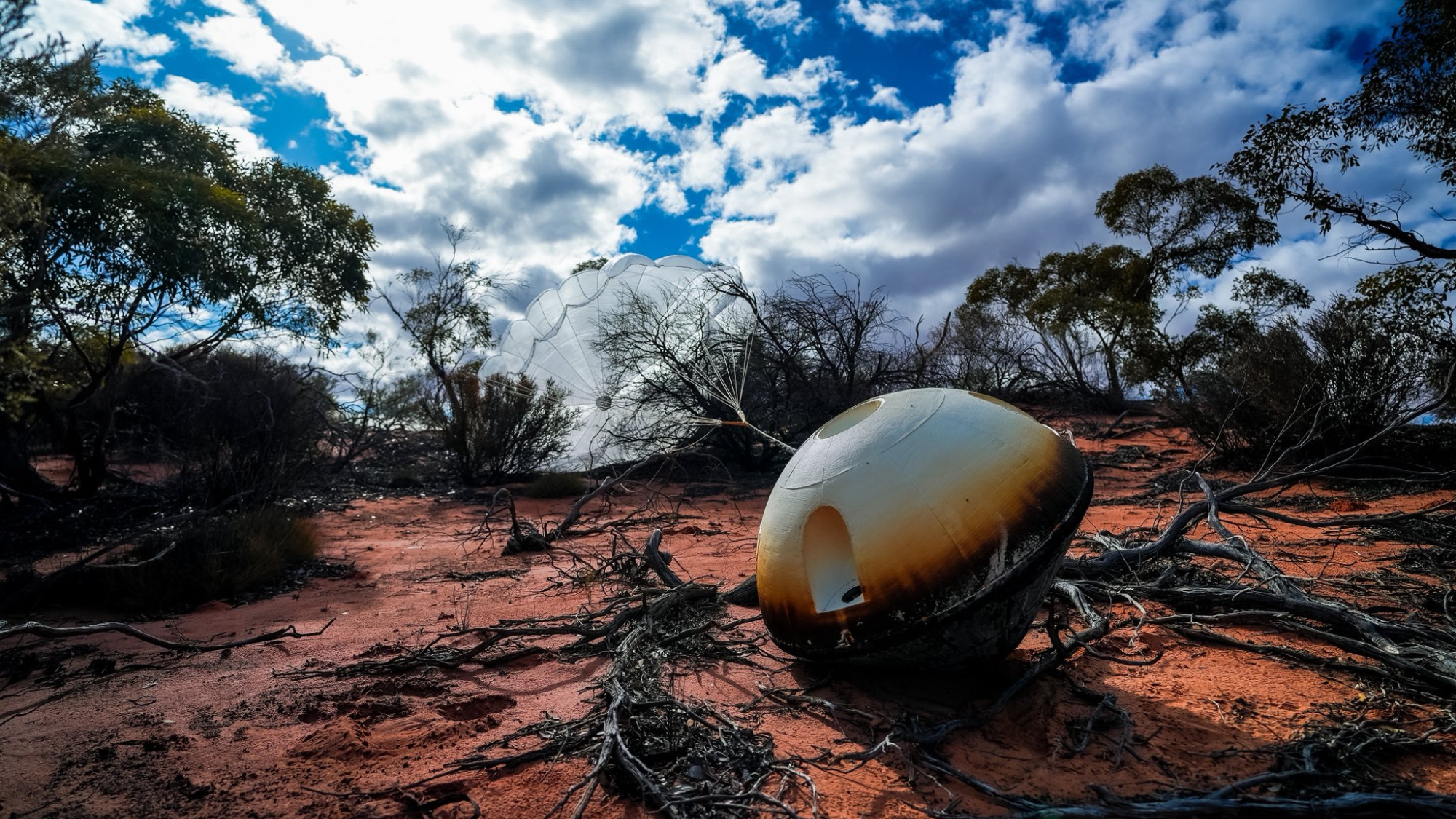
That's because the microgravity environment is great for growing flawless crystals, potentially enabling a newly efficient and effective production line for a wide range of pharmaceuticals and other high-value goods. The California company Varda Space recently demonstrated this potential, successfully crystallizing a stable form of the HIV drug ritonavir in one of its orbital "minifactories" and bringing the drug safely down to Earth.
Asteroid mining, too
There are other potential drivers of a booming off-Earth economy as well. Futurist, astrophysicist and sci-fi author David Brin pointed to asteroid mining, which several American companies, including AstroForge and TransAstra, are investigating seriously already.
"That's where the riches are," Brin told Space.com.
Those riches come in several forms. For starters, many asteroids are thought to harbor considerable amounts of water, which humanity could leverage for life support and split into oxygen and hydrogen, key components of rocket fuel. Space-rock mining could therefore enable the operation of off-Earth propellant depots, which would allow voyaging spacecraft to top off their tanks on the go and explore the solar system more deeply and ambitiously.
Then there are the metals — industrial-grade stuff like iron and nickel, which could feed the off-Earth manufacturing industry, and precious species such as platinum. So there are huge economic opportunities for us in the asteroid belt, according to Brin.
“The question is, will we be able to leverage asteroidal resources to get a takeoff industry out there?" he said. "And will we remain friends with the robots out there that are doing all of the work?”
That latter question is a serious one, for robotics and artificial intelligence will advance a great deal over the next 250 years. Indeed, humanity will likely merge with robots in meaningful and ethically confounding ways, according to Brin.
"There will be fuzzy boundaries between us and the robots," he said. Our species, Brin added, may eventually "range from residual totally organic types through cyborgs and multilinked clusters all the way to robots who either think of themselves as human citizens, or at least know that it's in their best interest to fool us into thinking they think that."
Living off Earth
There's no guarantee that the U.S. will be able to exploit the plentiful resources of the asteroid belt by 2276. For instance, Brin stressed that the nation, and the world at large, are in danger of falling into a sort of "lobotomized feudalism," which could derail most of our spaceflight hopes and dreams.
If we can avoid that trap, however, Brin thinks that asteroid mining could fuel our expansion into the solar system over the coming decades.
"I have no doubt that, if we restore a rational, scientific civilization, there will be city lights on the moon," Brin said. "I am hoping there will be city lights on the asteroids."
Newman has a different outlook. For starters, she's opposed to the idea of transplanting human civilization on a large scale to pristine worlds.
"I'm not a fan, of course, of colonization," she said. "We should never do that. History should teach us something."
She also doesn't see a business case that would drive companies to spend large amounts of money on moon and Mars activities, which could be prerequisites for the establishment of large human settlements there. And she's skeptical that many people would want to pack up their lives and move to Mars or the moon permanently.
"There's a reason Antarctica is not populated," Newman said. "I love it, I can't get enough of it, but that's pretty crazy. Most people don't want to be in a very isolated, confined environment."
Mars settlement, she added, "doesn't make any sense. It's not Option B. We have to take care of this planet."
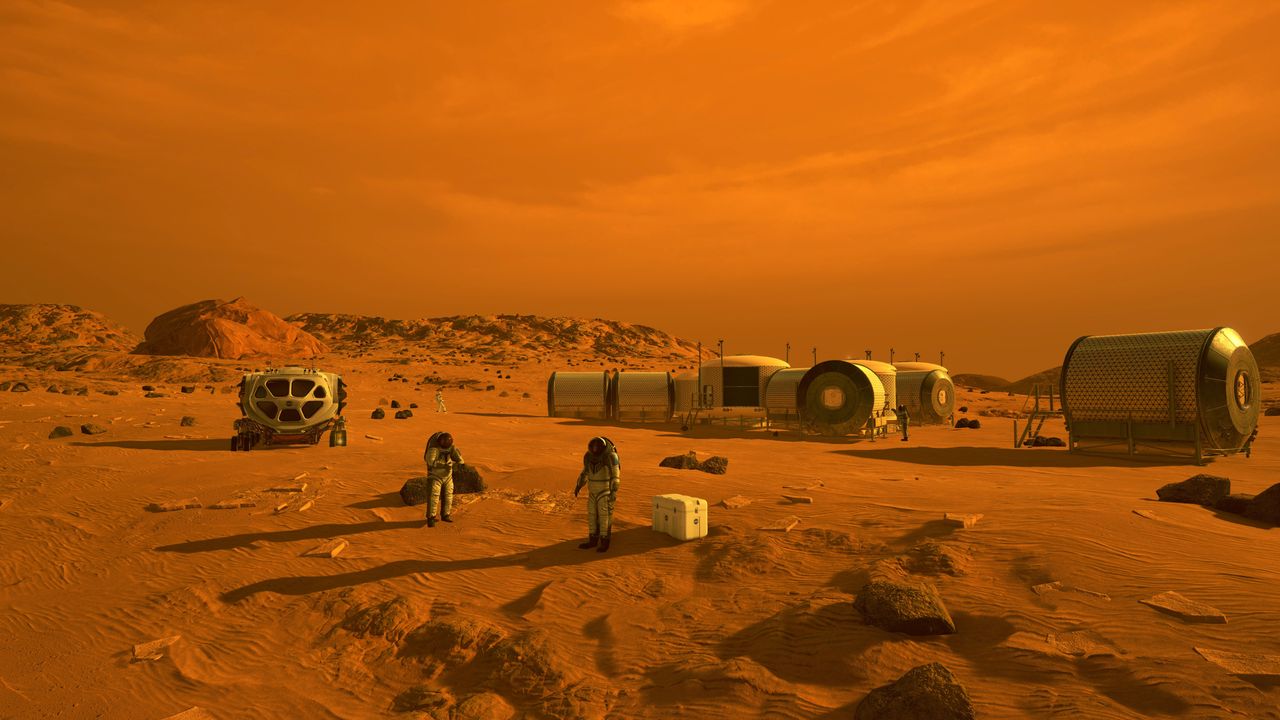
Newman still thinks that we should (and will) explore the moon and Mars in the not-too-distant future. But she envisions a much smaller-scale effort that's driven by ambitious science goals — a committed search for signs of life on Mars, for example. This effort will likely start with small outposts on the moon, which will serve as stepping stones for similar activities on the Red Planet.
This vision is not exactly far-fetched; it's the approach that NASA is currently taking with its Artemis program. The agency plans to build an astronaut outpost near the lunar south pole over the next decade or so, then use the information gained to send astronauts to Mars in the late 2030s or 2040s.
A moon or Mars base would be a huge breakthrough, of course, but it wouldn't be our species' first toehold in the final frontier. We've had one since November 2000, when the International Space Station — a partnership involving the space agencies of the U.S., Russia, Europe, Canada and Japan — began hosting astronauts on a continuous basis. The orbiting lab has been occupied by rotating crews ever since.
Are we alone?
The U.S., and the world at large, will doubtless make great strides in space science over the coming years as well. Indeed, Newman thinks we will answer perhaps the biggest question of all — and doing so won't take anywhere close to 250 years.
"I think definitely we will have found [alien] life," she said. "I think we might find the evidence of life — and it's probably going to be past life — in the coming decade."
Her optimism is based on a number of data points. One is the example of our own planet: Life sprang up here about four billion years ago, not long after Earth had cooled enough to support oceans on its surface. That suggests it doesn't take a miracle for a world to go from habitable to inhabited.
And our solar system hosts multiple worlds that could be habitable. Multiple moons in the outer solar system — Saturn's Enceladus and Jupiter's Europa, for example — host big liquid-water oceans beneath their icy shells. Titan, Saturn's biggest satellite, hosts hydrocarbon lakes and streams on its surface and likely has a buried water ocean as well, raising the possibility that it could support two entirely different types of life.
Then there's Mars. Scientists know that the Red Planet had lots of surface water in the distant past, around four billion years ago. They see evidence of lakes and streams in many Martian locales, some of which have been explored by rovers like Curiosity and Perseverance. And both of those NASA robots have discovered complex organics, the carbon-containing building blocks of life as we know it. Such molecules are not convincing evidence of life, but they're suggestive and intriguing. And humanity aims to follow up on such finds — possibly by astronauts working out of a research base. Mars is therefore the place where we'll likely make the big discovery, Newman said.
Brin was similarly optimistic, predicting that we'll find evidence of alien life in the next 20 years "if we reclaim our potential as an exploratory culture." Mars could be the place it's found, but he thinks the chances are perhaps even greater on Titan and "ice roof" worlds like Europa and Enceladus.
"I would bet 3 to 1 odds we'll find life under ice roofs," Brin said.
If multiple icy moons have life, and we can confirm that each one represents an independent origin, that would tell us something very profound: That life is exceedingly common across the universe.
"It would mean that every star you can see, except perhaps the blue supergiants, has life," Brin said.
The search for intelligent life
The first alien lifeforms we find will probably be microbes, because most life across the universe is likely microbial. That's an inference we can take from Earth, the only inhabited world we know of: Life here remained single-celled for about three billion years, suggesting it's tough to make the leap to more complex organisms.
Becoming a technological civilization is another big leap, one that humanity made just a few centuries ago. But given the vastness of the universe, in both time and space, life has probably made this leap in other places as well, and Brin is bullish on our chances of crossing paths with such aliens — provided we make the right choices in the near future.
“If we restore a dynamic and scientific civilization, we might get some answers to that within 20 to 30 years," he said.
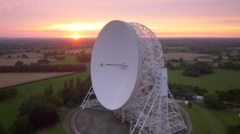
Those answers might come close to home, in the form of long-hidden "lurker" probes sent to our solar system to monitor us on the sly. Or we might pull a world-changing SETI (search for extraterrestrial intelligence) signal from the sky, one that could not have come from a natural, astrophysical source.
Given how young humans are technologically, however — we started launching things to space less than 70 years ago, after all — we probably won't get the drop on advanced aliens, if they're out there.
"Is it likely that intelligent life will actually find us before we find them? I think that's a pretty good probability," said Newman, who sits on the SETI Institute's board of directors.
And we have a chance to mature greatly as a spacefaring civilization over the next 250 years, Brin said. If everything goes well — we don't fall back into feudalism, for example, and we fully exploit the resources of the asteroid belt — the U.S., and humanity overall, we will likely be able to explore other star systems in a meaningful way. He cited laser sailing as a promising propulsion method, one that could send robots — and perhaps cybernetic versions of ourselves — very far afield on reasonable timescales.
"If we make a dynamic, enlightenment civilization, then it's 100% that we'll send somebody out there," Brin said.