Breaking space news, the latest updates on rocket launches, skywatching events and more!
Contact me with news and offers from other Future brands Receive email from us on behalf of our trusted partners or sponsors By submitting your information you agree to the Terms & Conditions and Privacy Policy and are aged 16 or over.You are now subscribed
Your newsletter sign-up was successful
Want to add more newsletters?
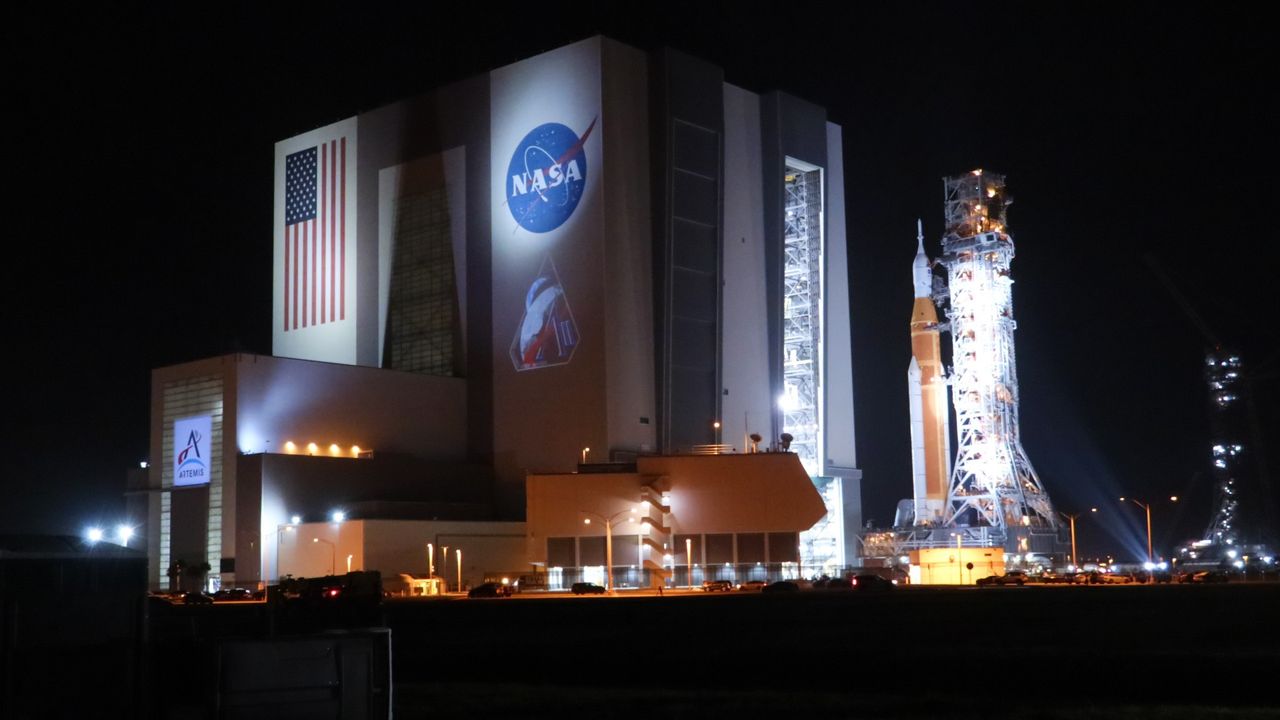
An account already exists for this email address, please log in. Subscribe to our newsletter NASA's Space Launch System (SLS) rocket and Orion spacecraft, secured to the mobile launcher, roll out of the Vehicle Assembly Building to Launch Pad 39B, Friday, March 20, 2026, at NASA's Kennedy Space Center in Florida. (Image credit: Steven Spaleta/Future)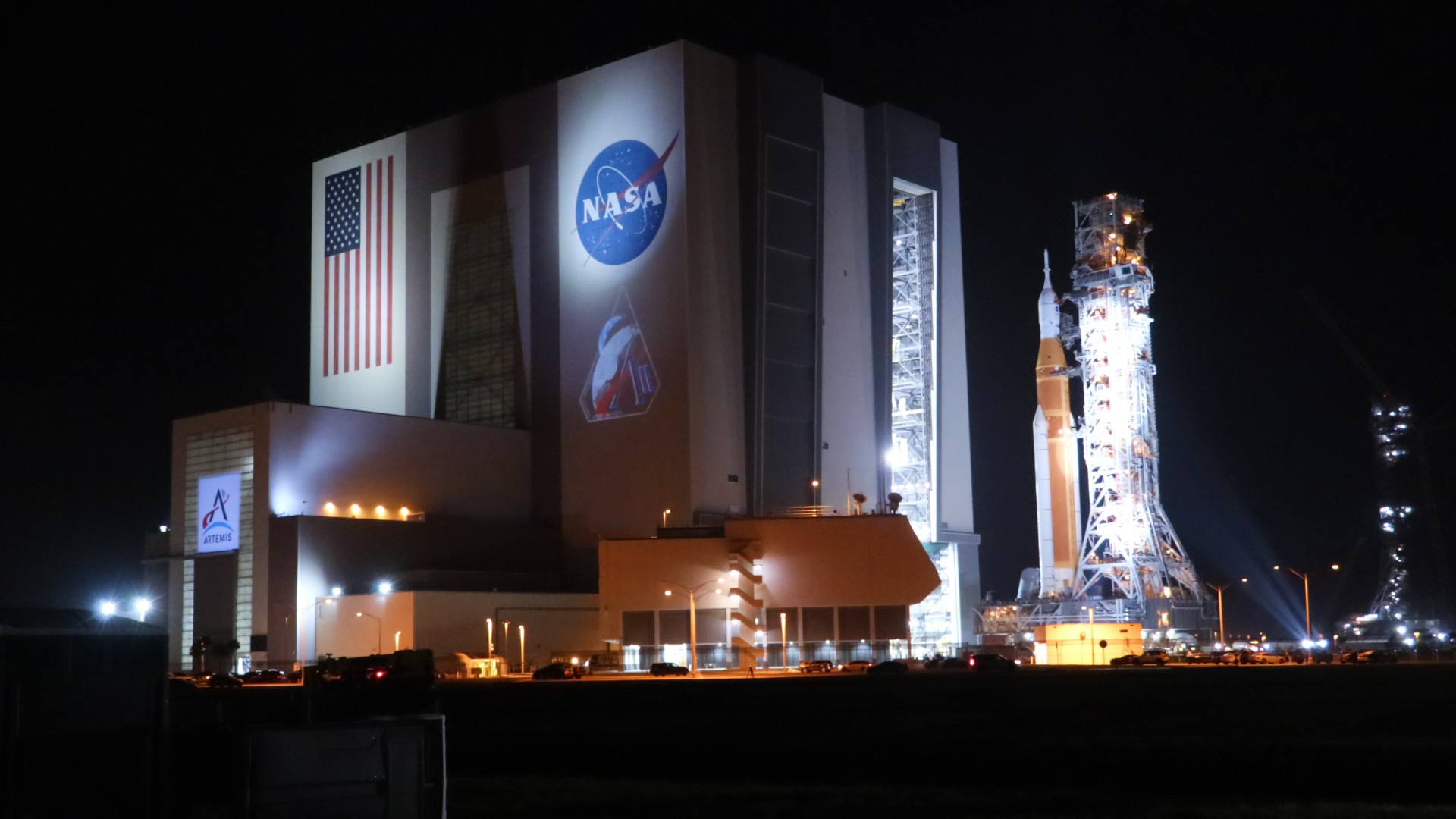
NASA's Space Launch System rocket was back on the move overnight ahead of its second mission to the moon, which will be the first time the vehicle carries a crew.
What is it?
This photo, taken by Space.com senior producer Steven Spaleta, shows NASA's Space Launch System rocket (SLS) rolling out of the agency's massive Vehicle Assembly Building (VAB) in the early morning hours on March 20, 2026.
SLS started the move around 8 p.m. EDT on March 19 (0000 GMT on March 20) and slowly inched its away across the 4-mile (6.4-kilometer) path to historic Launch Pad 39B atop NASA's massive Crawler-Transporter 2 vehicle. The journey took around 12 hours.
Article continues belowThis was the second time NASA has rolled out the rocket. After the first rollout on Jan. 17, the Artemis 2 team conducted a wet dress rehearsal (WDR), fueling the rocket and running through a mock countdown. That identified a liquid hydrogen propellant leak, which was fixed on the pad. On Feb. 21, NASA identified another issue with the rocket's helium flow, prompting mission managers to roll the Artemis 2 rocket back to the VAB.
After fixing the issue earlier this month, SLS was once again rolled out to Launch Pad 39B overnight today.
Why is it amazing?
SLS is scheduled to launch NASA's Artemis 2 mission no earlier than April 1, sending a crew of four astronauts around the moon and back in the agency's Orion spacecraft.
Artemis 2 will see NASA's Reid Wiseman, Victor Glover and Christina Koch, and Jeremy Hansen of the Canadian Space Agency become the first people to fly beyond low Earth orbit since the Apollo 17 in 1972.
Get the Space.com NewsletterContact me with news and offers from other Future brandsReceive email from us on behalf of our trusted partners or sponsorsIf NASA can't launch on April 2, there are other opportunities throughout the month. The agency is eyeing another launch window that opens in May, but has yet to announce any potential dates past April.
 Brett TingleyManaging Editor, Space.com
Brett is curious about emerging aerospace technologies, alternative launch concepts, military space developments and uncrewed aircraft systems. Brett's work has appeared on Scientific American, The War Zone, Popular Science, the History Channel, Science Discovery and more. Brett has degrees from Clemson University and the University of North Carolina at Charlotte. In his free time, Brett enjoys skywatching throughout the dark skies of the Appalachian mountains.
View MoreYou must confirm your public display name before commenting
Please logout and then login again, you will then be prompted to enter your display name.
Logout MORE FROM SPACE... 1NASA's Artemis 2 moon rocket arrives back at the launch pad
- 2Spring equinox could supercharge northern lights this weekend — here's why
- 3NASA won't give up hope on silent MAVEN Mars probe: 'We're still looking for it'
- 4Astronomers missed a space explosion as powerful as a billion suns — until they spotted its echo
- 5A not-so-equal equinox: Why day beats night on the 1st day of spring