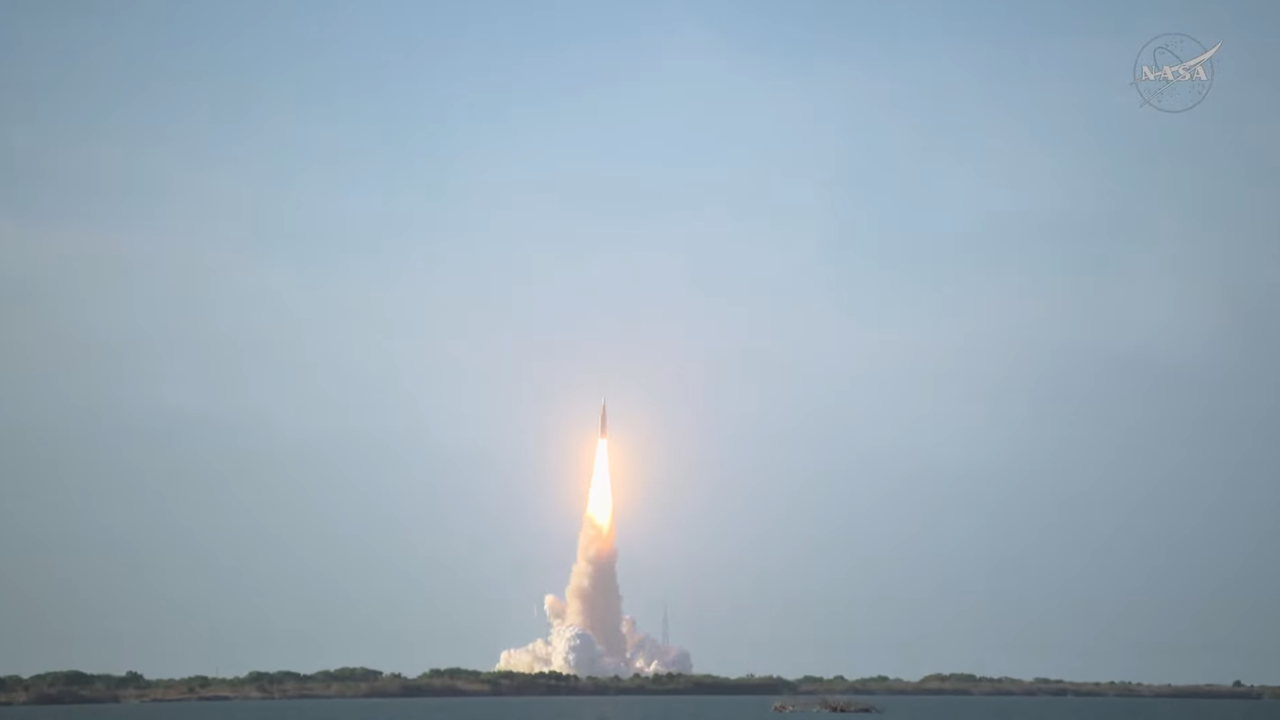
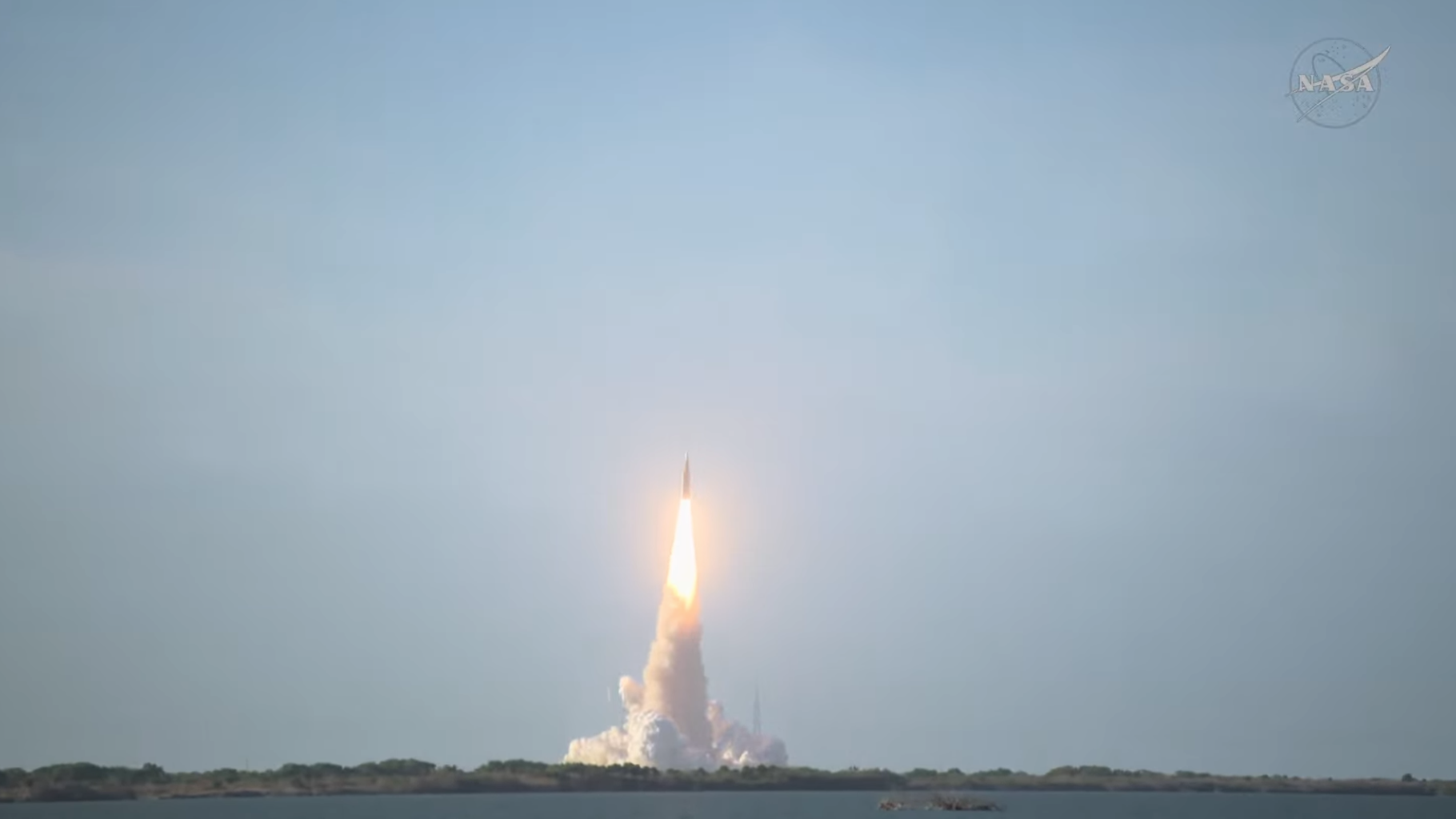
 Artemis II launched for the moon at last. (Image credit: NASA) Share this article 0 Join the conversation Follow us Add us as a preferred source on Google Newsletter Sign up for the Live Science daily newsletter now
 Get the world’s most fascinating discoveries delivered straight to your inbox.
Become a Member in Seconds
Unlock instant access to exclusive member features.
Contact me with news and offers from other Future brands Receive email from us on behalf of our trusted partners or sponsors By submitting your information you agree to the Terms & Conditions and Privacy Policy and are aged 16 or over.You are now subscribed
Your newsletter sign-up was successful
Want to add more newsletters?
Join the club
Get full access to premium articles, exclusive features and a growing list of member rewards.
Explore An account already exists for this email address, please log in. Subscribe to our newsletterThe Artemis II crew has blasted off for the moon on a historic rocket launch at NASA's Kennedy Space Center in Florida.
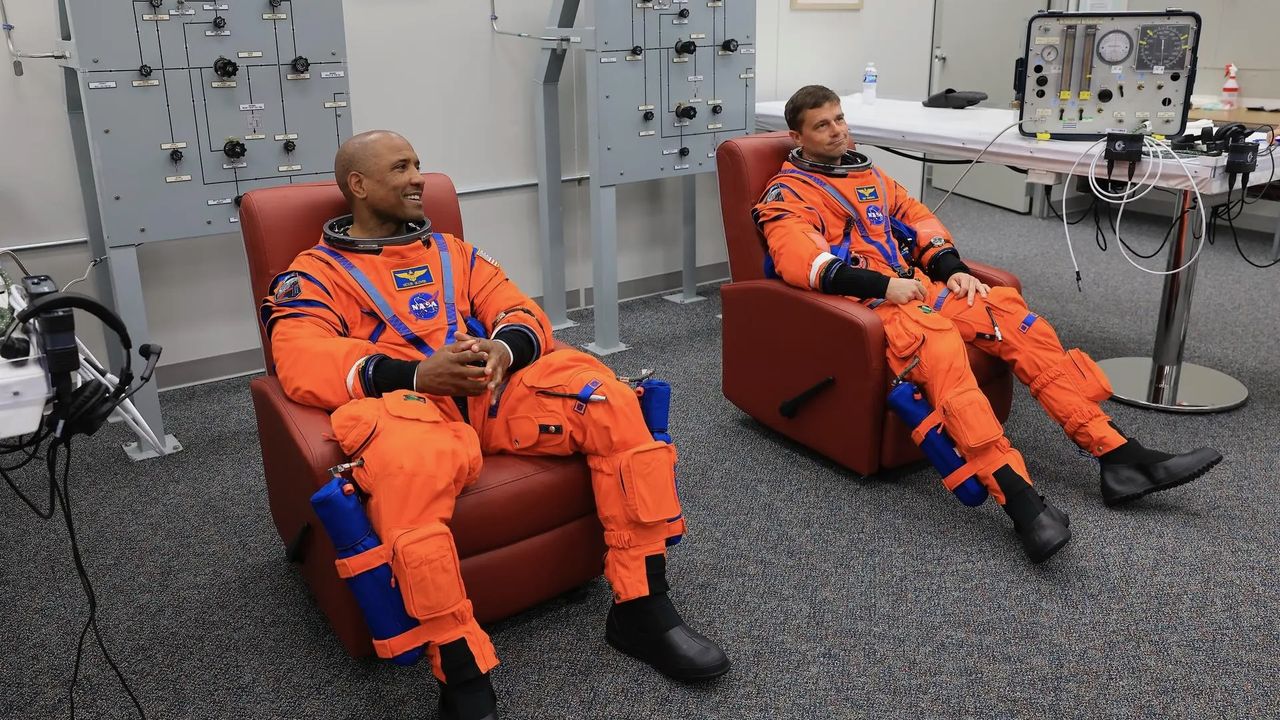
Commander Reid Wiseman, pilot Victor Glover, mission specialist Christina Koch and mission specialist Jeremy Hansen are now riding high in the Orion spacecraft as the first humans to head back to the moon in more than 50 years.
The rocket lifted off at 6:35 p.m. EDT on April 1 — one of the final launch windows available to meet NASA’s April 30 mission deadline.
Artemis II has been fraught with delays in recent months, but on April Fool's Day, NASA's gigantic Space Launch System (SLS) rocket and Orion capsule took off without any significant issues. Hundreds of thousands of people flocked to Florida's Space Coast to watch the launch in person, while millions more tuned in around the world to watch NASA's live broadcast.
A record-setting mission
The Artemis II crew is now embarking on a 10-day spaceflight, which will take them around the far side of the moon, travelling farther and faster than any humans in history, before they return home to Earth.
The record-breaking mission is set to establish a number of historic firsts. NASA's Koch is on her way to becoming the first woman in history to go beyond low Earth orbit and the first woman to visit the lunar environment, while NASA's Glover is on his way to becoming the first Black astronaut to venture beyond low Earth orbit and visit the lunar environment.
Hansen, of the Canadian Space Agency, is on his way to becoming the first non-American to visit the moon. Finally, Wiseman is on his way to becoming the oldest astronaut to visit the moon, having turned 50 in November.
Sign up for the Live Science daily newsletter nowContact me with news and offers from other Future brandsReceive email from us on behalf of our trusted partners or sponsorsIn recent months, the Artemis II mission staff has grappled with hydrogen leaks, which were a problem during the first Artemis II fueling rehearsal on Feb. 3, and helium flow issues, which forced NASA to take its rocket back to the shop for urgent repairs a few weeks later. However, there were no such issues during today's tanking.
A smooth countdown
The launch team didn't encounter any significant technical issues while filling the SLS with more than 700,000 gallons of super-cold liquid oxygen and liquid hydrogen, and the countdown proceeded smoothly and on schedule.
The crew walked out at about 2 p.m. EDT, suiting up at Launch Complex 39B, before entering the Orion spacecraft at 2:31 p.m.
Artemis II's launch team did have to work through an unusual range issue. NASA clears an airspace launch corridor along the rocket's flight path, but part of this system, specifically the Flight Termination System (FTS) that sends a destruct signal to a rocket if it goes off course, had some kind of problem.
Engineers ended up fetching "a piece of heritage equipment" that was used during the Space Shuttle Program, and ultimately worked through the issue to clear the range and work the FTS system.
RELATED STORIES—Artemis II timeline: 12 key steps that will take NASA astronauts to the moon and back
Clouds and rain showers hovered over the Kennedy Space Center at times, but these didn't disrupt the launch, and wind speeds remained within acceptable levels.
The launch is only the beginning of NASA's historic flight around the moon, which is all about testing systems and building capacity ahead of planned lunar surface missions in 2028 at the earliest. Sending astronauts into space also gives NASA a rare opportunity to study how deep spaceflight affects the human body.
NASA will provide live, real-time coverage of the mission on its YouTube channel as well as live conversations with the astronauts and daily mission briefings.
Live Science will share key information from NASA's coverage on our dedicated Artemis II live blog.
TOPICS Patrick PesterTrending News Writer
Patrick Pester is the trending news writer at Live Science. His work has appeared on other science websites, such as BBC Science Focus and Scientific American. Patrick retrained as a journalist after spending his early career working in zoos and wildlife conservation. He was awarded the Master's Excellence Scholarship to study at Cardiff University where he completed a master's degree in international journalism. He also has a second master's degree in biodiversity, evolution and conservation in action from Middlesex University London. When he isn't writing news, Patrick investigates the sale of human remains.
View MoreYou must confirm your public display name before commenting
Please logout and then login again, you will then be prompted to enter your display name.
Logout LATEST ARTICLES 1Astronauts can face 'nearly lethal doses' of solar radiation — so why launch Artemis II during the sun's peak of activity? Space scientist Patricia Reiff explains.
- 2Farting comet seen reversing its spin for the first time ever — and it may soon 'self-destruct'
- 3Extreme wildfires, droughts and storms could happen even under moderate global warming, study finds
- 4Diagnostic dilemma: Teenager's hives turned out to be caused by rare water allergy
- 5How to watch NASA's historic Artemis II launch for the moon