Breaking space news, the latest updates on rocket launches, skywatching events and more!
Contact me with news and offers from other Future brands Receive email from us on behalf of our trusted partners or sponsors By submitting your information you agree to the Terms & Conditions and Privacy Policy and are aged 16 or over.You are now subscribed
Your newsletter sign-up was successful
Want to add more newsletters?
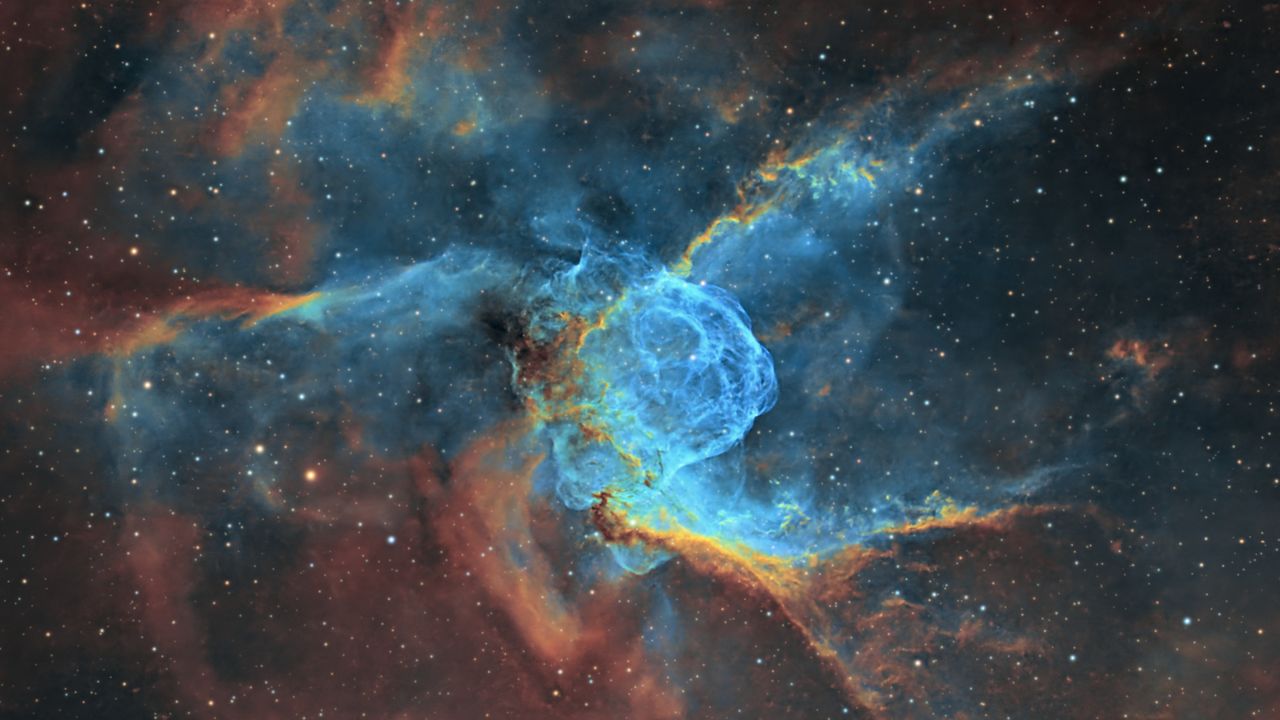
An account already exists for this email address, please log in. Subscribe to our newsletter NGC 2359 glows in the constellation Canis Major. (Image credit: Ronald Brecher)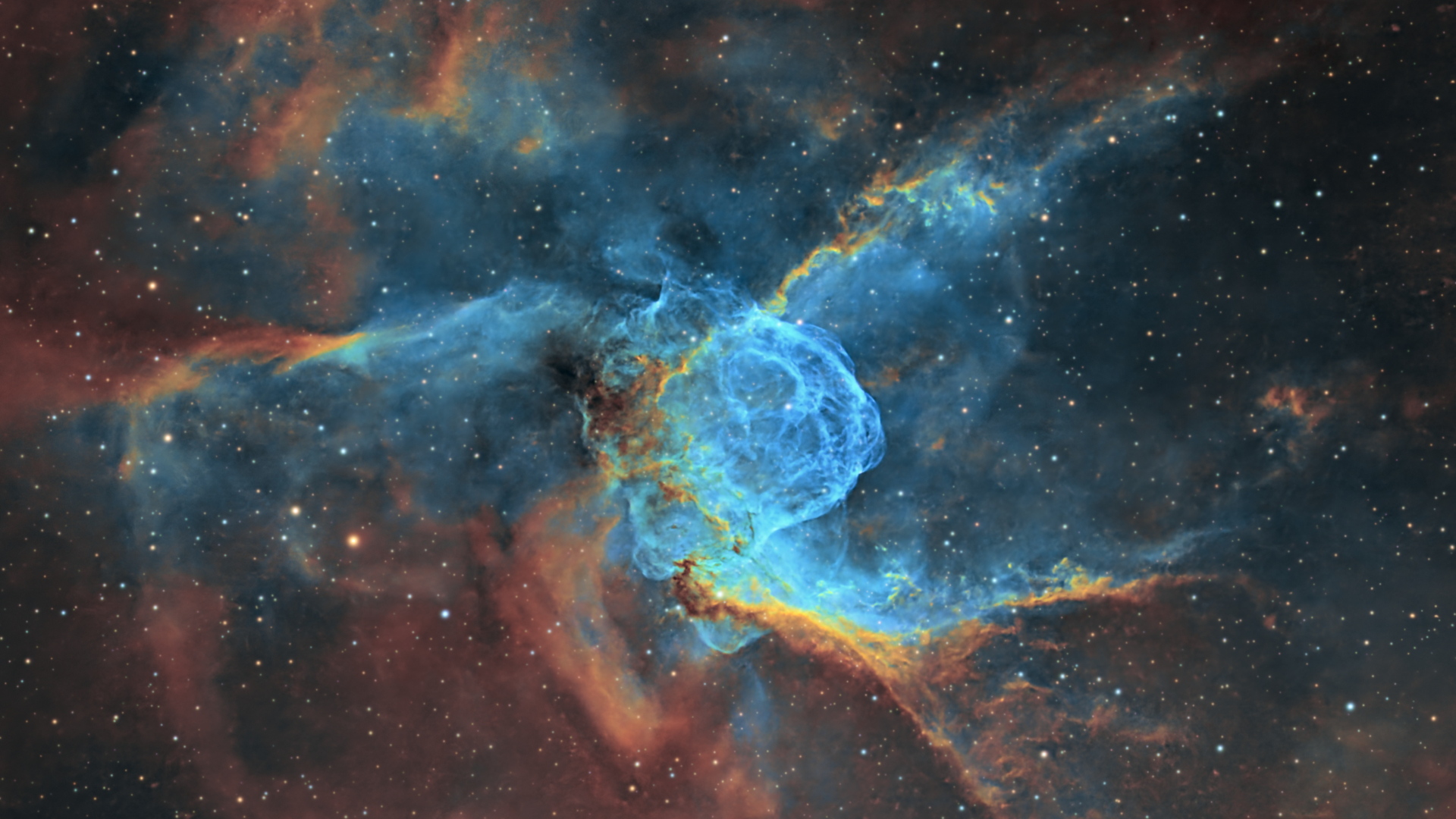
The god of thunder appears to have misplaced his helmet in a new deep-space photo from Ronald Brecher, which captured glorious detail in a nebula scene surrounding a colossal star shining 15,000 light-years from Earth in the constellation Canis Major, the "Great Dog".
A pair of wing-like nebula structures sweep away from NGC 2359's central bubble, giving it the appearance of a vast cosmic helmet remarkably similar to that worn by Thor, the Norse god of thunder.
Article continues belowThe burst of activity that formed NGC 2359 — also known as Thor's Helmet — is merely the precursor to the cataclysmic natural light show to follow, when the ageing Wolf-Rayet star ends its life in a supernova explosion that will reshape the nearby interstellar environment.
ZWO ASI533MC Pro 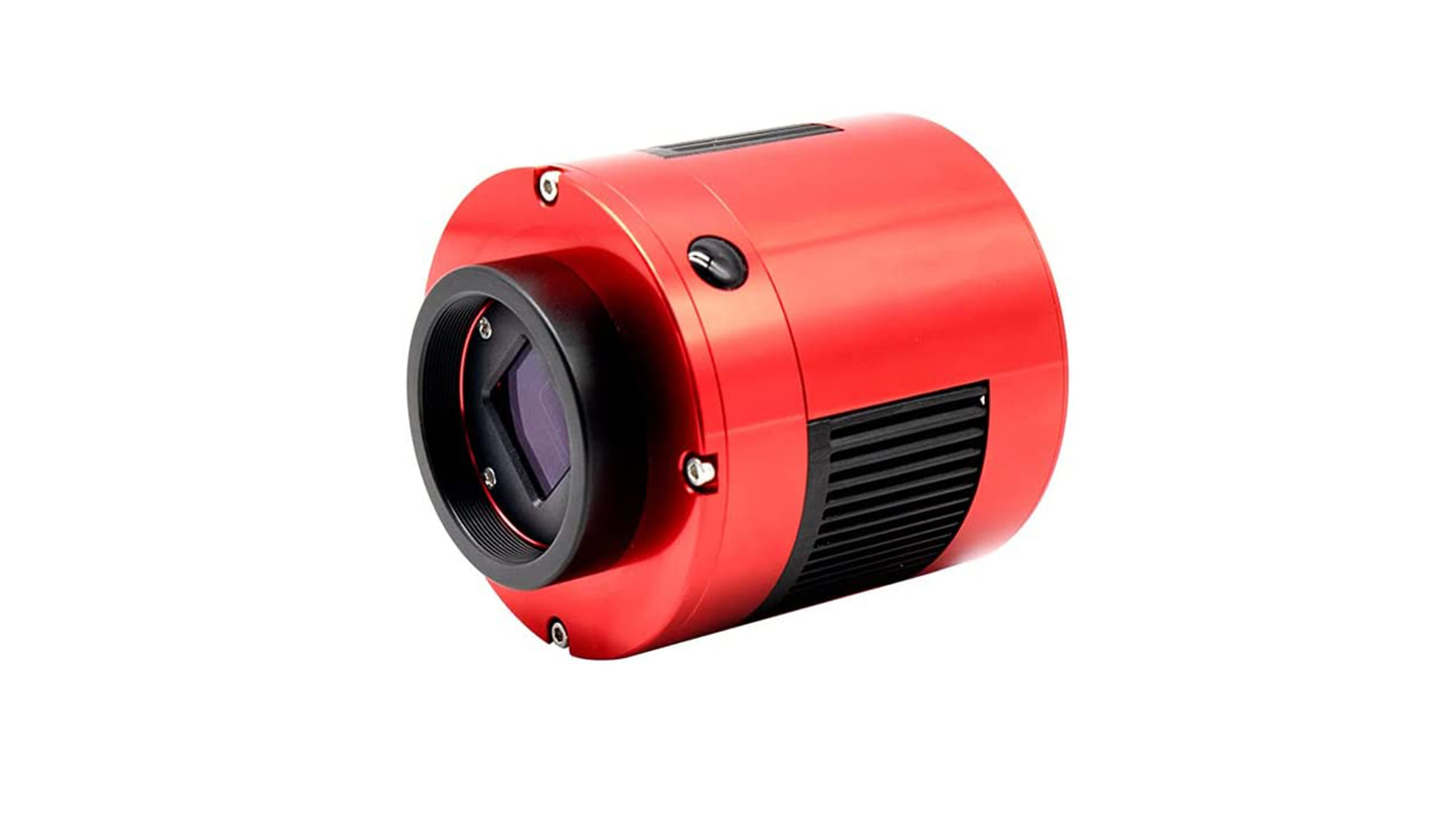
The ZWO ASI533MC Pro camera is the best dedicated astro camera out there, in our opinion. It features zero amp glow, 80% quantum efficiency and a 20FPS frame rate. It also features a 9MP sensor and you can check out our ZWO ASI533MC Pro review for a more in-depth look.
Brecher captured the ionized glow of the distant nebula using a Celestron 14-inch EDGE HD telescope with a monochrome astronomy camera fitted with a series of narrowband filters in the skies over the city of Guelph,Canada, from March 8-13, 2026.
A little over 8 hours and 124 camera exposures went into the creation of the gorgeous deep space image, which was carefully stacked and processed using the astronomy software PixInsight. "I didn't think I could capture Thor's Helmet from my location," Brecher told Space.com in an email. "It skimmed the trees through my most light-polluted skies, awash in the glow of the Guelph's Auto Mall. But here we are!"
Want to capture your own deep space images? Then be sure to check out our beginner's guide to shooting the night sky with a DSLR camera and peruse our roundups of the best camera bodies and lenses for astrophotography if you're looking to upgrade your gear!
Get the Space.com NewsletterContact me with news and offers from other Future brandsReceive email from us on behalf of our trusted partners or sponsorsEditor's Note: Do you want to share your nebula photos with Space.com's readers? Then please send your photo(s) and comments, along with your name and location to [email protected].
 Anthony WoodSkywatching Writer
Anthony Wood joined Space.com in April 2025 after contributing articles to outlets including IGN, New Atlas and Gizmodo. He has a passion for the night sky, science, Hideo Kojima, and human space exploration, and can’t wait for the day when astronauts once again set foot on the moon.
View MoreYou must confirm your public display name before commenting
Please logout and then login again, you will then be prompted to enter your display name.
Logout MORE FROM SPACE... 1Triangulum Galaxy dazzles in psychedelic color | Space photo of the day for March 23, 2026
- 2Northern lights dazzle worldwide as strong G3 geomagnetic storm sparks stunning show (photos)
- 3Are mysterious 'Little Red Dots' discovered by the James Webb Space Telescope actually baby galaxies under construction?
- 4Could our universe exist because black holes ate up all the antimatter?
- 510 iconic William Shatner 'Star Trek' moments to celebrate his 95th birthday