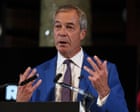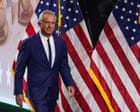
 Mohamed Amersi donated £25,000 to Reform UK last year and has previously donated to the Conservatives. Photograph: Anadolu/Getty ImagesMohamed Amersi donated £25,000 to Reform UK last year and has previously donated to the Conservatives. Photograph: Anadolu/Getty ImagesBBC allegations cost Tory and Reform donor a peerage, defamation trial told
Mohamed Amersi is suing over Panorama episode that made claims of his suspected involvement in corruption
A Conservative and Reform UK donor lost out on a knighthood and a peerage amid claims of his involvement in corruption, the high court has heard at the start of his defamation case against the BBC.
An episode of Panorama in 2021 and a BBC article caused “very serious harm” to Mohamed Amersi, his barrister, Oliver Powell, said on Wednesday.
The programme and article alleged strong grounds for suspecting that during Amersi’s work for the Swedish telecoms company Telia he was involved in deals that he knew or should have known were corrupt or involved corrupt payments.
In an opening statement to the high court at the start of a seven-week defamation trial, Powell said the claims made by the BBC went to the heart of Amersi’s reputation and integrity.
The barrister read a witness statement from Amersi, who donated £25,000 to Reform UK last year and who previously donated hundreds of thousands of pounds to the Conservatives. The businessman claimed in the statement he had been forced by the publicity to step aside from what he described as his educational philanthropy.
Amersi said the “scandal cost me a knighthood and a peerage” and that he was debanked by Union Bancaire Privée of Switzerland.
The BBC, which is defending its content on the grounds of truth and public interest, claimed there was no evidence that Amersi suffered serious reputational harm either from its programme – Pandora Papers: Political Donors Exposed – or the article, which remains online.
In its skeleton defence, the BBC said “no corroborating documentary evidence to support Mr Amersi’s assertions has been disclosed” and suggested there were factual inaccuracies in his statement.
The focus of the BBC’s reporting in 2021 was Amersi’s work as an adviser to Telia, then known as TeliaSonera, in Uzbekistan along with a payment of $220m (£165m) made in January 2010 to a Gibraltar company called Takilant.
Powell told the court: “The BBC’s case is that the real beneficial owner of Takilant was actually Gulnara Karimova, the eldest daughter of the president of Uzbekistan. And it is their case that she is said to have had influence over the regulator of the Uzbek telecommunications sector.
“Mr Amersi will say that neither he nor Telia knew or suspected that Ms Karimova was the ultimate beneficial owner of Takilant and there was no basis for saying that he should have known.”
Powell said the BBC was relying on admissions by Telia to the US Department of Justice in 2017 in a deferred prosecution agreement. The BBC was suggesting that this offered evidence that the $220m was a bribe, Powell said. He said any such admissions were untested “hearsay” and the court should give them “little or no weight”.
Powell pointed to a legal review commissioned by Telia, which did interview Amersi, and was “unable to determine with any certainty that there was any legal or financial connection between Takilant and Gulnara Karimova”.
In its defence, the BBC has claimed that Telia “entered into a whole series of corrupt deals and payments for the benefit of its businesses in (variously) Uzbekistan, Kazakhstan and Nepal”.
Amersi claims that the BBC has failed to provide any evidence of his knowledge or involvement in corruption in any of those countries, claiming that his “work for Telia in Uzbekistan was very limited in scope during a very short period of fewer than six weeks in December 2009 and 2010”.
Amersi further claims there is “no contemporaneous (or other) evidence to suggest that [he] knew or should have known that Takilant was secretly owned (as the defendant claims) by Karimova”.
He has claimed that the BBC “seriously misled its readers and viewers by suggesting that [he] had been centrally involved in the payment of a ‘bribe’ to Karimova”.
The court heard from Amersi’s barrister that the BBC was offering “inference and generalised suspicion rather than any evidential foundation” in seeking to defend its reporting.
Amersi is seeking damages, “including aggravated damages”, and an injunction to prevent further publication of the statements he argues are defamatory. He will give evidence for six days from 11 November.
The case continues.
Explore more on these topicsShareReuse this content