
 Composite: Guardian Design; VLG;clubfoto/Getty Images Composite: Guardian Design; VLG;clubfoto/Getty ImagesBuy bread in the evening, hit the sales on a Tuesday: retail workers’ top tips to cut your shopping bill
From the ideal time to go discount-sticker shopping to the best day of the week to visit charity shops, industry insiders offer their advice on how to keep costs down as prices rise
From supermarkets’ yellow-stickered items to apps for free food, there are many ways to lower your shopping bill amid the cost of living crisis. Retail workers share their insider info on how to save money at grocery stores, street markets and charity shops.
Be savvy about store discounts
Alasdair Baker from Aldershot runs The Penny Pincher, a site dedicated to helping people save money on their bills, which he started 12 years ago when he went bankrupt and “discovered yellow-sticker shopping”.
Then, during Covid, Baker was furloughed from his job working for a bathroom supplier and went to work for Morrisons. It was, he says, “a massive eye-opener. I got to see the things I wrote about on my website.” He gained a greater understanding of food distribution, food wastage and food poverty: “All the sort of stuff that you don’t really think about as you push a trolley around.”
Part of his job was to check the dates on products and reduce the price of those that were about to expire using yellow discount stickers. “Most stores will do an early morning reduction, which is 10% to 15%. Sometimes they do a lunchtime one, where they’ll knock the price down another 10% to 20% and then they’ll do their final reductions between 4pm and 6pm to 75% off,” he says.
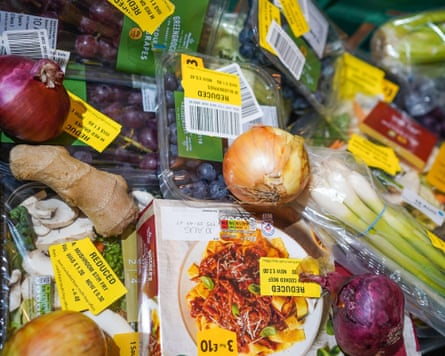 Timing matters … you’ll find the biggest reductions on yellow-sticker items in the late afternoon and early evening. Photograph: Lee Hudson/Alamy
Sometimes reduced items are collected together in one place, but often they live in their usual spot, says Baker. “Stores will generally move them when the discounts are higher, to highlight the fact that they are a bargain.”
Jenny Rogers from Leeds, who has worked for a UK supermarket for the last four years, says: “Fresh bread is reduced after about 6pm (if there’s any left), and I know that Tesco and Co-op have half-price loose bakery items (pastries, etc) in the evenings.”
Catherine Erdly is an independent retail consultant based in south-east London, who worked on the high street for 20 years for brands including Laura Ashley, Coast and Paperchase. She says most shops will have four or more sales a year and there is a particular day of the week to get the best deals. “All retailers will have a big trade meeting on a Monday when they’re in a sale cycle, and will go through everything that’s in the sale. If it’s not selling, they’ll make further reductions, and then they push those out to the stores, usually on Monday evening. So if you want to get the best deal in the sale, go shopping on a Tuesday.”
Be appy
Some grocery stores use apps such as Too Good To Go and Olio to offer discounts or free food to avoid food waste – but it can be a gamble as to what you get. “When I was packing them, I tried to vary it as much as possible with things from all over the store,” says Baker, “but sometimes you get a massive bag just of lettuce and you think: ‘What am I going to do with that?’”
But it could also be an opportunity to get creative with your cooking. “It’s so expensive to eat out now,” says Mike Read of Mike, Debs & Sons, who has worked as a greengrocer at Norwich market for 58 years. Buying fresh ingredients and cooking is a far more affordable option, and can be cheaper than processed meals.
Use common sense
If you buy something reduced on the day it is expiring, that doesn’t mean you need to eat it that day. There is a difference between “best before” dates, which are about food quality and the more important “use by” dates, which are about food safety. “A lot of things can be frozen, or you can cook it that night and then freeze it,” says Baker. “I got cheap pork the other day, cooked it and then it lasts another three days, and you can reheat it, or have it in sandwiches.” With fruit and vegetables, you can use your discretion a bit more. Baker says he has just cooked some potatoes he bought two weeks ago with a yellow sticker on and they were fine. With dairy, “people use the sniff test … if it looks or smells funny, it is going in the bin,” says Baker.
Be cautious about ‘bogof’ deals
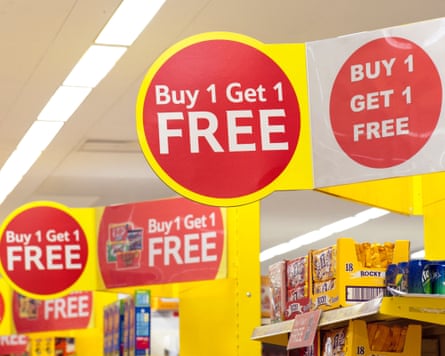 Beware the ‘bogof’ … they may not be the best value. Photograph: Alex Segre/Alamy
“There aren’t as many buy one, get one free [bogof] deals now, because of new rules that came into place last year,” says Baker. These restrict promotions of products high in fat, sugar or salt. “A bogof deal can be good value – but it is a case of looking at the prices. For example, £1 for a pack of decent brand pasta, buy one get, one free? That’s not bad until you look at the own brand and realise you can get three boxes for the same price.” Baker says that in some cases the price reflects the quality, “like cheap pasta sauce that tastes like wallpaper paste. I make my own – it’s even cheaper to do that.”
Avoid big brands
The ends of supermarket aisles often feature big brands, says Baker. “They are not placed there randomly: the companies pay an awful lot of money. The idea is to try to coax people into buying those products more often.” But if you look at a bag of pasta for 29p, he says: “The ingredients are virtually identical to the bigger brand which can cost five times that.”
Another tip is to look down, says Baker. “All the more expensive, high-margin products are on the shelf at eye level. If you look down, that’s where you will find the cheaper items. The supermarkets sell them because it gets people into the store, but they’re usually on the bottom shelf.
Sign up for a store card
“It’s sad that we now have to essentially sell our data to the supermarkets in exchange for affordability – but such is life in 2026,” says Rogers. “If you have a store card, it is also worth getting the supermarket app, as a lot of stores will give you one or two personalised offers a week, or periodic free delivery for members. Keep an eye out for member prices and member-exclusive deals, since they seem to be cropping up more and more.”
“Boots and other loyalty schemes that give you points and discounts are brilliant,” says Baker. “Everywhere I shop, I make sure that I have the app before I pay so I am getting the best possible deal.” Don’t forget to activate the deal, Baker says, as it can be easy to miss out on coupon savings this way. Look out for perks in more unusual places too, he adds. “My energy provider gives me a free coffee each week and I make sure I claim that.”
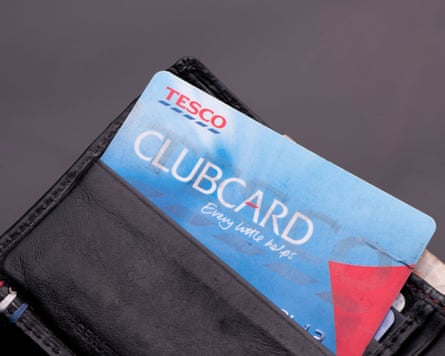 Getting personal … as a store card holder, you can get personalised discounts via the supermarket’s app. Photograph: Rob Wilkinson/Alamy
“Always sign up to the email list,” says Erdly. “When I worked for big retailers, we would always go through every offer that we were doing, and think about what the email list gets that is extra. If there was going to be a sale, then it might be first dibs goes to those on the email list. If it was going to be 20% off, it might be an extra 5% for email subscribers. There is often a welcome offer too.”
Go to the world food aisle
“If you’re in a big supermarket with a world food section, you can often find things are cheaper there, especially tinned ingredients such as chickpeas and chopped tomatoes,” says Rogers. Baker says spices can be more affordable in the world food aisle too: “I spent £2 on a massive bag of spices; one of the tiny plastic jars was the same price.”
Deal stack
“Always look for coupon codes,” says Baker. “Just Google. There are loads of coupon sites out there which will give you codes to save on this and that. A lot of the cashback sites, such as Jam Doughnut, have coupon codes as well, so you can deal stack. On certain days of the week, some supermarkets have up to 50% off on loads of different products. Just Eat and Uber Eats do grocery deals too – because of the discounts, it’s cheaper than going to the supermarket, even with the delivery charges.”
Choose seasonal produce
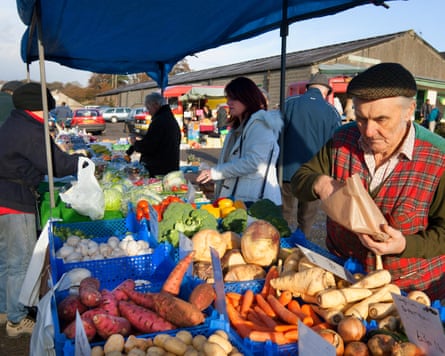 Head to your local farmers’ market … here the produce is fresh and seasonal. Photograph: Marc Hill/Alamy
There are more reasons than ever to eat seasonally to save money, says Read, adding that prices fluctuate wildly and are on the rise as a result of global events. “The cost of transport is now going to be astronomical, because stuff comes from Italy, France and Spain by road. A lot of early stuff that is heated in greenhouses – tomatoes, strawberries and that sort of thing – will be affected.” Supermarkets buy a year ahead, so market traders like him are much more vulnerable, he says. But, he points out: “Some supermarket produce tends to be a bit tasteless, because they store everything at 2C (36F) and it’s taken all the flavour out.” Instead, he says, go to your local market daily to buy fresh produce, which also avoids waste.
To nab some free veg, Butcher says: “Come to an arrangement with your local allotment, because throughout the year there will be surpluses. When you grow things, it all ripens at the same time, and there’s never enough people who are willing to bottle it or preserve it.”
Ask for a better price
Is haggling ever OK? Not at Norwich market, says Read. It is tried “only by tourists who think a market is about haggling”. Other markets may accept a bit of price negotiation, and sometimes you can even get away with it in shops.
It is good to support independent shops, but they can be more expensive, so is it worth asking if they will price match a better offer elsewhere? “Perhaps, if you were buying several other full-price items,” says Erdly, “but as a general rule, it is really hard for them to price match.” Instagram can be a great source of discount codes, sales of seconds and special deals for indies, she adds.
Another option is to look out for faulty items, which occasionally you see with a label highlighting the problem, says Erdly. If you spot something in a shop that has a fault, take it to the till and see if they can offer a reduction. But beware, as you may find it hard to exercise your legal rights if you then return the item.
Be a frequent customer
For bargains on the high street, there is nowhere better than charity shops, but you need to be a regular visitor. Sharon Kalewski is assistant manager at the Marie Curie shop in Knowle, Solihull, which was named favourite charity shop of the year 2025 by the Charity Retail Association. “We try to get stuff out every day. Saturday is our busiest day, so if you come in at 3pm on a Saturday afternoon, you’re not going to get as much choice as you would do first thing on a Tuesday morning.”
 Look in your lunch hour … head to charity shops midweek, and try to go around lunchtime. Photograph: John Morrison/Alamy
“I recommend midweek,” says Stacey Richards, AKA Queen of Preloved, who works at the Salvation Army charity shop in Worksop, Nottinghamshire. “And you’re better off coming in the afternoon, because by the time we’ve got an item, steamed it, checked it, sized it up and popped a price on, it probably goes out at around lunchtime.”
Consistency is key, adds Richards: “Because there are not rails and rails of 10 of the same thing, you have to keep going in. If you only go once every three months, it’s going to be more difficult to find bargains.”
Get to know who sells what
Charity shop donations vary wildly depending on their location. Highlights at Marie Curie’s Knowle branch include “some nice designer stuff. Cashmere always goes – we have sweaters that retail for £100-plus that we’re selling for £12,” says Kalewski. “Sometimes we get big donations. A few months ago, somebody brought us 40 pairs of designer shoes.” Other top bargains have included leather jackets and handbags.
Richards says: “I’ve noticed more and more charity shops are doing ‘fill a bag’ and kilo sale events, which are becoming really popular. You can either cherrypick your own bag, usually from a giant bin of items, or they can be pre-made up. That’s another way to get a good bargain.”
Be open-minded
“Have a good rummage,” says Kalewski. “We have a lot of people who come in looking for one particular thing and then go out with something totally different. If you’re looking for something specific, you might be disappointed.” Richards advises: “Check every rail, whether it’s men’s or women’s, and outside your own size range as well.”
Seasonal items can be good to look out for at secondhand shops, says Kalewski, who advises picking up decorations after Christmas, along with unwanted gifts that have been donated. Buying new could mean that you “spend an absolute fortune. Come into your local charity shop and get it for a fraction of the price.”
Some names have been changed
Explore more on these topics- Life and style
- The experts
- Shopping
- UK cost of living crisis
- Retail industry
- Supermarkets
- Food & drink industry
- features