(Image credit: Zane Landers) Live Science Verdict
The Celestron NexStar 6SE stands out as a favorite in the NexStar lineup and is a top choice for computerized telescopes around $1,000. It performs well for visual observing but may require upgrades for heavy use or astrophotography. Overall, it's the best GoTo telescope option in its price range.
Reasons to buy
- +
Great optics
- +
Decent aperture
- +
Sturdy GoTo mount automatically points at and tracks objects
- +
Can be used for some astrophotography, mainly of the moon and planets
Reasons to avoid
Why you can trust Live Science Our expert reviewers spend hours testing and comparing products and services so you can choose the best ones for you. Find out more about how we test.
Jump to category:

By
Zane Landers published 28 May 2026 in
Reviews Originating in the late 1990s as Celestron's response to Meade's LX series, the NexStar SE line was designed as an affordable, user-friendly GoTo telescope. The 6SE features quality Schmidt-Cassegrain optics, a 6-inch aperture and a robust mount, earning a strong following among astronomers.
The Celestron NexStar 6SE is the middle child of the NexStar SE Schmidt-Cassegrain series, positioned between the 5- and 8-inch models, with a 4-inch Maksutov-Cassegrain also in the family. Its 6-inch aperture is big enough to provide meaningful, sharp views of both deep-sky and solar system objects while not being too large or expensive. Its portability and small size make it a fantastic beginner telescope if you have a healthy budget, but the larger 8SE still tops our list of the very best telescopes.
Celestron NexStar 6SE: Design
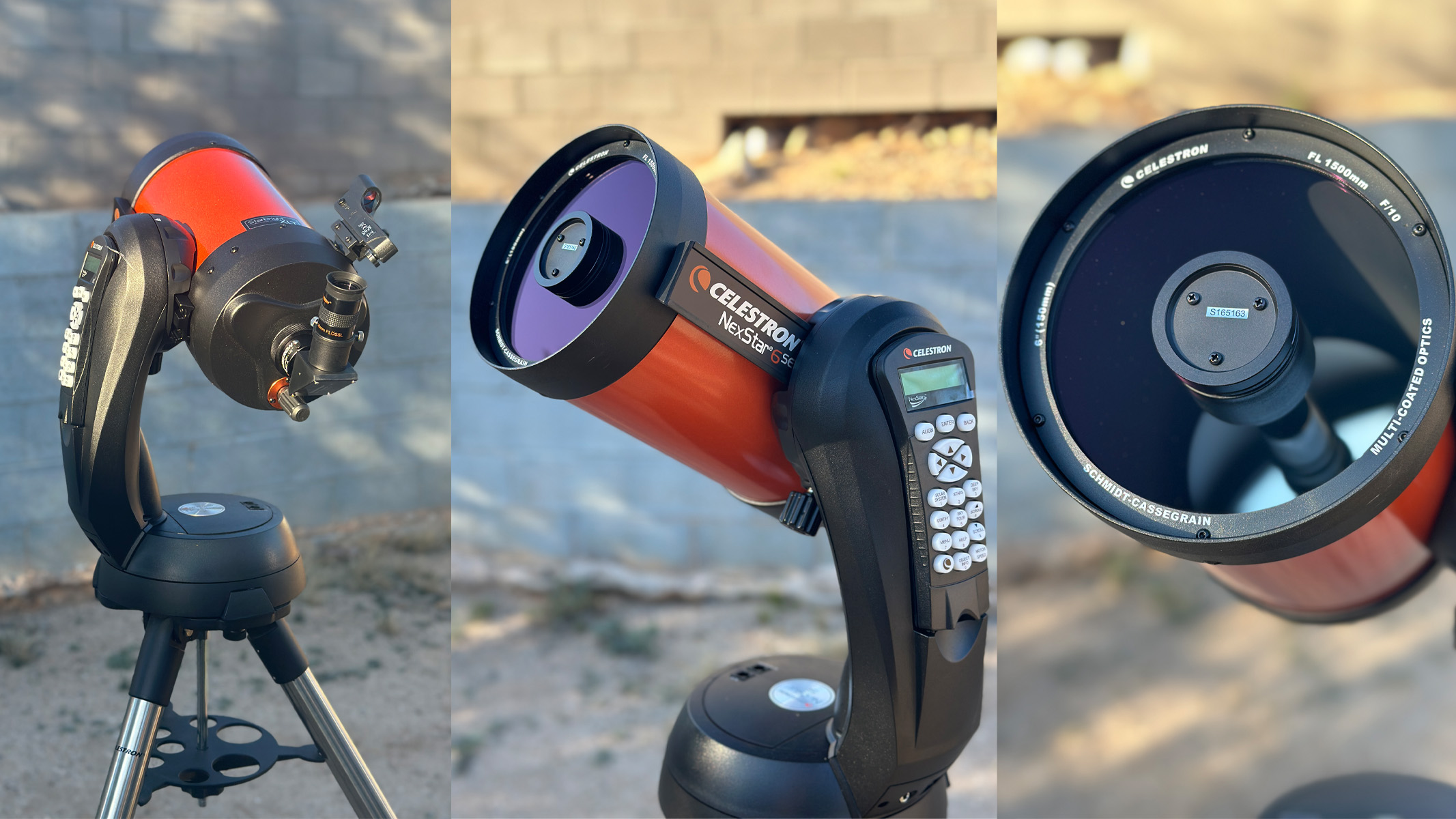
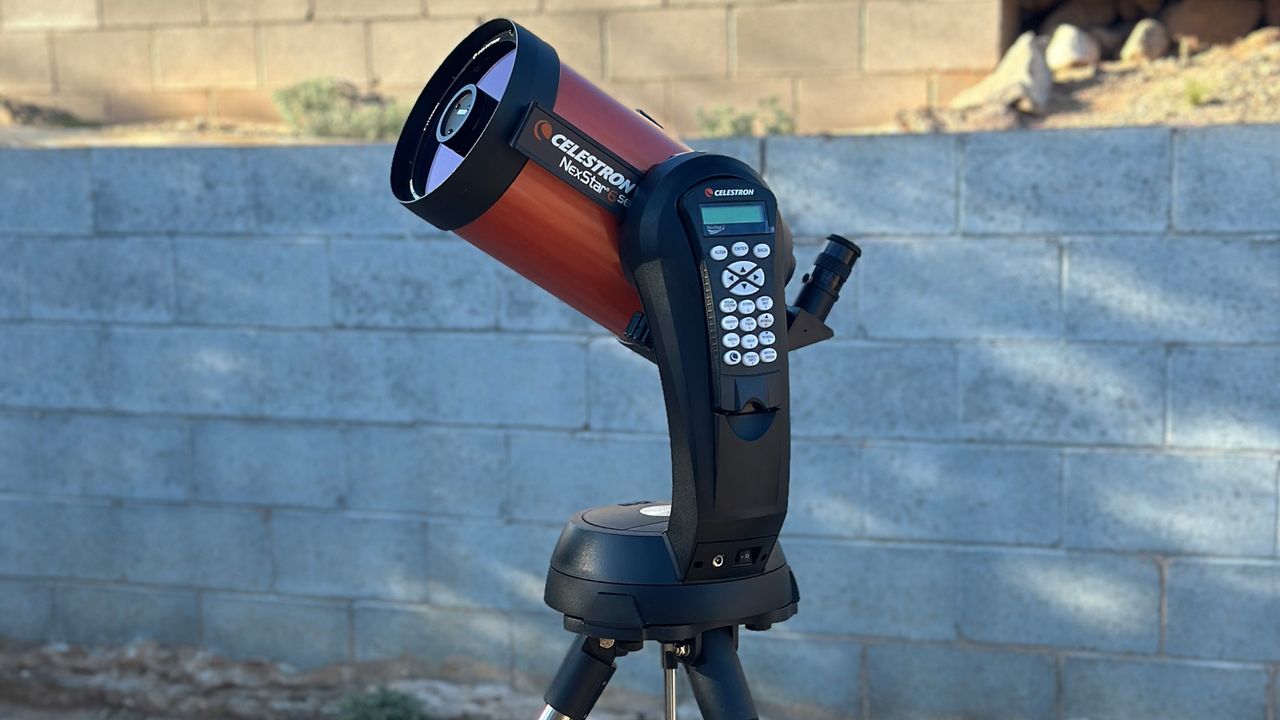
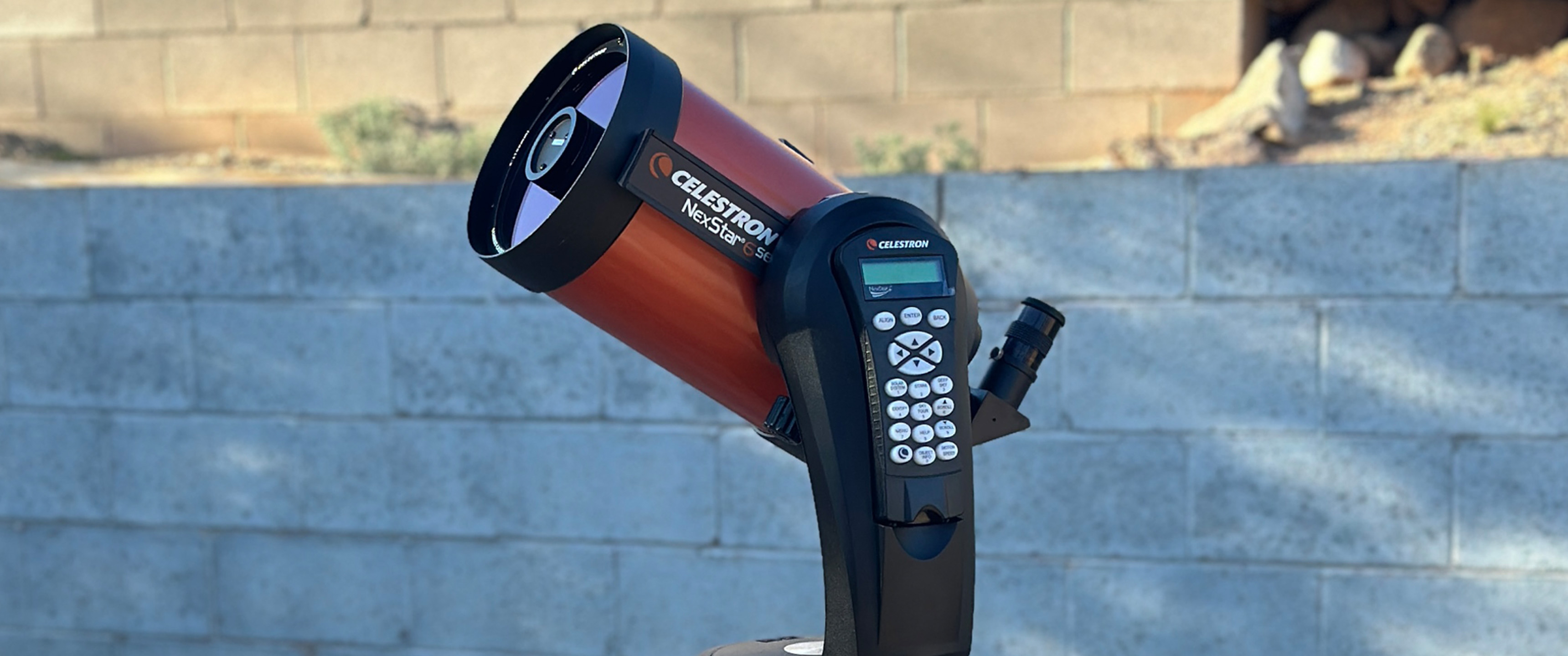
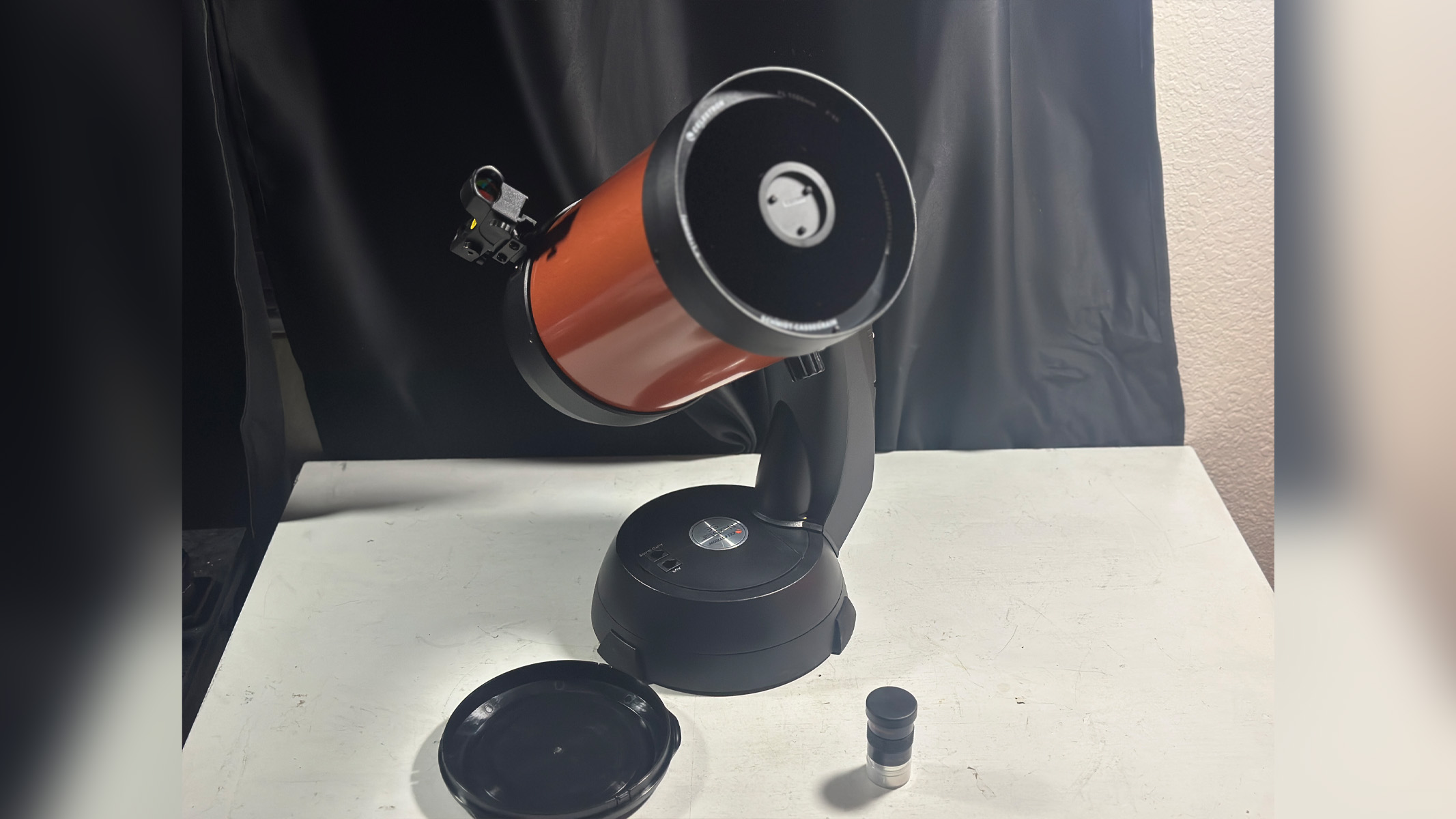
The orange tube is classic for Celestron's renowned NexStar range.
(Image credit: Zane Landers)
- 6-inch f/10 Schmidt-Cassegrain optics, can be used at f/2 for imaging with Hyperstar or for visual/imaging with f/6.3 reducer (sold separately)
- GoTo mount with NexStar+ controller — cannot be aimed manually
- One eyepiece included (25mm yielding approximately 60x magnification)
The NexStar 6SE has been around since 2008, and it hasn’t changed much in that time apart from some minor software upgrades. The Celestron C6 XLT optical tube is sold by Celestron in other configurations such as the NexStar Evolution, and is a 6-inch f/10 Schmidt-Cassegrain design. It can also be used at f/2 with a Starizona HyperStar reducer for imaging, or Celestron’s f/6.3 reducer, either of which is necessary for quality deep-sky imaging with the C6. The C6 is primarily designed for planetary viewing/imaging on account of its long focal length, but can be used for deep-sky work as well.
The 6SE has collimation adjustments at the front. Users probably do not need to adjust these, ever. The author has owned hundreds of Schmidt-Cassegrain telescopes, and they usually arrive collimated from the manufacturer and stay that way. Swapping the collimation screws for thumb screws just leads to frequent misalignment that would otherwise not occur.
The 6SE’s mount is a simple alt-azimuth GoTo mount. It uses the position of two or three alignment stars to calculate where it is in the sky, and once aligned it can automatically point at over 40,000 objects in its internal database. Unfortunately, the technology in it is rather outdated. It cannot be aimed by hand at all, and attempting to do so will ruin the motorized pointing and tracking accuracy. You can replace the hand controller with Celestron’s SkyPortal WiFi adapter, however, and run it off an app like SkySafari, which is a little easier to learn to use. Regardless of which method you use to control it, it only takes around 5-10 minutes to set up and assemble the 6SE.
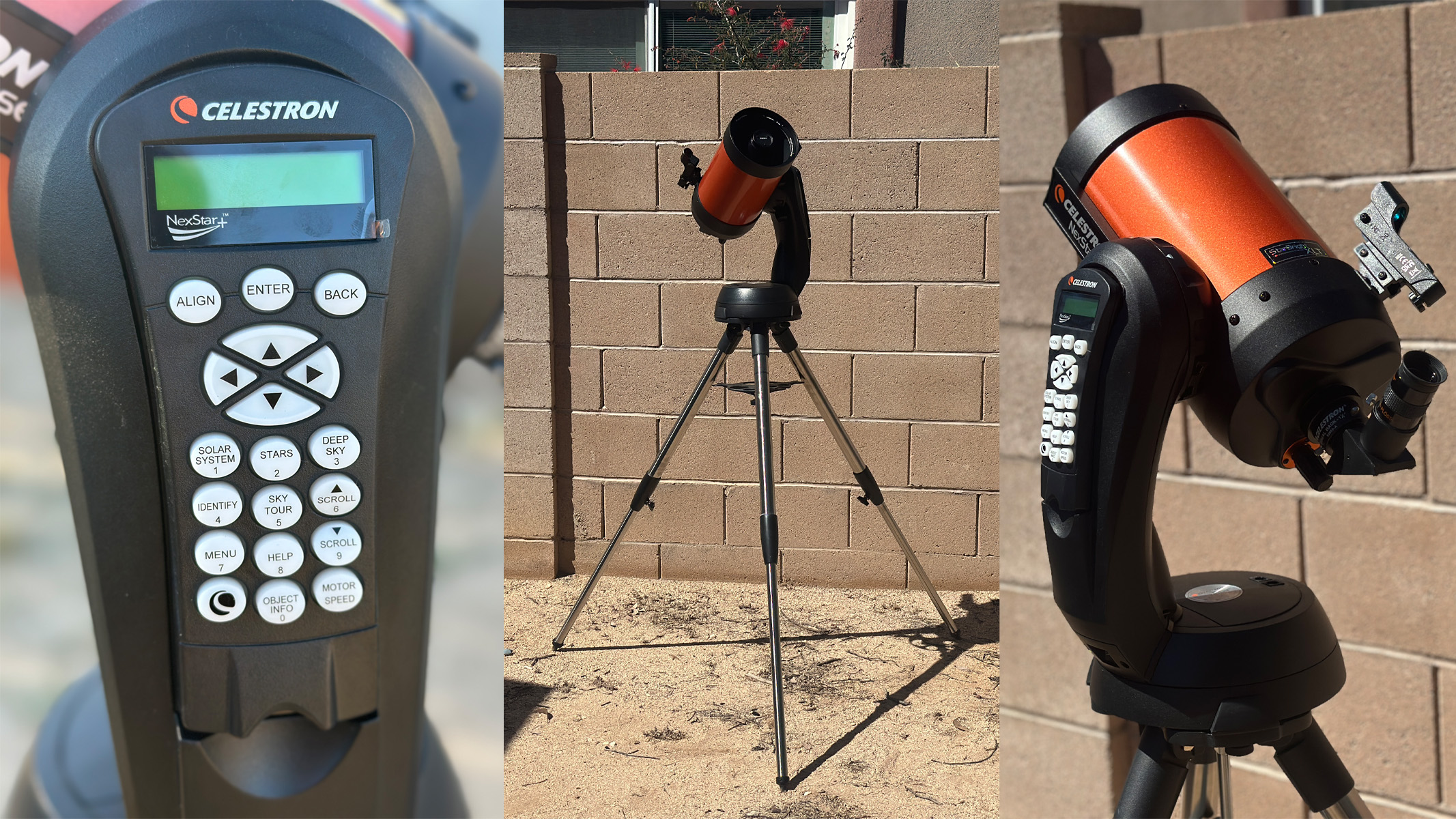
The hand controller lets you choose which subjects to view.
(Image credit: Zane Landers)
A 1.25-inch visual back and star diagonal are included with the NexStar 6SE. These are all you’ll need, as a 2-inch diagonal and eyepieces will vignette substantially and cause stability/balance issues with the mount. Celestron supplies a single 25mm E-Lux Plossl eyepiece yielding approximately 61x magnification and a true field of view of 0.9 degrees with this telescope. While it’s annoying to get only a single eyepiece with this telescope, there are endless third-party options to choose from to get the magnifications you want.
For a wider field of view, a 32mm Plossl or 0.63x reducer would come in handy. For higher power, we’d recommend a 9mm SVBONY "redline" (170x) or even a 6mm (254x) if you have fairly steady sky conditions.
Sign up for the Live Science daily newsletter now
Get the world’s most fascinating discoveries delivered straight to your inbox.
Contact me with news and offers from other Future brandsReceive email from us on behalf of our trusted partners or sponsors
Overall, the 6SE is quite sturdy and the whole telescope can easily be carried around in one trip. It breaks down small enough to fit in the author’s Mazda MX-5 Miata, and the tube is small enough to take on a plane as carry-on luggage.
Celestron NexStar 6SE: Performance
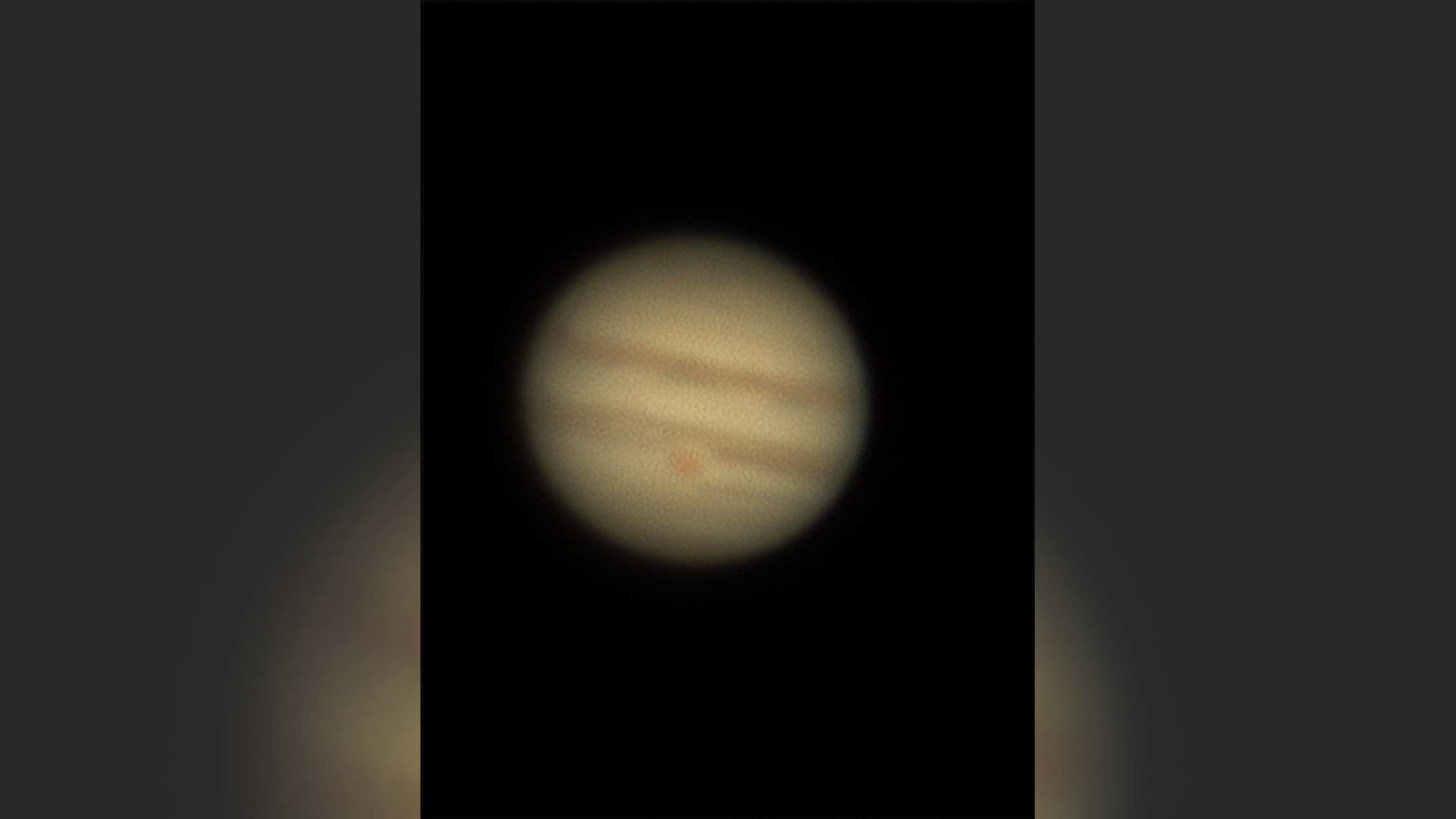
We got beautiful views of Jupiter with the Celestron NexStar 6SE.
(Image credit: Zane Landers)
- Sharp planetary details
- Solid deep-sky views
- Good double-star splitting
The Celestron NexStar 6SE is typically optically superb, with quality units such as the review sample reaching ⅙ to ⅛ wave peak-to-valley accuracy at the wavefront (a typical standard commercial scope might be ¼ wave). This is critical when viewing the moon, planets and double stars up close. With only a 6-inch primary mirror, the common issues of image shift and mirror flop are of little concern with this telescope.
The NexStar 6SE delivers impressive performance for its size, excelling for both solar system and deep-sky observations. Within the solar system, it reveals Mercury and Venus phases, intricate lunar craters down to mile-sized features, Mars' ice caps and some dark markings when it’s close to Earth, Jupiter's cloud bands with the Great Red Spot and moon transits, Saturn's rings including the Cassini Division plus half a dozen moons, Uranus as a turquoise dot, and Neptune as a blue point with Triton perhaps faintly visible under dark skies.
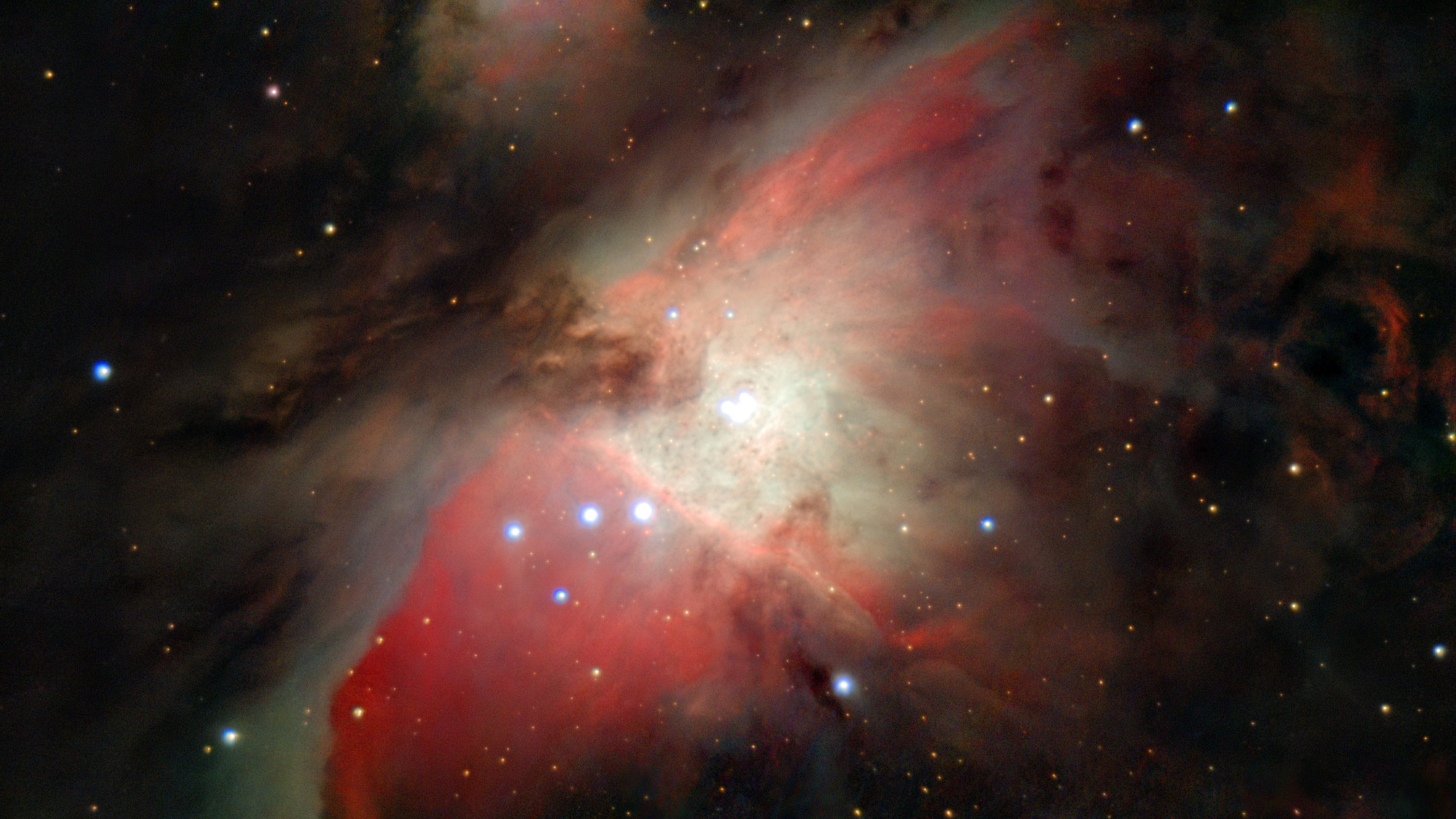
The Orion Nebula through the 6SE. Apart from the lack of colors, this is about what you’d see through the eyepiece under a dark sky (Bortle 4 or better). 10 minutes of 1-second exposures with a Player One Uranus-C Pro at prime focus.
(Image credit: Zane Landers)
Beyond the solar system, the 6SE handles open clusters like M35 and M11 well, though larger ones like the Pleiades are too big to fit in the field. Bright globulars such as M13 show partial resolution under decent skies, while emission nebulae like M42 and M8 are spectacular, especially under dark skies and/or with a filter. The brightest planetary nebulae display hints of color, and structures in bright galaxies (such as M82's dust lanes) begin to emerge under dark conditions — but for the best results, a larger telescope than the 6SE is necessary to reveal up-close details in these faint fuzzies.
The 6SE is also excellent for splitting double stars. The author was able to split Tau Coronae Borealis (2.2 arc seconds) easily with the 6SE and a 6mm eyepiece (254x).
Celestron NexStar 6SE: Functionality
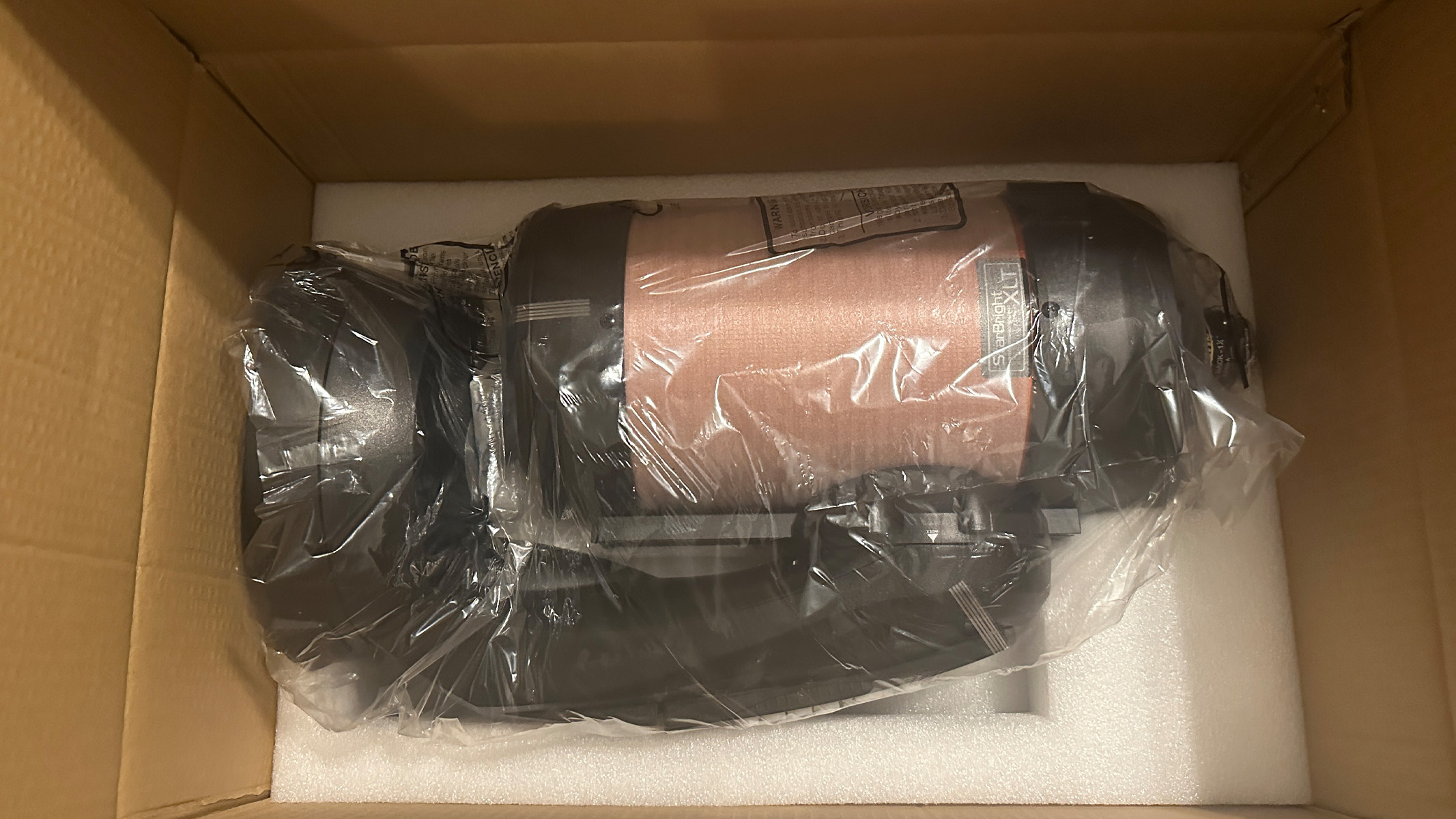
The Celestron NexStar 6SE is fairly easy to set up.
(Image credit: Zane Landers)
- Quite a simple setup
- Two-Star Alignment mode is best
- Smooth focusing and quick acclimatisation
The NexStar 6SE is pretty simple to set up — just assemble the mount/tripod, take the caps off and power it on (either using AA batteries or a DC 12v extension cord). The controller then prompts the user to enter the time, date and location, and choose an alignment method. The recommended three-star alignment is unfortunately prone to errors, so it’s recommended you use the Auto Two-Star alignment mode instead.
Once aligned, the 6SE will automatically point at any object you choose in its catalog. Sometimes, accuracy can wane over the course of a night, but simply going to the main menu and selecting “sync” to add new alignment points usually fixes this. Focusing the 6SE is buttery smooth even at high magnifications, and the scope takes only a few minutes to cool down to chilly nighttime temperatures on account of its small size and the low-expansion glass used for the optics.
The author used the 6SE for imaging as well as visual observation by simply installing a camera at the back end where the diagonal inserts into the visual back. For planetary imaging, the author added a 2x Barlow lens.
Should you buy the Celestron NexStar 6SE?
Buy it if:
✅ You want a portable GoTo telescope for casual stargazing.
✅ You want to do planetary astrophotography.
Don't buy it if:
❌ You are looking for a telescope with precision tracking for deep-sky astrophotography.
❌ You want to observe detail in galaxies and globular clusters.
This telescope offers a great entry into computerized astronomy with solid optics, portability and performance for visual observing of planets, the moon and brighter deep-sky objects. It's well-suited for those around a $1,000 budget who value automation over manual tracking, ranking highly among similar scopes. However, its mount's limitations for heavy accessories and lack of manual fallback make it less ideal for intensive use or imaging. Buy it if you prioritize ease and balance; skip if you are looking to do serious astrophotography or hunt down faint galaxies.
This is one of the best C6/SE units we’ve seen optically, with extremely sharp optics and very little image shift. Mechanically, the mount had an abnormal amount of backlash compared to previously tested units. This is seemingly a one-off issue, as other 6/8SE units tested previously by the author do not experience this issue.
Normally, one can take exposures as long as 10 seconds for deep-sky imaging with the 6SE, but this particular unit had a lot of backlash in the mount’s gears, so performance was somewhat restricted. The 6SE is best for planetary imaging, not deep-sky, unless you obtain a focal reducer and preferably a more sophisticated equatorial mount with better tracking.
If the Celestron NexStar 6SE isn't for you
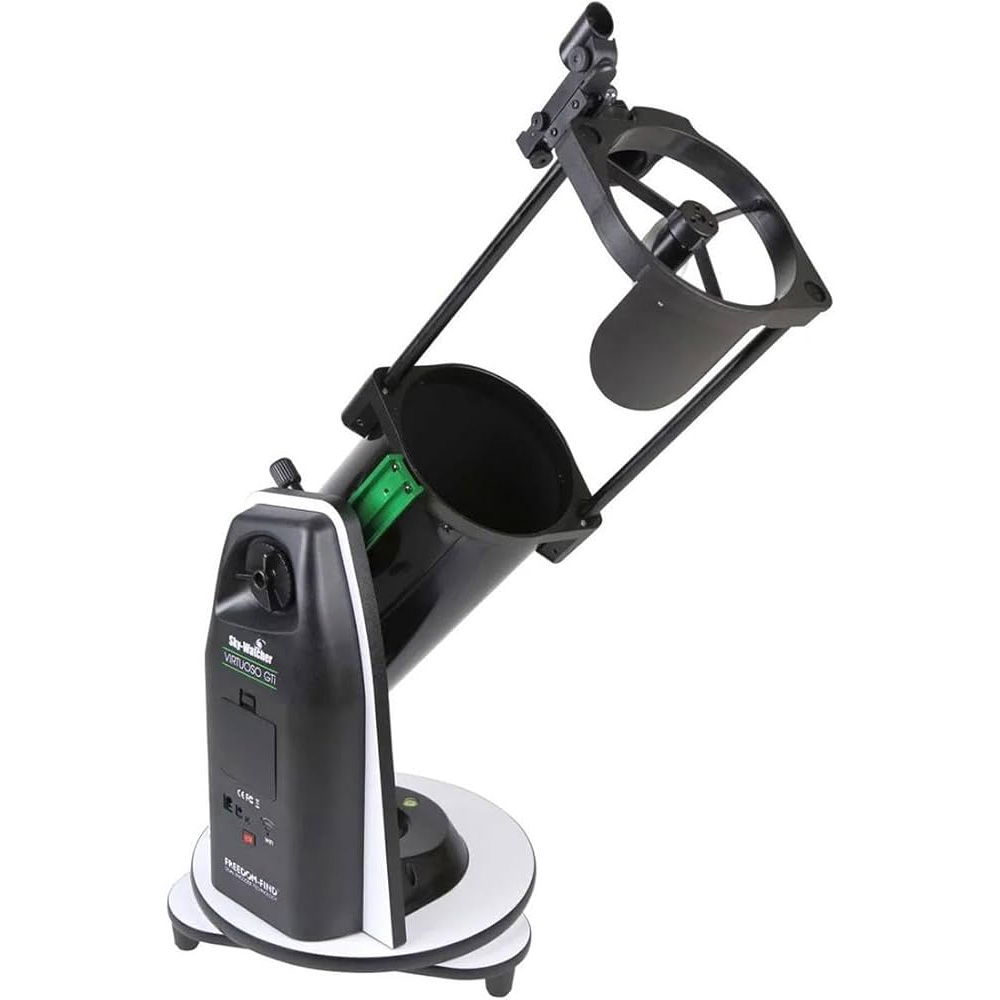 For the budget-conscious:
Sky-Watcher Virtuoso GTi 150P
The Sky-Watcher Virtuoso GTi 150P offers the same GoTo (with the added ability to aim it manually yourself) and 6-inch aperture as the NexStar 6SE, though you’ll need to spend more on an aftermarket tripod and other upgrades to get the most out of it.
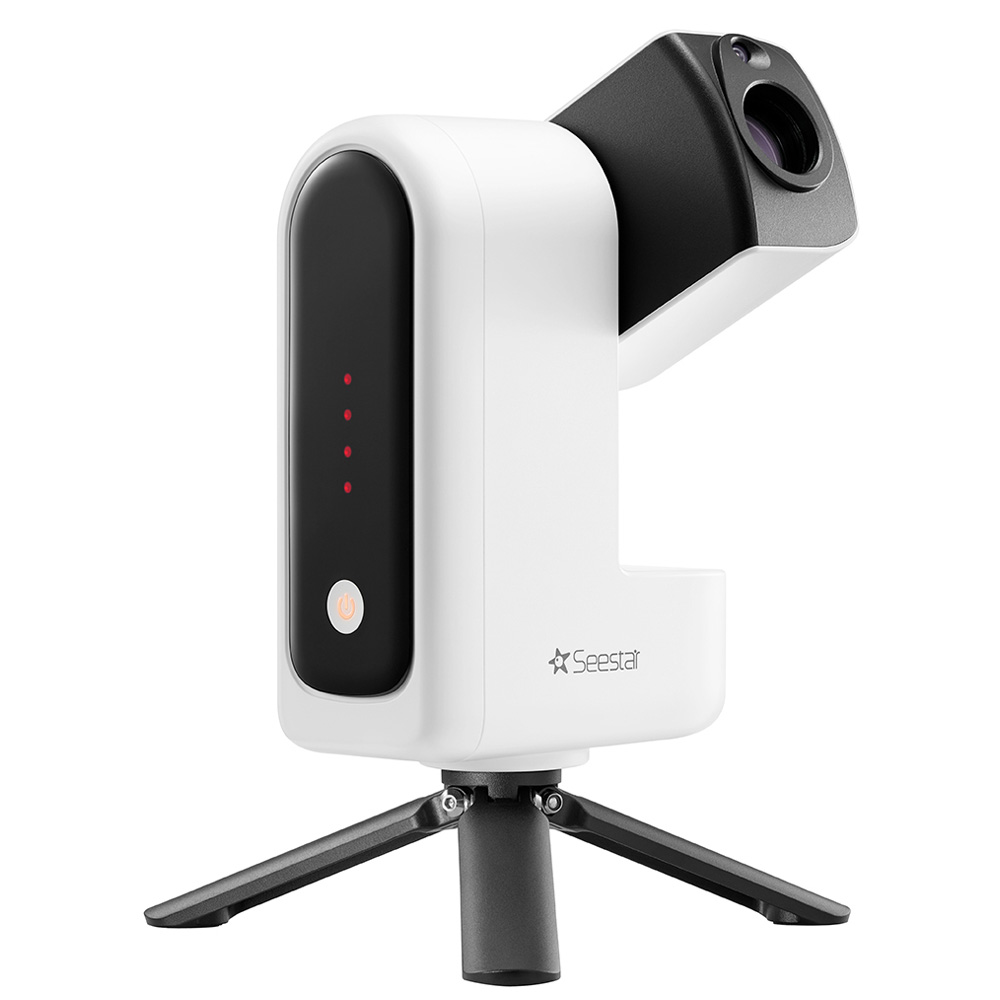 For astrophotography:
ZWO SeeStar S30 Pro
The ZWO SeeStar S30 Pro is much more compact than the 6SE and vastly superior for basic deep-sky imaging, though you can’t look through them and they are not well-suited for planetary imaging.
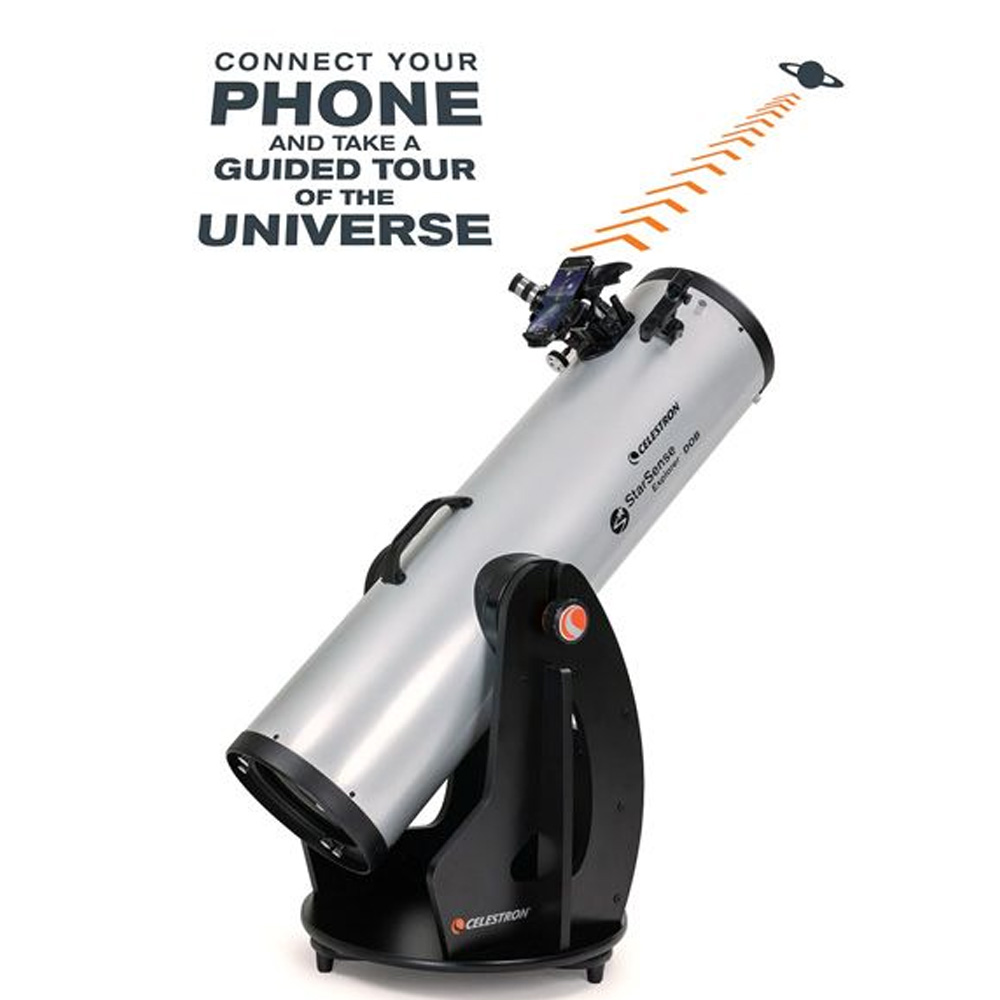 For performance
Celestron StarSense Explorer 10-inch Dobsonian
The Celestron StarSense Explorer 8-inch and 10-inch Dobsonians still have computer-aided pointing but offer much more aperture and simple, user-friendly Dobsonian mounts which can be aimed by hand.
How we tested the Celestron NexStar 6SE
(Image credit: Zane Landers)
The author has owned, as of the time of writing, five Celestron NexStar 6SE units, along with eight NexStar 8SEs, which utilize the same mount/tripod. A new 6SE was sent by Celestron to the author in February 2026 and tested under a variety of sky conditions between Bortle 6 and Bortle 2, at elevations between 2,000 and 7,000 feet. The author is located in Tucson, Arizona. The sky around Tucson is very conducive to amateur astronomy, thanks to widespread adoption of dark sky ordinances, high altitude, and extremely steady/transparent desert skies.
 Zane Landers
Freelance Contributor
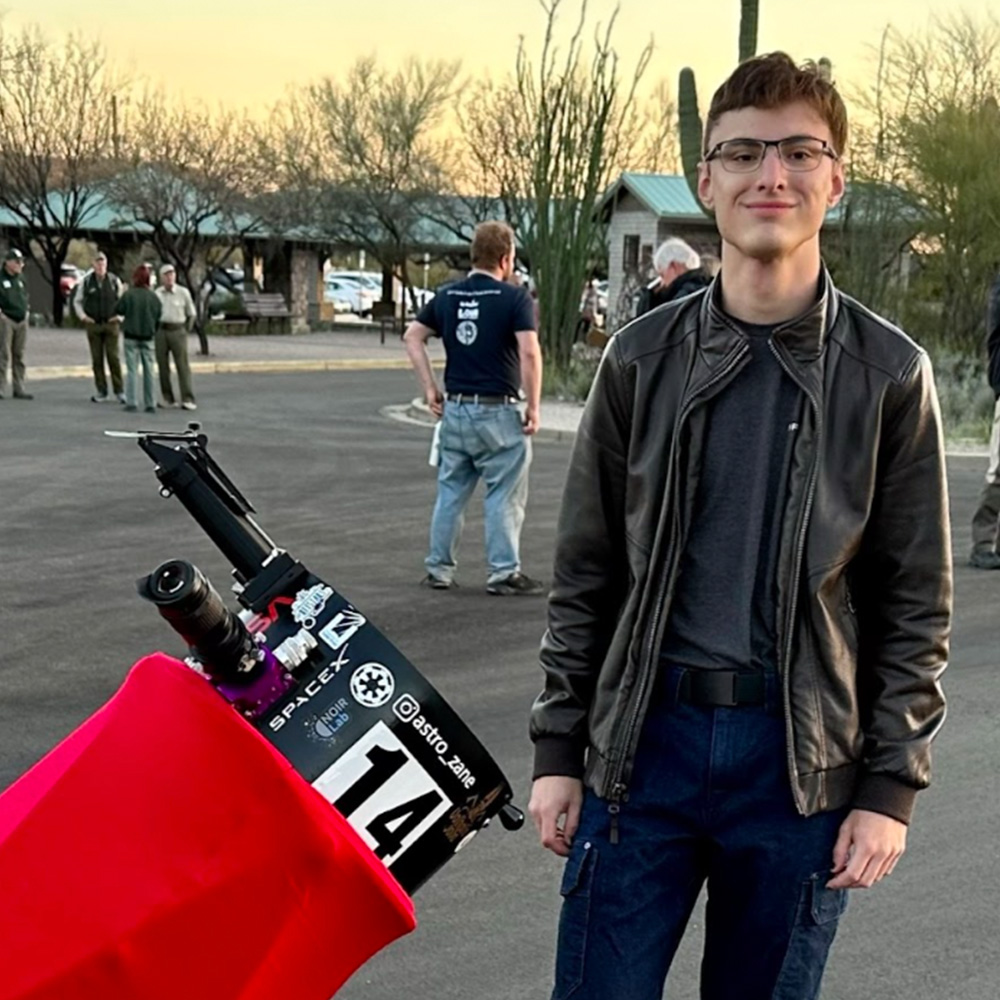
Zane Landers is an amateur astronomer and telescope maker from Tucson, Arizona. Since the age of 12, Zane has been building, testing, buying and selling telescopes, ranging from pocket-sized smart telescopes to 24-inch and 30-inch Dobsonians. Zane has previously owned five Celestron NexStar 6SEs as well as hundreds of other Celestron telescopes.
View More
You must confirm your public display name before commenting
Please logout and then login again, you will then be prompted to enter your display name.
Logout
Back To Top