

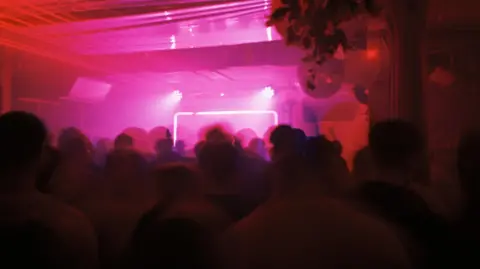
 Cobalt StudiosA report said Newcastle was outpacing London with the number of electronic music events
The electronic music scene in Newcastle is experiencing a boom, outpacing London with a 72% year-on-year growth, according to a new report. But venues on the ground say they are still struggling under the weight of funding issues and the cost of living crisis. So is the city's club scene truly thriving?
The report on electronic music, which was commissioned by the Night Time Industries Association (NTIA), aimed to understand the economic value and cultural significance of the genre to the UK economy, stating it generated £2.47bn in 2025.
And part of that drive came from the North, with Newcastle said to be a major player in a move away from London.
Newcastle enjoyed nine times London's 8% growth in 2025, the report claims.
But after the statistic was clipped up and shared all over social media, venues in the city say the stats could be painting a false picture of the health of Newcastle's local scene.
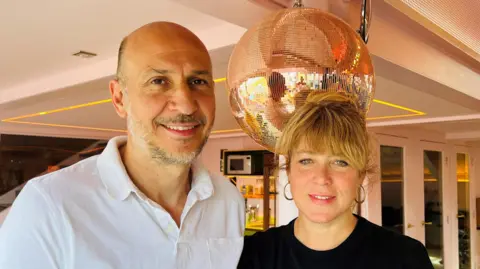 Cobalt StudiosKate Hodgkinson and her co-director Mark Collet say more DJs have been wanting to play in Newcastle
Kate Hodgkinson is the director of Cobalt Studios in Ouseburn, just east of the city centre.
Cobalt opened as artist studios around 1998 before becoming a fully fledged venue in 2018 and over the years Hodgkinson has made it her mission to build a diverse and inclusive space on the fringes of the city's nightlife.
But she says in the early days it was difficult to build any traction.
"I think there was quite a bit of stigma attached to Newcastle," she says.
"In the past I've looked after artists and musicians and honestly when they arrived you might think that we're still stuck down in coal mines and shipbuilding, they don't seem to know very much about the city.
"It is only fairly recently that we've actually had agents getting in contact and we've become a venue that DJs of a certain status want to go and play, which is a real change for us."
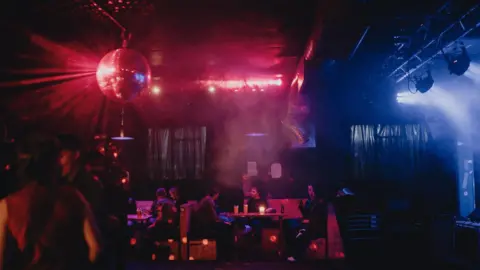 Ameila ReadThe Lubber Fiend says the cost of putting on parties is rising
Hodgkinson believes this is partly down to the reputation the venue has built as a female-led space.
"We've provided a home for people that have often felt that they've not got a comfortable or safe space to go to," she says.
"That means it can become a very expressive space as well because if people feel safe to be who they are, then they can express themselves and people see that and that helps the space grow."
But despite Cobalt enjoying cult success and selling out their club nights regularly, the venue is still struggling.
It is a small venue with a cap of 220 people and it is also a Community Interest Company (CIC), so aims to keep things affordable and accessible.
"Even though our reputation is growing and I think we are doing good things for Newcastle as a city in terms of representing how cool the city is, our economics haven't changed at all and it only works because I don't take a salary," Hodgkinson says.
"Two of us do about 80 hours a week and we don't get paid for that."
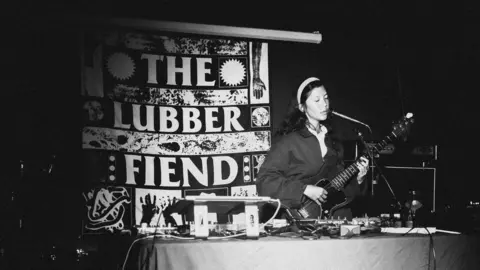 Mark BuchananNTIA says more listings does not mean "more viable venues"
Hodgkinson adds she does not believe Newcastle's scene is expanding, but there has simply been an increase in the number of events being officially listed.
And it is a sentiment shared by Sam Booth and Jon Cornbill, from the Lubber Fiend, another small venue which opened in 2022 as a DIY grassroots music venue which also hosts club nights.
"I think there is a strong scene in Newcastle, there are lots of people doing lots of good things, but we're all existing in quite a difficult environment," Booth says.
"We still have a lot of stuff going on in this city, but I think it paints a different picture when you start to say things like outpacing London, it makes us sound like we've got this thriving money scene.
"But everyone's broke, the parties are really difficult to put on, the costs of putting on parties are rising."
Head of music research and audiences strategies at NTIA Rufy Ghazi says the 72% growth figure for Newcastle comes from an analysis of Resident Advisor event listing data.
She adds the listings are used because "they provide a consistent, like-for-like basis for comparing city-level activity over time" and it is a "meaningful signal of scene momentum and decentralisation away from London".
"It doesn't measure financial health and the report is clear on that distinction," Ghazi says.
"So the venues struggling financially while listings grow isn't a contradiction in the data, it's actually one of the report's core tensions.
"More events don't automatically mean more viable venues."
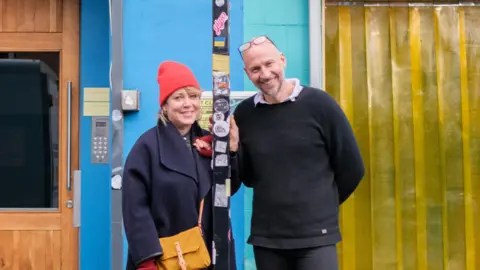 Cobalt StudiosHodgkinson says electronic music can be a "regeneration driver"
Booth thinks there is a lot of "great stuff" happening in Newcastle, but other cities have decades of better funding which has created all-round stronger scenes.
The pair also believe there has been a shift in the way people consume music and more people are spending money on large-scale events, such as The Warehouse Project in Manchester, instead of going to smaller, local events more frequently.
But as Cornbill says: "We're doggedly determined to keep doing it anyway.
"And if those funding opportunities don't come, that's fine.
"It sounds like I'm being pessimistic with that, but it's born from pure love and enthusiasm of doing it, and we're just going to keep doing it."
Both the Lubber Fiend and Cobalt believe more practical help should be available to club venues.
Booth and Cornbill mention the new levy on arena and stadium shows which sees £1 from each ticket shows go towards grassroots venues, but say this is more centred around gig instead of club venues.
They believe a similar thing should be in place for larger electronic music events.
"That would definitely help, that would be tangible help to underground club culture," Booth says.
'Cultural power of nightlife'
Hodgkinson has given nearly 30 years to Cobalt and says the longevity of the venue is something she thinks about often.
"For me, the worry is probably no-one else is stupid enough to do that, or driven enough," she says.
Hodgkinson adds she hopes Newcastle City Council understands "the cultural power of really good quality nightlife".
"When it's done right, it's a really important regeneration driver," she says.
"It's a really important tourist attraction.
"But you know, having a reputation as a city as being a really gnarly stag and hen do place where people are vomiting on the streets, that doesn't do the city any favours because it's so much more than that."
A Newcastle City Council spokesperson said it was "committed to supporting the sector and have been working with partners to create new opportunities for artists and venues across multiple music genres".
"We also welcome recent support announced by the North East Combined Authority, including grants for music venues, and have been actively lobbying government on the challenges facing the sector," they said.
"We were pleased to see the introduction of business rates relief for smaller music venues, which will provide much-needed support.
"We will continue to work closely with the sector to support its sustainability and ensure Newcastle remains a leading destination for music and nightlife."
Follow BBC Newcastle on X, Facebook, Nextdoor and Instagram.
More on this story