
 Cocaine-specific deaths were five times higher in the most deprived areas than the least deprived. Photograph: Mark Fagelson/AlamyCocaine-specific deaths were five times higher in the most deprived areas than the least deprived. Photograph: Mark Fagelson/AlamyCocaine overtakes heroin as leading cause of drug deaths in England and Wales
Charities say government ‘must act now’ with cocaine-specific deaths eight times higher than in 2010
Cocaine has overtaken heroin as the biggest cause of drug deaths in England and Wales, figures from the Office for National Statistics show.
The government “must act now to reverse this deadly trend”, charities have said, with 1,233 deaths caused by cocaine last year.
Though drug deaths fell slightly in 2025 compared with the previous year, they “remained historically high” at double the rates of 10 years ago, with cocaine-specific deaths four times higher than a decade ago and eight times higher than in 2010.
The Guardian revealed last week that police were recording a growing number of crimes linked to cocaine, including assaults, domestic abuse and dangerous driving.
Ageing users and record deaths – the data behind Britain’s multibillion-pound cocaine habitRead moreWastewater analysis shows consumption of the class A drug is surging, becoming a more common sight in pubs, festivals and workplaces. It is linked with a rise of 10% in crime associated with cocaine since 2019.
For the first time, cocaine was the drug most involved in drug-related deaths, the figures show, amounting to 22%. This included its use as a powder and deaths caused by injecting the drug or smoking it as crack cocaine.
A total of 64% of cocaine deaths registered were of people over the age of 40, a trend also seen among people seeking help from drug treatment services.
Overall, 5,519 deaths related to drug poisoning were registered last year, 46 fewer than in 2024.
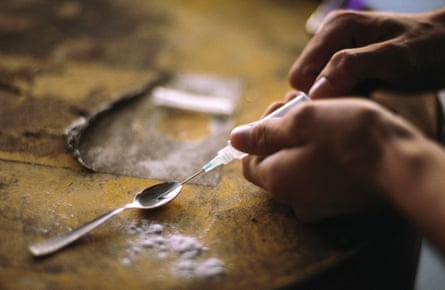 Cocaine accounted for 22% of drug-related deaths in England and Wales last year, including through injecting it or smoking it as crack. Photograph: PhotoAlto/Alamy
The north-east of England had the highest rates of drug deaths, at 135.2 deaths per million people in 2025, while London had the lowest rate at 58.3 deaths per million. Deaths were five times higher in the most deprived areas than the least deprived.
The statistics also showed rates of deaths from ketamine had risen dramatically from a very low base a decade ago. Ketamine was mentioned in 115 deaths in 2025, compared with 27 in 2020 and seven in 2015.
Niamh Eastwood, the executive director of Release, the UK’s national centre of expertise on drugs and drug laws, said cocaine deaths were “a direct result of policy failures both in the UK and internationally”.
She said: “Cocaine production is at an all-time high; it’s more available, cheaper and purer than ever, despite billions spent on trying to disrupt or eradicate the trade.”
The NGO said the UK’s focus on punishing drug use prevented drug services offering harm-reduction interventions, “meaning there is literally nothing practical on offer for people who use [cocaine]”.
skip past newsletter promotionafter newsletter promotion
Mike Trace, the chief executive of the social justice charity Forward Trust, said the overall drug-related death rate was “a national scandal” that needed urgent attention.
He said: “That cocaine has risen to the top of the statistics for drug-related deaths should come as no surprise. We’re facing the perfect storm of record levels of production in South America leading to falling prices combined with increasing purity, which means increasing potency and risk.”
Will Haydock, the chief executive of Collective Voice, a drug treatment campaigning charity, said that improvements previously made were “now at risk due to government inaction”.
‘He was like 10 men after taking cocaine‘: how Britain’s drug habit is fuelling domestic abuseRead more“For over two years the government has been largely silent on addiction, and has paused the planned investment programme, freezing funding at year-three levels rather than continuing to follow the path laid out by the independent review of drugs, which has amounted to a real-terms cut at a time when we are trying to support more people in treatment than ever before,” he said.
The independent review led by Prof Carol Black was commissioned by Boris Johnson’s government and published in 2021, and recommended an overhaul of drug treatment services.
Haydock said: “If the current prime minister is to achieve his ambitions on a whole range of policy issues – including violence against women and girls, the crisis in the criminal justice system, homelessness, and young people’s employment and mental health – then we must talk about drugs, and specifically treatment and recovery services.
“We urgently need a new drugs strategy with clear priorities, including reducing drug-related deaths. If we get our response to alcohol and other drugs right, we can save and improve hundreds of thousands of lives.”
Explore more on these topicsShareReuse this content