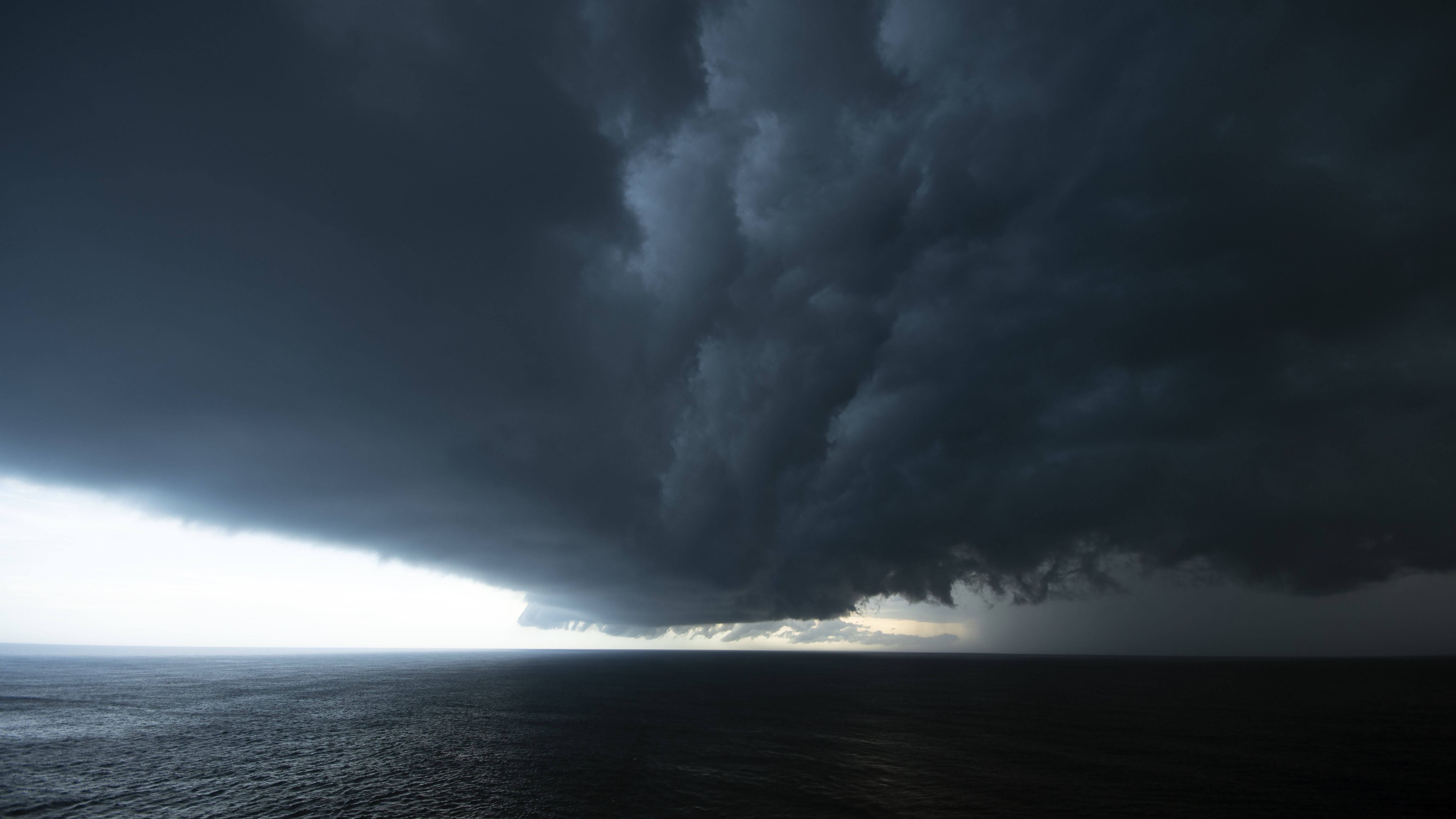
The impacts of past El Niño periods on global agriculture have been far-reaching. (Image credit: Getty Images)
Share this article Join the conversation
Follow us Add us as a preferred source on Google Newsletter Subscribe to our newsletter
This year's brewing El Niño could become the strongest ever recorded, a new forecast warns.
New predictions by the European Centre for Medium-Range Weather Forecasts (ECMWF) suggest sea surface temperatures in a key region of the central equatorial Pacific Ocean will climb 5.4 degrees Fahrenheit (3 degrees Celsius) above average by December of this year, with some scenarios showing it could go above 7.2 F (4 C).
If the forecast bears out, it could mean that this year's El Niño — the warm phase of a multi-year natural climate pattern that supercharges temperatures across the globe — will be significantly stronger than the previous joint record holders of 2015 to 2016 and 1997 to 1998.
These past two El Niño events sent temperatures in the Niño 3.4 index (which measures sea surface temperature anomalies between 5 degrees north and 5 degrees south latitude, and 120 degrees west and 170 degrees west longitude) to 2.3 C (4.1 F) above average.
"Almost every scenario now reaches past +3˚C, with a cluster of high-end scenarios in excess of +4˚C," Ben Noll, a meteorologist and global weather writer at the Washington Post, wrote on the social platform X. "This outlook now depicts the strongest El Niño on record."
El Niño events occur every two to seven years as part of the El Niño-Southern Oscillation (ENSO) natural climate cycle in the Pacific Ocean. The ENSO cycle flips between the warmer El Niño phase and the cooler La Niña phase, with neutral periods in between. El Niño periods bring elevated sea surface temperatures in the central and eastern Pacific, thereby weakening or reversing trade winds and strongly disrupting global temperatures and rainfall patterns.
Earth's last El Niño ran from June 2023 to April 2024, delivering an injection of heat to our already warming world that made 2024 the hottest year on record and the first to breach the 1.5 C (2.7 F) warming limit — a key guardrail set by the Paris Agreement, after which the effects of climate change become increasingly disastrous.
Sign up for the Live Science daily newsletter now
Get the world’s most fascinating discoveries delivered straight to your inbox.
Contact me with news and offers from other Future brandsReceive email from us on behalf of our trusted partners or sponsors
The impacts of previous El Niño periods on global agriculture have been profound, with studies linking the events to famine in Europe; triggers for civil wars in tropical regions; and droughts, floods and forest fires around the world. This year's El Niño will arrive during a period of increased global food insecurity driven by the Iran war.
RELATED STORIES
In an update on Tuesday (June 2), the World Meteorological Organization (WMO) warned that the climate pattern has an 80% chance of forming before September and a 90% chance before November, and that the world should prepare for a potentially strong event.
"The science is clear: El Niño is arriving on our doorstep in the coming months with 90% certainty. The world must treat it as the urgent climate warning it is," UN Secretary-General António Guterres said in a video statement.
And while El Niño would have arrived regardless of anthropogenic climate change, Guterres was careful to stress that it will add more heat to an already dangerously warming planet.
"El Niño conditions will pour fuel on the fire of a warming world. Impacts will hit even harder, travel even farther, and cross borders with devastating speed," he added.
"The only effective response is climate action equal to the crisis — ending the addiction to fossil fuels, accelerating the shift to renewables, protecting the most vulnerable, and delivering early warning systems for all."
TOPICS
 Ben Turner
Acting Trending News Editor
Ben Turner is a U.K. based writer and editor at Live Science. He covers physics and astronomy, tech and climate change. He graduated from University College London with a degree in particle physics before training as a journalist. When he's not writing, Ben enjoys reading literature, playing the guitar and embarrassing himself with chess.
View More
You must confirm your public display name before commenting
Please logout and then login again, you will then be prompted to enter your display name.
Logout