 Image source, Getty ImagesImage caption,
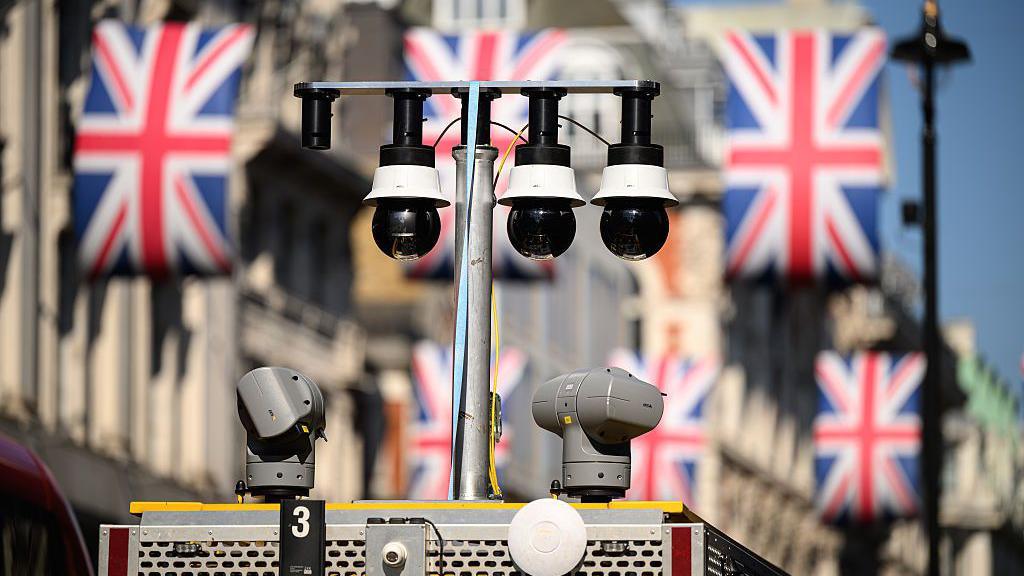
 A facial recognition system on a Metropolitan Police van at Oxford Circus in London
ByJennifer McKiernanPolitical reporter- Published1 hour ago
The Conservatives have called for the greater use of facial recognition technology to investigate crimes.
Shadow home secretary Chris Philp wants to make it a requirement for officers to run images of suspects through facial recognition software, where they have been captured on CCTV, mobile phones or camera doorbells.
He also wants officers to follow up when geo-tagged items - including phones, laptops, tablets, bikes and cars - are pinging their location at a suspect's address, as well as tackling stolen goods being sold in plain sight.
A Home Office spokesperson said the government was investing heavily in facial recognition technology.
"This government is already turning the tide on crime," they added.
Philp said the Conservative's Take Back Our Streets plan would put all three elements into practice, backed up by 10,000 extra police officers, which he claimed would be fully funded by £800 million per year.
"The public expects clear evidence to always be followed up," he said.
"When they show the police an image of a suspect or the location of stolen goods they want action, not just a crime number."
Labour has pledged an extra 13,000 neighbourhood police by the end of this Parliament. An additional 3,814 officers have been hired between April 2025 and March this year.
Philp praised the existing facial recognition database, which contains images of about 10 million people that can be face-matched using AI, but said what was missing was a requirement on a force to always use it.
Similarly, he said, where a stolen device is pinging its location at an address, an officer will be required to knock on the door.
He added that officers would be required to follow listings of stolen goods advertised online and recover belongings where possible.
"These are the basics the public expect," he said.
Met to extend live facial recognition to West End
- Published23 June
Police start facial recognition trial at stations
- Published11 February
Facial recognition pilot cuts crime, says Met
- Published19 January
'Return powers to home secretary'
The Tories have also called for the reversal of a 2014 decision made by Conservative Prime Minister David Cameron where the power to direct police chiefs was taken from the home secretary and handed to the College of Policing.
Philp said rather than the College of Policing being absorbed into the proposed National Police Service, the Home Office should be setting standards in policing.
"We have not seen enough action being taken and so the Conservatives would return to the home secretary the power to set operational guidance and codes of practice," he said.
The introduction of the National Police Service is aimed at streamlining national responsibilities to allow local forces to focus on tackling crime in their communities, the BBC understands.
A Home Office spokesperson said: "In just one year, the number of neighbourhood officers has already skyrocketed by 22% as we put more personnel back on the beat to fight crime.
"We are going further by delivering major reforms to ensure that local policing protects our communities, and a new National Police Service will tackle serious crime through specialist capabilities.
"We are freeing up forces through investing in technology, including a national facial recognition system for police, so they can spend more time on the frontline - visible in communities and tackling crime."
They added: "Homicides are at their lowest level in almost 50 years, theft and other offences that blight local areas are also falling, while charges are going up significantly."
The College of Policing has been contacted for comment.

Sign up for our Politics Essential newsletter to read top political analysis, gain insight from across the UK and stay up to speed with the big moments. It'll be delivered straight to your inbox every weekday.