The expansion of the universe is still accelerating under the influence of dark energy, despite recent claims to the contrary, according to new research. This means that dark energy, the mysterious force that dominates the universe, is not weakening but continues to get stronger, considered something of a "cosmological crisis" as it was so against expectations.
In 1998, via the study of cosmic explosions called Type Ia supernovas, astronomers discovered that not only is the universe expanding, but that the speed of that expansion is increasing. "Dark energy" was the name given to the mysterious force driving this accelerating expansion. Since then, scientists have discovered that dark energy accounts for around 70% of the universe's matter and energy.
In November 2025, research was published that suggested the expansion of the universe was slowing, meaning dark energy would be weakening. But this new research suggests that these findings from last year might not be a cosmic hand grenade thrown into the cosmological apple cart, but instead may have actually emerged from a scientific misunderstanding.
"Thankfully, we have averted this crisis, but the mystery about why the rate of expansion of the universe is still accelerating remains," lead author of the new refuting research, Phil Wiseman, from the University of Southampton in the UK, said in a statement. "The previous and well-accepted measurements were, in fact, fine, and our current understanding of the fate of the universe remains robust. By proving our measurements are correct, we can get back to trying to understand what this dark energy actually is, rather than wondering if it exists at all."
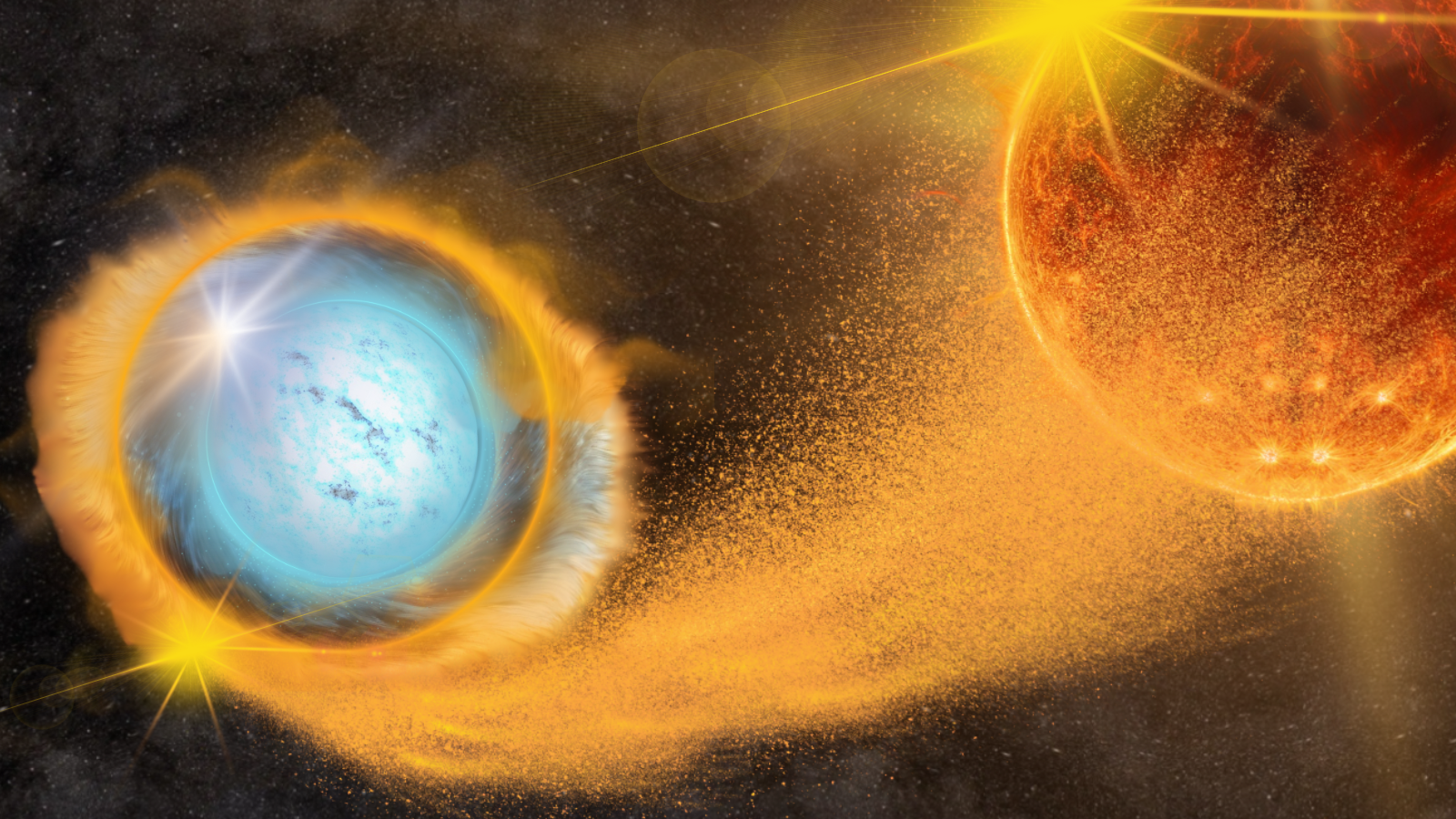
The research from 2025 that suggested dark energy was weakening was based upon a reassessment of the brightness of Type Ia supernovas, which occur when a dead star called a white dwarf overfeeds on a companion star. This causes a runaway nuclear explosion of such uniform brightness that it can be used to measure cosmic distances. In fact, these explosions are so uniform that astronomers refer to them as "standard candles." This prior research determined, incorrectly it now seems, that as the universe has aged, the brightness of Type Ia supernovas had changed, leading to incorrect measurements of distances based on them as well as incorrect estimates of the speed of the universe's expansion. Both of these led to the suggestion that dark energy is weakening.
But Wiseman and colleagues found this previous team had made an error in how they calculated the ages of exploding white dwarfs, finding they had assumed the ages of these stars would be the same as the ages of the galaxies in which they exploded. They also found the 2025 research hadn't accounted for a common correction used in cosmology that factors in the masses of galaxies in which Type Ia supernovas occur. "Extraordinary claims require especially careful testing," team member Adam Riess, who in 2011 shared the Nobel Prize for the discovery of dark energy, said. "What we find is that when we calibrate these supernovae, accounting for different host environments and populations, the evidence for cosmic acceleration remains remarkably consistent."
While the challenge to dark energy's growing dominance over the universe seems now to have been refuted, the back and forth on this topic shows how ideas in science aren't dogma and remain open for revision.
"This is how progress is made," team member Mark Sullivan, also from the University of Southampton, said. "Although this idea did not turn out to be correct, it has opened up new ways of thinking about how supernovae explode and how we can measure dark energy more accurately."
The team's research was published on June 10 in the journal Monthly Notices of the Royal Astronomical Society.