 Image caption,
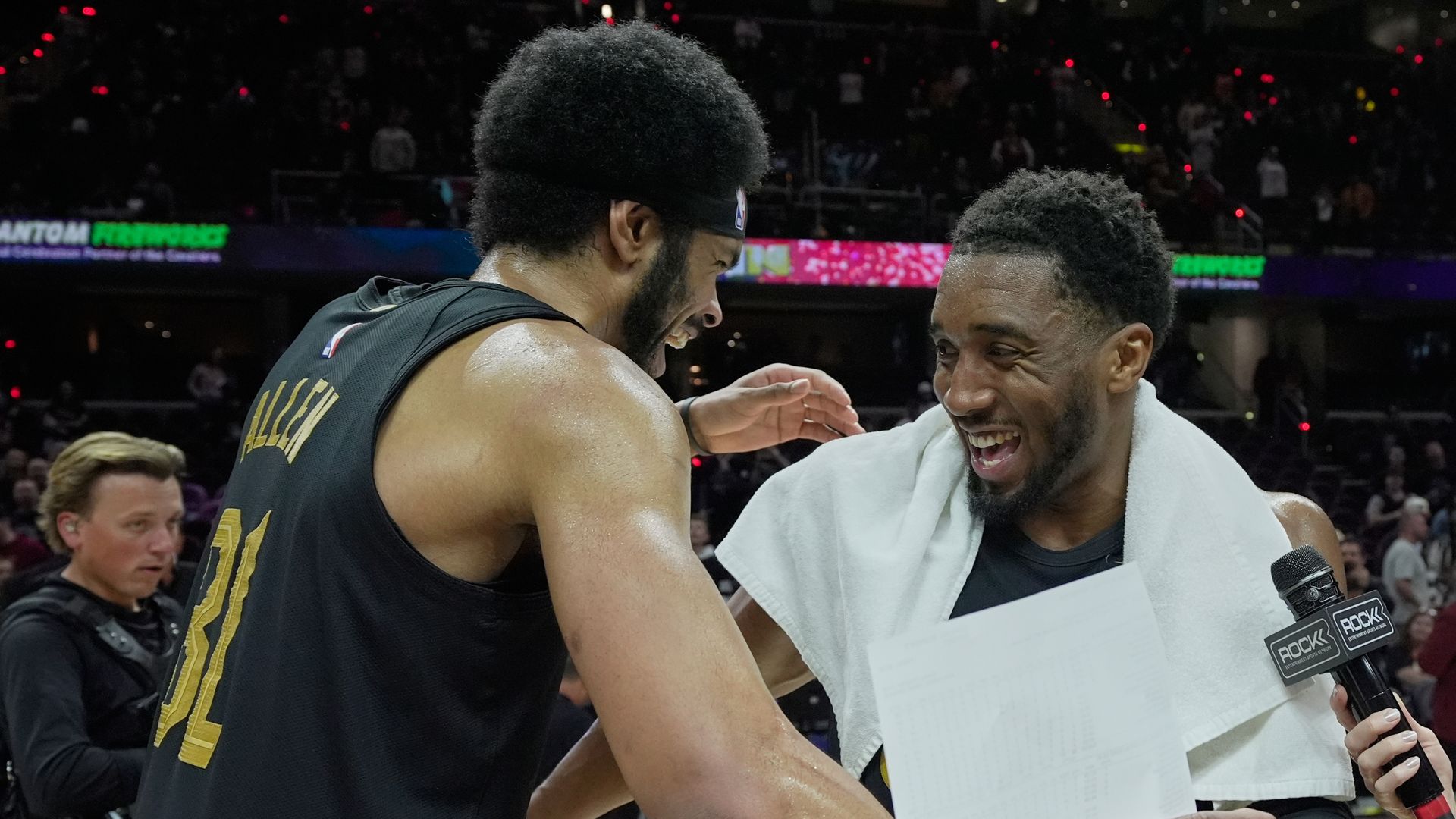
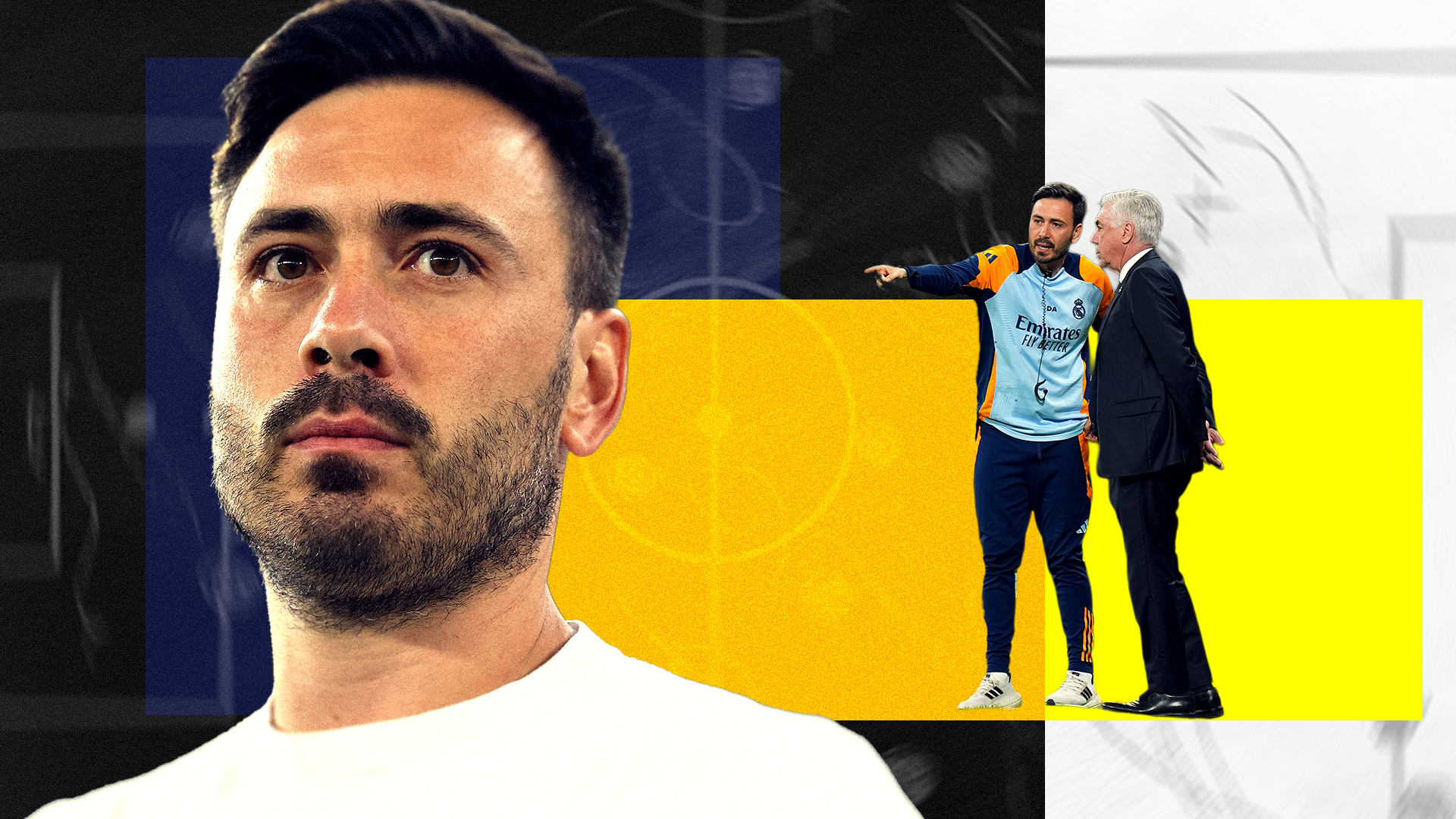
 Davide Ancelotti is Brazil's assistant manager for the World Cup, with his father, Carlo Ancelotti, the manager
ByUmir IrfanFootball tactics correspondent- Published19 minutes ago
Davide Ancelotti grew up immersed in football in a way few ever have.
Aged six, accompanying his father and then-Parma manager Carlo to the training ground, the first player he remembers meeting was Gianluigi Buffon.
The young boy would take shots against the Italian goalkeeper, who would go on to become one of the greatest in the game.
Turning his head, Davide would see defenders Lilian Thuram and Fabio Cannavaro, still early in their own journeys, honing the habits that would later make them World Cup winners with France and Italy.
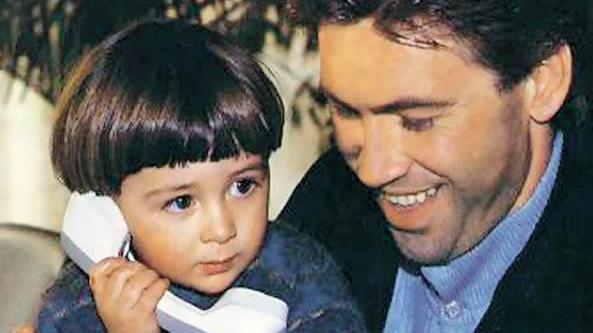 Image source, Corriere della SeraImage caption,
 A young Davide Ancelotti with his father, Carlo Ancelotti
This immersion came before the coaching badges, before he would accompany his father - a five-time Champions League-winning manager - as assistant boss of Bayern Munich, Napoli, Everton and Real Madrid.
I sat down with Davide, a tactics board on the table between us, looking to unpick the mind of a hardworking and curious coach following his first head coach role in charge of Botafogo and prior to this summer's World Cup - where he will accompany Carlo as assistant coach of the Brazilian national team.
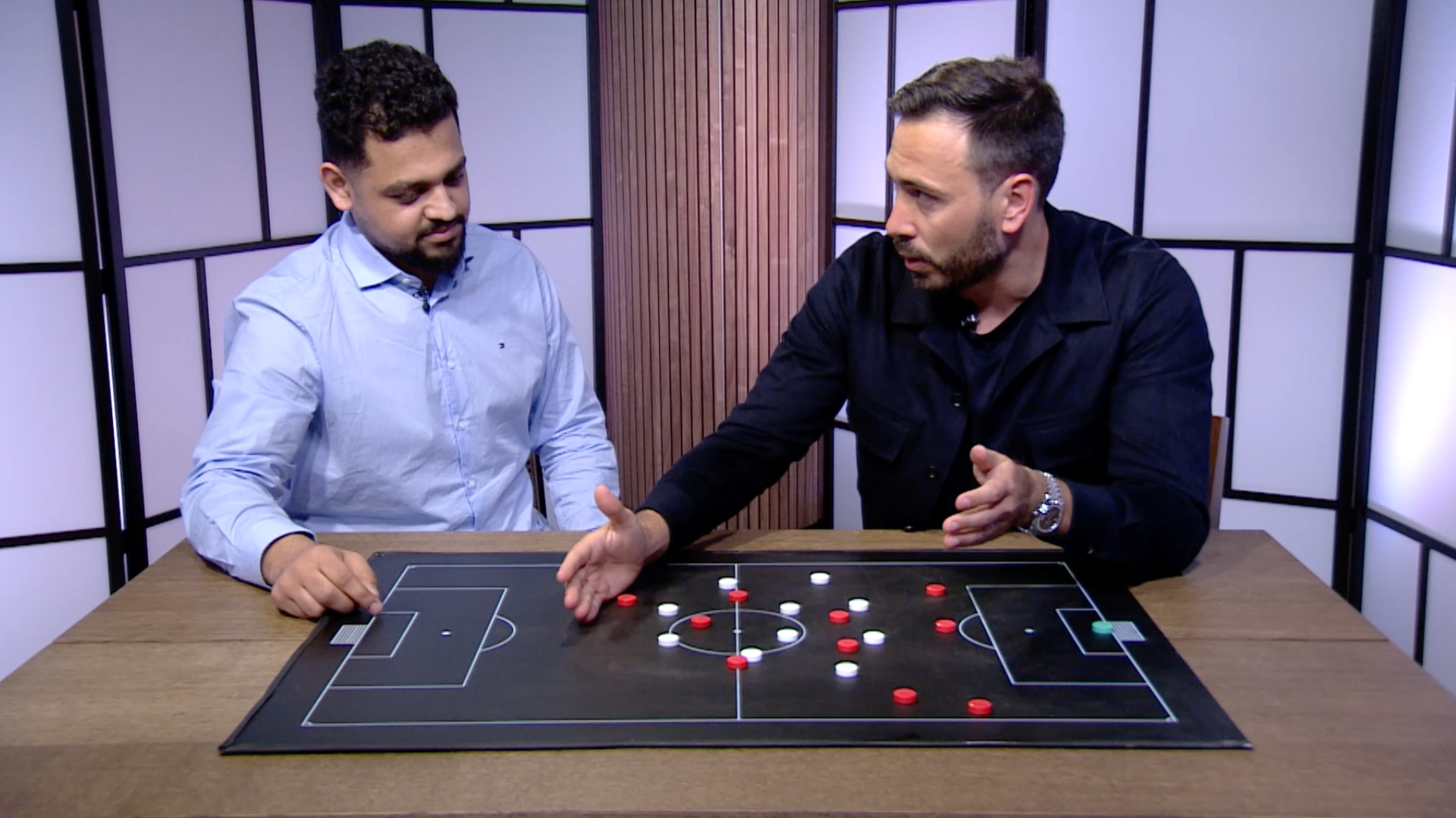 Image caption,
 Davide and I discuss his philosophy, the tactics used by Pep Guardiola's Manchester City and PSG's Luis Enrique, as well as possible future tactical trends
Inspirations and mindset
"In football, it is difficult to say that one manager inspires you," began the 36-year-old Davide. "You take things from different managers.
"Pep Guardiola was cutting edge, a pioneer. You cannot forget Jurgen Klopp in the high pressing, in the triggers. If we speak about superiority, you have to mention Roberto de Zerbi in how to find the third man, the small details that he discovered. I am fascinated by the defensive phase of Diego Simeone, by Unai Emery and, of course, my father.
"My father came from the school of Arrigo Sacchi, the zonal defence, the 4-4-2.
"And all of these ideas have influenced my own identity as a manager. This process of creating my own identity as a manager is always an ongoing one. For some people I am like my father, but in truth, I am not exactly like him. I have a similar character, but I am a different kind of manager.
"I don't think a manager has to be one thing or another. There is always a point in the middle. You adapt to the players, and sometimes to the opponent, but you also need clear ideas on what you like as a manager.
"In the end, the team will become what you emphasise and you emphasise the things you like."
What is the ideal version of your team?
"My dream is to have a team that can do different things at the highest level.
"If we take the example of the last Champions League winners, Paris St-Germain, they are able to do everything.
"They are able to find the spare man if they have superiority in the first build-up. They are able to have a positional possession, and also not have a positional possession (freedom) when they have the ball in the high build-up.
"Of course, they have great ability up front, but without the ball, if they have to press, they recognise when they have to press to be man-to-man. And they are really organised in the deep block.
"So what can you say about a team like this? This is a team that is complete."
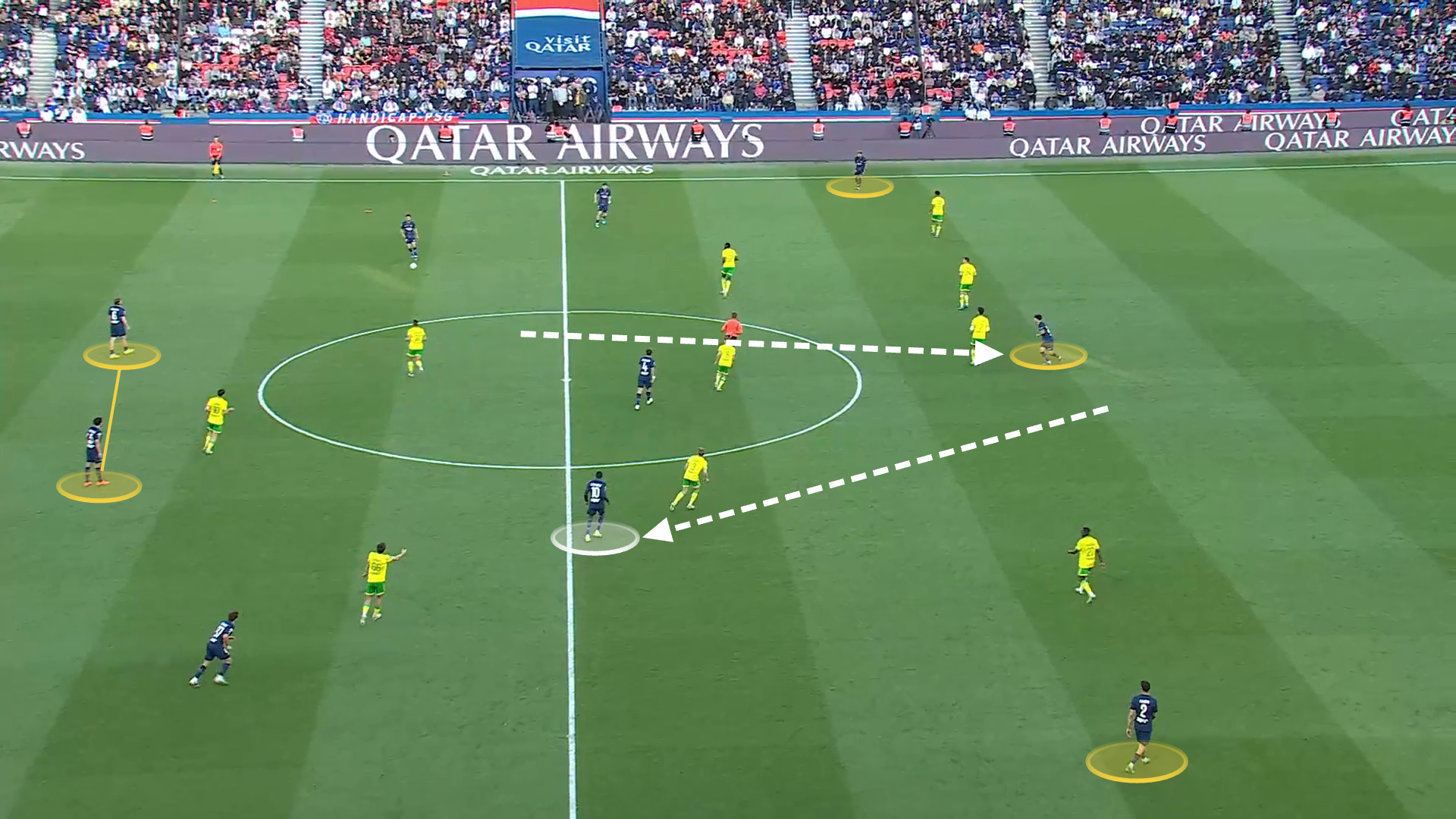 Image caption,
 Illustrating Davide's analysis on PSG. In 'high build-up', forward Ousmane Dembele has moved into a midfield position with central midfielder Dro Fernandez taking up his position in attack. The players marked in yellow stand in areas the manager has instructed, in a positional manner. The remaining unmarked players float in a non-positional manner, with freedom.
"Defensively, I believe in the zonal defence in your own half. The best way to defend is to defend with two lines of four and a line of two. It could be a 4-4-1-1 or a 4-4-2.
"But a shape is not enough, you need principles.
"Today it is difficult to defend the last line with four. The shape is 4-4-2, yes, but then it always changes.
"I believe, and this is from Jose Mourinho, Diego Simeone, Unai Emery, the great teachers of the defensive phase, that you have, at some point, to be five."
At this point we altered the tactics board, dragging one of the opposition midfielders forward in between the defending team's full-back and centre-back.
Davide continued: "For example, if this guy goes, you follow. It all depends on where the ball is, but you create a back five and that can be with your number six, or it can be with your winger.
"That is my belief. I still believe in zonal marking when you are defending the goal and when you are defending the box."
To play this video you need to enable JavaScript in your browser.
This video can not be played
Figure caption,Ancelotti talks through the 4-4-2 when defending
"The skill you need to have today in the defensive phase as a manager is to make the players understand that the mid-block is disappearing.
"I made the coaching licence in Germany, and in Germany they draw two lines and they call it mittelfeldpressing [midfield pressing]. Here they keep the high line but don't press the ball.
"If you see Liverpool when they won the Champions League with Jurgen Klopp, it was like this. Against Barcelona away, there was no pressure on the ball, but the line was high.
"As a manager, you have to make your team understand that this block is now a transitory situation.
"Once we are here, we have to hold this position briefly, but we are looking for the next position, which is to drop deep or press high.
"Your players have to recognise the triggers and there are triggers to go high and there are triggers to go back.
"Following a passback or a trap you set, for example, your players can go man-for-man."
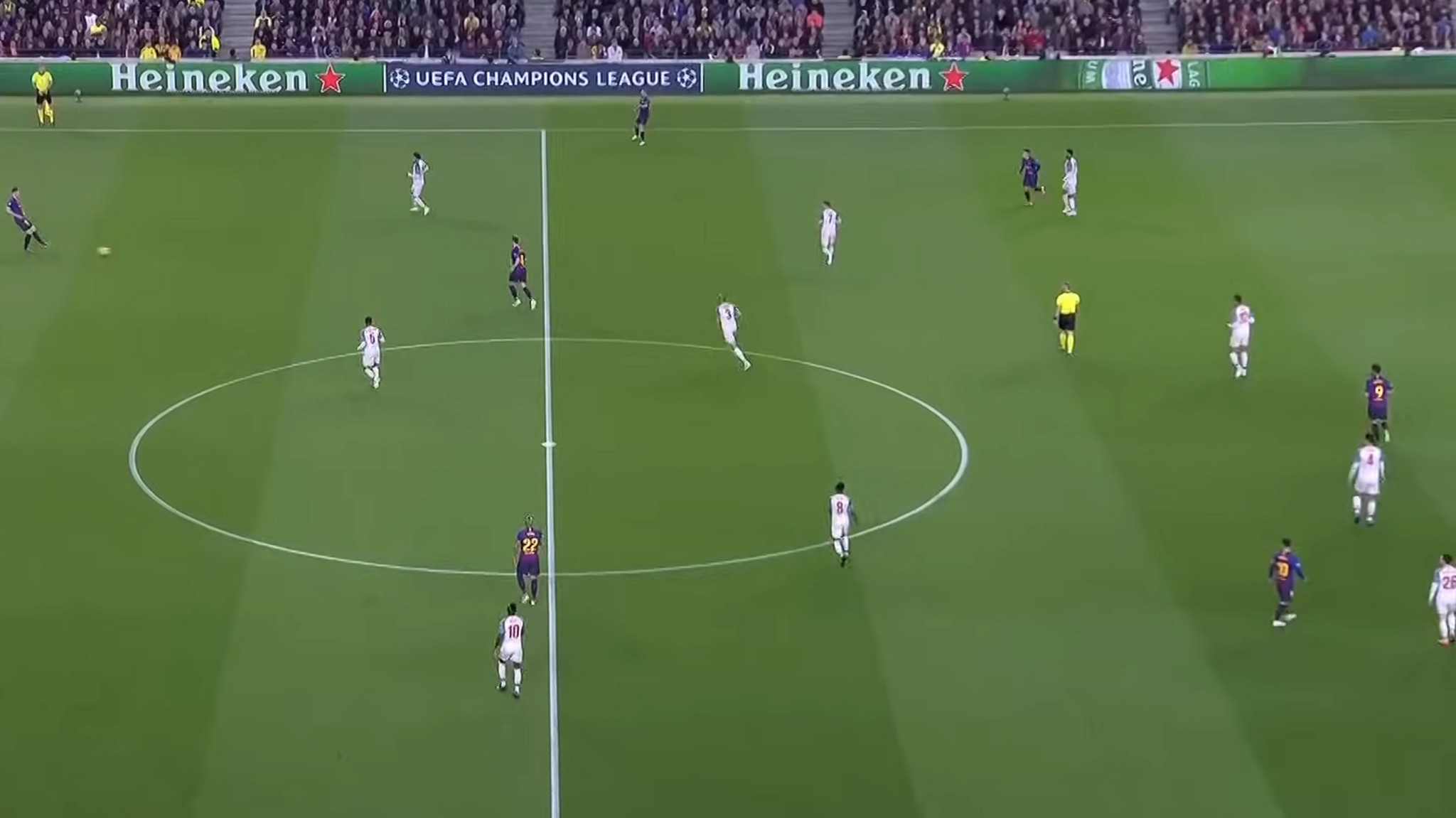 Image caption,
 Liverpool's mittelfeldpressing in their first leg semi-final loss against Barcelona. Note Liverpool's high defensive line while their attackers fail to apply pressure to Barcelona's defenders, giving them time to pick passes.
How to defend against Guardiola's teams?
Listening to Davide explain his defensive tactics, I then posed him a challenge.
In Manchester City's Premier League win at Liverpool in February, Arne Slot set his Reds side up in a 4-4-2. Guardiola countered that by placing Bernardo Silva between the two Liverpool central midfielders with attacking midfielders on the left and right of him.
The rationale was that if the central midfielders focused on Silva, the attacking midfielders would have space. If Liverpool's midfield two moved wider to address this, Silva would be free.
I asked how Davide would have addressed this tactic that appeared effective against the system he was describing.
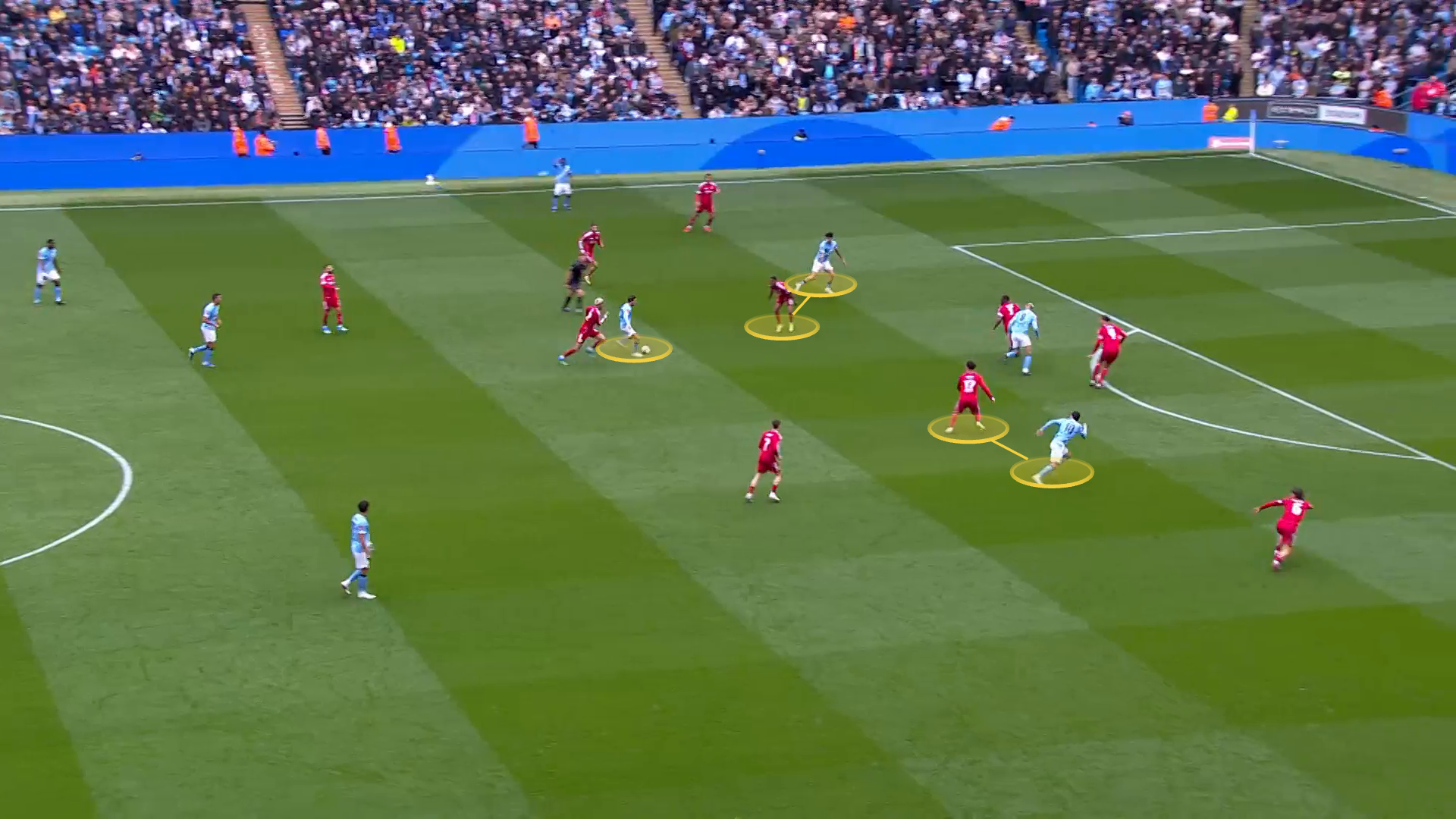 Image caption,
 Against Liverpool, Bernardo Silva positioned himself in the middle of the pitch with Nico O'Reilly to his left and Rayan Cherki to his right as attacking midfielders. Liverpool's midfield pairing in their 4-4-2 shape were torn between marking O'Reilly and Cherki or getting close to Silva with City having three players versus two in these situations
"Yes, the best way to attack against a 4-4-2 is to create an overload in the centre," said Davide.
"Guardiola did it a lot against us, even when we were at Everton. At Everton we defended in a 4-4-2, and we decided to mark their two midfielders with Abdoulaye Doucoure and Allan so he started to put a third player inside, and it was tough. We then moved our number 10 to follow this player.
"He did it again with John Stones in the Champions League, who started to go inside, I think in the game we drew 1-1 at the Bernabeu.
"We demand a lot from the four players in midfield. The way you cope with it is to close space with the wingers. They have to be really narrow.
"Every time the ball is on one side, the (far-side) winger controls one of their central midfielders, but at some point, because they are patient and they move from one side to another, you'll leave space in midfield.
"At that point, your number 10 dropping back helps.
"But sometimes you have [Kylian] Mbappe and Vinicius Jr as your two strikers, so what do you do when you need a player to drop back?"
To play this video you need to enable JavaScript in your browser.
This video can not be played
Figure caption,How to attack against a 4-4-2
How do you guide players like Mbappe and Vinicius Jr?
"You have to find a way. At the highest level you have players that you cannot avoid playing because they can win you the game.
"When we played against City in 2024, we were having a successful season with [Jude] Bellingham on the left of midfield with Vinicius and Rodrygo up top, but for this game we needed somebody to drop in as a third midfielder. We couldn't leave two players up top when defending.
"Our solution was to move Bellingham centrally to play behind Vinicius. His work-rate meant he could defend City's third midfielder. We then moved Rodrygo to the left who worked more defensively than Vinicius, who played up top.
"That game finished 3-3. Maybe tactically it would have been better to play with an even more defensive winger on the left and to play with Bellingham and Vinicius up top, but then you had Rodrygo, who scored."
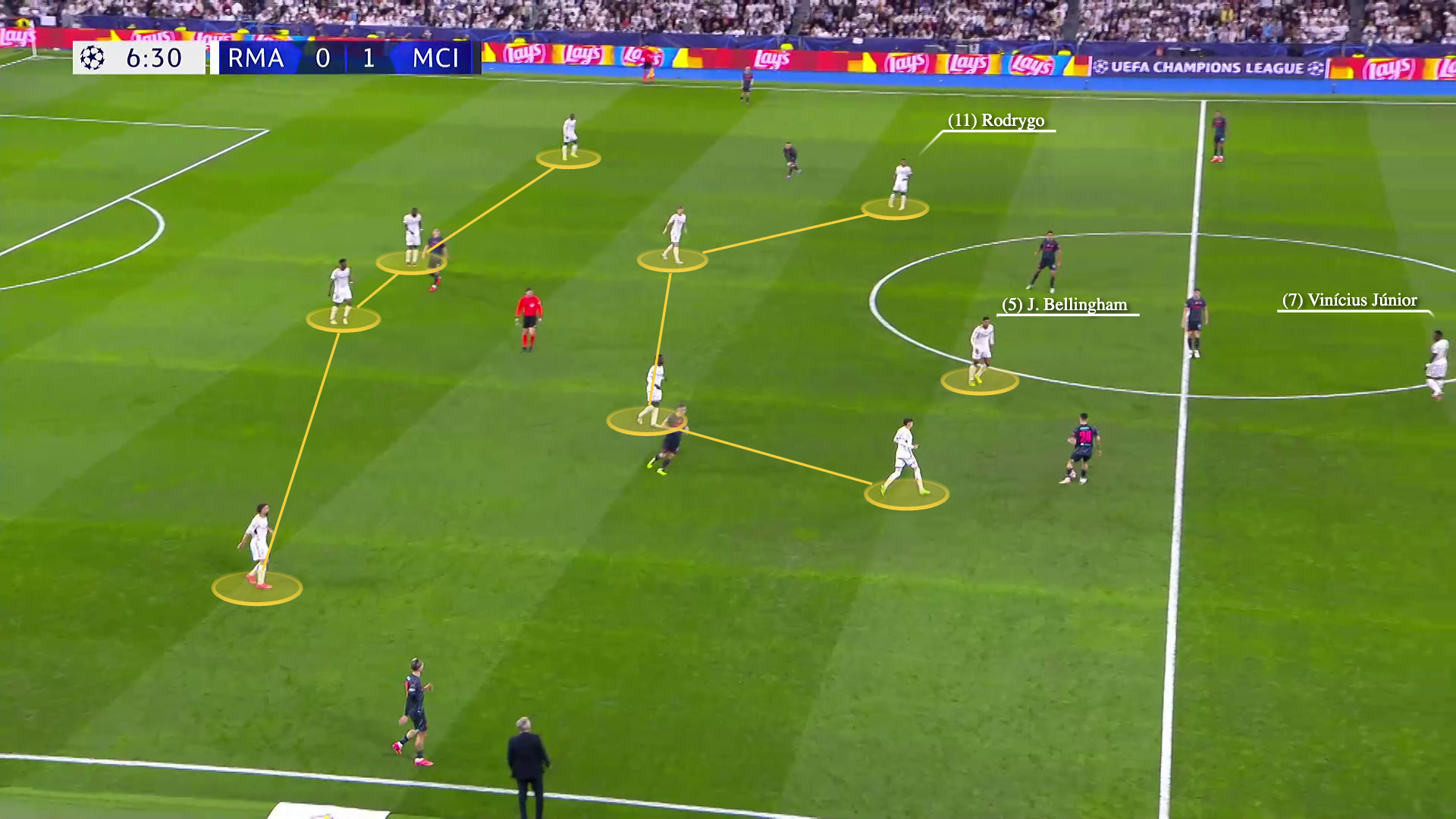 Image caption,
 Rodrygo started on the left with Jude Bellingham playing behind Vinicius Jr in a 4-4-1-1 shape out of possession - in the first leg of their 2024 quarter-final against Manchester City. This was a change from Bellingham playing on the left with Rodrygo up front alongside Vinicius - how Madrid set up for large parts of that season
What makes a great coach?
"In the end, coaching is teaching.
"You have to convince the players through your knowledge, that there is something they can improve on, and through that, I think you can convince them to believe in you even if they are older than you, even if they have won more Champions Leagues than you.
"In my methodology, the starting point is always the human relationship. One of my role models is Phil Jackson, a basketball coach in the NBA. He was forward thinking. If you read his books from when he was a player in the 1970s and 80s, it was forward thinking for us right now in the world of football.
"He used to gift books to his players.
"It is something I also did as manager of Botafogo. Once you get to know the player and the character of the player, you think about a book that he could read. Maybe he will never read it, but it is a good thing to connect with your players. If you know the character, the background, if he struggles with something, to read a story could be a good help for him.
"Books, films, nature, everything could be an inspiration for a football team if you find a way to tell a story."
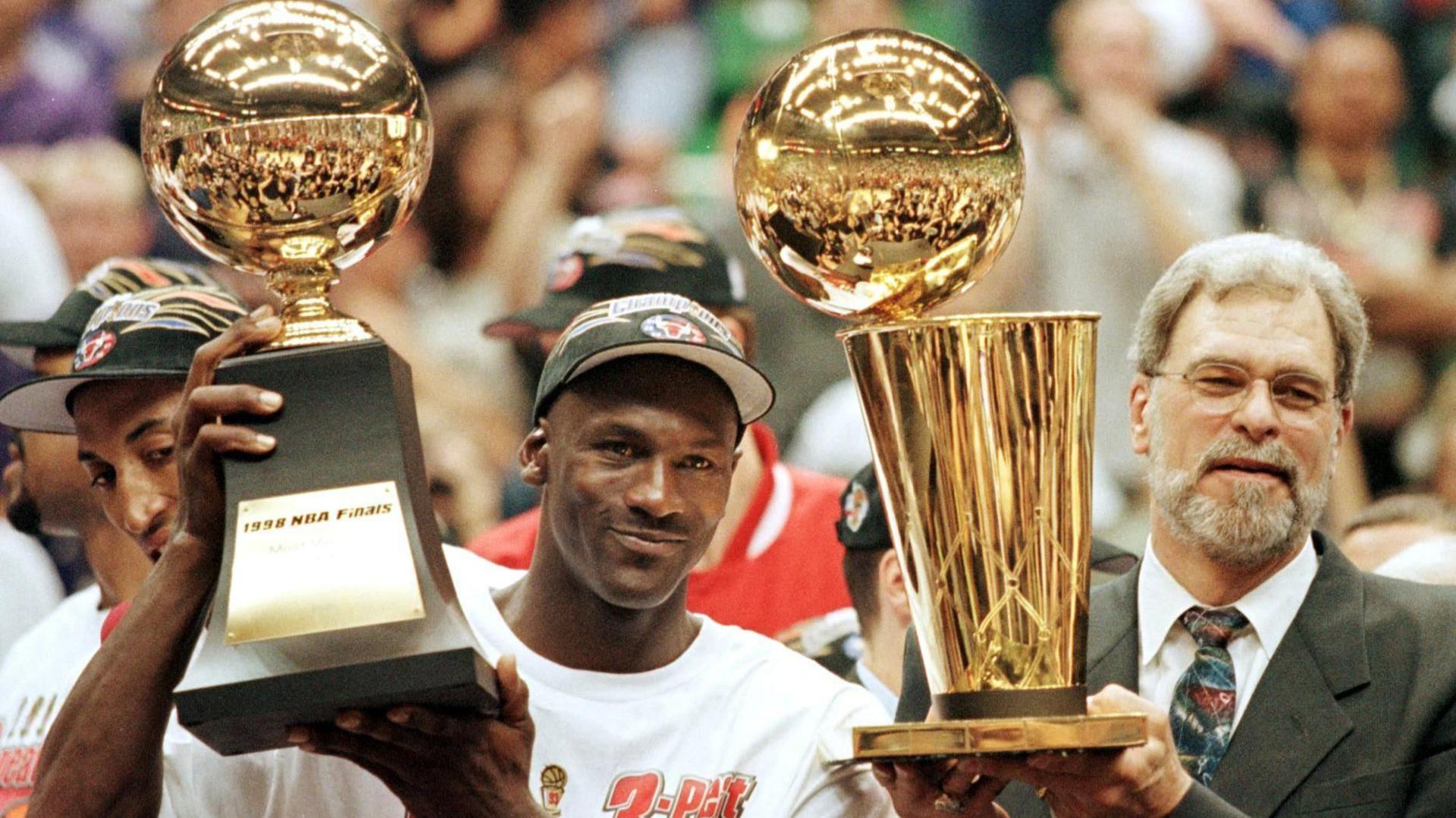 Image source, Getty ImagesImage caption,
 Legendary Chicago Bulls player–coach duo Michael Jordan and Phil Jackson lift the Most Valuable Player trophy and the Larry O'Brien trophy after taking their sixth NBA championship
Brazil's approach in a World Cup
"Brazilian people love football, they like to joga bonito (play beautifully), but they like to win a lot.
"If you analyse the actual situation of Brazil, there are really good defenders, some of the best in the world, really good transition players - the wingers, the 10s, and the strikers too.
"This gives you an idea of what kind of football you can play, but then there is the culture of the nation, to play attacking football, winning football, and to play with a smile. You have to consider that.
"You need to have a clear identity but to adapt. You have to be able to balance your ideas with the characteristics of the players and then the identity of the nation."
Despite being among the favourites in every tournament, Brazil won the most recent of their record five World Cups in 2002 and the pressure is on Carlo - who also tasted success at AC Milan and Chelsea - to end that wait this summer.
Wrapping up our conversation, I said: "It's not an easy job."
"Not an easy job, no," replied Davide. "And then you have to win the World Cup as well!"