 People holding signs in protest of NASA budget cuts on July 20, 2025. (Image credit: Space.com / Josh Dinner) Share this article 0 Join the conversation Follow us Add us as a preferred source on Google Newsletter Get the Space.com Newsletter
 Breaking space news, the latest updates on rocket launches, skywatching events and more!
Contact me with news and offers from other Future brands Receive email from us on behalf of our trusted partners or sponsors By submitting your information you agree to the Terms & Conditions and Privacy Policy and are aged 16 or over.You are now subscribed
Your newsletter sign-up was successful
Want to add more newsletters?
An account already exists for this email address, please log in. Subscribe to our newsletterA proposed fiscal year 2027 budget for NASA would cut the agency's overall funding by 23% and slash its science programs by nearly half, prompting strong opposition from the space community.
The Planetary Society, the world's largest independent space interest organization, issued a statement in response to the release of the FY 2027 top-line budget request for NASA, which would reduce the space agency's Science Mission Directorate from $7.25 billion to $3.9 billion — a 47% drop that advocates say would be the largest single-year cut to science funding in the agency's history, according to the statement.
The proposal closely mirrors a similar effort during the FY 2026 budget cycle, when the administration put forward nearly identical reductions. That plan was met with bipartisan resistance in Congress, which ultimately approved a $24.4 billion budget for NASA and preserved science funding at roughly $7.25 billion.
Despite that rejection, the FY 2027 request revives many of the same cuts, including a top-line budget of about $18.8 billion. Advocates warn the reductions could disrupt or cancel dozens of missions spanning planetary science, astrophysics and Earth observation — areas overseen by NASA's Science Mission Directorate.
The potential impact comes at a pivotal moment for NASA's science portfolio. Major projects in development include the Nancy Grace Roman Space Telescope — which is expected to launch later this year — as well as planetary missions like Dragonfly, which is aimed for Saturn's largest moon, Titan, and the asteroid-hunting Near-Earth Object (NEO) Surveyor. Significant funding reductions could delay or cancel such efforts, weakening U.S. leadership in space science.
At the same time, however, the proposal maintains support for human spaceflight initiatives, particularly the Artemis program, which aims to return astronauts to the surface of the moon later this decade. The emphasis follows a historic milestone with NASA's successful launch of Artemis 2 on April 1, marking the agency's first astronaut mission toward the moon since 1972. However, critics argue this prioritization of human exploration is coming at the expense of the agency's broader scientific mission.
Get the Space.com NewsletterContact me with news and offers from other Future brandsReceive email from us on behalf of our trusted partners or sponsorsHistorically, NASA's budget has fluctuated, but the scale of the proposed science cuts stands out. Adjusted for inflation, the plan would push funding toward levels not seen since the early days of the space age, before many modern scientific programs were established.
As in previous years, Congress will make the final decision. Lawmakers have repeatedly rejected deep cuts to NASA science, signaling strong support for maintaining a balanced portfolio that includes both exploration and research. In fact, last month, more than 100 members of the House of Representatives co-signed a bipartisan letter urging a $1.75 billion increase for NASA science, according to the statement.
This highlights a broad consensus that contrasts with the administration's proposed cuts, despite the president's stated goal of keeping NASA the world's premier space agency. With the FY 2027 proposal now on the table, Congress is expected to review it and debate the proposed cuts in the months ahead.
 Samantha MathewsonContributing Writer
Samantha Mathewson joined Space.com as an intern in the summer of 2016. She received a B.A. in Journalism and Environmental Science at the University of New Haven, in Connecticut. Previously, her work has been published in Nature World News. When not writing or reading about science, Samantha enjoys traveling to new places and taking photos! You can follow her on Twitter @Sam_Ashley13.
View MoreYou must confirm your public display name before commenting
Please logout and then login again, you will then be prompted to enter your display name.
Logout MORE FROM SPACE...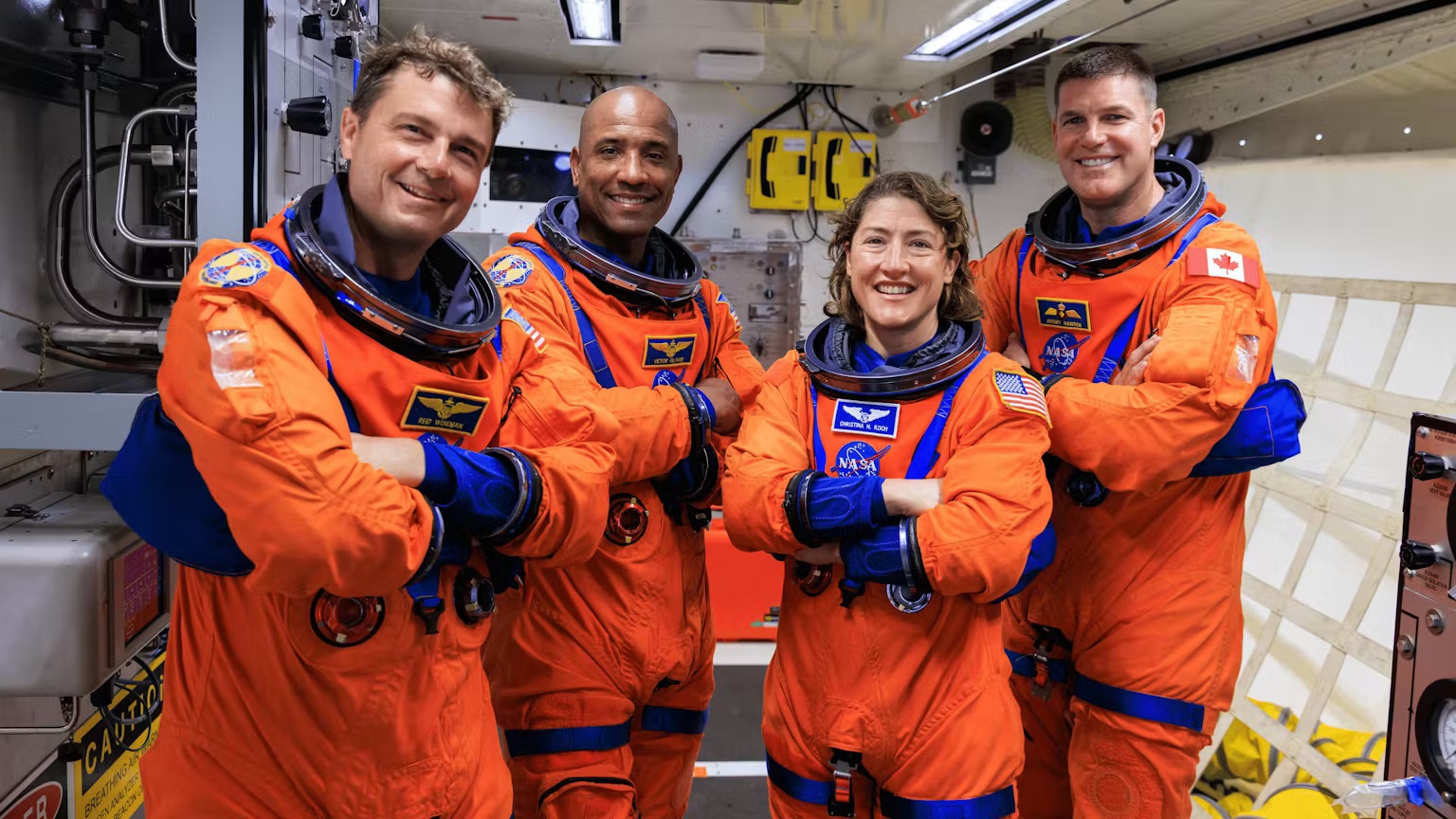 1Astronaut Victor Glover is the latest in a long line of Black American explorers − including York, the enslaved man who played a key role in the Lewis and Clark expedition
- 2NASA Artemis 2 astronauts to make historic moon flyby today. Here's what to expect hour by hour (timeline)
- 3Humanity is back at the moon! Artemis 2 astronauts arrive in lunar space
- 4When the moon hits your eye from your Orion ship up high, that's a 'mare' for Artemis 2
- 5Artemis 2 astronauts are about to see one of the rarest skywatching sights of all — a solar eclipse from beyond the moon