The patient: A 41-year old man in Iran
The symptoms: The man visited an outpatient clinic after a week of experiencing extreme discomfort during urination and pain above his pubic bone. His urine stream was weak, and he was unable to empty his bladder.
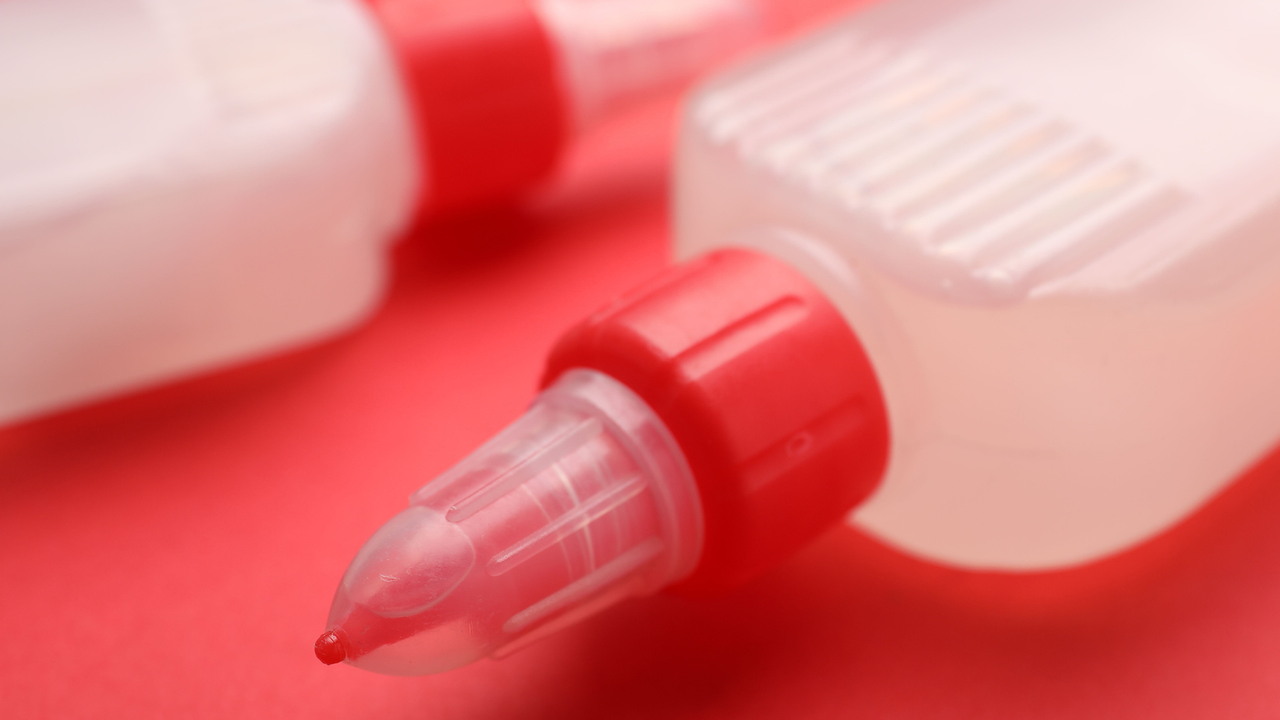
What happened next: The patient told the doctors that about a month earlier, he had begun to develop incontinence. He self-treated for two weeks by inserting superglue into his urethra.
At first, the superglue seemed to help. But after four days, he began to produce less and less urine and urination became painful. By the time of his clinic visit — two weeks after he stopped applying the superglue — he was barely able to urinate at all and was in constant pain, his doctors wrote in a report of the case.
The diagnosis: During a physical examination, the doctors noted that the man's penis was erect and that they felt a solid foreign body in the penile urethra. They also observed "brittle fragments of superglue" on the opening at the tip of his penis, they wrote in the report.
The doctors attempted to perform a cystoscopy, a procedure in which a tube fitted with a lens enables doctors to look inside the urethra. But the obstruction prevented them from inserting the tube far enough to see anything, and they decided to perform emergency surgery to remove the mass of hardened glue.
The treatment: Surgeons made an 0.8-inch (2 centimeters) incision in the glans, the bulb at the end of the penis. For 15 minutes, they bathed the urethra with 0.8 gallons (3 liters) of saline solution to saturate the glue plug and thus separate it from the walls of the urethra — a feat they eventually accomplished through "certain maneuvers," they wrote.
Finally, the glue broke loose. The doctors extracted a rod-shaped solid glue block measuring nearly 4 inches (10 cm) long.
After the patient recovered from surgery, his urination and urine analysis were normal. He was discharged five days later with a catheter that remained in place for 10 days, and he received prescriptions for antibiotics to prevent infection. At a follow-up visit in the sixth week after surgery, his urination was normal and he had no further complications.
The doctors did not identify the cause of the patient's prior incontinence.
What makes the case unique: Application of superglue in body cavities typically occurs in the ear or nose, according to past case reports. Usually, the glue can be dissolved with solvents, such as acetone. However, three other case reports in the medical literature describe patients intentionally inserting superglue into their urethras, and all of those cases required removal with endoscopy or surgery, the doctors in Iran reported.
Other dilemmas- Man who consulted ChatGPT about cutting out table salt ended up hospitalized with psychosis
- Doctors performed surgery to remove a mass in a woman's gut — and a bug-like creature immediately jumped out
- A joyful wedding nearly broke a woman's heart in a rare case of 'happy heart syndrome'
Urethra tissue is very delicate, and inserting anything into this sensitive tube risks damaging it, which can lead to serious infection. The insertion of foreign bodies into the urethra can also be painful, making the practice "relatively rare," the report's authors wrote.
If a person chooses to do this, they added, it may be to satisfy curiosity or as a result of intoxication or mental illness, but the most common motivation is sexual stimulation. Despite the risks, numerous case reports describe people pursuing pleasure by introducing a wide range of diverse objects into their urethras, including magnets, pencils, earphones, a dining fork, a thermometer, the ink chamber from a ballpoint pen, the metal tip of a screwdriver, a USB cable, a tree branch and three AAA batteries.
For more intriguing medical cases, check out our Diagnostic Dilemma archives.
This article is for informational purposes only and is not meant to offer medical advice.
Can you guess the diagnosis in these strange medical cases? Find out with our diagnostic dilemma quiz!