The origin of life on Earth remains a mystery. New research shows that comets almost certainly did not bring the chemical building blocks of life to our planet.
Life as we know it is based around carbon chemistry, also known as organic chemistry. Complex organic molecules are the fundamental building blocks of biochemical compounds such as nucleobases, amino acids, sugars and so on that act as the machinery for biochemistry on Earth.
Two big questions are where did this complex chemistry originate? Did these complex organic molecules form on Earth, or were they delivered here from space?
New research led by planetary scientist Richard Anslow of the Institute for Astronomy at the University of Cambridge has now seemingly ruled out comets as the origin of complex organic molecules on Earth.
"Historically, scientists thought that comets were important for the origin of life on Earth, because they carried carbon and nitrogen-bearing molecules, so these giant space snowballs were almost like a 'get-out-of-jail-free card' that brought all the molecules a planet would need to seed life," said Anslow in a statement.
Stripping the romance from the Earth's turbulent past
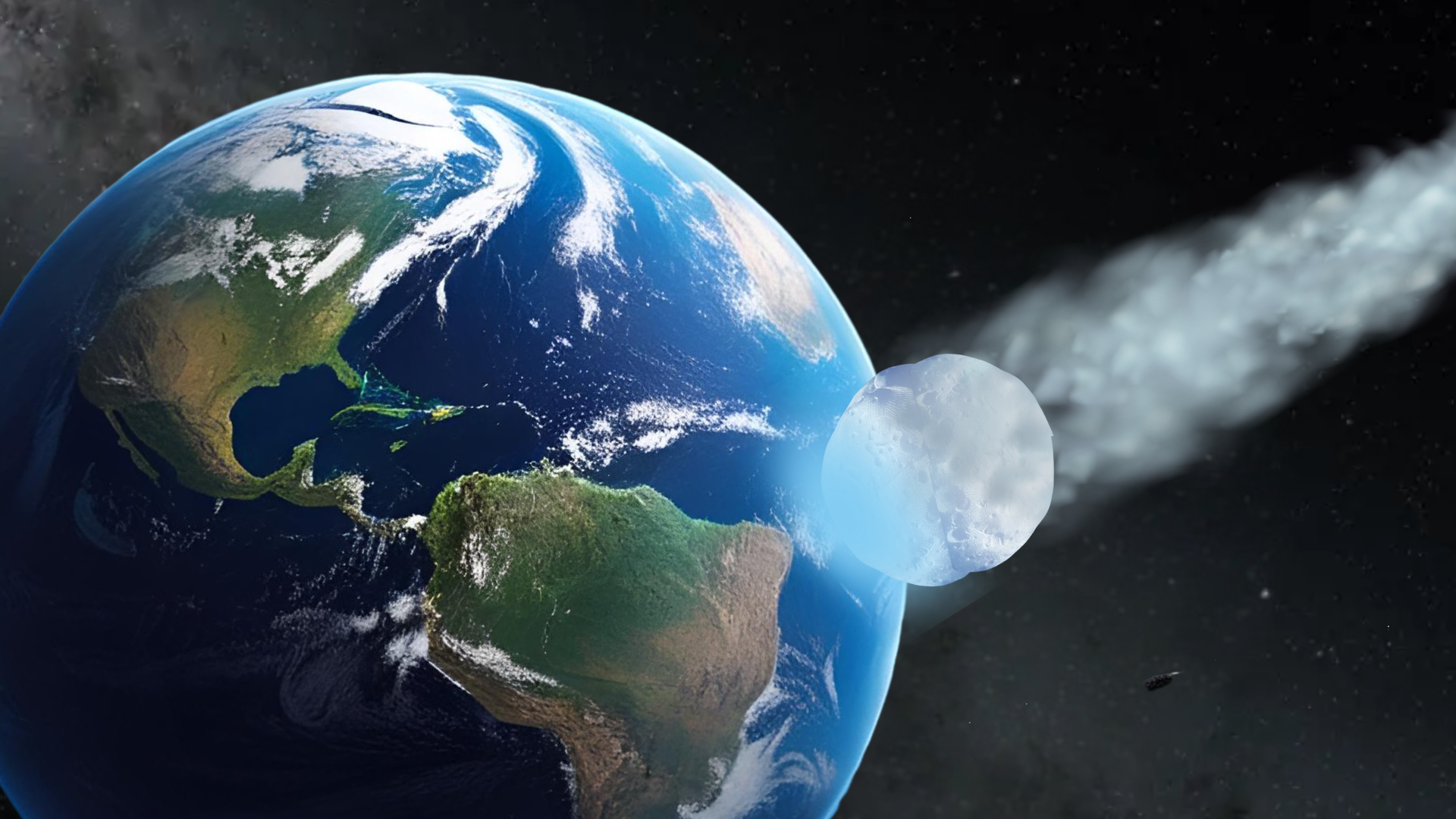
Comet impacts on Earth were much more frequent in the first half-billion years of the solar system’s existence, when there were still lots of debris leftover from the formation of the planets. For over a century comet impacts had been considered a prime suspect in the search for what brought the building blocks of life to Earth. However, while comets bringing the building blocks of life to Earth is "kind of a romantic idea," according to Anslow, the University of Cambridge researcher added that the team's results suggest that is highly unlikely.
Anslow and colleagues arrived at this conclusion based upon computer modeling by using the very latest simulations depicting the origin and evolution of comets and their orbits, their interactions with Earth's atmosphere as they enter it, and of the hypervelocity comet impacts themselves.
In particular, they used the fate of hydrogen cyanide as a proxy for what happens to complex organic molecules in comet impacts. Hydrogen cyanide is frequently found in comets and was even detected in the interstellar comet 3I/ATLAS.
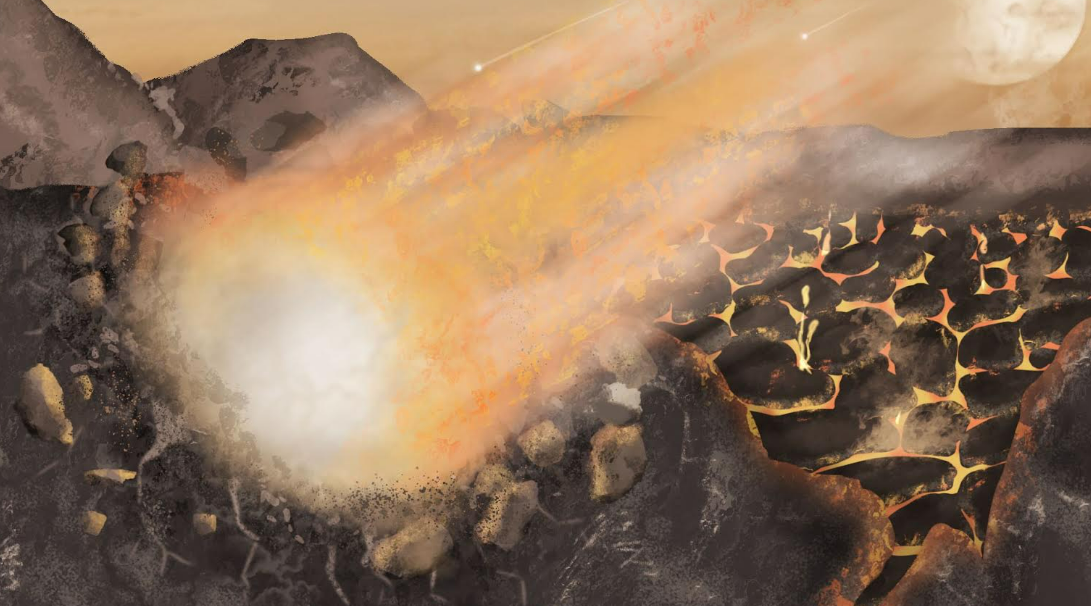
The problem is that comets are generally moving at too great a velocity. For organic molecules to survive impact, the impact velocity would have to be below 33,500 miles per hour (15 kilometers per second). Anslow and his colleagues found that, in general, comets travel too fast and enter Earth’s atmosphere at too sharp an angle for complex organic molecules to survive. Instead, they are mostly vaporized on impact. Even on the rare occasions that the complex organic molecules survived, they were usually not in great enough abundance to provide any meaningful prebiotic chemistry.
"It would really have to be a one-in-a-million occurrence, because not only would you need an impact at just the right speed and just the right angle, you would also need everything to happen after that point, in terms of the concentration and the speed at which the chemical origins of life got going," said Anslow. "We can’t rule out for certain that it happened that way, but it seems to be a really rare occurrence – at best, a one-off fluke."
Maybe life on Earth is a fluke
It is not yet known if the origin of life on Earth was a fluke, or whether life is plentiful in the universe, so a fluke occurrence could still have been a trigger for life on our planet.
However, researchers are coming around to alternatives, either that all the pre-biotic chemistry that resulted in life took place on Earth without requiring material from space, or asteroids instead brought those important molecules to Earth.
Scientists have found asteroids to be rich in those molecules – for example, the sample of material brought back by the OSIRIS-REx mission from the near-Earth asteroid Bennu contained all the building blocks of RNA.
However, other planets could have plausibly benefitted from comet impacts. The simulations showed that complex organic molecules in comets would stand a slightly better chance of surviving impacts on Mars, because of the Red Planet’s thinner atmosphere and lower gravity. "This is not to say it definitely happened on Mars, of course, but it suggests it would be unlikely if it happened on Earth and didn’t happen on Mars," said Anslow. "Or the other, perhaps more likely, alternative is that it didn’t happen on either planet."
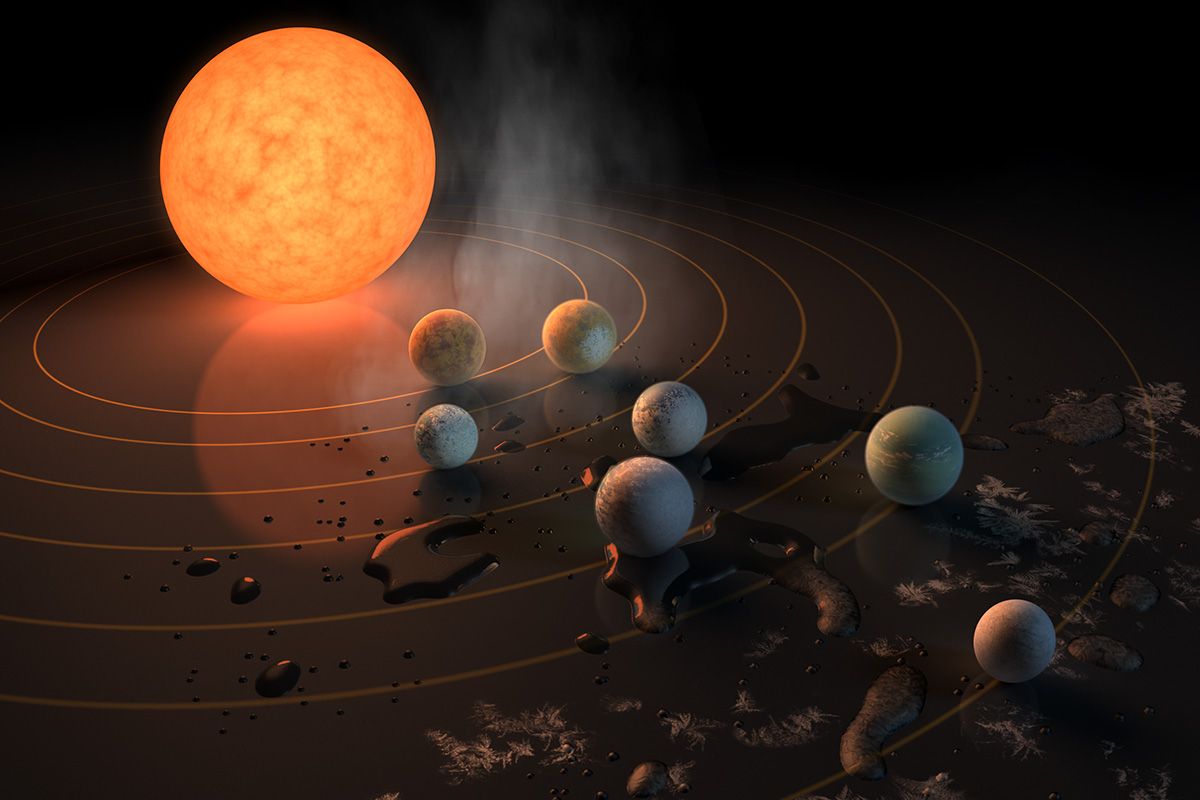
More intriguing are the possibilities on exoplanets, specifically the peas-in-a-pod multi-planet systems around red dwarf stars such as TRAPPIST-1, where all the planets are bunched up close.
In 2023 Anslow wrote a research paper describing how comets could gravitationally bounce from one planet to the next, losing velocity in the process so that when they crash into one of the planets, they impact is not so severe and complex organic molecules might have a chance to survive.
The team's research was published on 28 October in Scientific Reports.