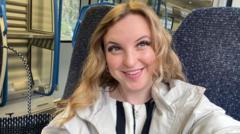

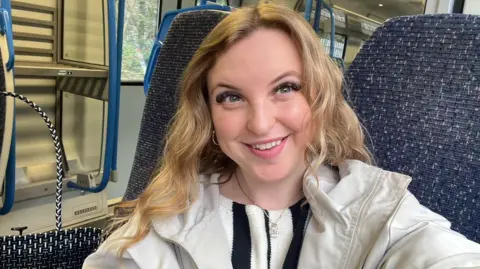
 Jade Boden-de MelJade Boden-de Mel has experienced chronic pain since she was 17
 A woman says doctors mistook her endometriosis for irritable bowel syndrome, as new figures show diagnosis delays are getting longer.
Jade Boden-de Mel first experienced "unbearable" pain at 17 but says medics could not identify the cause and prescribed the contraceptive pill to manage it.
She was not diagnosed with endometriosis until four years later, after a friend suggested the condition while she was at university.
A specialist carried out an ultrasound but "couldn't diagnose it from that," she said, "but she had enough evidence to suggest surgery the next day to one, diagnose and two, burn out the tissue".
New figures from charity Endometriosis UK show the average time to receive a diagnosis is now nine years and four months, up from eight years in 2020.
According to the NHS, endometriosis is a chronic condition in which cells similar to the womb lining grow elsewhere in the body and there is currently no cure.
Boden-de Mel said she was placed on a two-year NHS waiting list but accessed a specialist earlier through private care while she was in full-time education.
It took her a year to recover internally from surgery and she has since taken the pill for eight years to manage her symptoms.
"I've had a very supportive family and friends who've kind of taken it seriously, so other than the odd comment of 'I get painful periods too", everyone has been very understanding," she told BBC South East.
"But then it happens so often that it's almost like it's tiring. It's like, 'can't we be over this?'"
Despite her condition, she said she remains hopeful of starting a family one day.
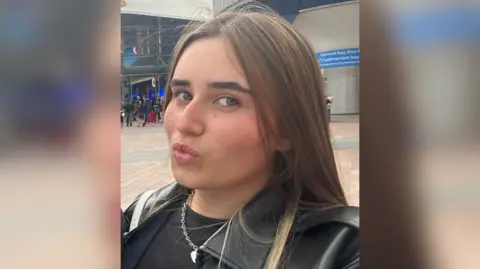 Emily KnellEmily Knell would like endometriosis to be counted as a disability due to the state it can leave you in
Emily Knell said she has experienced severe menstrual pain since she was 14 years old.
Doctors recommended she go on the combined pill to manage her pain, which used to cause her to pass out.
She then started getting migraines when she was 17 so doctors took her off the pill, which led to "really, really painful" periods.
"They swapped me to the mini pill but it made it worse, so I couldn't cope," the 20-year-old from Margate said.
"I was missing days off school," she said. "They just thought I was being dramatic. It was a really bad time."
Doctors 'did not know'
Even though she felt "lucky" with her medical care, Knell said doctors just did not seem to know what endometriosis was.
"I went to a gynaecologist, I went to the sexual health clinic, I went literally everywhere.
"They wouldn't even bring endometriosis up", she said. "They would just try and find another cause."
After waiting a year to go private, the endometriosis was eventually found when Knell underwent surgery.
She said she feels some doctors "don't really know what to do".
She said her pain therapist, a male doctor, told her he did not know about endometriosis or how he could deal with it.
"Doctors have basically said now there's nothing else we can do because I'm so young, they can't do any more surgery," the McDonald's shift manager told the BBC.
She said there should be more research and awareness around the condition and would like it to be classed as a disability one day.
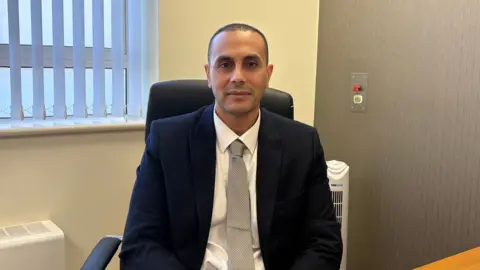 Danielle MalgwiDr Ahmed El Gohari has been working in gynaecology since 2013
Consulting gynaecologist Ahmed El Gohari, who has worked in gynaecology for 13 years, encourages women with the condition to advocate for themselves.
He said many patients he sees have suffered for years before being referred to a specialist.
"The pain has either been ignored or put down to normal life or stress," he said.
El Gohari is optimistic about attitudes to endometriosis changing but said he still believes symptoms are being ignored.
He said more awareness can be brought through women speaking out about their symptoms.
The specialist, who works at Nuffield Health Tunbridge Wells Hospital, said women "need to be aware of what sort of treatment or service is available" to help them.
He said patients can ask for a referral to an endometriosis specialist.
"Don't sit down and be in pain. And don't be shy or ashamed that you're in pain," he said.
"Our duty here is to help you and provide good support to you."

Follow BBC Kent on Facebook, on X, and on Instagram. Send your story ideas to [email protected] or WhatsApp us on 08081 002250.
Related stories