 Earth's energy imbalance is off the charts, but scientists aren't sure what's causing the increase. (Image credit: Kevin Carter/Getty Images) Share this article 0 Join the conversation Follow us Add us as a preferred source on Google Newsletter Sign up for the Live Science daily newsletter now
 Get the world’s most fascinating discoveries delivered straight to your inbox.
Become a Member in Seconds
Unlock instant access to exclusive member features.
Contact me with news and offers from other Future brands Receive email from us on behalf of our trusted partners or sponsors By submitting your information you agree to the Terms & Conditions and Privacy Policy and are aged 16 or over.You are now subscribed
Your newsletter sign-up was successful
Want to add more newsletters?
Join the club
Get full access to premium articles, exclusive features and a growing list of member rewards.
Explore An account already exists for this email address, please log in. Subscribe to our newsletterThe world's best climate models are not capturing the true extent of Earth's energy imbalance, and scientists aren't sure why.
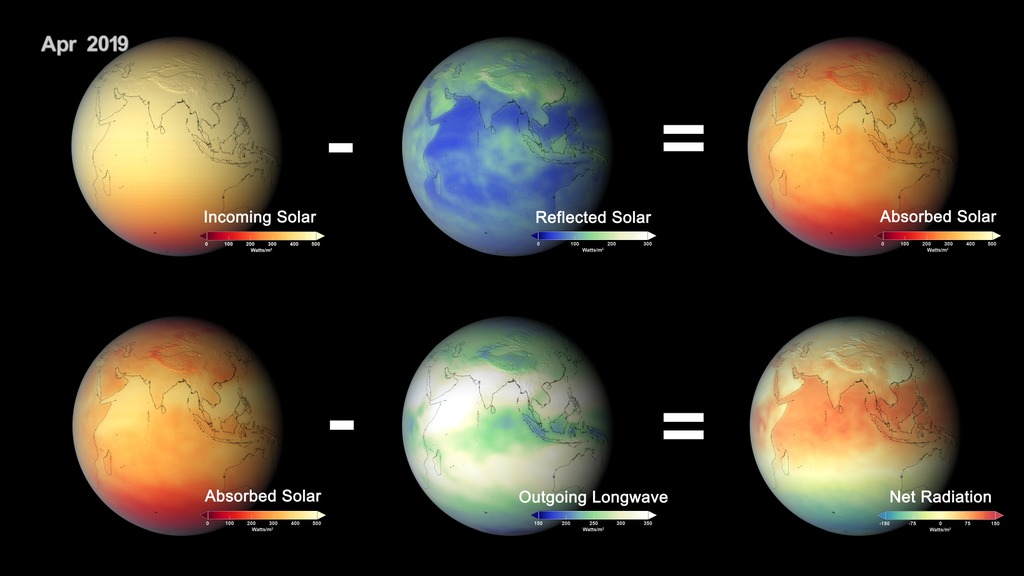
Instead of mirroring real-life satellite observations, the models consistently underestimate a growing gap, or imbalance, between the amount of energy Earth receives from the sun and the amount the planet radiates into space, a new study shows. It's unclear what missing component would bring the models up to speed, but researchers think it could be related to how clouds interact with small particles in the atmosphere known as aerosols.
Satellite observations show that Earth's energy imbalance has more than doubled over the past two decades and risen especially fast since 2010. More energy is being trapped in the atmosphere than is expelled into space, driving up temperatures, according to the study. Human emissions of greenhouse gases are to blame for most of the energy imbalance, but scientists say there are other factors at play.
In 2023, the imbalance reached 1.8 watts per square meter (0.16 watts per square foot), which was twice what climate models estimated based on rising greenhouse gas emissions. Models in general show an increase in Earth's energy imbalance, but the rate differs between simulations, and they never mirror exactly what satellite observations show, Tianle Yuan, an atmospheric scientist at the University of Maryland, Baltimore County and NASA's Goddard Space Flight Center, told Live Science in an email.
Researchers have tried to explain this discrepancy by proposing that the simulations may not fully account for feedback processes, natural variability and declines in aerosol emissions. To find answers, Yukimoto and his colleagues reconstructed Earth's energy imbalance between 2001 and 2024, using 15 state-of-the-art climate models, satellite radiation data and surface temperature records.
The results, published Feb. 22 in the journal Geophysical Research Letters, confirm that some processes in the climate system are missing from the models. The simulations underestimated the amount of energy that Earth absorbed from the sun, particularly between 2010 and 2024, when satellite data shows that Earth's energy budget was completely out of whack.
Sign up for the Live Science daily newsletter nowContact me with news and offers from other Future brandsReceive email from us on behalf of our trusted partners or sponsors"Their analysis is solid and straightforward," said Yuan, who was not involved in the study. "They analyzed different emission scenarios and none can fully simulate the observations. They find a failure of models to capture the strong increase in [Earth's energy imbalance]."
This failure suggests that the models are missing hidden mechanisms that are reducing the amount of energy Earth radiates into space. Climate models account for greenhouse gases, but they may not capture the effect that rising surface temperatures have on clouds and other elements that regulate how much energy escapes into space, according to the study. There is also a question regarding the influence of aerosols, which have declined since 2010 due to cuts in China's emissions and new shipping regulations.
High aerosol concentrations lead to more abundant and smaller cloud droplets, which reflect more light and energy into space. Aerosols also affect the lifespan of clouds, Yukimoto said. Thus, falling aerosol concentrations in the atmosphere may influence how clouds scatter light and energy.
"Aerosols are heterogeneous in type and distribution, and their effects vary depending on the location and conditions of the affected clouds, making them extremely difficult to [model]," Yukimoto said.
If the sharp increase in Earth's energy imbalance since 2010 is due to cuts in aerosol emissions, the rate of increase should decline as aerosol levels stabilize, Yukimoto said. If, instead, the increase is from clouds reacting to rising surface temperatures, Earth's energy imbalance could grow bigger and warm the planet faster than greenhouse gases alone could. But "our results contradict this," Yukimoto said.
RELATED STORIES—Extreme wildfires, droughts and storms could happen even under moderate global warming, study finds
—32 weird ways to fight climate change that just might work
The gap between observations and models is widening. To get more realistic results, scientists could get the models to more accurately represent the impact of sea surface temperatures and aerosols on clouds, Yukimoto said.
Cloud-aerosol interactions may be the key to fixing the models, and several studies support this idea — but uncertainties remain, Yuan said. "It would be nice to get more details such as how subsets of models perform differently and dive into the possible causes of this underestimation by models," he said.
Article SourcesYukimoto, S., Kawai, H., Oshima, N., & Deushi, M. (2026). Emerging effective radiative forcing in the radiative imbalance since 2010. Geophysical Research Letters, 53(4). https://doi.org/10.1029/2025gl119913
 Sascha PareStaff writer
 Sascha is a U.K.-based staff writer at Live Science. She holds a bachelor’s degree in biology from the University of Southampton in England and a master’s degree in science communication from Imperial College London. Her work has appeared in The Guardian and the health website Zoe. Besides writing, she enjoys playing tennis, bread-making and browsing second-hand shops for hidden gems.
View MoreYou must confirm your public display name before commenting
Please logout and then login again, you will then be prompted to enter your display name.
Logout LATEST ARTICLES 1Chinese satellite with robotic 'octopus arm' passes key refueling test in orbit — making longer-lived space assets more likely
- 2'Not how you build a digital mind': How reasoning failures are preventing AI models from achieving human-level intelligence
- 3Scientists cured type 1 diabetes in mice by creating a blended immune system
- 4Native Americans invented dice and games of chance more than 12,000 years ago, archaeological study reveals
- 5Artemis II blasts off: Humans are on their way back to the moon