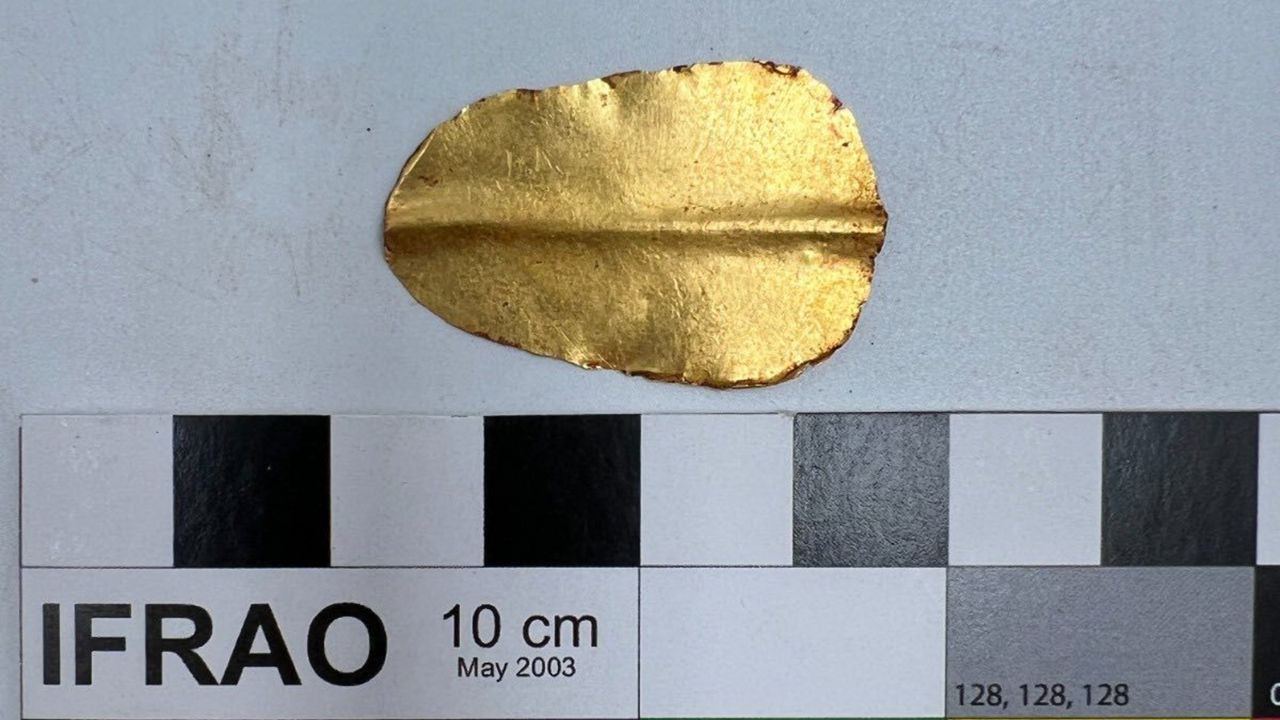
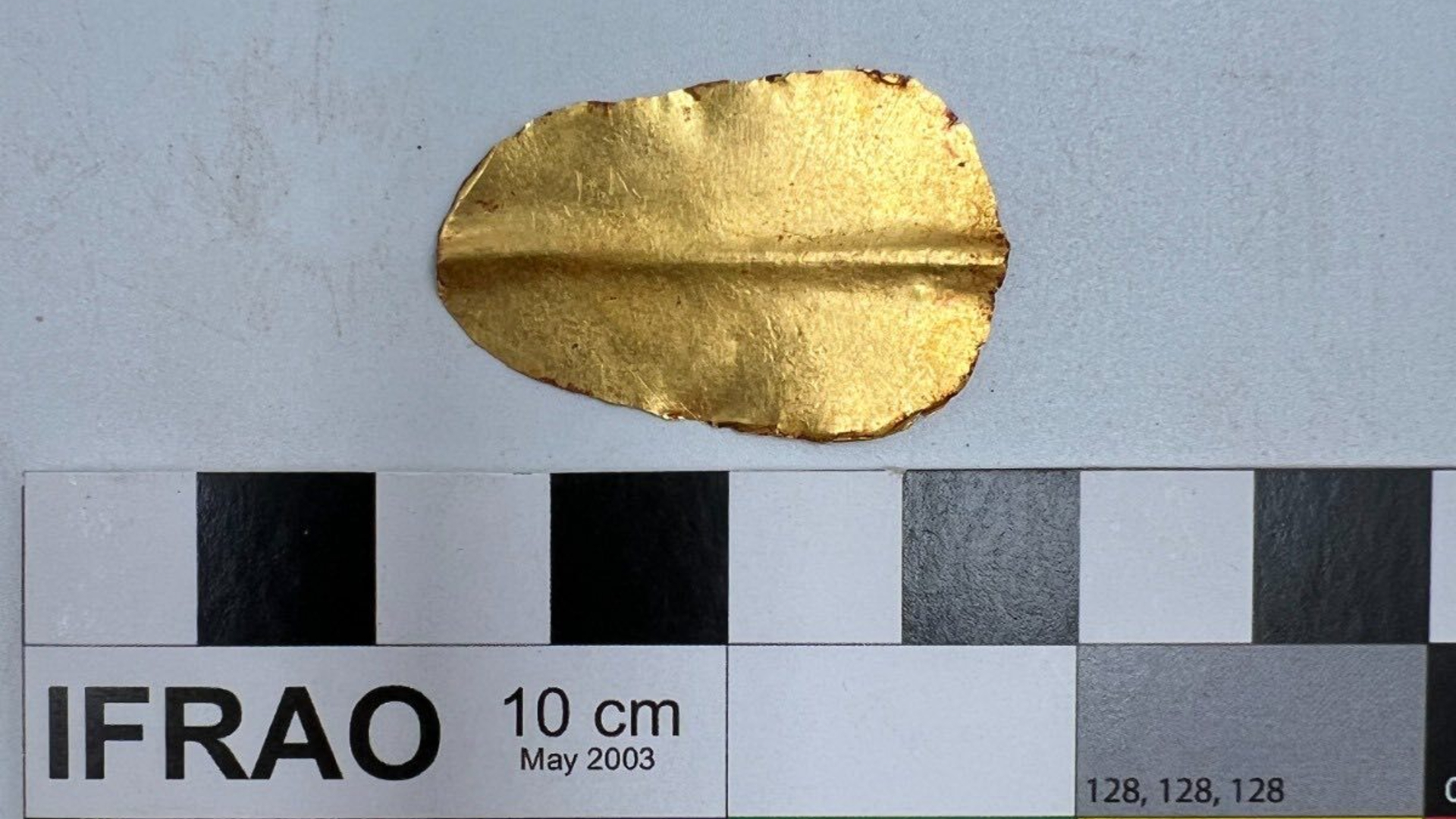
 One of the gold tongues found inside a mummy at the archaeological site of Oxyrhynchus in Egypt. (Image credit: Courtesy of the Egyptian Ministry of Tourism and Antiquities) Share this article 0 Join the conversation Follow us Add us as a preferred source on Google Newsletter Sign up for the Live Science daily newsletter now
 Get the world’s most fascinating discoveries delivered straight to your inbox.
Become a Member in Seconds
Unlock instant access to exclusive member features.
Contact me with news and offers from other Future brands Receive email from us on behalf of our trusted partners or sponsors By submitting your information you agree to the Terms & Conditions and Privacy Policy and are aged 16 or over.You are now subscribed
Your newsletter sign-up was successful
Want to add more newsletters?
Join the club
Get full access to premium articles, exclusive features and a growing list of member rewards.
Explore An account already exists for this email address, please log in. Subscribe to our newsletterArchaeologists in Egypt have discovered a Roman-era mummy with a copy of Homer's epic poem the "Iliad" inside its abdomen — a unique find that archaeologists are calling "exceptional."
Written on papyrus in Greek, the text records part of Book 2 of the "Iliad," which details the legendary Trojan War. The text found in the mummy lists the ships used against the city of Troy, according to a statement from the University of Barcelona. It would have been placed within the abdomen during the embalming ritual.
The site of Oxyrhynchus has been excavated off and on for well over a century. In the late 19th and early 20th centuries, archaeologists found around 500,000 fragments of papyri at the site.
The newly discovered "papyrus was placed on the abdomen to protect [the] deceased in the afterlife," Esther Pons Mellado, co-director of the archaeological mission in Oxyrhynchus, told Live Science in an email.
Pons Mellado and Maite Mascort, who is also a co-director of the mission, explained that during the time the Romans controlled Egypt, it was common for papyri to be put inside mummies, in the chest or abdomen. However, it's unclear why ancient Egyptians thought papyri would help protect the deceased, Pons and Mascort said.
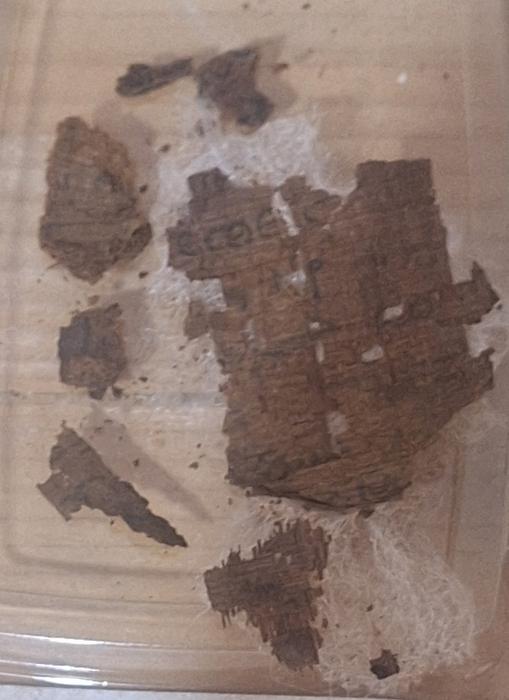
Remarkably, this is the first time a copy of Homer's "Iliad" has been found inside a mummy.
Sign up for the Live Science daily newsletter nowContact me with news and offers from other Future brandsReceive email from us on behalf of our trusted partners or sponsors"The discovery is exceptional: it is the first time in the history of archaeology that a Greek literary text has been found deliberately incorporated into the mummification process," the University of Barcelona statement noted.
Although other Greek literary texts have been unearthed at Oxyrhynchus, "the real novelty" of the newfound literary papyrus is its "funerary context," Ignasi-Xavier Adiego, a linguistics professor at the University of Barcelona who analyzed the papyrus, said in the statement. He explained that papyri found inside mummies are often magical texts.
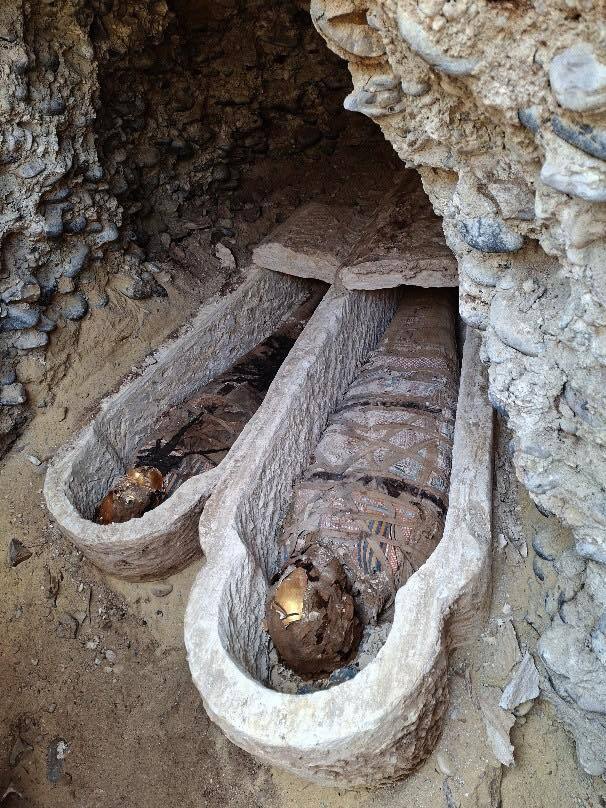
So far, archaeologists don't know much about the mummy with the "Iliad" papyrus. "We know that [it] was a male mummified individual but it's still under investigation," Pons and Mascort wrote in the email. They noted that the person was an adult.
The "papyrus is very important and relevant, but of course the study is not finished yet," Mascort and Pons wrote.
Gold and copper tongues
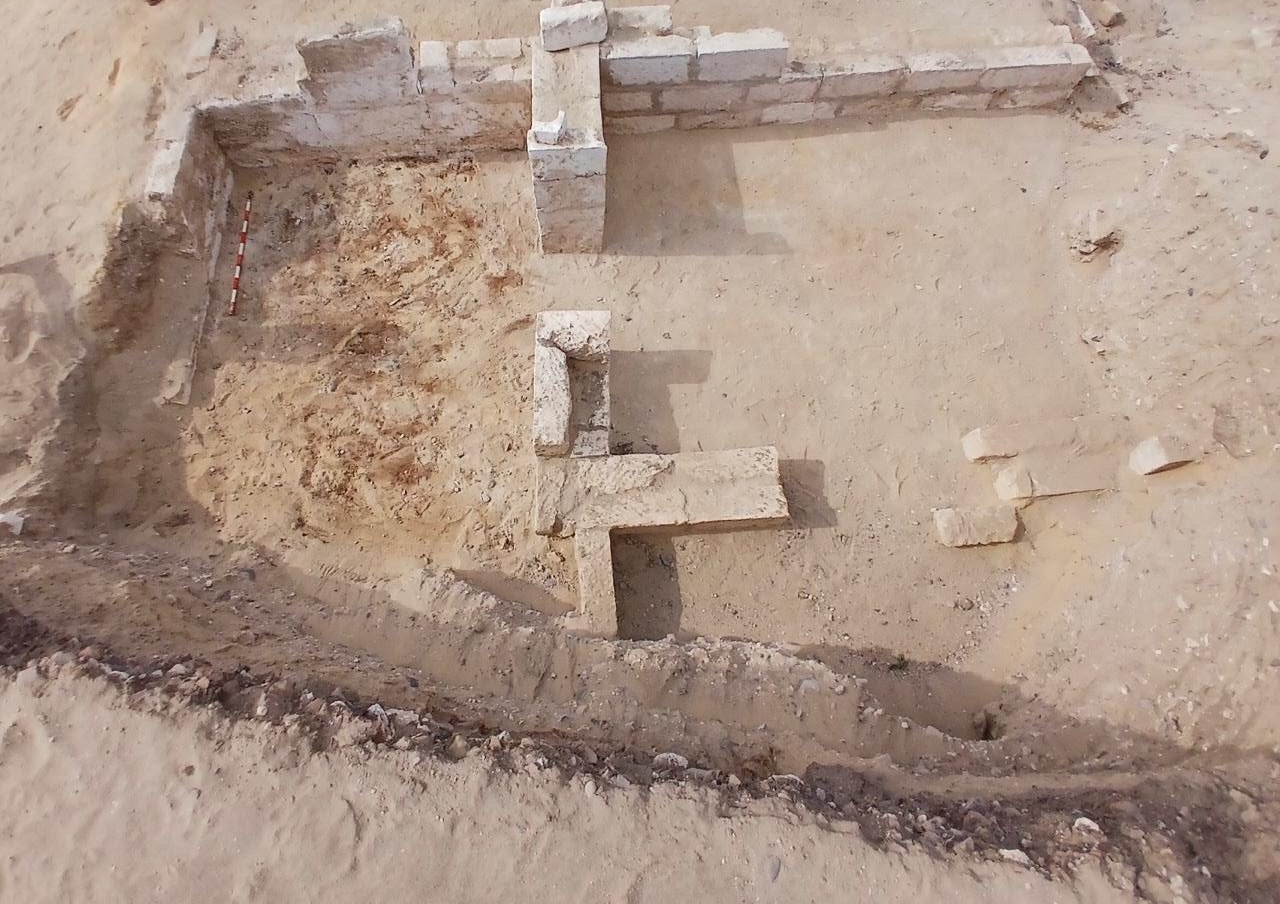
The "Iliad" mummy was found during a November-December 2025 excavation of a cemetery at Oxyrhynchus. The team's previous excavations at the cemetery revealed more than a dozen mummies with gold tongues, which ancient Egyptians thought would help the mummies communicate in the afterlife.
Related Stories- AI is deciphering a 2,000-year-old 'lost book' describing life after Alexander the Great
- 1,900-year-old papyrus 'best-documented Roman court case from Judaea apart from the trial of Jesus'
- 2,000-year-old RSVP: A birthday invitation from the Roman frontier that has the earliest known Latin written by a woman
The team found three additional gold tongues and one copper tongue during the November-December 2025 excavation, a translated statement from Egypt's Ministry of Tourism and Antiquities said. For the ancient Egyptians, gold symbolized the flesh of the gods and it was thought that having a tongue made of gold would help you communicate with them. It's not clear why copper was used for one of the tongues.
It's also unknown if the mummy with the "Iliad" text had a gold or copper tongue; study of the mummy is ongoing.
TOPICS Owen JarusLive Science Contributor
Owen Jarus is a regular contributor to Live Science who writes about archaeology and humans' past. He has also written for The Independent (UK), The Canadian Press (CP) and The Associated Press (AP), among others. Owen has a bachelor of arts degree from the University of Toronto and a journalism degree from Ryerson University.
View MoreYou must confirm your public display name before commenting
Please logout and then login again, you will then be prompted to enter your display name.
Logout LATEST ARTICLES 1Artemis moon landing could face long delay while NASA waits for next-generation spacesuits
- 2Gene therapy improves hearing in 90% of patients with inherited deafness in largest trial of its kind
- 3Oil spills from Iran war may contaminate water and food supply and threaten protected wildlife refuge
- 4NASA's Curiosity rover finds a surprising number of giant 'dragon scales' littered across Mars
- 5Watch an AI-powered table tennis robot beat elite players