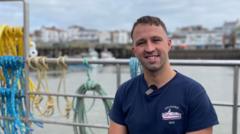

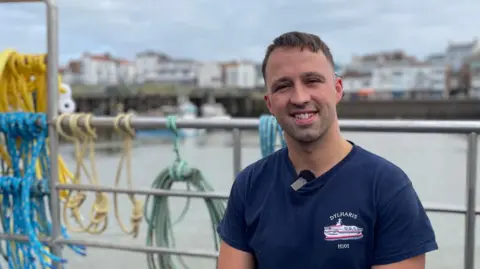
 BBCGrant Watson, who works on a shellfishing boat, says the industry "works hard" to reduce its impact on marine ecosystems
Fishermen on the East Yorkshire coast say a simple redesign for thousands of lobster pots is protecting the wider marine environment.
An "escape hatch" built into the side of pots is preventing so-called "bycatch" and allowing young lobsters, fish and other marine life to escape.
Bycatch – the unintentional capture of non-target species – is causing increasing concern to conservationists.
Grant Watson, who works aboard a Bridlington-based fishing boat, said the redesigned pots were helping ensure a "stronger future" for the shellfish industry by minimising its impact.
"It's letting the smaller stuff get out. It reduces fighting in the pots between species. It's reducing deaths in the pots," Watson added.
A recent report by Wildlife and Countryside Link found thousands of protected seabirds, more than 1,000 porpoises and dolphins, and dozens of whales were dying through bycatch each year.
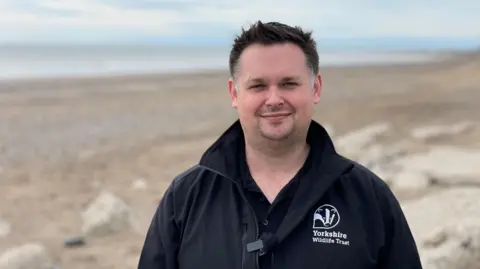 Andy van der Schatte Olivier is calling on the government to implement a bycatch policy
 A notable case happened on a beach in Bridlington three years ago, when dozens of seabirds were killed after becoming trapped in a discarded net.
Yorkshire Wildlife Trust has joined calls from other marine conservation groups for a government policy to tackle the issue.
Andy van der Schatte Olivier, marine programme manager at the trust, said this was "vital" for the future of many species.
He said the trust was "working well" with the local fishing industry to "improve awareness" and reduce bycatch, but wanted ministers to act.
"We are calling for the government to immediately put in a bycatch action plan," he added.
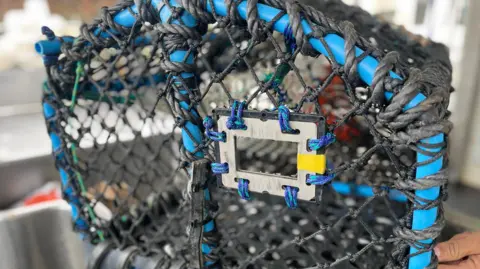 The lobster pot hatch allows smaller marine creatures to escape
A spokesperson for Wildlife and Countryside Link said the government had been slow to develop plans to reduce bycatch, while rules prevented fishermen near UK shores from putting acoustic devices on their nets to deter dolphins.
The government said it was committed to "restoring oceans to good health" and had been trialling deterrents since 2019.
Fishermen say they have been working closely with conservation organisations.
The report highlighted the work of fisherman Rex Harrison, who redesigned his nets in order to reduce bird bycatch.
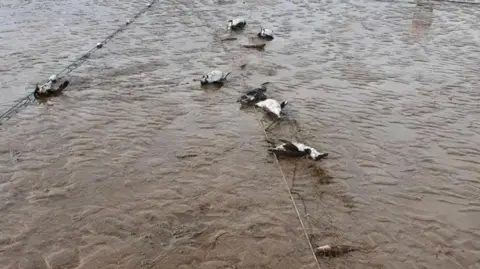 Whitby Wildlife SanctuaryIn 2023, seabirds were found trapped in fishing nets on Bridlington beach
Watson, who fishes on the Dylharis, said the industry took its responsibilities seriously.
"The escape hatches are definitely a good thing. Marine life needs to be there for our future as well and if we can help it then it also helps our industry.
"We're all conscious of nature as fishermen and there's some amazing wildlife out there."
A spokesperson for the Department for Environment, Food and Rural Affairs said: "This government is committed to restoring our oceans to good health and we are taking action to reduce the bycatch of marine species.
"Our flagship programme, Clean Catch, uses electronic monitoring to collect bycatch data and evaluate the effectiveness of mitigation measures, and our new Seabird Bycatch Action Plan will look to reduce seabird deaths in and around English waters."
Listen to highlights from Hull and East Yorkshire on BBC Sounds, watch the latest episode of Look North.
Download the BBC News app from the App Store for iPhone and iPad or Google Play for Android devices
More on this story