Economy
Family income rose and poverty fell in 2025 — but safety net cuts could erase gains September 15, 20262:29 PM ET
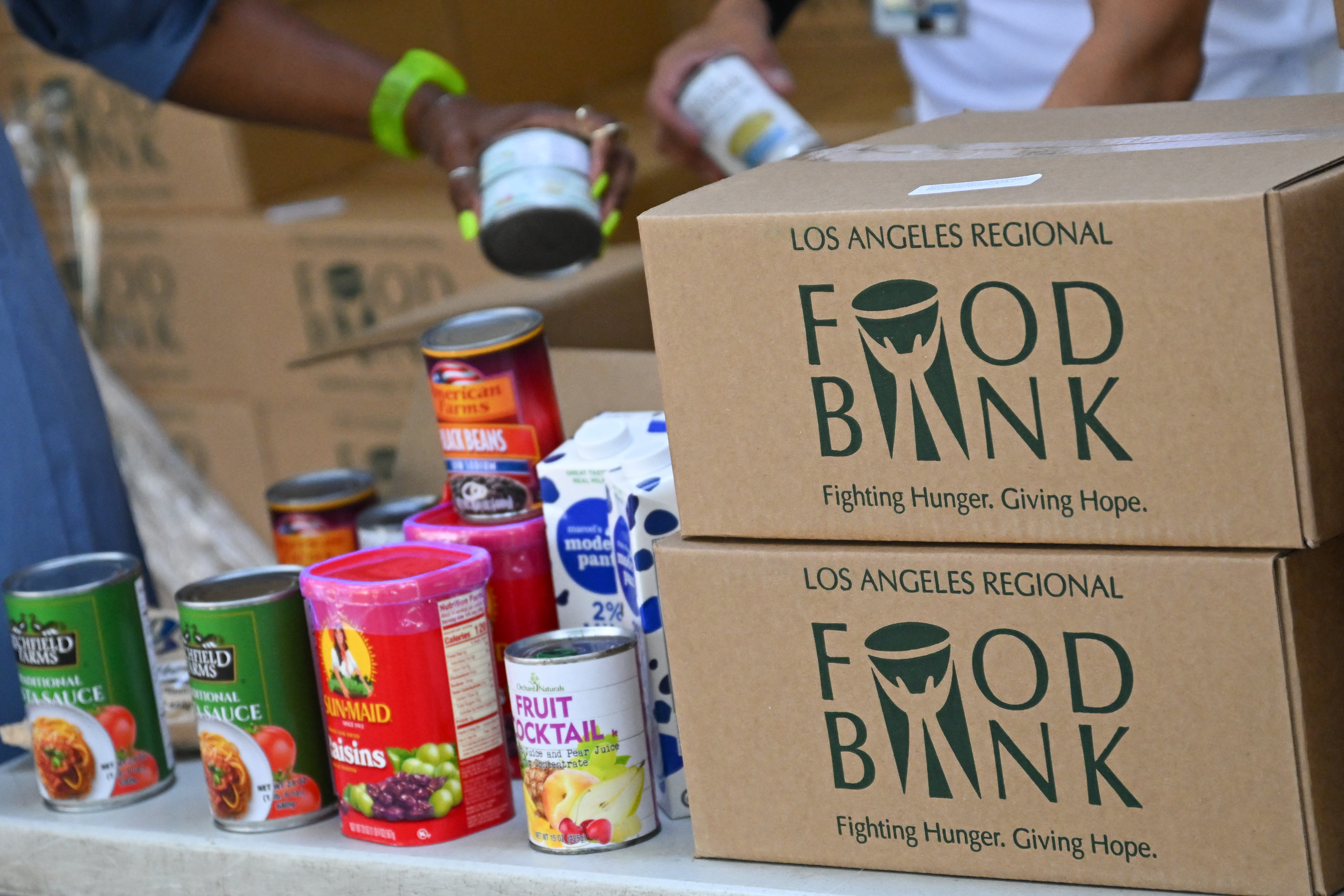
The Los Angeles Regional Food Bank provided boxes of groceries for a food giveaway in August. Food insecurity is expected to increase as government assistance programs are scaled back. Patrick T. Fallon/AFP hide caption
toggle caption Patrick T. Fallon/AFPThe average American family made more money last year than in 2024, while the number of people living in poverty fell slightly, according to a new report from the Census Bureau.
The annual snapshot of last year's family income, poverty and health coverage comes as Americans are currently wrestling with stubborn inflation that's been rekindled by the war with Iran. Prices have been climbing faster than average wages for the last five months.

Planet Money Newsletter
Has the economy gone C-shaped?
In 2025, by contrast, families saw real improvements in their purchasing power. The average family's income rose 2.6% last year, after adjusting for inflation, to $87,460. Families at the top of the income ladder saw bigger gains than those at the bottom.
Analysts say those gains could be eroded by cuts to the social safety net. In 2025, programs such as Supplemental Nutrition Assistance (SNAP) helped keep many families out of poverty, as measured by a special yardstick that includes government aid. Some of those programs are being scaled back as part of the sweeping tax cut package passed by the GOP Congress last year. Results of those cuts are likely to be reflected in future Census tallies.
Health insurance coverage held steady in 2025 but is expected to fall now that enhanced subsidies for Obamacare coverage have lapsed. Stricter work requirements for Medicaid are also set to take effect next year.

Planet Money Newsletter
The hidden costs of cutting Medicaid
"Things like SNAP and Medicaid made a really big difference in lowering poverty and expanding health coverage," says Sharon Parrott, president of the left-leaning Center on Budget and Policy Priorities. "Instead of building on that improvement and recognizing the record of success of things like SNAP and Medicaid, Republican policymakers enacted very deep cuts, historically large cuts that right now are taking food assistance and health coverage away from people, putting upward pressure on poverty, increasing the ranks of the uninsured, and really taking us in the wrong direction."
The share of people living in poverty declined last year to 10.2% from 10.7% in 2024. In 2025, 34.5 million people in the country fell below the poverty line, compared to 36 million the previous year.
A supplemental measure of poverty, which accounts for taxes, government benefits and additional expenses showed somewhat higher levels of poverty — 13.1%. This figure was little changed from 2024.
While average family income rose last year, some families did better than others. Families in the top 10% of income saw gains of 1.7%, while those in the bottom 10% saw little change. On average, African American families saw the largest increase in income last year — 4.8% — but at $59,980, the median income among Black families remains far lower than for white ($91,930) or Asian ($126,300) families.

National
For those who help the poor, 2025 goes down as a year of chaos
"2025 becomes a benchmark of sorts," Parrott says. "We saw these modest gains. We saw some improvement in poverty. We saw health insurance hold steady at relatively low rates. And we saw real wage gains. And on almost every measure, things are worse today."
NPR does not offer or accept money for coverage or interviews. Anyone who makes such an offer or request is not an NPR employee and does not represent NPR.