
The U.S. Food and Drug Administration (FDA) recently approved the first mRNA vaccine for seasonal influenza, bringing a bumpy approval process to a close.
The shot's approval appears to contradict the federal government's generally unfavorable view of mRNA vaccines. The U.S. Department of Health and Human Services (HHS) terminated half a billion dollars in funding for mRNA vaccine development, impacting 22 projects. A key vaccine advisory committee was remade to include people who have been vocally opposed to mRNA vaccines. Health Secretary Robert F. Kennedy Jr. has falsely called the mRNA-based COVID-19 shots the "deadliest vaccines ever made" and incorrectly claimed that mRNA vaccines don't work well against upper-respiratory viral infections.
Does the approval of a new mRNA vaccine signal a shift in this sentiment? Not necessarily, experts told Live Science.
"I don't read this as a shift in the administration's stance on mRNA," Jeff Coller, a distinguished professor of RNA biology and therapeutics at Johns Hopkins University, said in an email. Coller is also a co-founder of the Alliance for mRNA Medicines, an international association aimed at advancing mRNA technology, and he advises several RNA companies.
The approval does suggest, however, that the FDA's approval process isn't completely compromised by anti-mRNA sentiment, Coller said.
"What the approval does signal, and I think this is the more useful story: the statutory machinery still works when it is allowed to run," Coller said. "For companies and investors deciding whether to keep building in this space in the United States, that matters more than any statement from HHS."
A "tortured" approval process
The new flu vaccine, called mFlusiva, was made by Moderna. The company filed for the shot's approval in February, but initially, the FDA denied Moderna's request to have its materials reviewed.
Reporting by STAT News later found that career FDA scientists had planned to do the review but they had been overruled by Dr. Vinay Prasad, then director of the FDA's Center for Biologics Evaluation and Research (CBER). (Live Science has contacted the FDA for comment.)
"It's been a little tortured," Dr. Paul Offit, director of the Vaccine Education Center at Children's Hospital of Philadelphia, said of the approval process. In April 2024, before starting its final trial of the vaccine, Moderna ran its plans past the FDA, and the FDA confirmed in writing that the trial's design was acceptable. But when Moderna filed for approval using data from the trial, "Vinai Prasad, who had just been put in place at CBER … said no," Offit told Live Science.
"That didn't last long, nor did he last long, after that," Offit added. The denial was reversed within the month, and Prasad left the FDA in April.
"That refusal was reversed fifteen days later," Coller said. "Nothing about the evidence changed in those fifteen days." What changed were the choices made by FDA leadership, he said.
Once allowed to do so, the FDA's vaccine advisory committee, called the Vaccines and Related Biological Products Advisory Committee (VRBPAC), met to discuss the shot's safety and effectiveness. The group voted unanimously to recommend approving the vaccine for adults ages 50 and up. The FDA then followed this advice, making the approval official.
"They're experts in the field," Offit said of the VRBPAC members. He personally sat on the committee from 2017-2025. "It's a pleasure to go to those meetings because, you know, it's the way it's supposed to work," he said.
Unlike the Advisory Committee on Immunization Practices (ACIP), which advises the Centers for Disease Control and Prevention (CDC), VRBPAC has not seen a major overhaul in its membership since Kennedy's appointment, though it does have a number of open vacancies. However, its remaining members have ample expertise in infectious diseases, immunology, global health and genetics.
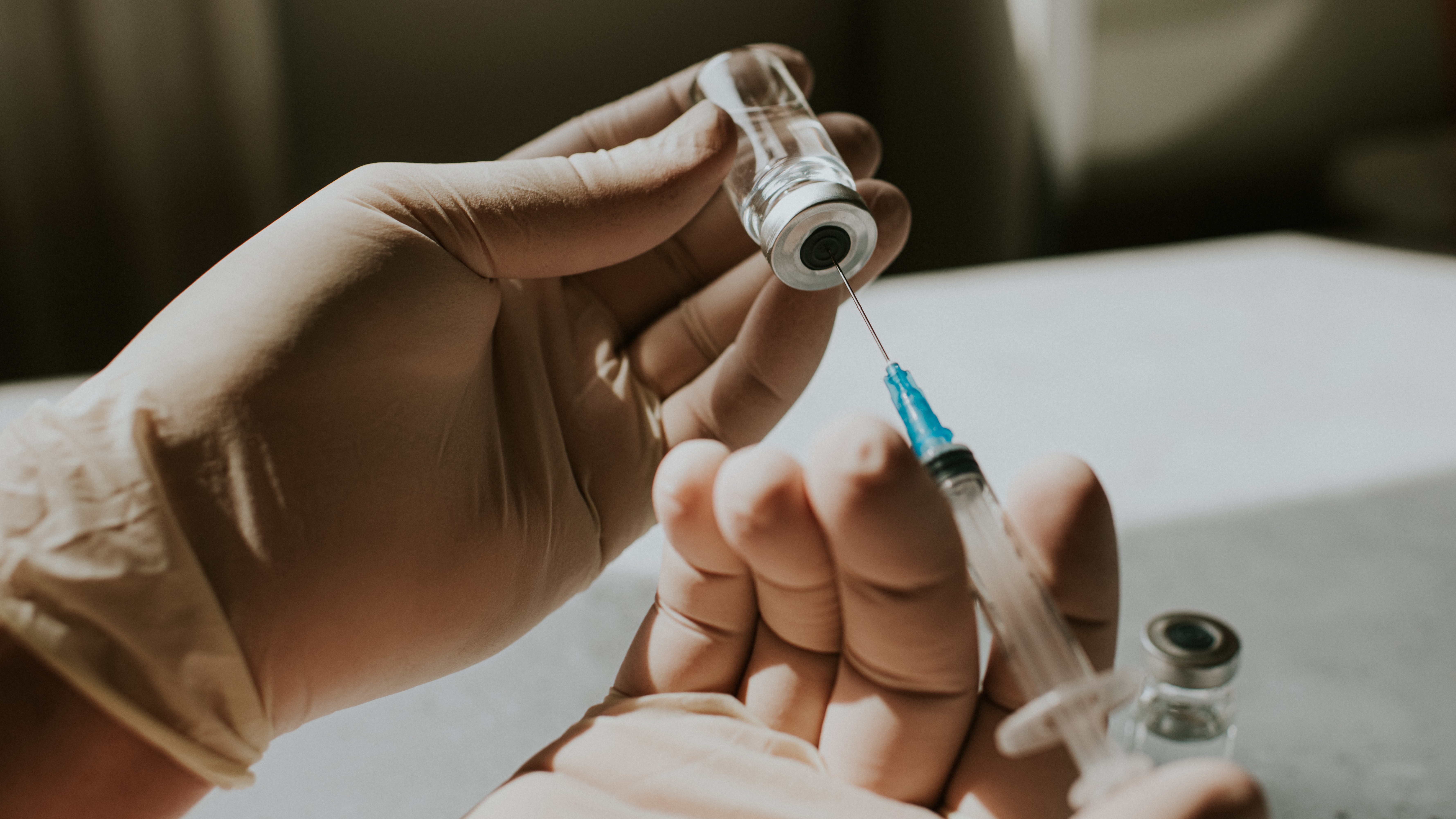
Next step for the new mRNA flu vaccine
Now that mFlusiva is FDA approved, the data must be reviewed by the CDC, which issues recommendations about how the vaccine should be given and to whom. Normally, a vaccine advisory committee would review the data first and then give the CDC guidance, but it's unclear how that might look in this case, Offit said.
That's because ACIP is in the midst of a lawsuit, which recently prompted a federal judge to put a freeze on several of the committee's recent changes. Those changes include the appointment of new committee members by Kennedy and a major revision of the childhood immunization schedule. While the litigation plays out, the committee could still issue new vaccine guidance if it appoints enough new members to compensate for the ones who are currently in limbo — but that hasn't happened yet.
The CDC could issue its own recommendations for mFlusiva without ACIP's help, Offit noted. It's within the agency's power to do so. But will that happen?
"I don't know," Offit said. "Robert F. Kennedy Jr. has ultimate say, and he's a science denialist and an anti-vaccine activist. So I don't know." Offit predicts that Kennedy "will do nothing to encourage vaccination, period, independent of what the vaccine technology is."
The shot is now licensed, thanks to the FDA approval, and that means it could be used without bespoke CDC recommendations, Offit said. But a lack of CDC recommendations may undermine insurance coverage for and access to the vaccines.
It would be useful to have an mRNA vaccine option available this upcoming flu season, Offit said, in part because trials suggest that the shot is more protective than existing options, especially for adults 50 to 64. There's also strong evidence that that's true for adults over 64, but for that age group, more data will be collected in the coming season to see how well mFlusiva stacks up against existing high-dose flu shots for older adults. Offit expects those upcoming results will likely be positive and back up the existing evidence, which involved measuring antibody levels in older adults given either vaccine.
RELATED STORIES- The US is on track to lose its measles elimination status in months. RFK needs to go.
- 'I don't know if CDC will survive, to be quite frank': Former CDC officials describe the disintegration of the agency under RFK
- One molecule could usher revolutionary medicines for cancer, diabetes and genetic disease — but the US is turning its back on it
Other strengths of mRNA-based flu vaccines are that they can be produced in about half the time that existing flu shots are made and they can be better tailored to match the targeted flu strains, Offit noted.
In the 2025-2026 flu season, there were at least 390,000 hospitalizations and 24,000 deaths from flu in the U.S. Flu shots are the best way to prevent severe illness and death from influenza.
Looking to the future of mRNA vaccines in the U.S., mFlusiva's approval suggests that vaccine regulatory bodies still have the means and will to review mRNA vaccine trials and approve new products, as Coller said. However, this stand-alone approval doesn't necessarily mark a sea change in the federal government's sentiment toward the technology, he noted.
"An approval is a legal determination on one application. It tells you the data met the standard, which everyone involved in reviewing it already knew," he said. "A genuine shift would look like the 22 canceled mRNA contracts being restored, or a retraction of the claim that these vaccines fail against respiratory viruses. As far as I know, neither has happened."
This article is for informational purposes only and is not meant to offer medical advice.