Business
Fears about an AI crackdown after midterms sparks a $2 trillion rout in tech stocks November 5, 20267:16 PM ET
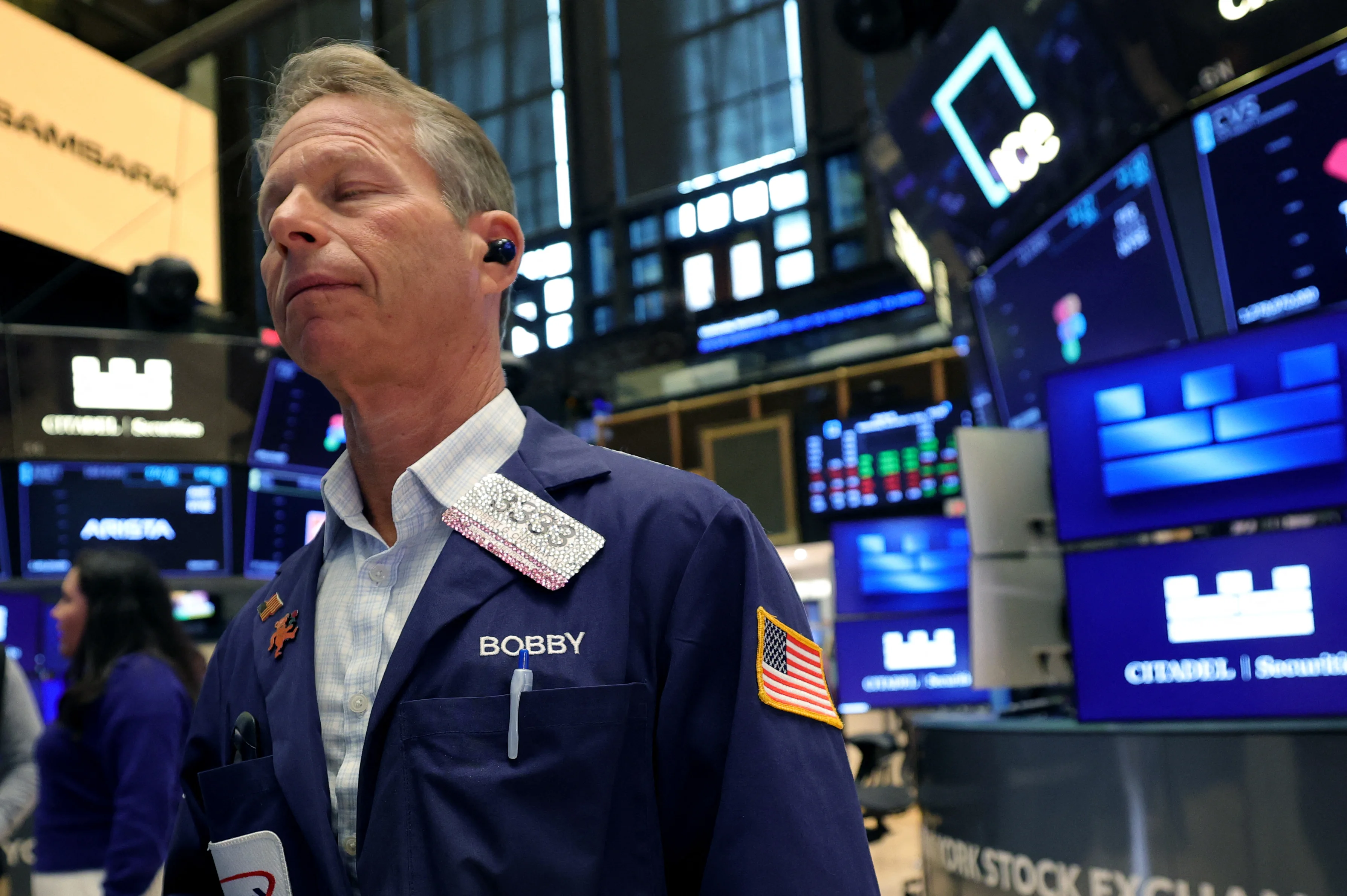
Stocks sank as investors fear an incoming Democratic Congress — and states across the country — could crack down on the AI industry and data centers. Timothy A. Clary/AFP via Getty Images hide caption
toggle caption i Timothy A. Clary/AFP via Getty ImagesTwo days after Democrats won overwhelmingly in the national midterm elections — and in state races across the country — investors started to come to terms with the potential consequences.

Elections
6 takeaways from Democrats' big wave on election night
Fears that an incoming Democratic Congress would crack down on AI sent the tech-heavy Nasdaq down more than 5% and wiped out more than $2 trillion in market value. The Dow Jones and S&P also sank.
The losses were a stark reversal from Wednesday, when investors had initially sent shares higher across the board, relieved that the midterms did not end with the fate of Congress undecided.

Politics
How a lifelong Republican came to lead the data center battle in Ohio
The sobering-up seen across markets on Thursday reflected investors' concern about a big signal sent by voters: They revolted against AI data centers, which many people worry will gobble up water and energy resources. Those voters supported Democrats who have vowed to push back against the proliferation of these projects.
But many AI companies — including Meta and Alphabet, the parent company of Google — need to keep building out these data centers to continue developing the technology.
The Nasdaq's decline comes after what has already been a rough year of technology shares on Wall Street, with investors starting to question whether the massive investments companies have plowed into AI will pay off anytime soon.
"There is some concern regarding AI regulation, and fears that there could be far more regulations coming to AI technology, as well as a pushback on the buildout of data centers across the country," says David Busch, chief investment officer of Trajan Wealth.
Musk companies hit hard
AI-related or AI-dependent stocks of all kinds were among the biggest decliners on Thursday, with Tesla and SpaceX — both controlled by billionaire Elon Musk — falling particularly sharply. Musk spent hundreds of millions of dollars in an unsuccessful attempt to elect more Republicans, and investors fear he and his companies could also come under Democratic scrutiny when the new Congress is seated in January.

Only on NPR
The South flexes political power in midterms, sets regional influence in 2028 election
It's not only Congress, however. Democrats who vowed to slow down AI development also won at the state level, most prominently Gina Hinojosa, who won the Texas governor's race in stunning fashion.
It's unclear whether the AI stock rout will continue — or spread beyond tech stocks. AI has become a big driver of the U.S. economy, helping it post a solid annual growth of 3.4% in the July-September quarter.
And sophisticated Wall Street investors are not the only ones who own a lot of shares in AI companies. Average Americans also own them through their retirement investment portfolios — such as 401(k)s or pension funds — leaving them also vulnerable to a prolonged AI rout.
NPR does not offer or accept money for coverage or interviews. Anyone who makes such an offer or request is not an NPR employee and does not represent NPR.


