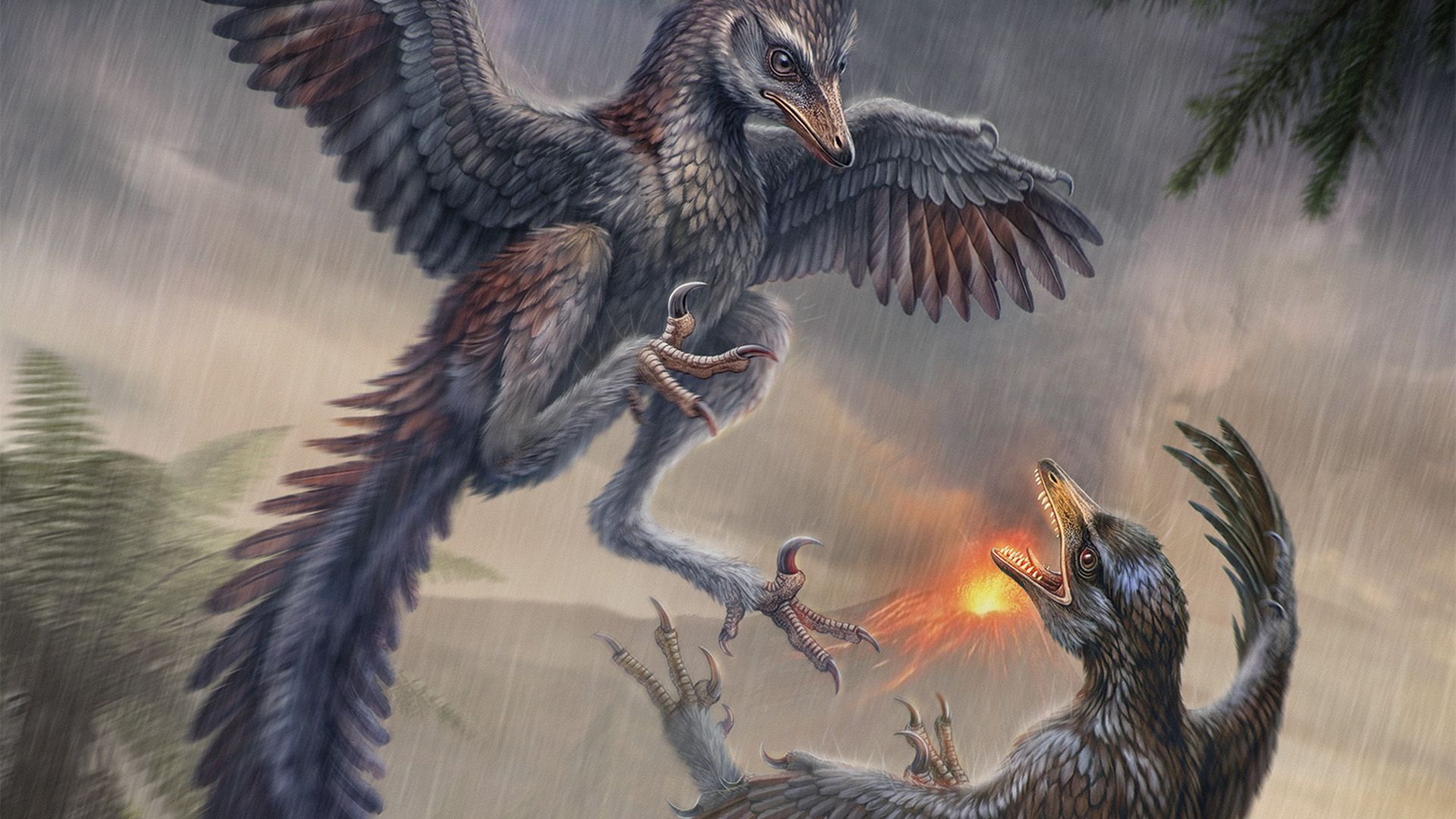
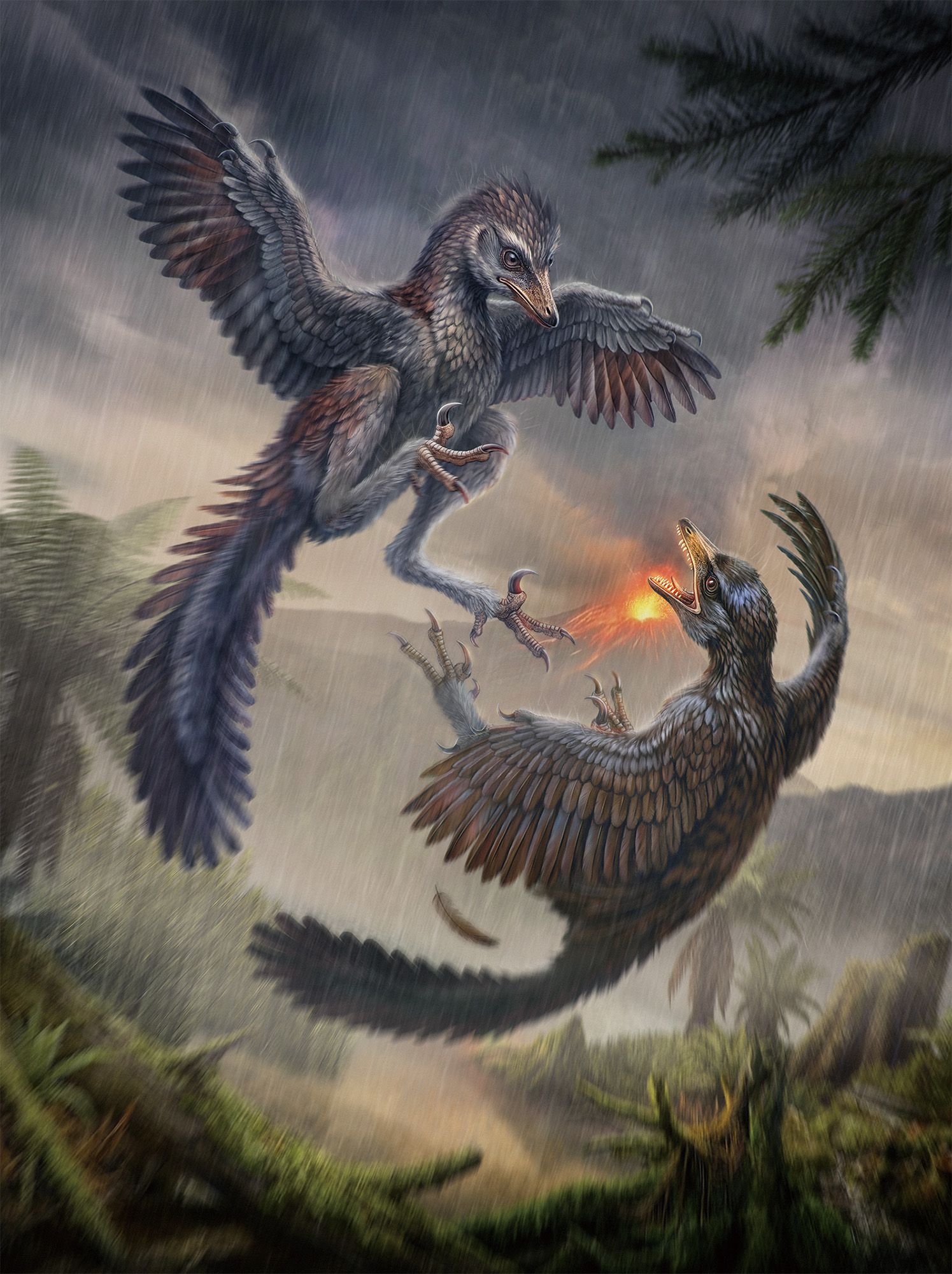
Paleontologists in China have discovered a small Jurassic bird that was likely a land-based predator — like a carnivorous pheasant with killer claws. It had some features of birds and others of dinosaurs, suggesting that the earliest birds had a greater diversity of lifestyles than previously recognized.
Jurassic birds first emerged 150 million to 148 million years ago, and fossils of them are rare, so experts are just starting to understand how early birds diversified and evolved the ability to fly.
The researchers discovered the newly identified Yuezhuornis yangyuanensis in 2024, in the fossil assemblage known as the Upper Jurassic Zhenghe Fauna in southeastern China. It lived 150 million to 148 million years ago, roughly when birds started to appear in the fossil record. The team published their findings Wednesday (Oct. 14) in the journal Nature.
Analysis of the fossilized skeleton revealed the animal was small and weighed about 1.8 pounds (0.8 kilograms). "It was probably as large as a crow," Wang told Live Science via email.
Y. yangyuanensis had a mix of features seen in birds and predatory Deinonychosauria dinosaurs, such as Velociraptor, which are known for their sickle-shaped toe claws. It had deinonychosaur-like hyperextensible toes, with forelimbs that were roughly one-third shorter than its hind limbs. This is odd because modern birds and many other Jurassic paravians — the group that includes bird-like dinosaurs, including the ancestors of birds as well as modern birds themselves — have long forelimbs, linked to giving wings more lift force for taking off.
Y. yangyuanensis also had slender cranial elements and sparsely spaced teeth. These features, alongside the curved claw-like toes that were capable of securing prey, suggest that the animal's diet included meat.
"Its key anatomical features are the combination of dinosaurs' and birds' features: for instance, its teeth, pectoral gird, and especially the hyperextensible, 'sickle-clawed' second pedal digit are similar to that of dinosaurs," Wang said. Meanwhile, he said its slender cranial bones and bird-like pelvis are comparable to early birds.
This combination of features suggests that "the morphological gap between birds and dinosaurs is much smaller than we thought," he added.
Comparisons with 377 living bird species showed that the limb proportions of Y. yangyuanensis were most similar to those of terrestrial birds.
Wang suggested that Y. yangyuanensis was a flightless bird, but not one specialized to live in trees or wade in the swamps in the region. It was a small carnivore, with similar proportions to a pheasant, that was well adapted for running. "I think there are no directly comparable modern birds," he said.
The mosaic of features hints that Y. yangyuanensis may have occupied an ecological niche that was rarely utilized by early birds, and that there wasn't a systematic progression toward flight optimization, Wang said.
Related stories- New Velociraptor cousin was a '4-winged' dragon that hunted prey from the trees of ancient China, fossil find hints
- Scientists find the earliest evidence of a dinosaur eating a mammal
- 'He began to cry, and almost fell to the floor': The fluffy fossil that finally showed the world that birds are dinosaurs
Despite being flightless, Wang and his colleagues place Y. yangyuanensis closer in the evolutionary tree to modern birds than to Archaeopteryx, one of the world's first proto birds, which lived about 150 million years ago and is thought to have been able to fly.
This adds to evidence that "the ability to fly arose not once, but several times among disparate groups of carnivorous dinosaurs that are closely related to birds," wrote Fernando Novas, a paleontologist at the Felix de Azara Natural History Foundation in Buenos Aires, Argentina, who wasn’t involved in the study, in an accompanying article in Nature. This includes flight evolving in early birds and in scansoriopterygid dinosaurs, which had membranous folds like the wings of bats, and the four-winged microraptors. Y. yangyuanensis seems to have taken a different road, eschewing the flying ways of its relatives.
"It highlights the extraordinary breadth of ecological and morphological diversification that took place close to the origins of avialans," Wang said.