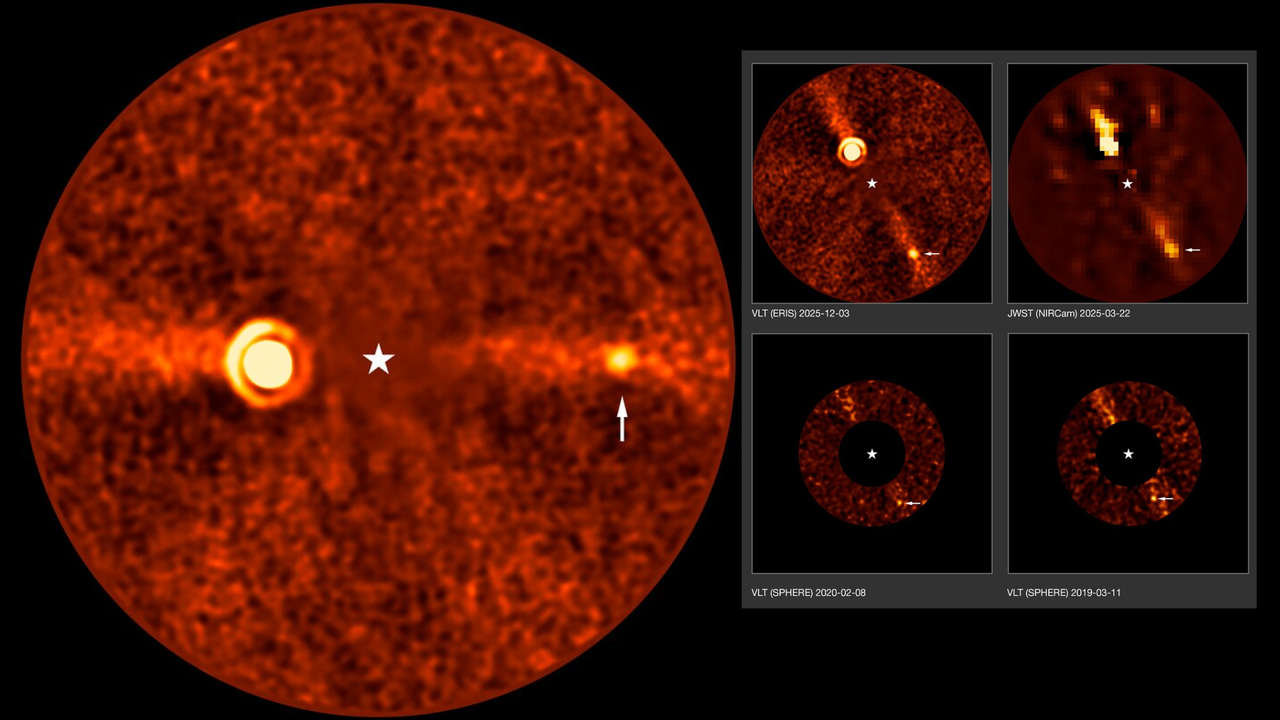
It has taken over ten years, but astronomers have finally won a prolonged game of cosmic hide-and-seek with a planet hiding around the star Beta Pictoris. The extrasolar planet, or exoplanet, is known as Beta Pictoris d. It is found 63 light-years away and has two planetary siblings, which were caught some time ago.
This new exoplanet is 100 times fainter than its sibling Beta Pictoris b, which was the first planet discovered in the system. That makes Beta Pictoris d the faintest exoplanet ever seen from Earth.
Like its previously discovered sibling, Beta Pictoris d is a gas giant. However, unlike Beta Pictoris b and Beta Pictoris c, it is much further away from its parent star and is thus much cooler than its siblings. The newly discovered world is also smaller than the previously seen world around Beta Pictoris. While both Beta Pictoris b and Beta Pictoris c have around 10 times the mass of Jupiter each, Beta Pictoris d has only around 2.4 times the mass of the solar system's most massive world. That makes it one of the lightest exoplanets ever directly imaged by a ground-based telescope.
"Planet d, it seems, has been playing a game of hide-and-seek with us for over a decade, and only now can we say ‘found you!’" team member Jayne Birkby an astronomer at the University of Oxford in the UK, said in a statement.
The discovery of Beta Pictoris d helps clear up a puzzle regarding a disk of dust and debris in this planetary system, which is theorized to be made of the leftovers of planet formation. That is because this newly found world has exactly the right mass and location needed to explain both the odd shape of this debris disk and its location.
11 years of hide-and-seek
The team behind this discovery wasn't initially looking for a third planet around Beta Pictoris. Instead, they were simply attempting to learn more about the system's first planet.
"This was a serendipitous discovery," team co-leader Ben Sutlieff, an astronomer at the University of Edinburgh said. "We initially wanted to look more at a known planet in the system, Beta Pictoris b, to see how it changed over time."
That was until they spotted telltale signs of another planet around the same star. Delving back into 11 years of archival data, the team found the third planet lurking in various images.
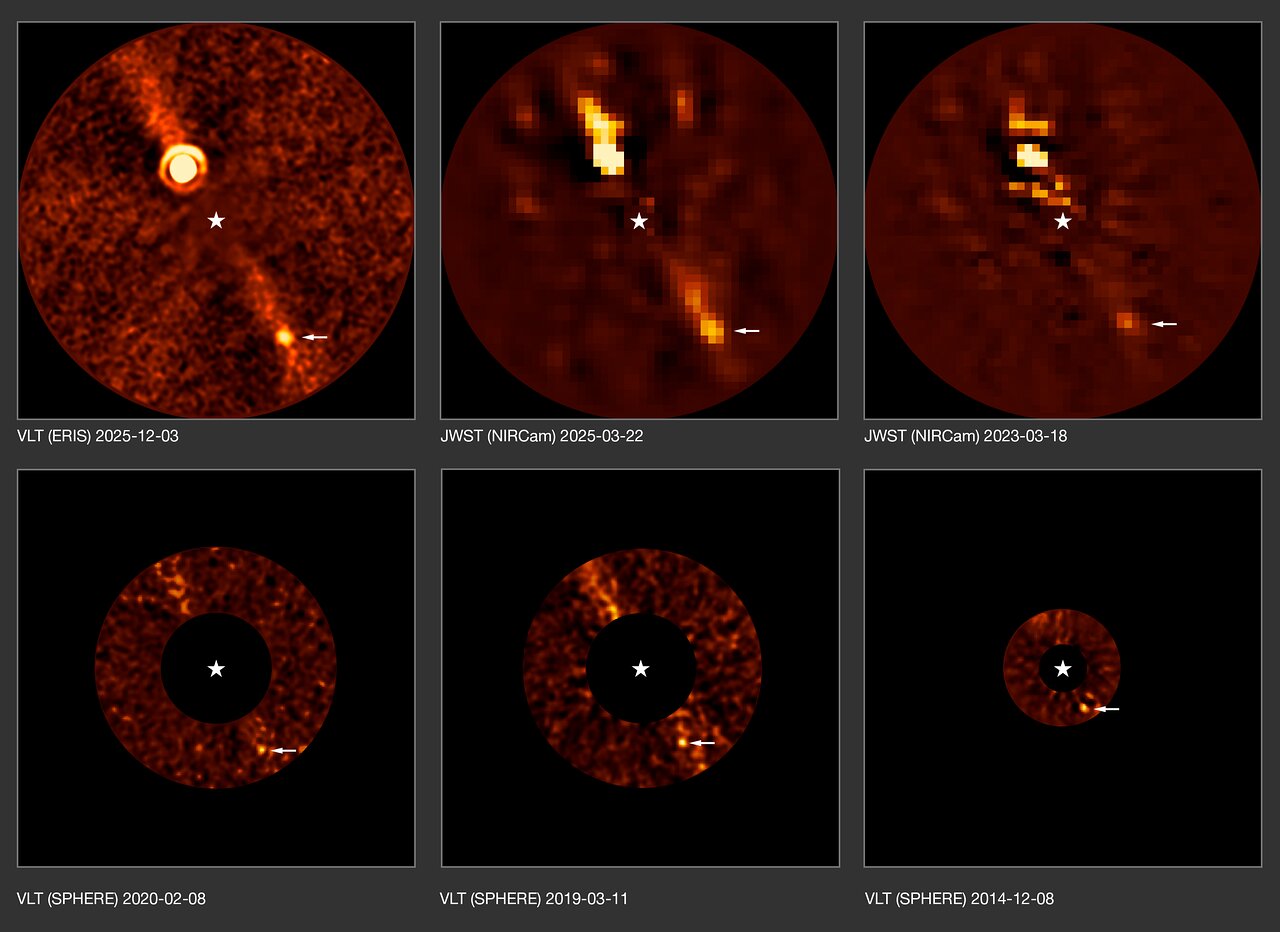
To consider how impressive it is to directly image a planet outside the solar system, consider that of the over 6,000 worlds in NASA's exoplanet catalog, less than 100 were discovered using direct imaging. Such detections are so tricky because they require picking out the thermal glow of a planet from the glare of its parent star.
Catching a direct image of an exoplanet as faint as Beta Pictoris d is a major step forward for this technique.
"The new planet is 100 times fainter than Beta Pictoris b, the famous planet in the same system, making it the faintest exoplanet ever imaged directly from Earth," team co-leader and European Southern Observatory researcher Markus Bonse said.
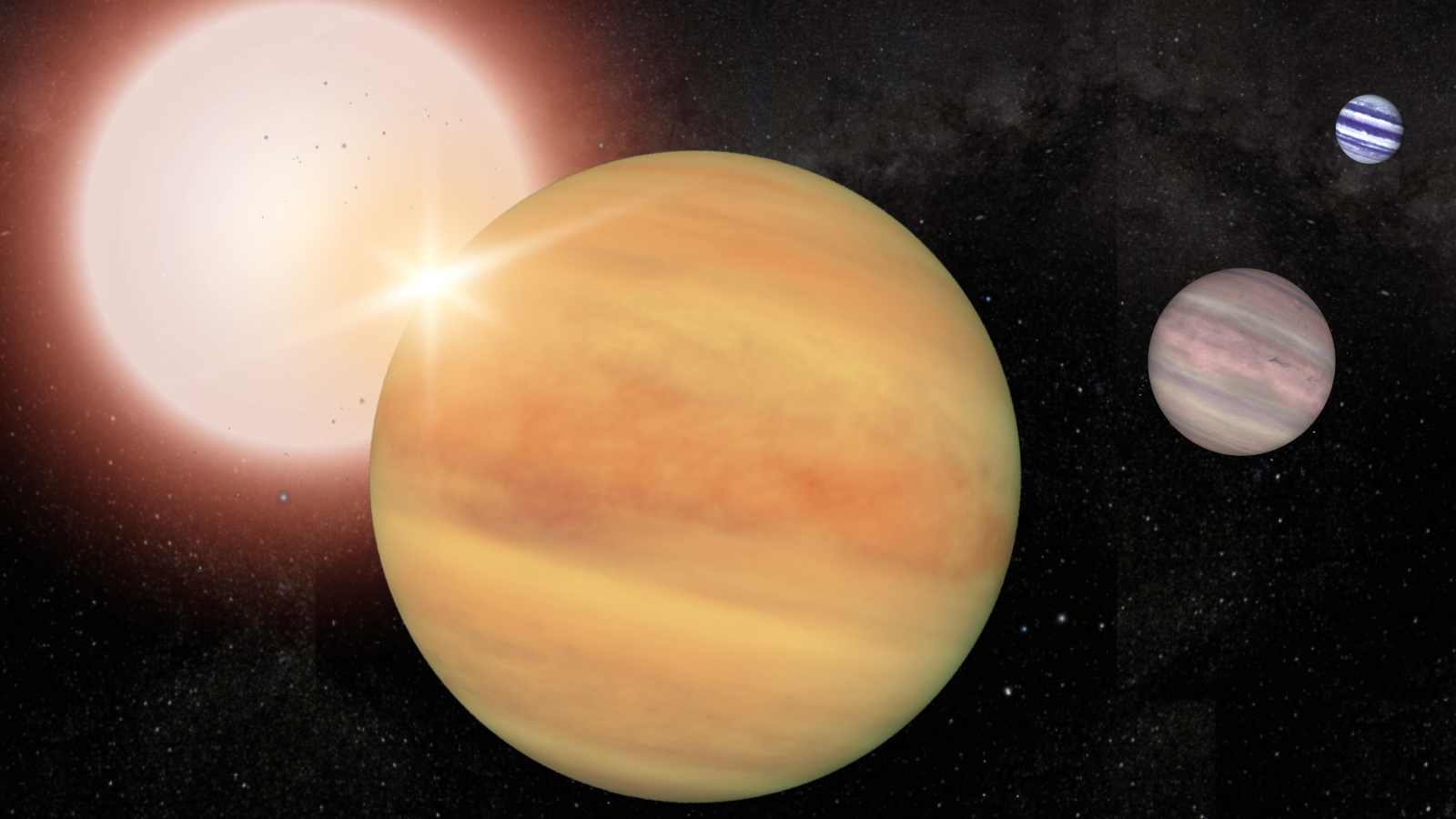
The discovery of Beta Pictoris d makes the Beta Pictoris system just the second in which more than two worlds have been directly imaged. The first was HR 8799, which is located around 133 light-years away. "Systems with multiple directly imaged exoplanets are the 'holy grails' of discoveries, because they can teach us a lot about what different exoplanets are like in the same formation environment," Sutlieff said
Thus, the discovery of Beta Pictoris d via direct imaging should encourage further direct imaging of planetary systems which may also harbor faint planets. This is an investigation that could be picked up by the Extremely Large Telescope (ELT), currently under construction in the Atacama Desert of northern Chile. "Planets seem to have friends," team member Beth Biller, of the University of Edinburgh in the UK, said. "Many of the famous directly imaged exoplanet systems seem to have multiple giant planets in the same system, and likely there are even more lower-mass planets hiding in these systems that might be revealed with instruments on the ELT." The team's research was published on Wednesday (July 15) in The Astrophysical Journal Letters.