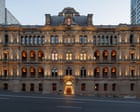
 The Lands hotel on Sydney’s Bridge Street has won a 2026 National Trust heritage award. Photograph: Timothy KayeThe Lands hotel on Sydney’s Bridge Street has won a 2026 National Trust heritage award. Photograph: Timothy KayeFrom drab partitions to haute couture host: how a Sydney civic masterpiece was rescued
Redevelopment of the former Department of Lands building on Sydney’s Bridge Street wins National Trust heritage award
It was once a grand old sandstone masterpiece, where returned soldiers would cram into marble corridors to anxiously await lottery draws that could change their lives.
Then the 20th century happened.
As the bureaucracy swelled, the interior Victorian grandeur of the Department of Lands building on Sydney’s Bridge Street became infested with a warren of claustrophobic cubicles. Office partitions sprang up like weeds, hiding grand Australian red cedar joinery behind particleboard. Ornate vaulted ceilings disappeared behind suspended acoustic tiles and humming fluorescent strips.
By the 1980s, the airy sandstone palace had become a cheerless maze of beige linoleum and grey metal filing cabinets. Under-maintained and technologically obsolete, the building had fully transitioned from one of the colony’s architectural prides to a draughty white elephant.
But that’s not the end of the story. On Friday, the building, which served as the engine room of New South Wales’ colonial expansion for more than a century, took out one of the top gongs at the 2026 National Trust (NSW) heritage awards.
The sandstone pile, built in the 1870s and long closed to the public, has been reimagined as a high-end lifestyle and cultural precinct, in a major project by Hassell as the lead design architect, with Purcell Architecture, providing the specialist heritage conservation.
From ‘architecturally tricky’ to ‘awe-inspiring’: winners of NSW’s 2025 National Trust heritage awards revealedRead moreThe winning architectural work stripped a century of utilitarian clutter to reveal grand internal voids: the original three grand internal staircases and circular corridors.
The judging panel praised the meticulous restoration, which “respectfully preserves the building’s grand sandstone façade and intricate heritage interiors, while carefully introducing contemporary architectural elements that sympathetically speak to its rich past”.
“The project has reawakened the building’s historic grandeur, unlocking public access to a cherished landmark and setting the stage for vibrant new experiences.”
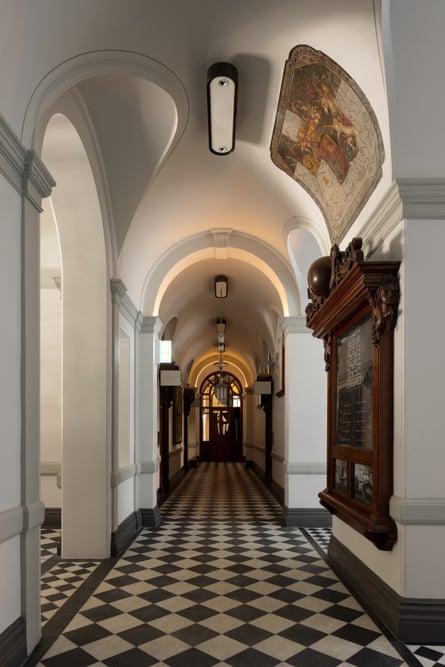 Now known as The Lands by Capella, the restored building will offer luxury retail, dining and event spaces for weddings, galas, and conferences. Photograph: Timothy Kaye
The project is the final phase of the broader Sandstone Precinct redevelopment, along with the neighbouring Department of Education building.
Education bureaucrats in the latter moved to purpose-built offices in Parramatta in 2018, making way for the building’s conversion into an exclusive boutique hotel.
Its award-winning neighbour, now known as The Lands by Capella, partially opened earlier this year, and this week was a satellite host to Australian fashion week. When finished later this year, it will offer 10,000 sq metres of luxury retail, dining and event spaces for weddings, galas and conferences.
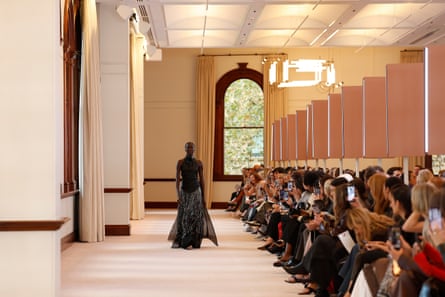 Designer clothing brand AJE held its Australian fashion week runway show at The Lands by Capella on Tuesday. Photograph: Brendon Thorne/Getty Images
Designed by Colonial Architect James Barnet (architect for the General Post Office in Martin Place, Customs House and Darlinghurst ourt house, among others) and constructed between 1876 and 1892, the sandstone palace was once the centre of the colony’s land administration, housing survey maps and land titles that defined the state’s borders and real property.
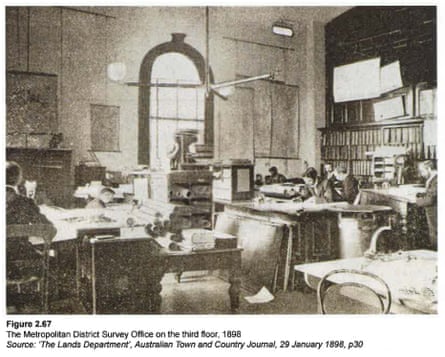 The third floor of the Metropolitan District Survey Office in 1898, as seen in the GBA heritage conservation management plan. Photograph: Australian Town and Country Journal
It was also the site of high-stakes livestock ballots. For decades, hopeful selectors would fill the building’s grand halls, including many returned soldiers from both world wars seeking a new start through soldier settlement schemes. Thousands would crowd the marble corridors, waiting for their names to be drawn from a ballot box to secure a parcel of government-distributed bush.
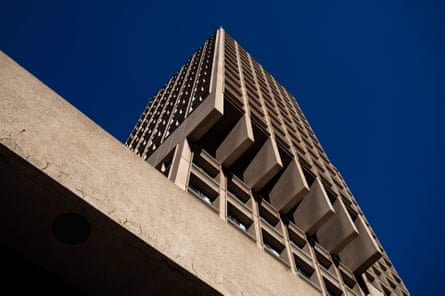 The Brutalist landmark Town Hall House was also awarded. Photograph: Urbis
The awards also gave a conservation prize to Urbis and the City of Sydney for its restoration of one of Sydney’s most distinctive Brutalist landmarks, Town Hall House. The sheer scale of the restoration project in itself, the judges said, was “hard to comprehend”.
And Hector Abrahams Architects was recognised for restoring an almost totally ruined 1920s Castlecrag home designed by Walter Burley Griffin and Marion Mahony Griffin.
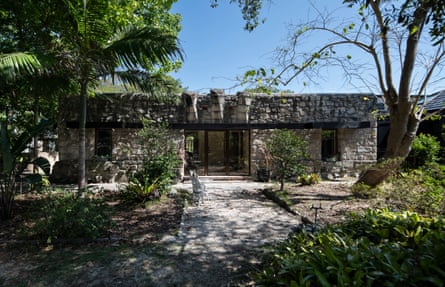 The restored 1920s Castlecrag home. Photograph: Richard Glover
White Bay Power Station’s entertainment hall won the interiors category.
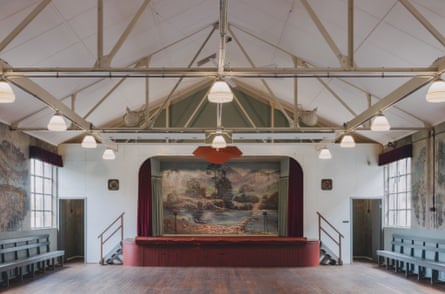 White Bay Power Station’s refurbished Entertainment Hall. Photograph: Katherine Lu
More than 1,000 members of the public voted for the refurbished grand dining room in the Katoomba’s Carrington hotel in the people’s choice award.
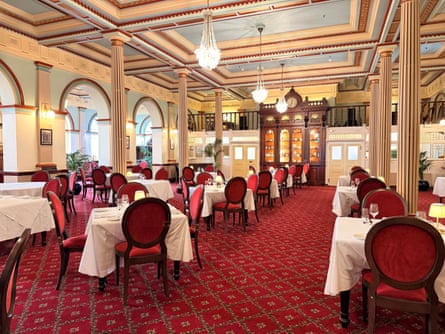 The Carrington hotel’s restored grand dining room. Photograph: The Carrington Hotel
The president’s prize went to GPG Architecture for the Coolamon hotel redevelopment with the National Trust (NSW) president, Bruce Pettman, describing the five-year conservation project as an impressive testament to the cultural and economic impact of country pubs in Australia.
Explore more on these topicsShareReuse this content