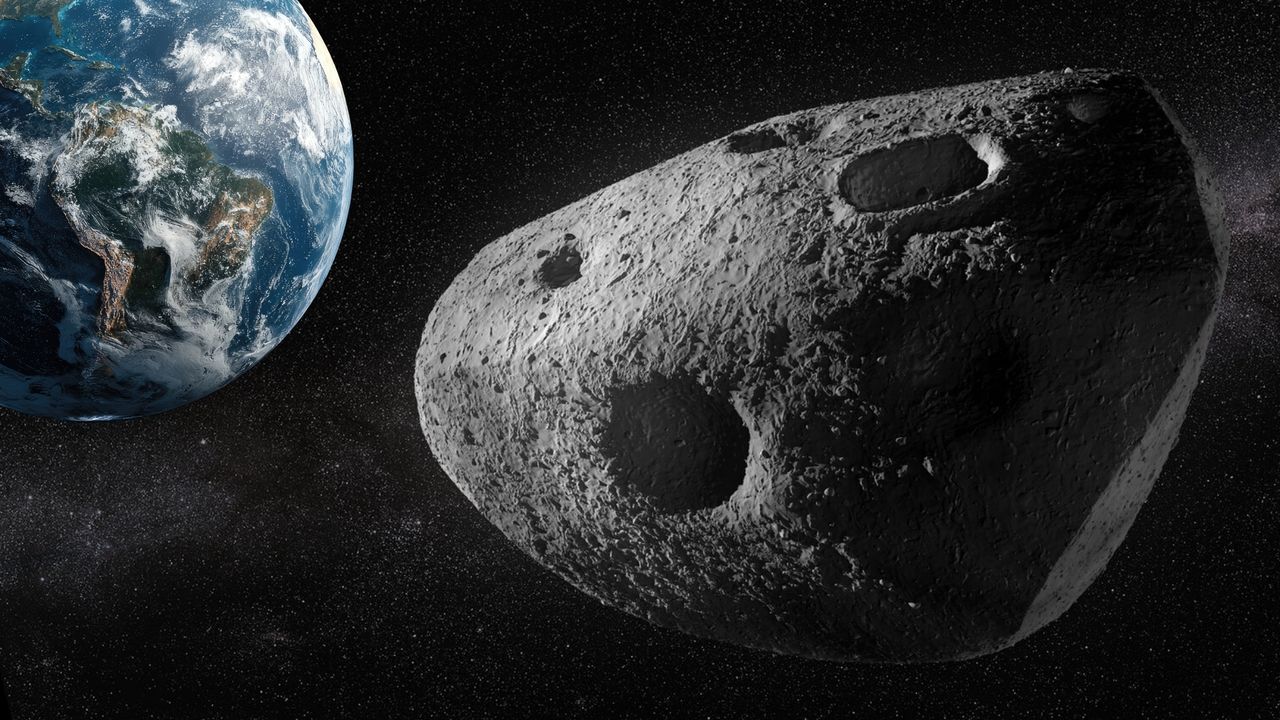
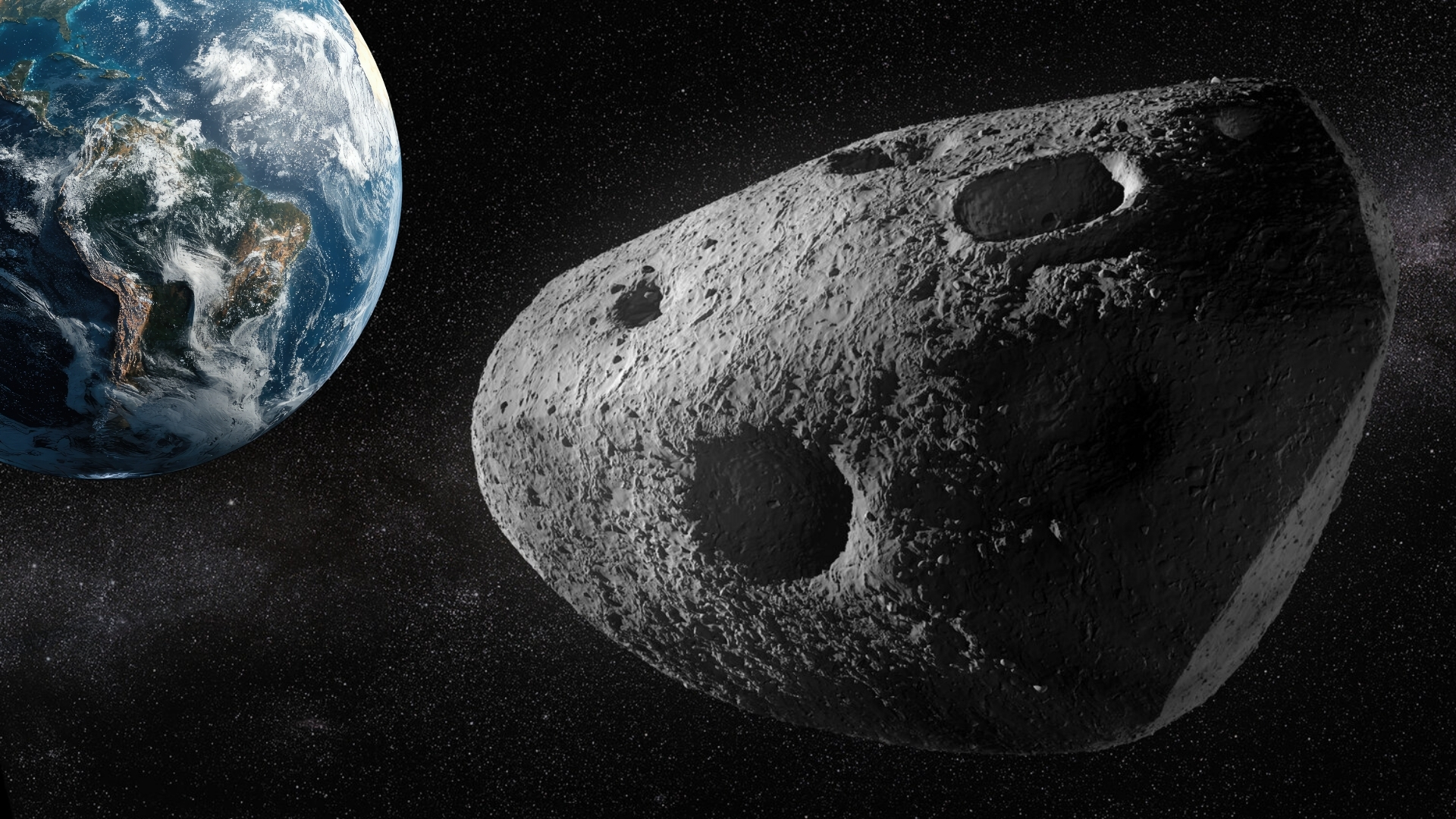
 A rare stargazing spectacle will unfold on Friday, April 13, 2029, as the asteroid Apophis passes closer than satellites over Europe and Africa in a true once-in-a-lifetime event. (Image credit: Apophis: ESA-Science Office, Earth added in Canva Pro.) Jump to:
 - What's happening and when to look
- Why all the fuss?
- Missions to Apophis
- How and when I'll watch Apophis
- Stargazer's corner: April 13-19, 2026
Breaking space news, the latest updates on rocket launches, skywatching events and more!
Contact me with news and offers from other Future brands Receive email from us on behalf of our trusted partners or sponsors By submitting your information you agree to the Terms & Conditions and Privacy Policy and are aged 16 or over.You are now subscribed
Your newsletter sign-up was successful
Want to add more newsletters?
An account already exists for this email address, please log in. Subscribe to our newsletterA rare naked-eye asteroid will light up the night sky on April 13, 2029, when the near-Earth asteroid 99942 Apophis makes an extraordinarily close flyby of Earth. For skywatchers, it's a once-in-a-lifetime event — and one worth traveling for.
The Sahara Desert cools fast after sunset, and April's stars come out quickly. One by one, the stars appear — Leo, the Lion, stretching across the southern sky towards Gemini, the twins standing side by side. Between them, I find a swarm of starlight — the Beehive Cluster (M44) — hundreds of suns suspended in the perfect desert sky. Then I see what I came to Africa for. Just below the swarm, there's a new point of light. It's no ordinary object. Older than Earth's continents, older than life itself, wandering through space for billions of years — an agent of chaos here for a fleeting visit. Here today, gone tomorrow.
On Friday, April 13, 2029, this imagined moment becomes real when asteroid Apophis will make one of the closest approaches ever recorded for an object of its size. The night sky will tell a story billions of years in the making. Here's how to prepare for that story — and see something extremely rare on human timescales.
What's happening and when to look
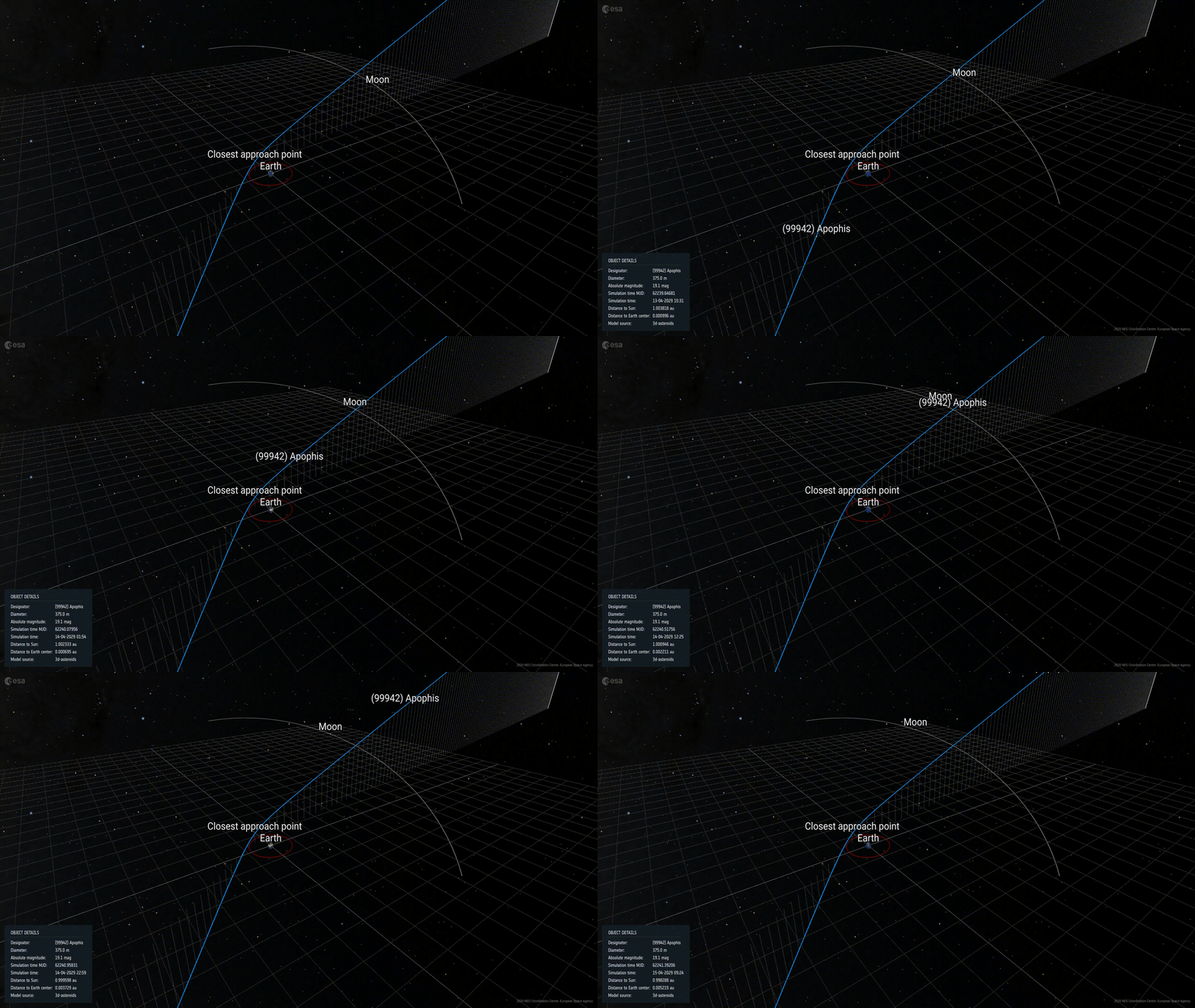
At its nearest point — 5:45 p.m. EDT (2145 GMT) on April 13, 2029 — it will pass closer than Earth's geosynchronous satellites, at a distance of roughly 20,000 miles (32,000 kilometers). Just over an hour earlier, at 4:30 p.m. EDT (2035 GMT), it will reach peak brightness, with a magnitude of around 3.1. That's bright enough to be seen with the naked eye from dark locations — but only some locations.
For observers in Europe, Africa and western Asia, Apophis will appear for one night only. An asteroid this big, getting this close to Earth, happens only once every few thousand years, making it truly a once-in-a-lifetime opportunity for a celestial encounter both dramatic and deeply humbling.
Why all the fuss about Apophis?
Friday, April 13, 2029, was once predicted to become Earth's unluckiest day ever. Discovered in 2004, Apophis initially sparked global concern when early calculations suggested a possible impact with Earth — hence its name, Apophis, the Ancient Egyptian deity of chaos. Subsequent observations and radar tracking ruled out any collision risk for at least the next century. Today, it is classified as a "potentially hazardous asteroid," not because it poses a current danger, but because of its size and proximity.
Roughly 1,230 feet across (375 meters), Apophis is thought to be an elongated, rocky asteroid. It's close pass in 2029 offers scientists an extraordinary opportunity to study how Earth's gravity may alter its rotation, surface, and internal structure.
Get the Space.com NewsletterContact me with news and offers from other Future brandsReceive email from us on behalf of our trusted partners or sponsors"The Apophis flyby will be an extraordinary event," Nick Moskovitz, a planetary scientist at Lowell Observatory in Flagstaff, Arizona, told Space.com. "Apophis will come so close that it will be visible to the naked eye and will feel a strong tidal pull from the Earth. The effects of these tides will include changing the spin rate of Apophis, seismic shaking of its interior, and maybe even landslides on the surface." It's the first time that scientists will witness an event of this kind, and space agencies are ready.
From an observer's point of view, it will be an extremely rare chance to detect an asteroid's motion relative to a background star over 5-10 minutes — most asteroids require hours or nights to show motion.
Missions to Apophis
Artist's impression of ESA's Rapid Apophis Mission for Space Safety (Ramses) (Image credit: ESA-Science Office)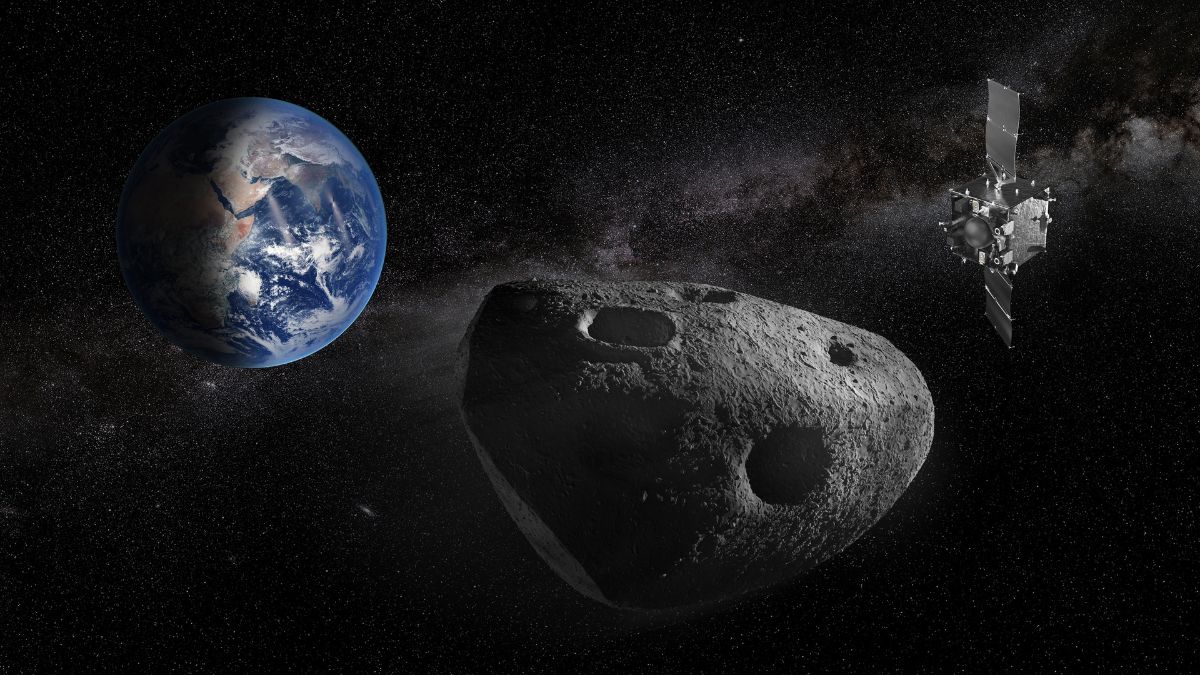
The European Space Agency's proposed Ramses mission aims to launch in 2028 to observe the asteroid up close before and during its flyby, while NASA's OSIRIS-APEX is scheduled to orbit Apophis in June 2029 to see how the close encounter with Earth affected it. The latter is the same spacecraft that, as OSIRIS-REx, dropped off a sample from asteroid Bennu in 2023 before positioning itself for the visit of Apophis. ExLabs also intends to launch a commercial mission, called Apophis EX, to rendezvous with the asteroid.
"The best way to study this event will be with in situ spacecraft watching closely as the effects of the encounter unfold," Moskovitz said. "Data from these observations will ultimately provide new insights into the internal structure and surface properties of asteroids, and how they evolve during close planetary encounters."
How and when I'll watch Apophis
For me, this isn't just an event to note on a calendar — it's something to travel for and to see. I'm not the only frequent astrotourist with the Apophis bug; solar eclipse cartographer Michael Zeiler has already prepared incredible maps of the Apophis flyby on his website, EclipseAtlas.com.
The plan is to head somewhere where Apophis will be at its brightest, with low humidity and minimal cloud cover. Tenerife in the Canary Islands is firmly on the shortlist —a truly world-class astronomy destination, where high-altitude sites often sit above the clouds — as well as Mauritania and Morocco. Coastal regions such as southern Spain remain viable, though slightly less reliable due to higher cloud cover.
Clear skies are everything. Over the coming months and years, I'll be poring over visibility maps and long-term cloud data, trying to stack the odds in favor of a perfect view. But even then, there are no guarantees. This is part of the appeal — and the tension — of astronomy and astrotourism. You can plan everything perfectly and see nothing. What I do know is that the Apophis flyby coincides with a new moon and the bright opposition of Jupiter, so maybe the gods (of chaos) will be smiling on us asteroid pilgrims below.
Stargazer's corner: April 13-19, 2026
Comet C/2025 R3 (PanSTARRS) on April 8, 2026, from eastern Crete. (Image credit: Dimitrios Katevainis - https://www.flickr.com/photos/202558869@N05/55195163943/, CC BY-SA 4.0)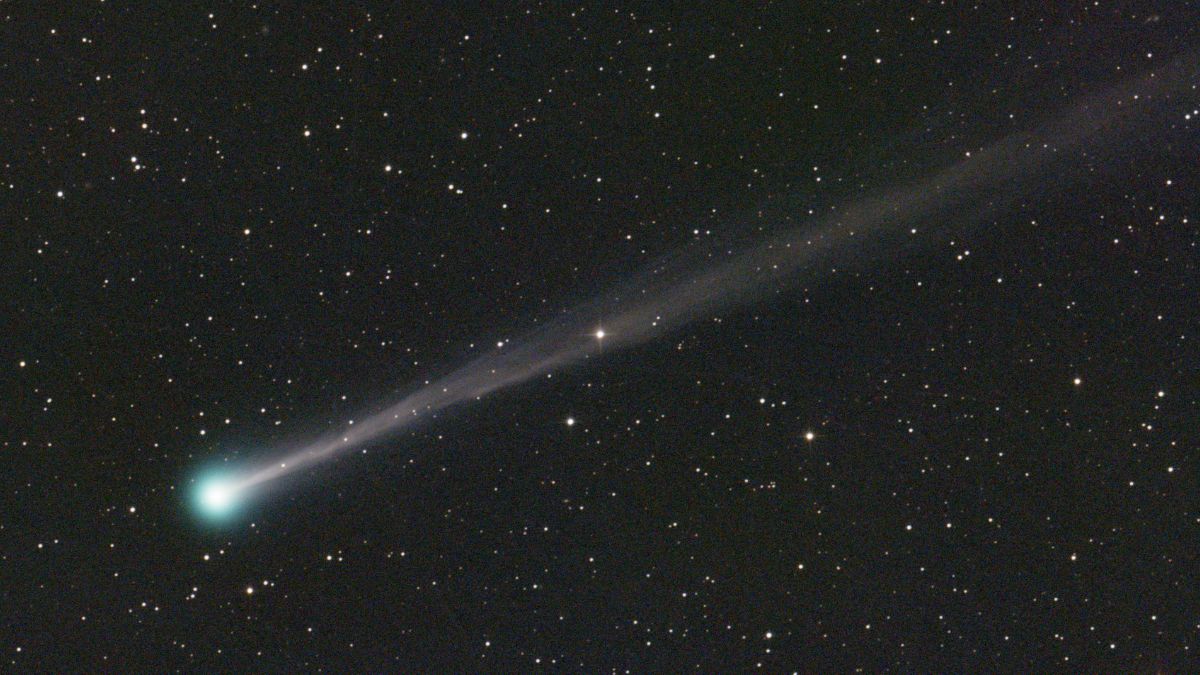
You don't need to wait until 2029 to look up, and this week brings some great opportunities to get used to getting up incredibly early for the sake of stargazing. This week will see Comet C/2025 R3 (Pan-STARRS) reach its brightest, with the best time to look to the east about 90 minutes before sunrise, where you are. Find an unobstructed eastern horizon, best done from a second or third (or higher) story. Look between the stars Markab and Algenib in the Great Square of Pegasus — and the sooner, the better, before it gets closer to the horizon during the rising dawn. While you're out, it will be worth staying outside a little longer on Monday, April 13, Tuesday, April 14 and Wednesday, April 15 to see a waning crescent moon move through the twilight, with a chance to see Mercury, too. On Saturday, April 18, comet Pan-STARRS will get to within a couple of degrees of galaxy NGC 7814, a distant edge-on spiral.
Constellation of the week: Corona Borealis
The constellation Corona Borealis, the Northern Crown, is home to the "Blaze Star." (Image credit: E. Slawik/NOIRLab/NSF/AURA/M. Zamani)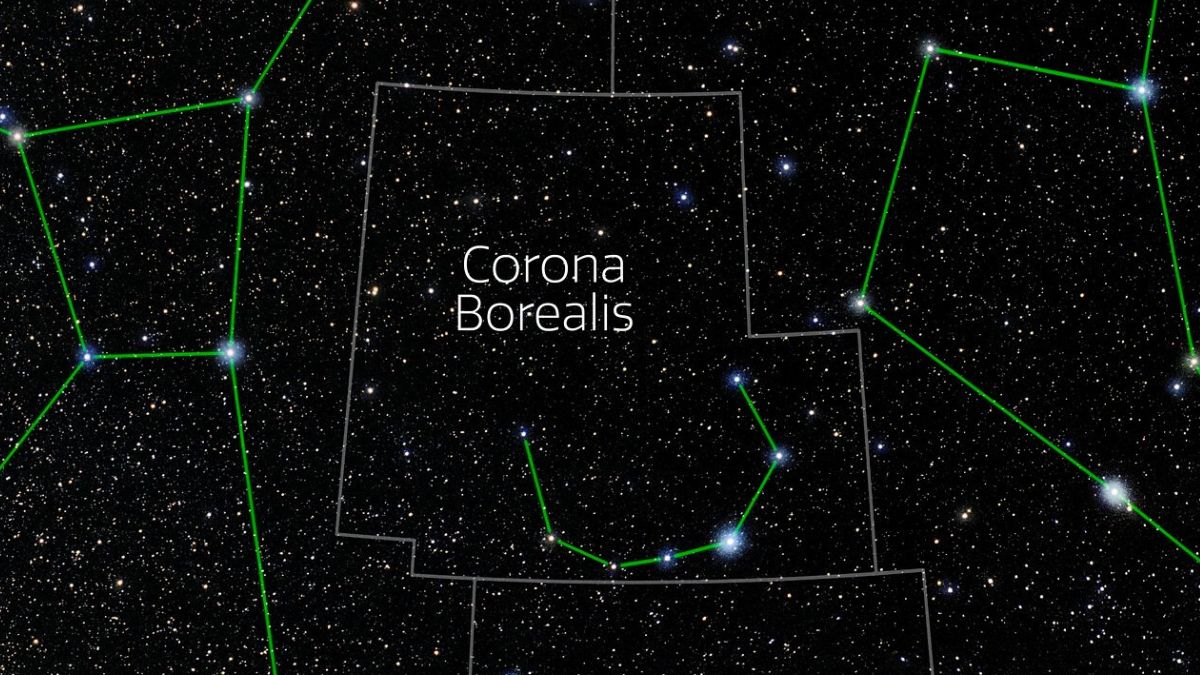
A small constellation now becoming visible in the Northern Hemisphere's night sky, Corona Borealis — meaning Northern Crown — is a curve of seven stars between bright stars Vega and Arcturus (though slightly closer to the latter). It's worth finding because it's beautiful, but also because its very faint star T Coronae Borealis, also called T CrB and the "Blaze Star," may explode this year and become visible in the night sky for a few weeks. It's low in the east-northeast around midnight.
 Jamie CarterContributing Writer
Jamie is an experienced science and travel journalist, stargazer and eclipse chaser who writes about exploring the night sky, solar and lunar eclipses, the Northern Lights, moon-gazing, astro-travel, astronomy and space exploration. He is the editor of WhenIsTheNextEclipse.com, author of A Stargazing Program For Beginners, co-author of The Eclipse Effect, and a senior contributor at Forbes.
View MoreYou must confirm your public display name before commenting
Please logout and then login again, you will then be prompted to enter your display name.
Logout MORE FROM SPACE... 1A worst-case solar storm could knock out satellites, GPS and power grids, report warns
- 2From spa to boat party: 10 epic events for the Aug. 12, 2026, total solar eclipse in Spain and Iceland
- 3'The most special thing that will ever happen in my life': Artemis 2 astronauts describe their epic moon mission
- 4This Week In Space podcast: Episode 205 — All About Artemis
- 5SpaceX launches huge 'Cygnus XL' cargo ship carrying over 5 tons of supplies to ISS astronauts (video)