NOW PLAYING
Welcome back to The Feed. We are three Generation Z editors at The Hill working to understand the ins and outs of our generation’s politics.
This week, we’re giving a glimpse into how Gen Z has dominated the box office over the last few weeks and why so many live at home once they graduate.
Opening up: Gen Z helps Marvel, Christopher Nolan dominate the box office
The past few weeks have brought us two of the highest-grossing movies of the year, Christopher Nolan’s “The Odyssey” and Marvel’s “Spider-Man: Brand New Day.”
And they share similarities in who is featured and who has helped generate blockbuster box office revenue.
“Spider-Man” shares Tom Holland and Zendaya (who sit on the cusp of Gen Z), as well as Jon Bernthal, with “The Odyssey.” The Hollywood couple were certainly a big draw for Gen Z fans to theaters.
“Spider-Man: Brand New Day” made box office history last weekend, passing fellow Marvel film “Avengers: Endgame” for the biggest North American opening weekend with $360 million U.S. and Canadian ticket sales, according to the Associated Press.
It is being reported that 36 percent of the opening weekend crowd was between ages 18 and 24, drawing in a large Gen Z crowd.
Despite Marvel’s audience aging since the 2019 release of “Avengers: Endgame,” the success shows a resurgence in Gen Z’s interest in Marvel, especially with the release of the “Avengers: Doomsday” trailer followed by “Spider-Man: Brand New Day.”
Marvel’s “Phase One,” which spanned from 2008-2012, included origin story movies for some of this generation’s favorite superheroes in the Marvel Cinematic Universe (MCU). Not to mention that all of Tobey Maguire’s Spider-Man movies came out before the MCU’s “Phase One” even started.
“Iron Man” (2008), “The Incredible Hulk” (2008), “Iron Man 2” (2010), “Thor” (2011) and “Captain America: The First Avenger” (2011) set up the 2012 release of “The Avengers.” This was a Marvel phase older Gen Z grew up with and younger ones were born into.
“The Odyssey’s” opening weekend made about $124 million, passing some of Nolan’s best, including “Oppenheimer,” “Inception” and “Interstellar.” The film made an additional $51 million in North America its second weekend, NBC News reports.
Nolan has also jumped in on the superhero connection with Gen Z in his career — although on the DC Comics side — with “Batman Begins” (2005), “The Dark Knight” (2008), one of my favorite movies of all time, and “The Dark Knight Rises” (2012). — Joshua Feldstein
 Photo by Alberto Pezzali/Invision/AP
 On the Mic: What’s up with HasanAbi?
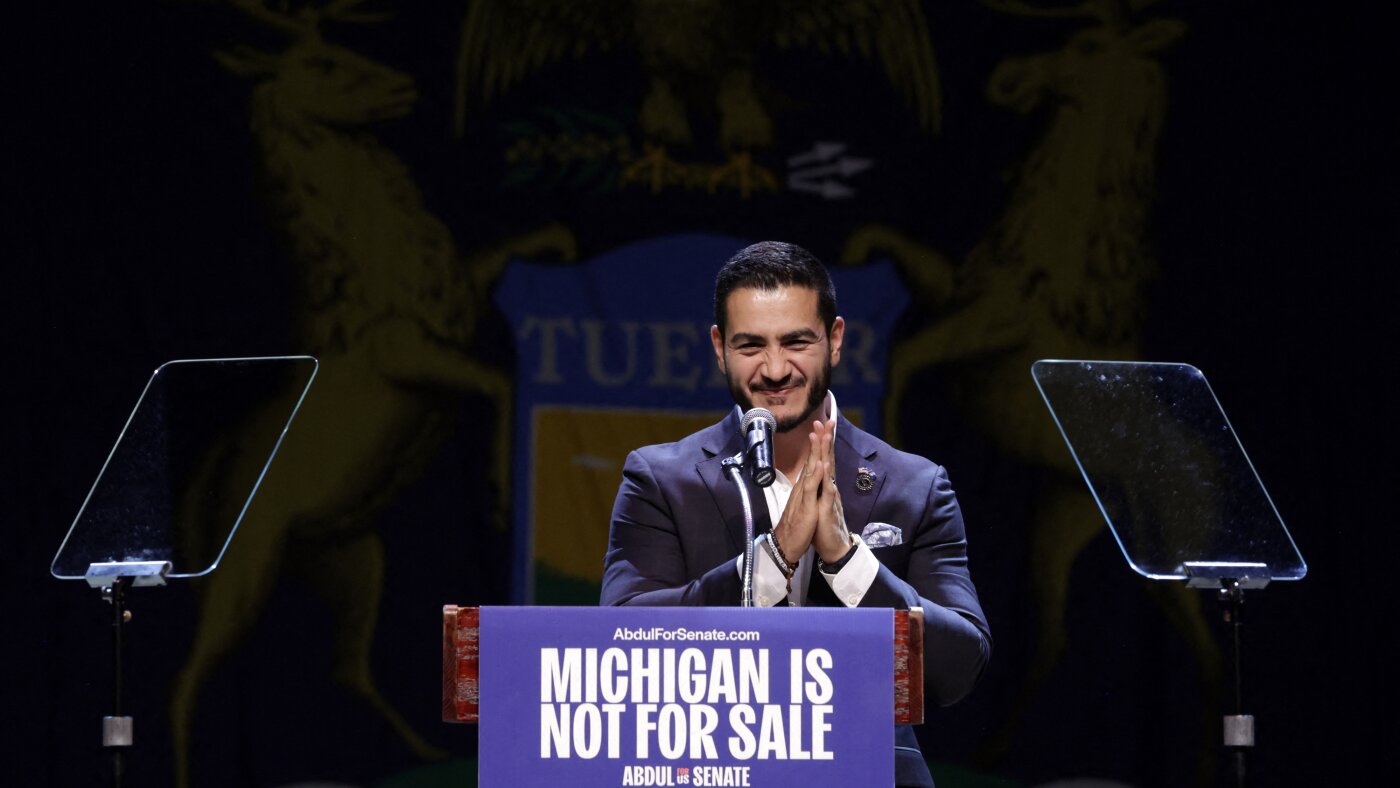
It is perhaps impossible to explain Gen Z’s relationship to politics without acknowledging the role often controversial political streamers play. One such streamer, Hasan Piker, has dominated conversations surrounding the Michigan Democratic Senate primary.
Progressive candidate Abdul El-Sayed defeated the more moderate Rep. Haley Stevens (D-Mich.) in a razor-thin race that wasn’t called until Wednesday morning. He’ll now face former Rep. Mike Rogers (R-Mich.) in the November general election.
Piker, who identifies as a socialist, threw his support behind El-Sayed. The two leftists stood alongside each other at an April rally at Michigan State University, a decision that ruffled some Democrats’ feathers.
State Sen. Mallory McMorrow (D-Mich.) shortly after compared Piker to far-right podcaster Nick Fuentes (we’ll get to him another week). And Matt Bennet, co-founder of center-left think tank Third Way, called El-Sayed a “disgrace to the Democratic Party.”
As the Democratic primary drew closer, criticism ramped up.
“To talk about the larger Democratic Party, post the election in Michigan going forward, I am not going to be in the same party with Hasan Piker,” Democratic strategist James Carville said in a Sunday interview with Fox News.
But Piker, who has 3.1 million followers on the social platform Twitch, is unlikely to disappear.
The backlash reflects a growing debate within the Democratic Party over how to handle the influence of online political personalities like Piker, particularly among Gen Z voters who increasingly consume politics through livestreams, podcasts and social media rather than traditional news outlets.
According to a 2025 report from the Pew Research Center, 76 percent of Americans aged 18-29 “get news often or sometimes” from social media, and 31 percent prefer these digital platforms compared to traditional media, like television (12 percent), radio (5 percent) and print (5 percent). — Abigail Walker
 Photo by AP Photo/Julia Demaree Nikhinson
 Breaking down: Almost half of Gen Zers live at home. Don’t worry.
Almost half (49 percent) of adults under the age of 30 reported living at home in 2025, according to the Fed’s Survey of Household Economics and Decisionmaking (SHED). This number is up 6 percentage points from 2022 and up 12 percentage points from 2019, before the coronavirus pandemic.
Another 47 percent received help from someone outside their household to pay for an expense, like cellphone bills and housing costs, according to the survey.
Fortune reported that this massive shift will ripple through the rest of the economy. The longer Gen Z lives with parents (and even roommates), the later they will marry, start families, buy homes, enroll their kids in local schools and beyond.
However, Laura Ullrich, director of economics at Indeed Hiring Lab, told Fortune that the survey may be “inflating” the living-at-home rates for college students, who may be at home for a few months but are otherwise gone for the rest of the year.
The New Yorker raised the same concern in its coverage of the survey and pointed out that the number of young adults living with their parents has been steadily increasing over the last 40 years. It received an extra bump during the pandemic, too.
While rents are rising faster than wages can keep up, it is not necessarily the driving force that sends Gen Zers to their childhood bedrooms. A lot of intergenerational living today may stem from shifting cultural norms, the New Yorker reported, and areas with more Black, Latino and Asian families typically have higher rates of young adults at home.
There is now a divide between Gen Z and economists. The latter argues that employment has been steady, and the former says they don’t make enough money, the outlet pointed out. This creates a stalemate, or some kind of macroeconomic misunderstanding.
I have noticed more friends post-grad gravitating toward home or making comments about how it could be a temporary fallback if things don’t work out. But it is not their first choice, and they’re not necessarily keen on reverting to a version of their teenage selves, forced to push back their own marriage and family timelines.
While the SHED’s numbers appear concerning, there is a larger story behind the statistics. Gen Z will make it out of their parents’ houses and into their own one day (we hope). — Claire Leibowitz
One last thing: Can’t afford the date or can’t step up to the plate?
Gen Z’s romantic lives have been the subject of significant commentary. A recent take? We can’t afford it.
The New York Times on Monday cited a 2026 study from Brigham Young University that found 52 percent of young adults reported “the biggest barrier to dating they expressed was not having enough money.”
This “romance recession” may stem from increased costs of living (especially in cities) and a sluggish job market. While cheaper dates are achievable, social media and dating apps create unnecessary pressure that make these plans less attractive, especially in the early dates where you’re first getting to know someone.
A BMO Group study found that the average cost of a date night is $200. That’s a lot of money to consistently drop on someone with whom it may not work out.
Young adults, including myself, definitely worry about present and future financial constraints, but it is still important to make sure I take my girlfriend on nice dates. Planning dates gives us something to look forward to on our calendars and keeps excitement in the relationship. But factoring the cost into my budget is a must.
In the financial situations and dating skills study, a total of 3,995 young adults (1,969 men and 2,026 women) were interviewed and asked about their dating barriers. — Joshua Feldstein
Thanks for reading The Feed. We’ll be back next week to offer more scoop into what Gen Z wants.
Add as preferred source on Google Tags Abdul El-Sayed affordability Christopher Nolan cost of living dating Generation Z Haley Stevens Haley Stevens Hasan Piker Marvel michigan democratic primary The FeedCopyright 2026 Nexstar Media Inc. All rights reserved. This material may not be published, broadcast, rewritten, or redistributed.
Comments: Link copiedMore In The Know News
See All
 Administration Trump revamps White House helipad, then tears it up by Ryan Mancini 14 hours ago Administration / 14 hours ago