The biggest blockbusters of 2014 threw up a varied rogues' gallery of bad guys. In "Transformers: Age of Extinction", it was a reincarnated version of Optimus Prime's perma-nemesis, Megatron, while Captain America faced off against a reborn Hydra infiltrating the upper echelons of the US government in "The Winter Soldier". For Spider-Man, it was Electro, while Maleficent showed up in live-action to give Sleeping Beauty nightmares.
Christopher Nolan has never been one to go with the Hollywood crowd, however, and in his outer space opus "Interstellar", the antagonist was time itself — or, to be more specific, Einstein's theory of general relativity.
Nolan, whose Homeric epic "The Odyssey" makes landfall in theaters this week, has always been obsessed with time, and our perception of it. From "Memento"'s backwards narrative to "Tenet"'s time-flipping terrorists, the director has tended to steer clear of linear narratives. Even the three interweaving plotlines of his World War II drama, "Dunkirk", unfold at completely different speeds. In short, Nolan is not a filmmaker you should ever set your clock by.
But time has never been as cruel as it is in "Interstellar", where the fundamental constants of the universe combine to wreak havoc with human emotions. "Time is relative," explains Anne Hathaway's biologist/astronaut Amelia Brand. "It can stretch, and it can squeeze, but it can't run backwards. It just can't."
She's summed up "Interstellar" in a nutshell, so it's not hard to see why this was the story Nolan wanted to tell when he added his own entry to the canon of cerebral cinematic sci-fi.
(Image credit: Paramount Pictures)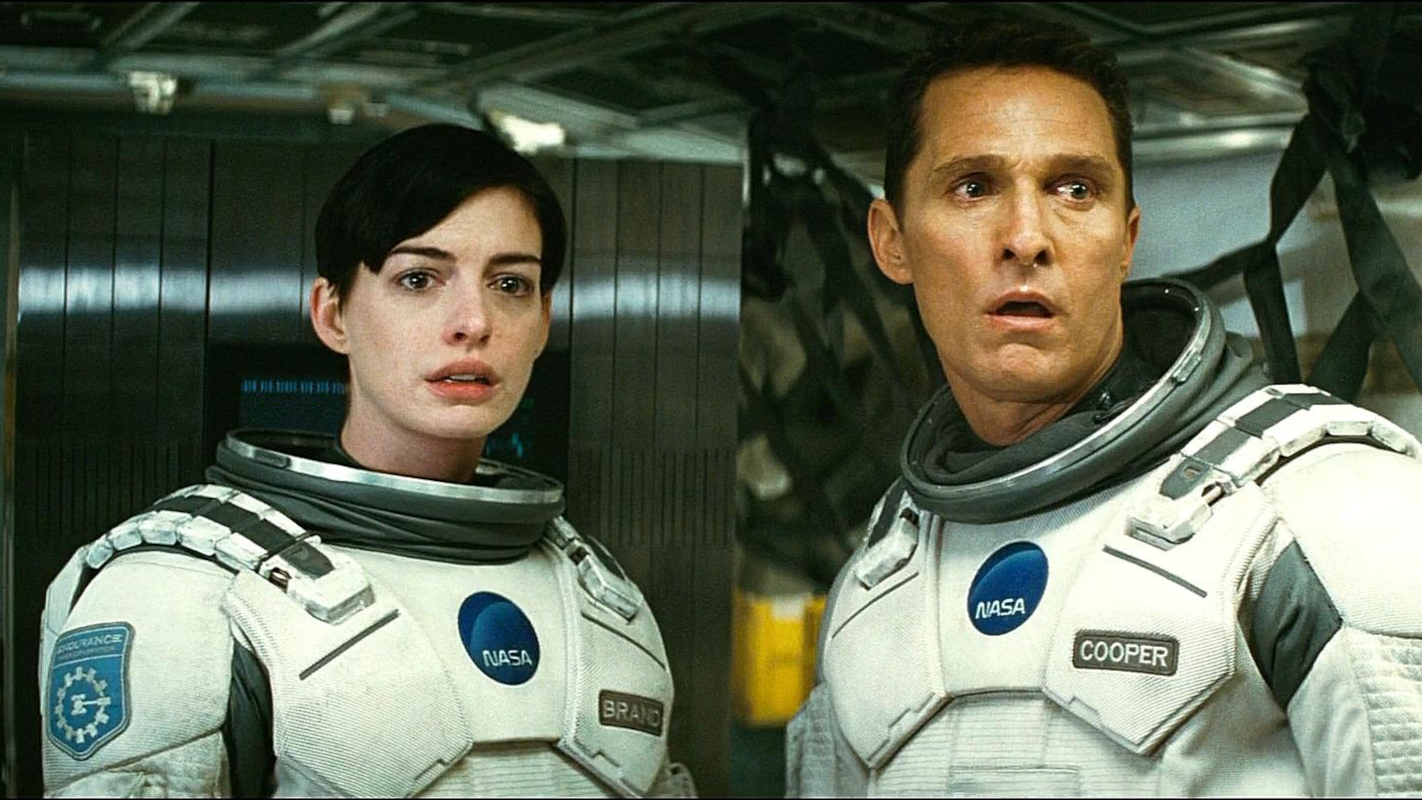
At one point in "Interstellar"'s evolution, it seemed set to be a Steven Spielberg movie. Physicist Kip Thorne had originated the project with producer Lynda Obst, and the "Close Encounters of the Third Kind" director spent a year developing the movie with them. He even hired Nolan's younger brother, Jonah (whose credits include "The Dark Knight" and "Westworld"), to write a script.
Spielberg ultimately dropped out — "It just didn't stick with me, and I don't know why," he told Empire magazine — but Jonah knew the ideal replacement. "Jonah actually said, 'If there comes a point where you decide not to make this movie, I can tell you who's gonna grab it. He's already bugging me about it. And that's my brother Chris.' The second I decided not to make it, Chris jumped on board, probably the next day. 'Interstellar' was a much better movie in Chris Nolan's hands than it would have been in mine."
In the film's near future, humanity is literally running out of time. The Earth's ecosystem is breaking down, with dust storms killing crops across the United States and causing major health issues among the survivors. Nolan even uses talking head footage of real-life survivors of the Dust Bowl that ravaged the US Midwest in the 1930s (taken from Ken Burns' 2012 documentary "The Dust Bowl") to add to the urgency of the situation.
(Image credit: Paramount Pictures)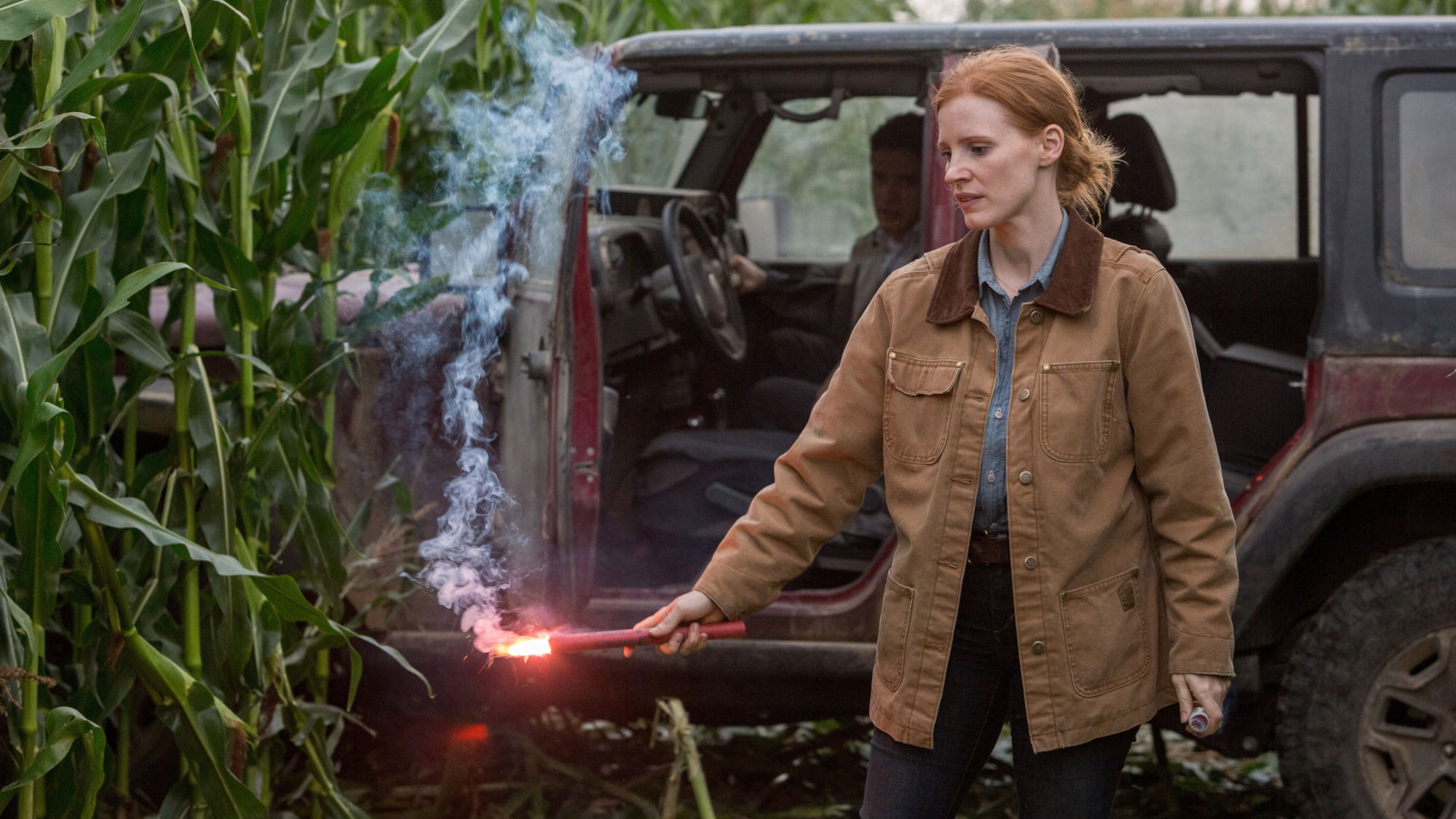
But the remains of NASA — now forced into hiding — have a plan. They've discovered a stable wormhole near Saturn, and it leads to another galaxy. Probes have found planets on the other side, and some of them might — just might — be capable of supporting life.
So when former pilot-turned-farmer Joseph Cooper (Matthew McConaughey) stumbles on NASA's clandestine base (for reasons that will later become clear), he's recruited for a mission checking in on the brave pioneers sent to investigate these strange new worlds. Unfortunately, this means leaving his kids behind.
And this is where relativity becomes one of the harshest antagonists in movie history. The Endurance crew's first destination, "Miller's Planet", orbits a black hole known as Gargantua. Its gravity is so intense that anything in its vicinity experiences extreme time dilation — to the extent that an hour on the planet's surface is equivalent to seven years for everyone else. "We need to think of time as a resource, just like oxygen and food," Brand says before they make landfall.
(Image credit: Paramount Pictures)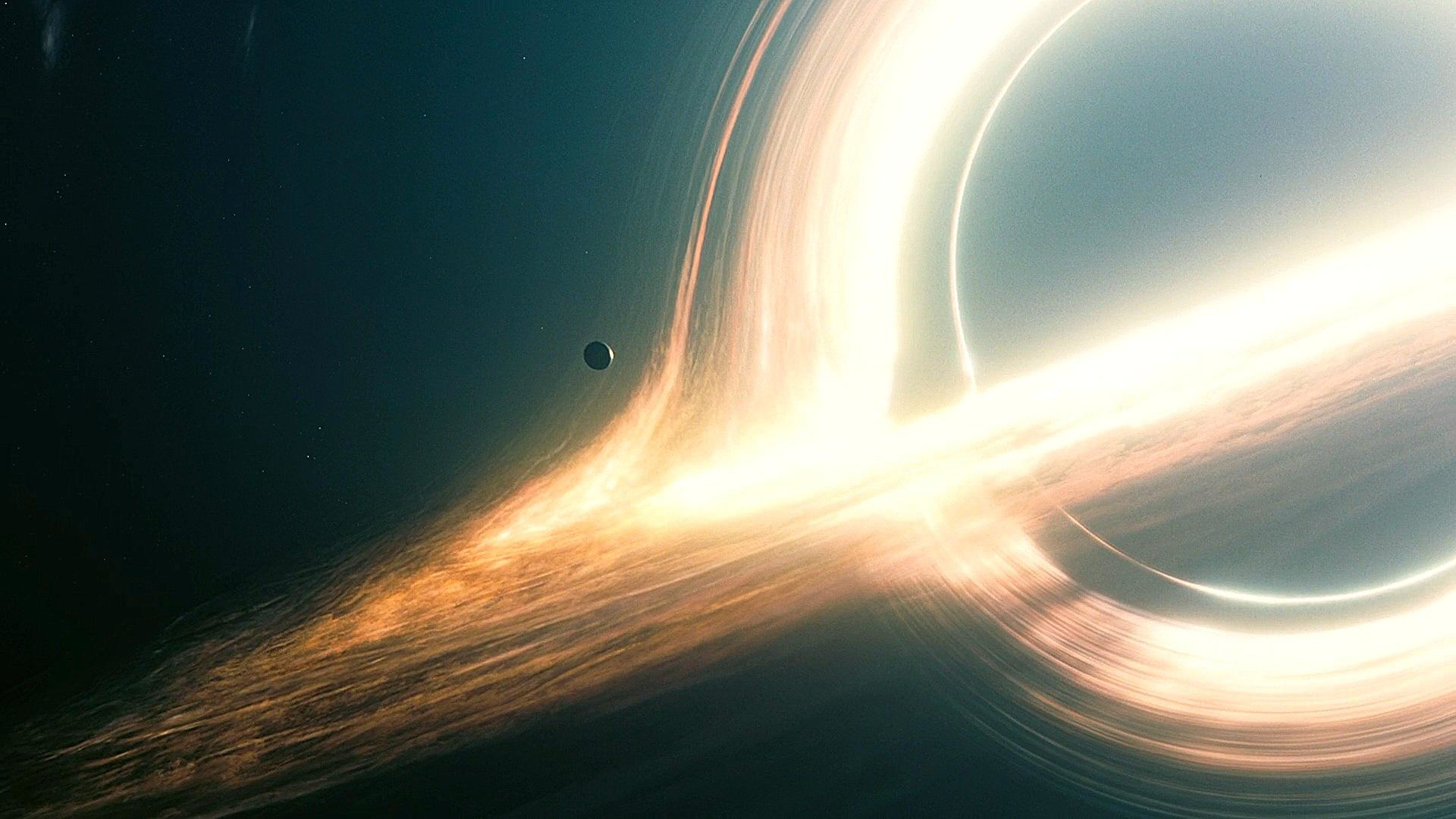
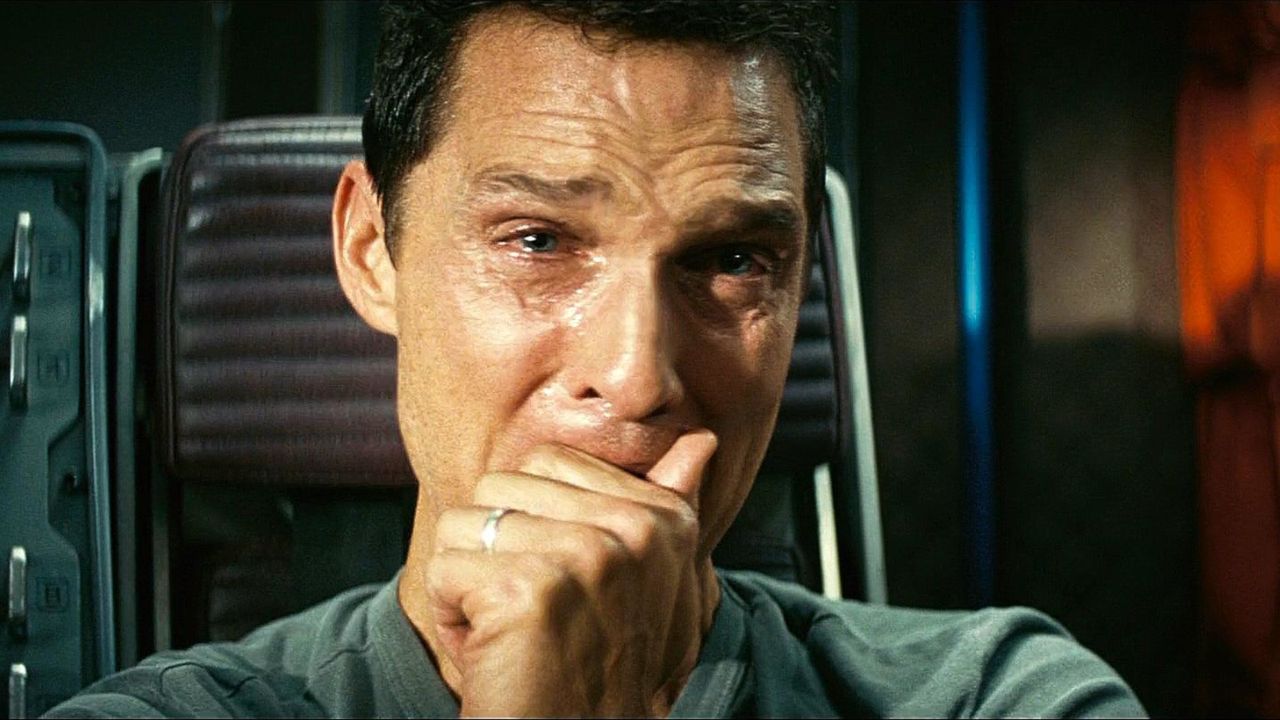
But in that old Hollywood tradition, not everything goes to plan on the surface, and by the time Cooper and Brand escape Gargantua's influence — minus their late crewmate Doyle (Wes Bentley) — decades have passed on Earth. In an extremely powerful sequence, we see Cooper catching up on the last 20-plus years of life back home via video messages from his son, Tom (the young version played by Timothée Chalamet, the older version by Casey Affleck).
In a matter of minutes, Cooper learns about the birth and death of a grandchild, as well as the passing of his father-in-law. At the end of the reel, his heartbroken daughter Murphy (young version: Mackenzie Foy; adult version: Jessica Chastain; elderly version: Ellen Burstyn) sends her first message since he abandoned her for outer space. The reason for breaking radio silence? She's now the same age he was when he left; her childhood vanished in the blink of an eye.
"Interstellar" makes a mockery of the myth that Nolan's films are cold and emotionless. Relativity shows no mercy for family bonds, and McConaughey, Chastain, and Hathaway all deliver towering performances as they deal with its consequences. This is a human story told across a multi-dimensional canvas.
(Image credit: Paramount Pictures)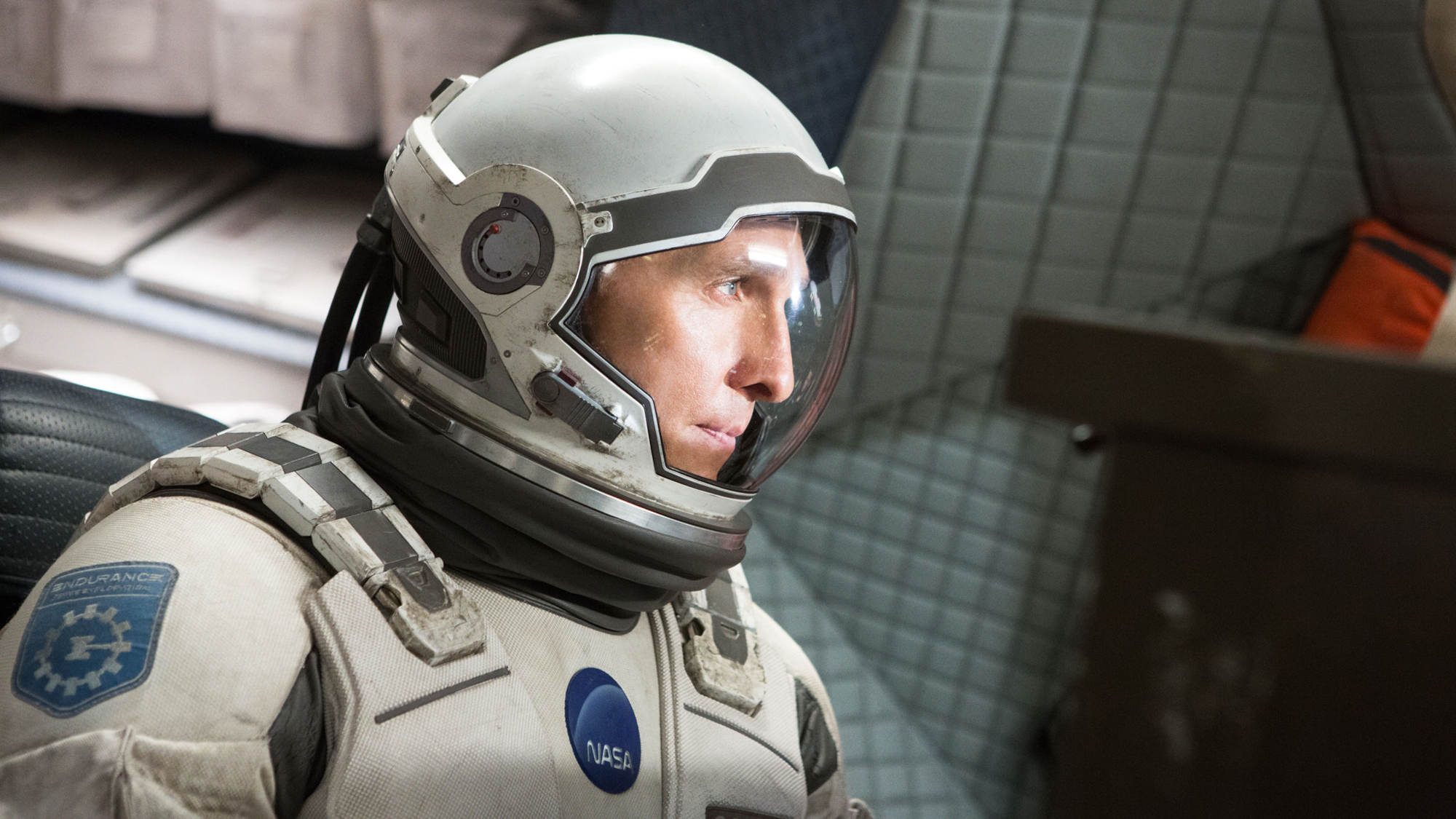
Even beyond their lives being thrown out of sync by time dilation — at the end of the movie, a still-40-something Cooper comes face-to-face with a nonagenarian Murph on her deathbed — they're coming to terms with the fact that the whole mission was built on a lie.
NASA boss Dr Brand (Michael Caine) may have thought he was doing the right thing by pretending that his gravity equation could be solved and giving false hope that humanity might one day find a new home among the stars. But it doesn't make it any less of a kicker when he confesses his grand betrayal, admitting on his deathbed that "Plan B" — sending embryos into the cosmos to extend the human race — was "Plan A" all along. Of course, whether he's right or wrong, he's a second-tier 'bad guy' compared to relativity.
Nolan went to extraordinary lengths to give his film a sound scientific footing. He consulted extensively with Thorne in order to generate a scenario where relativistic effects would be so extreme that minutes on a planet's surface would equate to years back on Earth. "Kip, apart from being an incredible mind, is actually a very good explainer of difficult concepts, and he was very patient with all of us lesser beings," producer Emma Thomas told SFX magazine. The Oscar-winning VFX team at D-Neg, meanwhile, turned their work modelling the accretion disc around Gargantua into an actual scientific paper.
(Image credit: Paramount Pictures)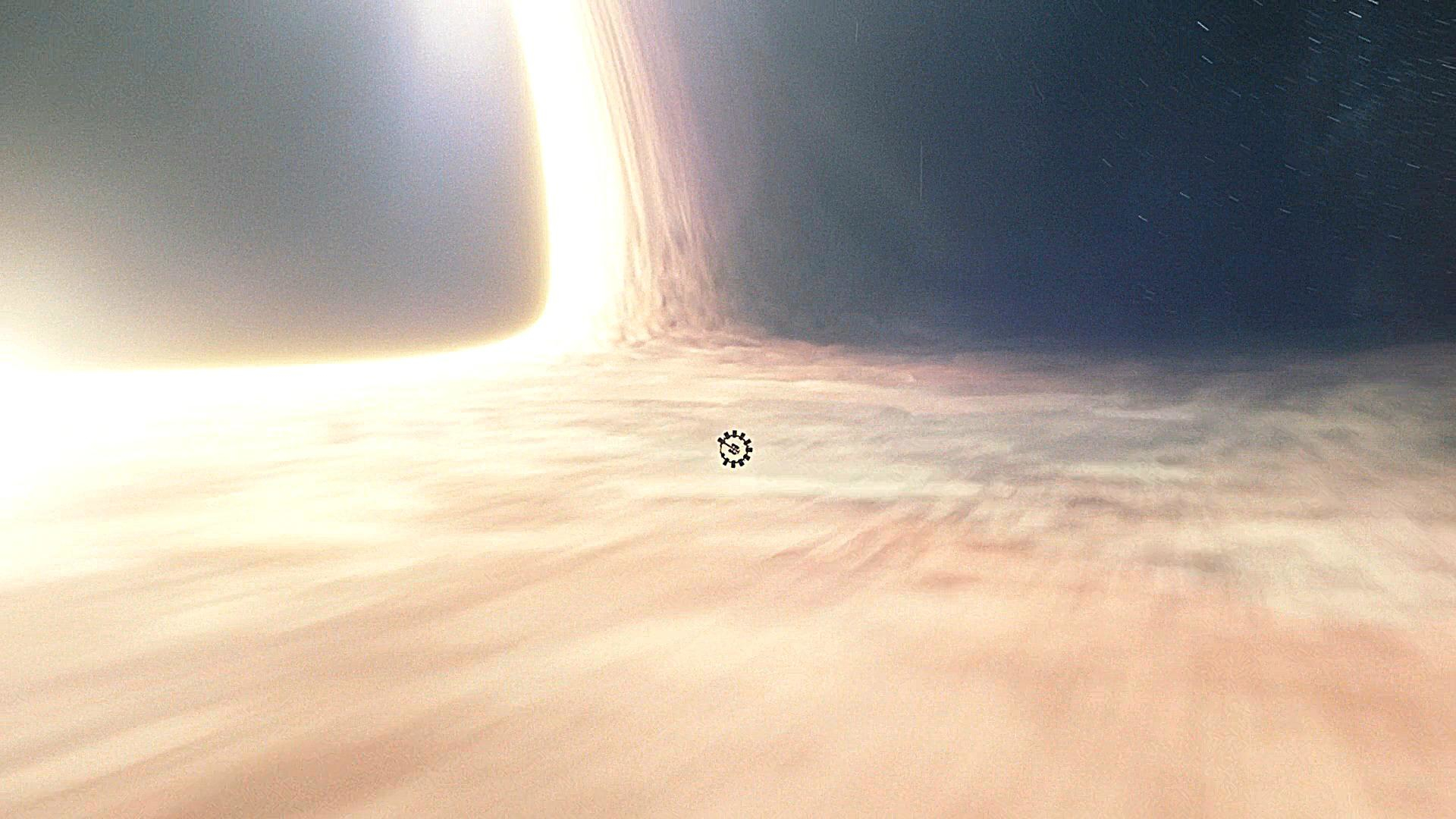
By the time the film enters its endgame, it's embracing tesseracts and five-dimensional superbeings, as Cooper uses gravity to communicate with Murph across time. In the process, he reveals that the "ghost" that helped him find NASA all those years ago was actually a future version of himself. Such diamond-hard sci-fi concepts are probably not, however, the reason that "Interstellar" has since — despite mixed reviews on release — become one of Nolan's most popular films a decade later.
"What I've found is that people who let the film wash over them get the most out of it," Nolan admitted in "The Nolan Variations" by Tom Shone, and the director may just have a point. While a cynic might have issues with the notion that love is a quantifiable force transcending the universe (anyone know the SI unit for that?), it's impossible to deny the genius of "Interstellar"'s use of high-level physics to explore the human condition.
It's unlikely any of us will find ourselves in the vicinity of a black hole, but all of us know what it means to want more time with the people we love.
"The Odyssey" is in theaters from Friday, July 17. "Interstellar" is available to stream on Hulu and Paramount+ in the US, and Sky Cinema and HBO Max in the UK.
Watch Interstellar on Paramount+: Essential (ads): $7.99/mo or $59.99/yr Premium (no ads): $12.99/mo or $119.99/yr

Watch Interstellar on Hulu: Hulu with Ads: $11.99/month or $119.99/year Premium (No Ads): $18.99/month