

 Getty ImagesSymptoms can include lower stomach pain or bloating, as well blood in your stool among other things
Eleven cancers - including bowel cancer - are becoming more common in young people in England, according to a major study, but exactly why remains a bit of a mystery.
Rising levels of obesity are thought to be part of the reason but scientists are still investigating many other potential factors.
11 cancers on the rise in young people - scientists find first clue why it's happening
What are the main bowel cancer symptoms?
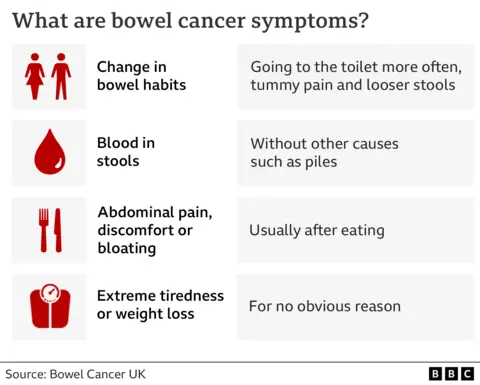
There are three main things to look out for:
- blood in your poo for no obvious reason - it may be bright or dark red
- a change in how you poo - such as going to the toilet more often or your poo becoming runnier or harder
- feeling lower tummy pain or bloating, when your belly feels full and tight
There may be other symptoms too, such as:
- losing weight
- feeling you haven't emptied your bowel properly after a poo
- feeling more tired or dizzy than usual
Having these symptoms doesn't necessarily mean it's bowel cancer.
But the NHS recommends that you see your GP if you notice them for three weeks or longer, and if things just don't feel right.
Sometimes bowel cancer can stop waste passing through your system, which can cause a blockage.
This can bring on severe tummy pain, constipation and sickness. You should see your GP or go to your nearest A&E straight away in those circumstances.
NHS: Bowel cancer
Bowel Cancer UK: Signs and symptoms
How do I check my poo?
 You, Me and the Big C podcaster Dame Deborah James diagnosed at 35, and helped raise awareness of bowel cancer symptoms
 Look out for blood in your poo as well as bleeding from the bottom when you go to the toilet.
Bright red blood may come from swollen blood vessels (piles) in your back passage, but could also be caused by bowel cancer.
Dark red or black blood in your poo may come from your bowel or stomach, and could also be worrying.
You may also notice a change in your bowel habits, such as looser poo, pooing more often than normal, or a feeling that you're not emptying the bowels properly.
Bowel Cancer UK recommends keeping a diary of your symptoms which you can discuss with your GP.
Doctors are used to seeing lots of people with a variety of bowel problems, so there is no need to be embarrassed.
'One in a billion': Dawson's Creek stars lead tributes to James Van Der Beek
Dawson's Creek actor reveals cancer diagnosis
Deborah James: Let's talk about poo and bowel cancer
What causes bowel cancer?
No-one is sure exactly what causes it, but there are some things which can make it more likely:
- the older you are, the more likely you are to get cancer - most cases of bowel cancer are in adults over 50, although rates are rising among younger people
- eating a diet with lots of red meat and processed meat, such as sausages, bacon, salami
- having a history of polyps in your bowel which can grow into tumours
- smoking cigarettes can increase the risk of developing many cancers
- drinking too much alcohol
- being overweight or obese
Scientists believe excess weight could be behind some of the rise of bowel cancer in younger adults in their 20s, 30s and 40s - but with fewer people smoking and improved exercise levels and diets, they are still not clear about other potential causes.
In most cases, bowel cancer isn't hereditary but you should tell your GP if you have any close relatives diagnosed before the age of 50.
Some genetic conditions such as Lynch syndrome mean you have a much greater risk of developing bowel cancer. But doctors can work with patients to try and limit the additional risk, and ensure they are diagnosed at an earlier stage when it is easier to treat.
Bowel-cancer rates rising among younger people
Century-old tumours could reveal why more young people are getting bowel cancer
Are we failing young people with cancer?
How can I reduce my risk of bowel cancer?
More than half of bowel cancers could be prevented by people following a healthier lifestyle, scientists say.
- exercising more
- eating more fibre and less fat
- drinking six to eight glasses of fluid a day
You should also go to your GP with any concerning symptoms, and take up the offer of cancer screening as soon as it is offered.
UKHSA: Seven ways to reduce your risk of bowel cancer
Who can be tested for bowel cancer?
 Getty Images
The NHS bowel cancer screening programme aims to detect bowel cancer at an early stage, increasing the chances of successful treatment and survival.
But it's not available to everyone - only to those age groups most likely to benefit. Screening isn't 100% accurate. People sent an at home-testing will be advised if they need further checks.
In England, Scotland and Wales, screening starts from age 50.
In Northern Ireland, it's for people over 60.
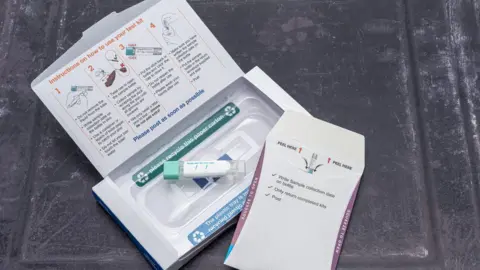
You will receive a home test kit to help gather a poo sample which you send back to be analysed.
You will then either be given the all-clear or contacted by your local hospital for further tests.
These could be a colonoscopy - a procedure which uses a camera inside a long tube to look inside the whole bowel - or a flexible sigmoidoscopy, which looks at part of it.
If you're in a younger age group and have symptoms, you should visit your GP but are not advised to buy a self-test kit, because the results can be confusing.
How is bowel cancer treated?
Treatments are becoming more personalised, as advances in genetic testing mean care can be tailored to the way each individual deals with their body's own cancer.
This approach still needs refining, but could mean extra years of life for those with cancer.
At whatever stage your cancer is spotted, you will be talked through the treatments available.
That might be surgery, or a combination of chemotherapy and radiotherapy, depending on your individual cancer.
Bowel Cancer UK has advice on questions to ask at appointments with specialists.
Is bowel cancer curable?
Bowel cancer is curable, especially if diagnosed at an early stage.
- stage 1 cancers - small, but haven't spread
- stage 2 cancers - larger, but still haven't spread
- stage 3 cancers - have spread to some of the surrounding tissue such as lymph nodes
- stage 4 cancers - have spread to another organ in the body, creating a secondary tumour
More than 90% of people diagnosed with bowel cancer at its earliest stage will survive for five years or more - compared with 44% when diagnosed at the latest stage.
The chances of survival in the UK have more than doubled in the last 40 years, according to Cancer Research UK. More than half of patients now survive for 10 years or more, compared with one in five in the 1970s.
Like many cancers, 15 to 40-year-olds have the highest survival rates, because cancer is more common and more deadly in older people.
However, in general, survival is not as good in the UK as the rest of Europe.