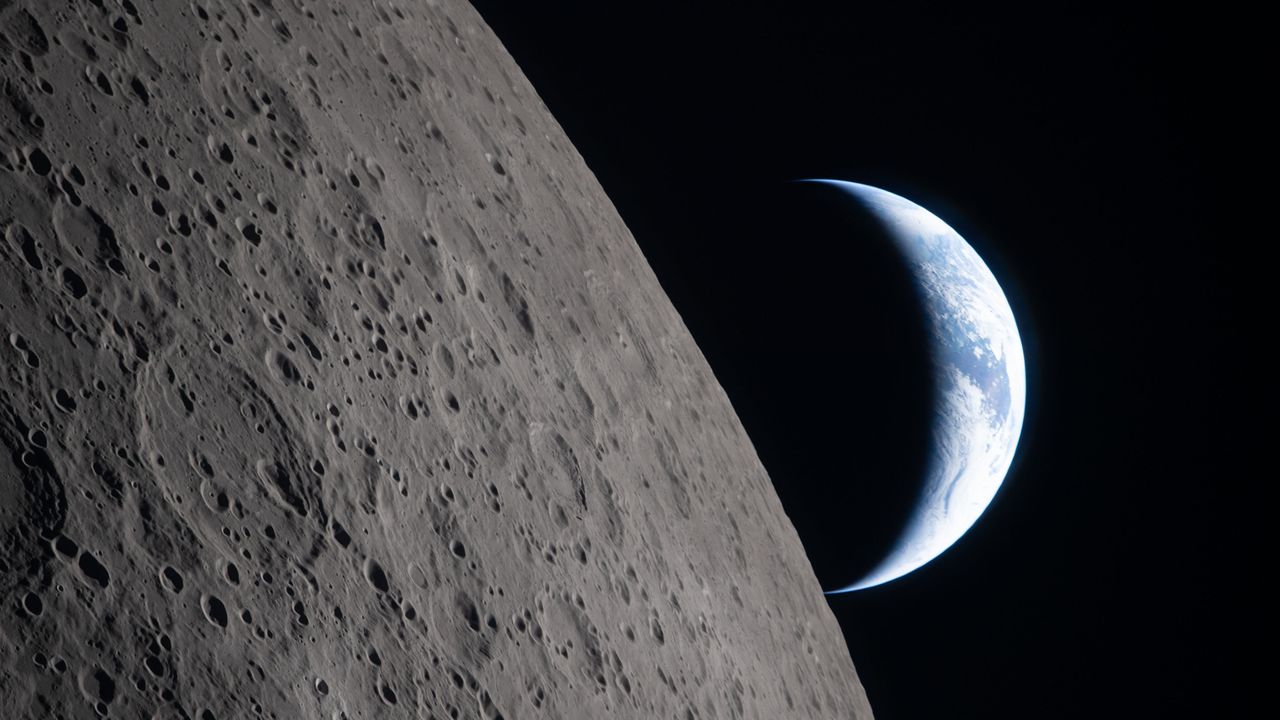
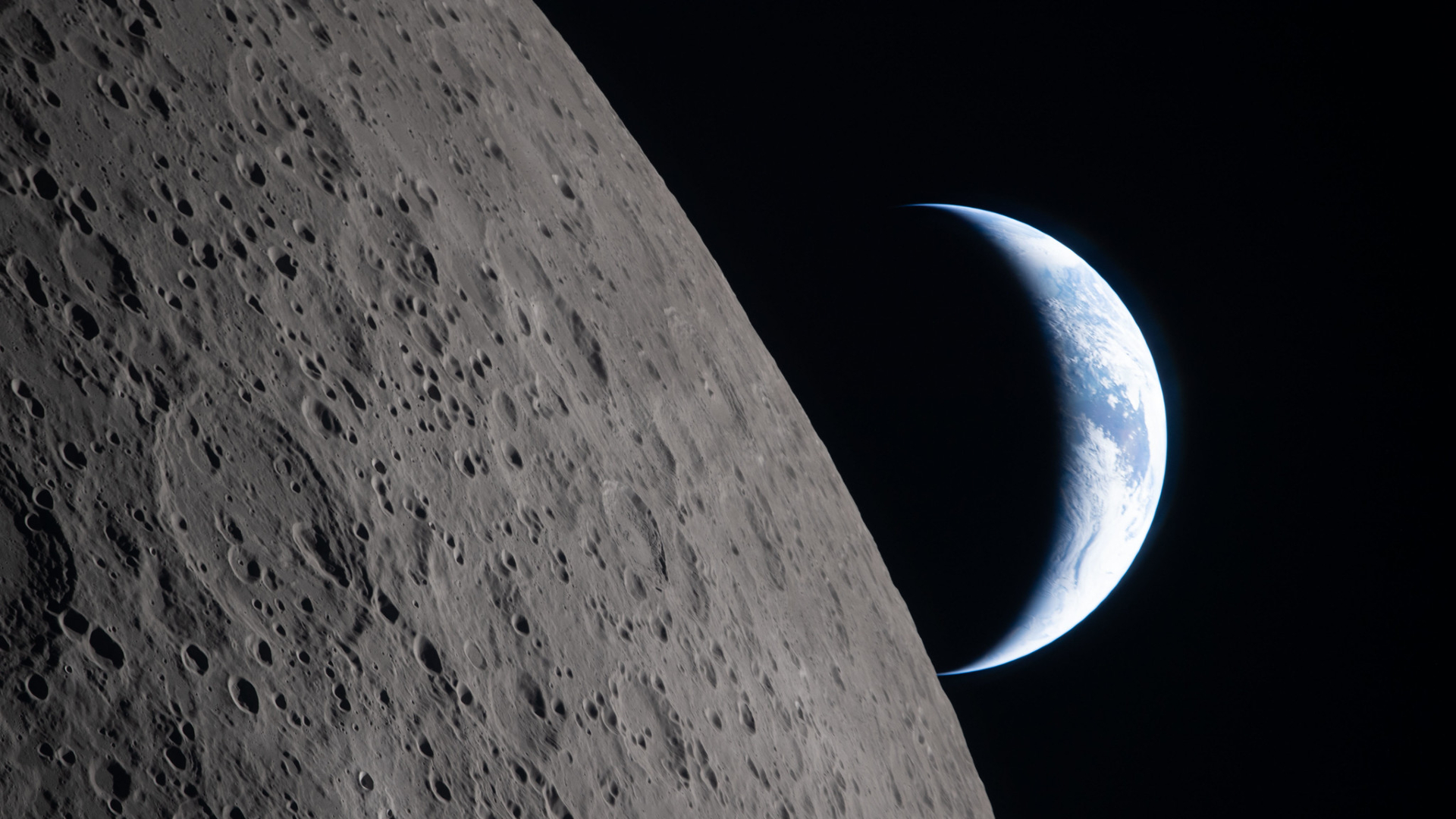
 Just before the Artemis II crew passed behind the moon, they captured this image of a crescent Earth setting on the moon's limb. (Image credit: NASA) Share this article 0 Join the conversation Follow us Add us as a preferred source on Google Newsletter Sign up for the Live Science daily newsletter now
 Get the world’s most fascinating discoveries delivered straight to your inbox.
Become a Member in Seconds
Unlock instant access to exclusive member features.
Contact me with news and offers from other Future brands Receive email from us on behalf of our trusted partners or sponsors By submitting your information you agree to the Terms & Conditions and Privacy Policy and are aged 16 or over.You are now subscribed
Your newsletter sign-up was successful
Want to add more newsletters?
Join the club
Get full access to premium articles, exclusive features and a growing list of member rewards.
Explore An account already exists for this email address, please log in. Subscribe to our newsletter Quick factsWhat it is: "Earthset" as seen by the crew of NASA's Artemis II mission
Where it is: 4,070 miles (6,550 kilometers) above the lunar surface
When it was shared: April 6, 2026.
This striking image shows a crescent Earth slipping behind the moon's rugged limb. This "Earthset" was witnessed by the crew of NASA's Artemis II mission and is arguably the highlight of the first mission around the moon since 1972. Moments after this image was taken, the Orion spacecraft passed behind the moon, beginning a 31-minute communications blackout with Mission Control in Houston, Texas.
"I'm actually getting chills right now — just thinking about it, my palms are sweating," Commander Reid Wiseman said from the Orion capsule during a live news conference on Wednesday (April 8). "It is amazing to watch your home planet disappear behind the moon. You can see the atmosphere. You can see the terrain on the moon projected across the Earth … it was just an unbelievable sight … and then it was gone. It was out of sight."
The image inevitably invites comparison with the Earthrise captured during the Apollo 8 mission on Christmas Eve 1968 — the mission that took three humans around the moon for the first time. That photograph, taken by pilot Bill Anders, revealed Earth as a fragile, finite world suspended in darkness — a perspective widely credited with helping to spur the modern environmental movement.
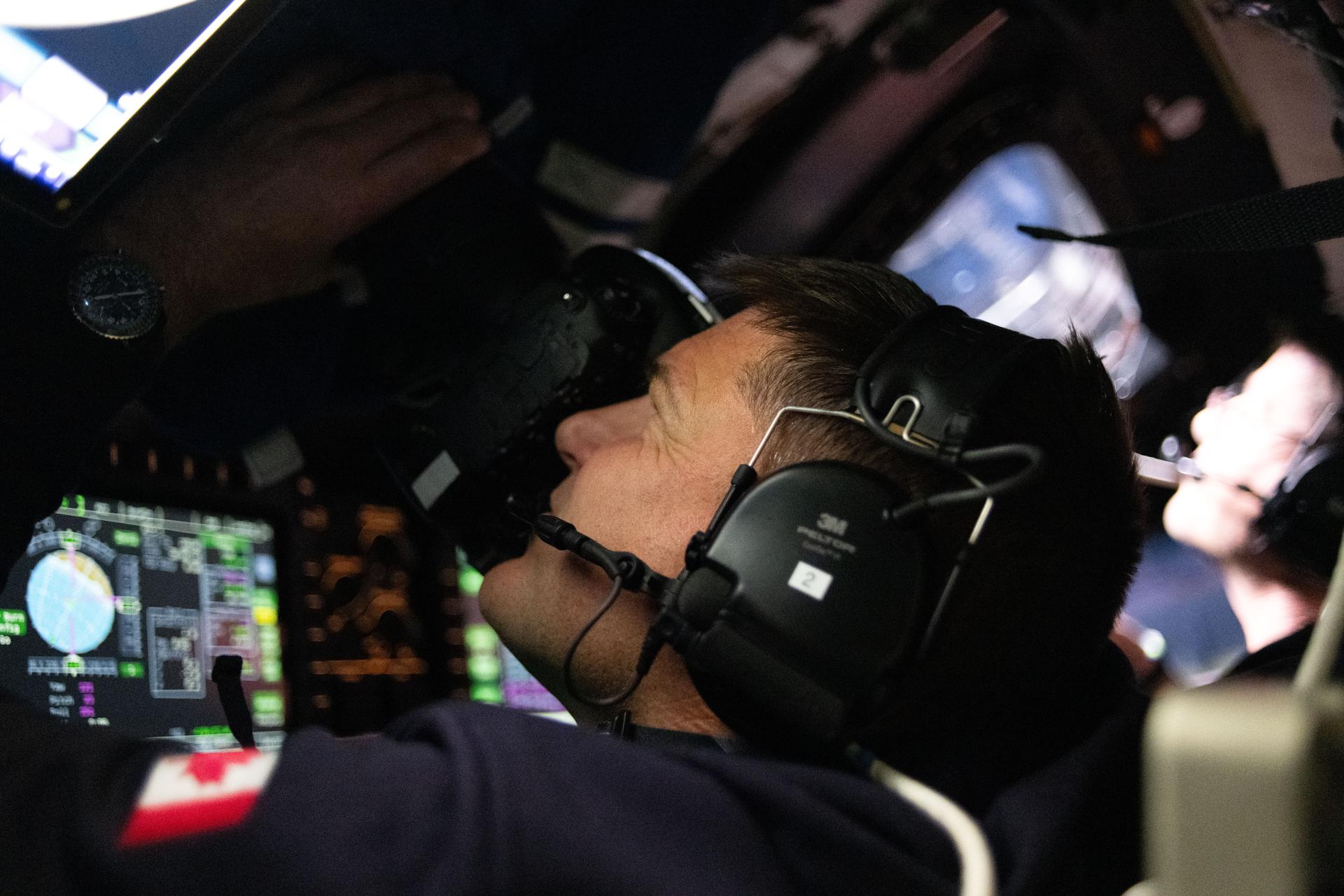
The crew of Artemis II later took their own Earthrise image, but it was that initial Earthset — also taken a little farther out, in close up and in wide angle — that deeply affected Wiseman, pilot Victor Glover, mission specialist Christina Koch and Canadian Space Agency astronaut Jeremy Hansen.
Human minds shouldn't have to go through what these just went through.
Reid Wiseman, Artemis II Commander
"The four of us took a moment,” Wiseman said. “We shared maple cookies that Jeremy had brought. We took about three or four minutes as a crew to reflect on where we were — and then it was right back into the science
"There's a lot that our brains have to process," Wiseman added. "Human minds shouldn't have to go through what these just went through, and it is a true gift."
Sign up for the Live Science daily newsletter nowContact me with news and offers from other Future brandsReceive email from us on behalf of our trusted partners or sponsorsThe original Earthrise image announced humanity's arrival at the moon. It was unexpected and improvised. Earthset was intentional — and signals humanity's return to the moon after more than half a century.
TOPICS Jamie CarterLive Science contributor
Jamie Carter is a Cardiff, U.K.-based freelance science journalist and a regular contributor to Live Science. He is the author of A Stargazing Program For Beginners and co-author of The Eclipse Effect, and leads international stargazing and eclipse-chasing tours. His work appears regularly in Space.com, Forbes, New Scientist, BBC Sky at Night, Sky & Telescope, and other major science and astronomy publications. He is also the editor of WhenIsTheNextEclipse.com.
View MoreYou must confirm your public display name before commenting
Please logout and then login again, you will then be prompted to enter your display name.
Logout LATEST ARTICLES 1Does the moon look the same from everywhere on Earth?
- 2I found a new meteor shower — and it comes from an asteroid getting baked to bits by the sun
- 3AI for breakup texts? How 'sycophantic' chatbots are messing with our ability to handle difficult social situations.
- 4Artemis II splashes down, the kākāpō bounces back, the Shroud of Turin gets weirder, and a functional cure for type 1 diabetes
- 510 Artemis II photos that define humanity's return to the moon