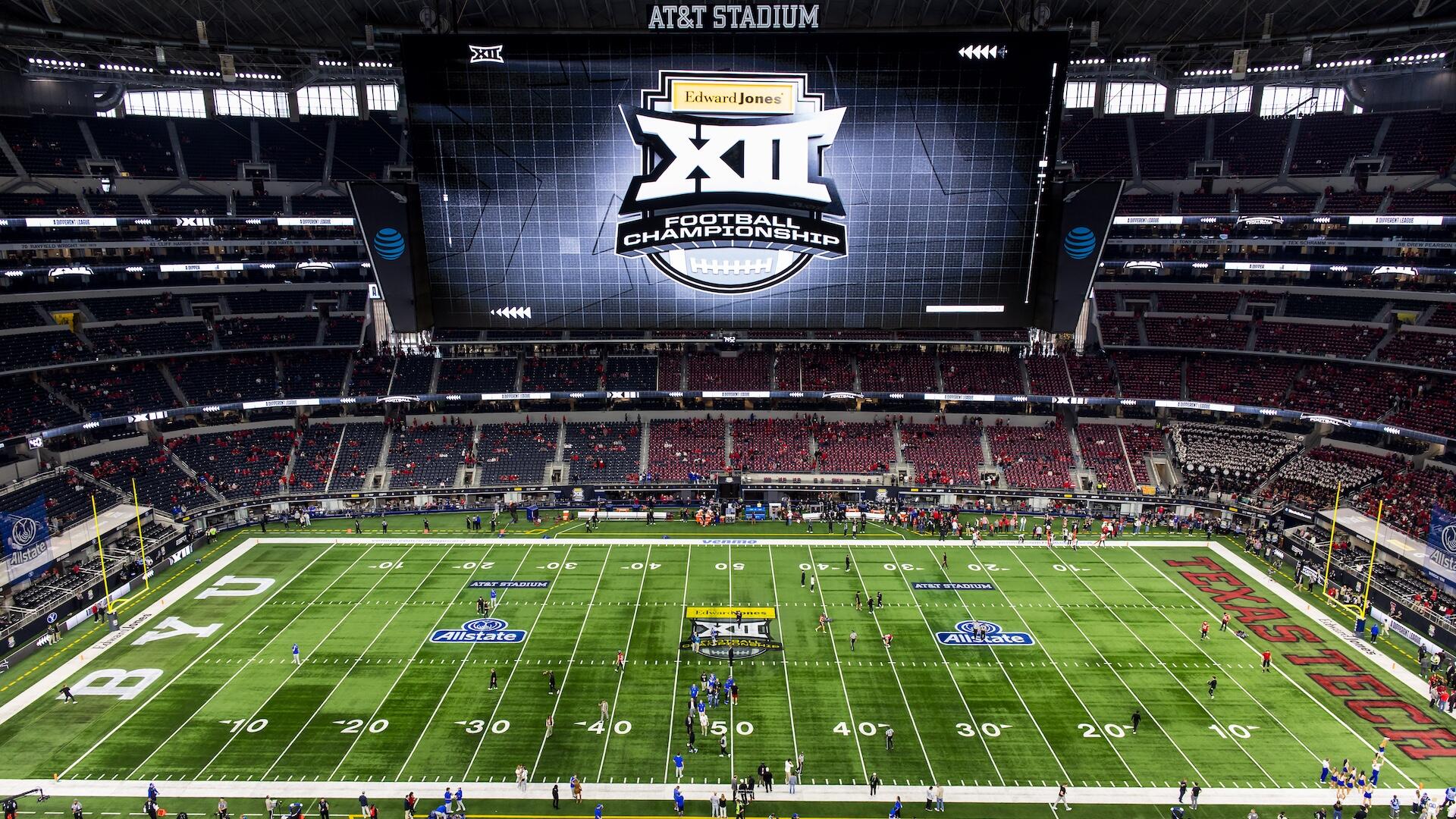
Big 12 commissioner Brett Yormark turned to private capital in a deal that could reshape how conferences make money
 By Brandon Marcello May 12, 2026 at 11:21 am ET • 9 min read
  Getty Images
 When Brett Yormark made the call 18 months ago to RedBird Capital Partners, the gap was already hard math, and it was only growing.
The Big 12's revenue was less than half of the Big Ten's $928 million, and with revenue-sharing on the horizon and NIL contracts draining the schools' coffers and lightening boosters' pockets, it was time to act.
Yormark, who became Big 12 commissioner in August 2022, was left with two problems on his desk. The first was the revenue gap. The second was that no one at the conference level had ever been built to close it.
What he reached for was something major college sports had never tried at the conference level: a private-capital partner. After working informally to help close two sponsorship deals worth roughly $100 million over the last year, RedBird and the Big 12 officially became partners.
The deal ties the Big 12 to RedBird Capital Partners and Tampa-based Weatherford Capital through an endeavor called Collegiate Athletic Solutions, which spans three interconnected business lines. The piece that has drawn headlines is an opt-in credit line of up to $30 million per school, with double-digit interest rates. The bigger, untested question is whether the other two legs -- a conference-level commercial-sponsorship operation and a $12.5 million direct investment from CAS to build new revenue-generating businesses for the Big 12 -- can actually shrink the gap with the leagues above the Big 12.
College football's 2026 transfer portal data highlights retention gap across conference tiers Chris Hummer
That is the test case college athletics is watching. Many in the Big 12 are curious, too. After all, their future, whatever the next iteration of college sports resembles, depends on their financial viability.
"The onus is on the schools to innovate," said Robert Klein, president of RedBird Capital Partners. "If they embrace new business models that reflect today's economic framework, we can help them to unlock value."
Schools and conferences across the country are desperate to carve out new revenue streams to counter rising operational costs, coaches' salaries and the latest line item, revenue-sharing contracts with players, which is set to enter its second year after the House v. NCAA settlement paved the way for sharing the financial pie with thousands of players.
RedBird Capital Partners was founded by Gerry Cardinale in 2014 and now manages roughly $15 billion across sports media entertainment and financial services, Klein said. (Part of the company's portfolio is a significant investment in Paramount Skydance, the parent company of CBS Sports.) RedBird has developed YES Network, NESN and NFL experience arm On Location and also owns Italian sporting power AC Milan.
Weatherford Capital, co-founded by former Florida State quarterback Drew Weatherford, joined RedBird in May 2024 to launch CAS, the platform now executing the Big 12 deal.
In an exclusive interview with CBS Sports this week, Cardinale and Klein walked through how they say the partnership with the Big 12 is structured to buoy the conference amid the ongoing sea change in college sports, and how they think CAS can deliver for member schools that have absorbed real financial damage from the transfer portal and the revenue-sharing cap.
Inside the three-part RedBird model
The first leg is commercial. RedBird Development Group, the firm's in-house sales arm, has signed two major sponsors on behalf of the Big 12, generating roughly $100 million in new revenue that flows down to the schools. The marquee partnership is with PayPal, a deal that includes on-field logos, co-branded credit cards for the conference and its member schools, and a Venmo system to deliver NIL payments to athletes.
The second leg draws on Cardinale's actual track record. The $12.5 million CAS has invested directly into the conference is earmarked for new EBITDA-generating businesses owned at the conference level. This is the playbook he ran with the NFL through On Location, and with the Yankees through YES. He builds businesses that monetize intellectual property rather than simply taking minority stakes in teams and waiting for them to appreciate.
The third leg has drawn the most questions. The private capital credit line CAS has offered to the Big 12's 16 schools, allowing athletic departments to draw up to $30 million over the next year, with repayment taken from the Big 12's annual revenue distribution to schools. At least 11 schools have initially declined the line of credit from CAS.
The label "private equity" is a dirty word for some, particularly in college athletics, where universities had long raised money on their own and generated millions in revenue without the overhead of paying players. Private equity firms are often fingered as vultures seeking short-term profits at the expense of a company's long-term stability, leading to cuts and a diminished product.
"Private equity gets lumped into this amorphous monolithic group, which misses the point," said Cardinale, founder and managing partner of RedBird Capital. "I don't think of myself as private equity, which has a pejorative connotation for many people and therefore overshadows the importance of capital at this table. The question at hand should be what to do with the capital, and with that answer comes which type of capital is most appropriate.
"The one thing I've learned in the several years that we've been engaging within the college athletics ecosystem is that one size does not fit all, and the flexibility to offer bespoke capital solutions to address individual university objectives is an important prerequisite for any actionable capital relationship."
The traditional private-equity sports playbook, Klein said, is to take secondary stakes in teams or leagues, discount them and wait for the equity to appreciate. RedBird's track record is the inverse, he said. They build companies around the intellectual property a team or league already controls, rather than buying into the team itself. "We approach it as business guys," he said, "not as private equity guys [who] want to take minority stakes in teams."
"When we created the YES Network 25 years ago, what George Steinbrenner basically questioned was why he would put in the risk capital every year to field a World Series team and yet only get paid a fee by this other family who broadcasts his games -- and it's that other family that gets the appreciation in their stock price," Cardinale said. "That paradigm is exactly what the opportunity is for college today."
The pressure on Big 12 athletic departments is substantial. The 16 schools averaged roughly $131.7 million in operating expenses in 2025, according to NCAA reporting, with average annual operating losses of approximately $57.4 million per school -- a rise of nearly $9 million compared to the previous year. Those operating losses are offset, though not always fully, by booster contributions and university support from student fees and redirected funding.
In many ways, the Big 12 going into business with RedBird Capital is a half-measure in the realm of private capital. Yormark spent the spring of 2024 in discussions with Luxembourg-based CVC Capital Partners, which proposed an $800 million to $1 billion cash infusion in exchange for a 15% to 20% equity stake in the conference. Those talks stalled by midsummer.
The most active flirtation with private equity recently has come from the Big Ten. Commissioner Tony Petitti began soliciting private-equity proposals in January 2025, leading to a proposed $2.4 billion investment from UC Investments, the University of California system's portfolio manager, in exchange for a 10% stake in a new entity, Big Ten Enterprises, that would hold the conference's media and revenue rights. Talks have since stalled.
The Big 12's Utah cut a deal with Otro Capital in December for a stake in a separate for-profit vehicle that holds a slice of its revenue-generating athletic operations. It's the first equity-style private-capital deal at the school level in major college sports.
Cardinale and Klein said they have met with more than 50 schools and every power conference over the past two years.
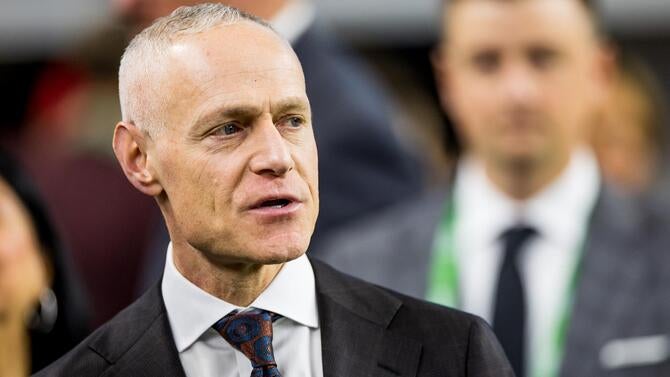 Big 12 commissioner Brett Yormark's big bet on private equity hopes to level the playing field in the NIL space. Getty Images
 A high-stakes test case for the future
Whether that translates to enough new dollars to matter is an open question. The math is unforgiving. Closing even half the projected gap with the Big Ten -- $15 million per school across 16 Big 12 schools -- would require the conference to generate $240 million per year in new conference-level revenue.
"They provide an incredible bench for us during these times of uncertainty," Yormark told CBS Sports. "When you evaluate the RedBird deal, you have to look at it very holistically. It is truly about a commercial partnership, a strategic partnership. The last component was the capital piece, which our schools had an opportunity to opt into or not. Knowing that RedBird will be here for the long term," he said, "gives our schools the comfort that if they don't want it now, they can revisit it in the future if need be."
Klein, asked about the gap between the public posture of the Big 12 schools approving the deal but not borrowing money, was direct.
"I think many ADs are waiting to see what legislative and/or regulatory changes might come before committing to take capital," Klein said. "And behind the scenes, we are working with many to evaluate the road ahead."
Cardinale said the point of the deal with the Big 12 schools is to "educate them how to work with capital," which several universities and conferences have explored over the last two years but have mostly passed on the offer -- for now.
"Are they taking the money? That's not the point," Cardinale said. "The point is we're engaged in an iterative set of discussions at an individual and university level to educate them on how to have a relationship with capital. That's the win here."
What happens amid the Big 12's five-year agreement with CAS, led by RedBird and Weatherford's group, could lead to a few leads heading into the next wave of media rights negotiations. The Big 12's media-rights contract with ESPN and FOX expires in June 2031, the same month as its deal with CAS ends. The Big 12 also has an ancillary television package with TNT, as a result of ESPN swapping 13 conference football games and 15 basketball games each season for the rights to "Inside the NBA." TNT, owned by Warner Bros. Discovery, is expected to come under the Paramount Skydance umbrella in the third quarter of 2026, following Paramount Skydance's acquisition of Warner Bros. Discovery earlier this year, a deal that would unite TNT and CBS under the same corporate parent.
The Big 12's bet is that by the time its media rights reach the open market, it won't just be selling television inventory. With RedBird Capital infusing capital into the conference, the firm has deep ties across broadcast media and entertainment — the Big 12 expects to market a portfolio of conference-controlled commercial businesses alongside its games.
Whether that bet pays off depends on whether RedBird, Weatherford and the Big 12's schools can actually build them.
For now, the Big 12 is a proving ground.
"All of the schools are engaging with us," Cardinale said. "And that's what it was meant to be. It's an educational process that is meant to evolve over time as the individual schools figure out what the most optimal relationship with capital should be for them. It's a marathon, not a sprint."
Join the Conversation comments