
 James LandaleDiplomatic correspondent
 BBC
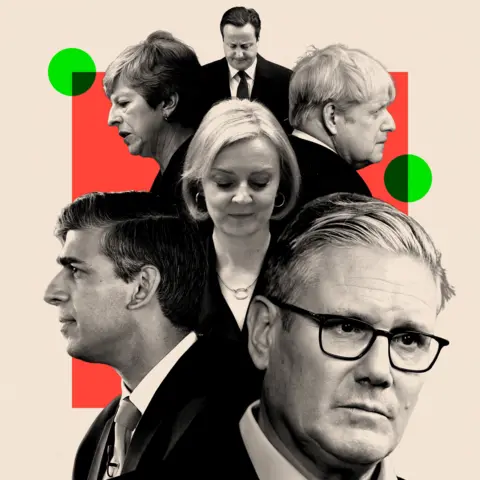
BBCThe story of British politics today can be told by numbers. Five prime ministers in seven years, none of whom served a full parliament. Over the same period, seven foreign secretaries, six chancellors of the exchequer and four cabinet secretaries.
It is a story of instability and inconsistency with potentially a new chapter written by Labour if it removes Sir Keir Starmer, an incumbent premier with a bigger parliamentary majority than his transformative predecessor Clement Attlee won in 1945.
What is driving this narrative? Why is the UK churning through its leaders almost as quickly as Italy once did? Why do voters and MPs bequeath and remove their support with seemingly such casual ease? In short, is Britain becoming ungovernable?
For Sir Keir, the answer is clear. At a news conference this week, the prime minister said: "No, I don't think Britain is ungovernable." His opposite number, the Conservative leader, Kemi Badenoch, agreed, telling the House of Commons: "Britain is not ungovernable."
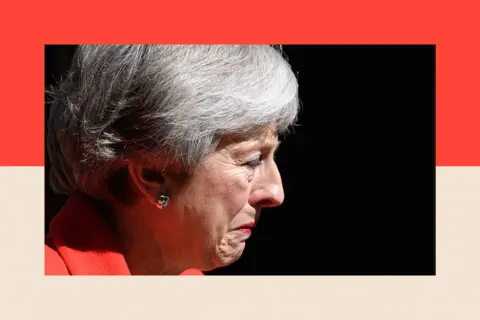 Getty ImagesThe UK has seen five prime ministers in seven years
But Sir Keir and Badenoch both lead MPs who in recent times have shown a taste for political regicide; they have to govern through a complex administrative, regulatory and judicial framework that can make implementing policy hard; and they appeal to voters who seem increasingly impatient for results and unwilling to accept that politics involves trade offs.
Is this a particularly turbulent moment in British history that has left leaders buffeted by events? Or does the turmoil at Westminster reflect deep and systemic problems in our politics?
Events, dear boy
The first answer may simply be that times are hard for the political classes. This period of history might have tested any generation: the financial crash of 2008, the political chaos of Brexit, the economic body blow of Covid-19, the war in Ukraine and resulting energy shock, and of course the systemic disruption of US President Donald Trump. These are challenges that are not specific to the UK, they are faced by other world leaders who are also struggling to cope. All across Europe, incumbent governments have wobbled into the face of economic headwinds and impatient electorates.
 EPA - EFE/REX/ShutterstockTackling problems in the UK will involve difficult trade-offs
Have our political leaders in the UK risen to meet all these challenges? Hannah White, CEO of the Institute for Government (IFG) think tank, has her doubts. "The UK is not 'ungovernable'," she says. "But its political parties have handed the country a series of prime ministers lacking in key leadership skills at a time when crises have hit thick and fast and a number of trends are making governing substantially harder."
Professor Anand Menon, director of the UK in a Changing Europe think tank, agrees. "Our system provides significant power to a government with a majority," he says. "That this majority has not been deployed [to drive through change] to date is a failure of leadership rather than being indicative of a systematic trend towards ungovernability."
Sir Anthony Seldon, historian and biographer of many prime ministers, argues some recent incumbents – such as Boris Johnson, Liz Truss and Sir Keir – lacked the political abilities to do the job and the humility to get help. "They didn't have the skills and weren't willing to bring people in," he says. "Past prime ministers had mentors. Even Margaret Thatcher had Willie Whitelaw."
Grit in the machine
But if prime ministers arrive at No 10 with less experience than in the past, some MPs say the civil service is failing to support their prime ministers adequately, claiming Whitehall can be obstructive.
Baroness Cavendish, former head of David Cameron's policy unit, told BBC Radio 4's PM programme: "Every government seems to come in and is astonished… that things are so difficult to do. Many Labour ministers have said to me that they might actually agree with what Dominic Cummings [former Boris Johnson adviser] said about parts of the civil service needing reform."
In a frank admission before the House of Commons Liaison Committee last December, Sir Keir complained even he struggled to get things done: "My experience as prime minister is of frustration that every time I go to pull a lever, there are a whole bunch of regulations, consultations and arm's length bodies that mean the action from pulling the lever to delivery is longer than I think it ought to be."
Civil servants, who cannot speak publicly, push back in private, some blaming ministers for failing to give them clear guidance and instructions. They wonder if the political class has forgotten how to govern.
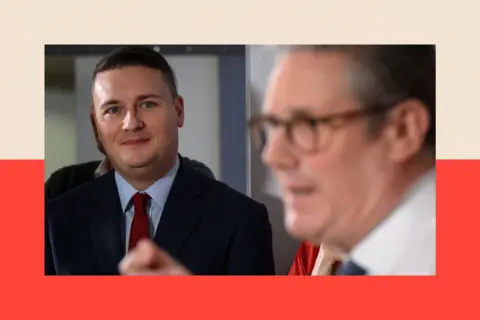 ReutersRebellions against the premier have become more common
 One veteran of Whitehall's corridors told me: "The contempt for the civil service, now amply reciprocated, has left the means by which politicians implement their policy frightened and wary." He said politicians "are increasingly like children. Agog and overawed at winning office and too frightened to do anything with it once they are there."
Some officials and advisers point to Downing Street itself, as an institution, saying it is woefully ill-equipped and understaffed to run a modern government. Yet successive governments have centralised power even further into the building. Some say this leaves decisions piling up there unresolved - and ministers disempowered.
Lord Hill, John Major's political secretary in the 1990s, said: "The centralisation of power in No 10 and the Cabinet Office - and the obsession with news management - has made the job of a minister far less relevant and powerful. It's a miracle that people are still prepared to go into politics and become ministers."
But are contemporary events, poor leadership and a creaking civil service enough to blame for our current political disorder?
Drama addiction
Some blame social media for accelerating the political process to a point it is almost unmanageable. Theo Bertram, former adviser to Tony Blair and Gordon Brown, now director of the Social Market Foundation, told the PM programme: "There is a structural problem which is that all the things we need to do to fix the country, they are going to take 10 years. But if you are prime minister, you don't have 10 years. In the age of social media, what you have is a lot of short-termism."
Social media, including personal messaging apps, makes rebellion easier at Westminster and policy discussion harder. Steve Baker, former Tory MP and arch Brexit plotter, wrote: "Whips and ministers arrive too late to a conversation that social media concluded an hour ago. Today, the same mechanisms are being deployed inside Labour: mini‑power centres built around WhatsApp lists, organising against their own leader in days rather than months."
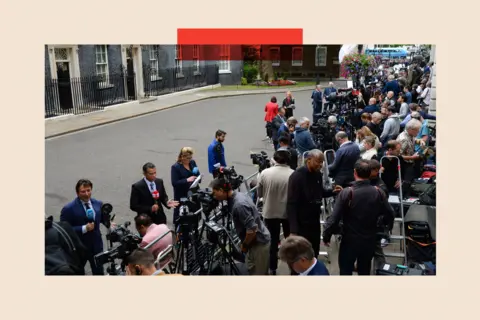 Bloomberg via Getty ImagesSome argue that a hunger for chaos makes governing harder
Others say the media bear responsibility. Nick Bryant, political commentator and former BBC colleague, believes the "excitability of journalists" is "part of the problem", arguing the "drama addiction among both politicians and the political reporters who cover them… fuels the constant cycle of chaos and uncertainty that is becoming so democratically destabilising".
Certainly, the politics around Brexit was so divisive that some believe it poisoned the political well, creating a culture of constant turmoil and rebellion. Conservative MPs got used to replacing their leaders. Have the current generation of Labour MPs watched and absorbed that culture, thinking it normal when historically it is not? Successive studies suggest backbenchers are becoming less obedient. Rebellion was rare in post-war parliaments but became more common in the Major, Blair and coalition governments as backbenchers grew in confidence and party management weakened.
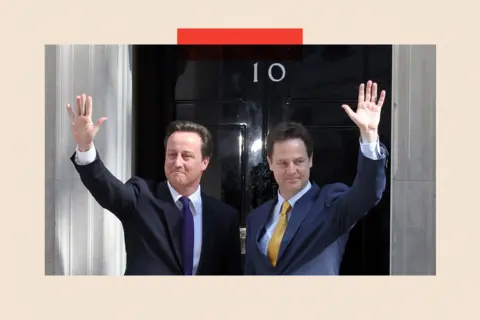 Getty ImagesMP rebellions increased during the coalition years
 But, again, is this the whole story? Some say the nature of our politics is changing. They point to the rise of smaller parties which are challenging the duopoly of Labour and the Conservatives. This has left the current government, yes, with a sizable parliamentary majority, but a paltry share of votes cast and thus weaker mandate. This trend may not change with the increased support for Reform UK and the Greens.
Lord Wood, former adviser to Gordon Brown, says: "Both main parties have had problems in government due to internal problems. The Conservative Party's travails in government were largely the result of Brexit fracturing the party and making party management impossible. The Labour Party has been strangely cursed by its loveless landside in 2024, without having a clear governing agenda to unite the party and set course once in power."
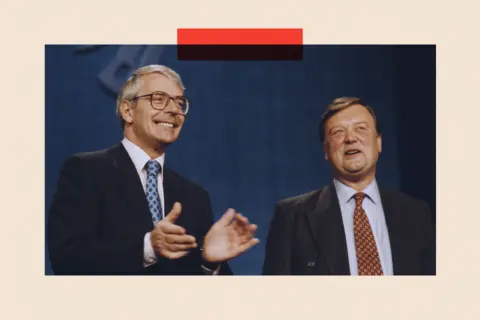 Getty ImagesSir John Major has said contemporary leaders struggle to make hard choices
Some argue the problem is deeper than that, and that the fracturing of traditional party lines reflects the failure of the political classes to address the scale of the problems the UK faces - structural economic weakness, persistently high immigration, weakening relations with traditional allies in Europe and the US, and an energy dependence on a tumultuous Middle East.
Managing expectations
That points to a broader issue, one of political leadership. Have prime ministers forgotten how to make arguments, to present their parties and voters with honest policy choices or trade-offs? Where once they promised short-term pain for long-term gain, do they now offer instant satisfaction that is almost always undelivered? This can fuel disillusionment and loss of trust. At the last election, neither of the two largest parties were candid about the prospects for tax rises and spending cuts.
Lord Hill says many in Westminster had forgotten politics was about working out what you want, making an argument for it and persuading as many people as possible to support it at a general election. "Instead, they think their job is to find out what different groups want, thread a needle through all the positions and assemble enough votes to get them over the line," he argues. "We've moved from government and parliament being a transmission mechanism into one that receives messages like a giant lobbying machine."
Theo Bertram, of the Social Market Foundation think tank, adds: "One of the things that we haven't seen so much in recent prime ministers is that ability to take on their own backbenches, to take on the public and tell them difficult things."
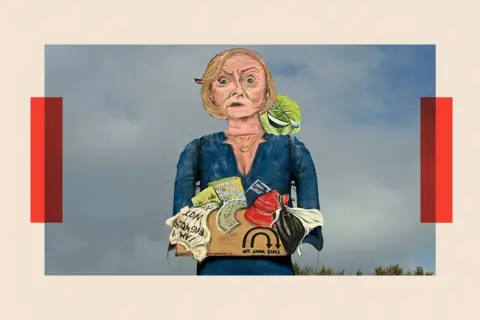 Andrea Deans/Glyn KIRK / AFP via Getty ImagesLiz Truss became a figure of derision during her short tenure
Some say politicians have yet to level honestly with the electorate about the need to cut welfare budgets, increase defence spending, reform the NHS and make the economy more productive, all of which would involve short term pain and - some think - a rebalancing of state support from the old to the young.
Politics is about persuasion, seduction even, and prime ministers seem to have forgotten this is an almost constant process of wooing voters, MPs and civil servants to keep them driving your agenda forward.
Perhaps, too, have we voters become too impatient? In an era of instant online purchases that are delivered to our doors within hours, do we demand faster political results at a rate no government could possibly deliver?
The rise in support for anti-establishment parties like Reform and the Greens is a result of voters becoming disillusioned with the mainstream parties which, they think, have failed to address the problems the UK faces.
Sir John Major, the former prime minister, agreed with Matt Chorley on BBC Radio 5 Live, that voters wanted quick and easy answers to complicated problems. "I'm afraid we do, and that is because nobody is telling us we can't have that," he said. "Governments have lost the capacity, it seems, to say no. And part of the job of politics is to say, no."
Here, perhaps, we are coming to the nub of the issue, the gap of expectations between the governed and those who seek to govern. In the past, prime ministers could often spend their way out of trouble. Leaders of the right could cut taxes; leaders of the left could spend more on welfare. Both options are now less viable. Tory promises of unfunded tax cuts - and Labour hints at easing fiscal rules to borrow more – spook the bond markets in equal measure.
Yet we have an economy seemingly trapped in low growth, high debt and stagnating real incomes with voters feeling the bitter reality of a cost-of-living crisis. The Tories promised a Brexit boom, Labour promised growth; neither materialised. This leaves many people feeling government is failing to deliver for them, and that makes government hard.
More from InDepthRoyal finances face a cut. But will much really change?
How the Trump-Xi summit could set superpower relations for many years to come
How the winner-takes-all voting system has turned on Labour and the Tories
"Pressures on public services are rising," says Hannah White from the IFG. "Public expectations are high but government room for manoeuvre is limited. The public, seldom faced with trade-offs, has become accustomed to the sort of sweeping government intervention we saw during the pandemic and Ukraine energy crises, and struggles to understand why today's cost of living pressures remain unchecked. But lack of money seriously constrains policy choices."
Sir Anthony Seldon thinks it could get worse. "What would be very dangerous is an economic and political crisis at the same time," he says. "In the past, we have had financial crises without political instability. If you have both, that is really serious."
Hard truths
So what might be a way out of the cycle of chaos? Lord Wood says our leaders should be "prepared to tell hard truths to the country, especially on fiscal realities, defence and security, and lead the country through the pain required to respond; and develop an agenda based on a clear view of the world, identifiable values and grounded optimism about the future, to unite their parties and inspire voters again."
Sir John Major echoed that call for straight talking: "There are millions of people out there who'd be only too pleased to hear a politician stand up and set out absolutely clearly and honestly and unmistakably the depth of the problems we face and the sort of measures we are going to have to take in order to protect ourselves."
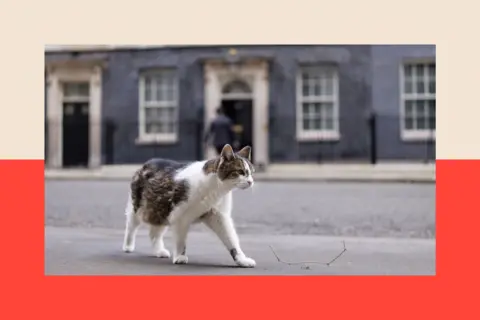 EPA/ShutterstockLarry the cat, a stalwart during an era of upheaval
Perhaps, but that might require voters willing to accept hard trade-offs and give politicians the time they need to resolve them. It might also require political parties that are ready to face up to difficult truths and to take voters with them. Above all, it would depend on competent leadership and prime ministers surviving long enough to implement what they promised the voters. Right now the longest incumbent in Downing Street is probably Larry the cat and that is a problem for all of us, not just the mice.
Top picture credits: Bloomberg / AFP / Getty Images

BBC InDepth is the home on the website and app for the best analysis, with fresh perspectives that challenge assumptions and deep reporting on the biggest issues of the day. Emma Barnett and John Simpson bring their pick of the most thought-provoking deep reads and analysis, every Saturday. Sign up for the newsletter here
Keir StarmerLabour PartyConservative Party


