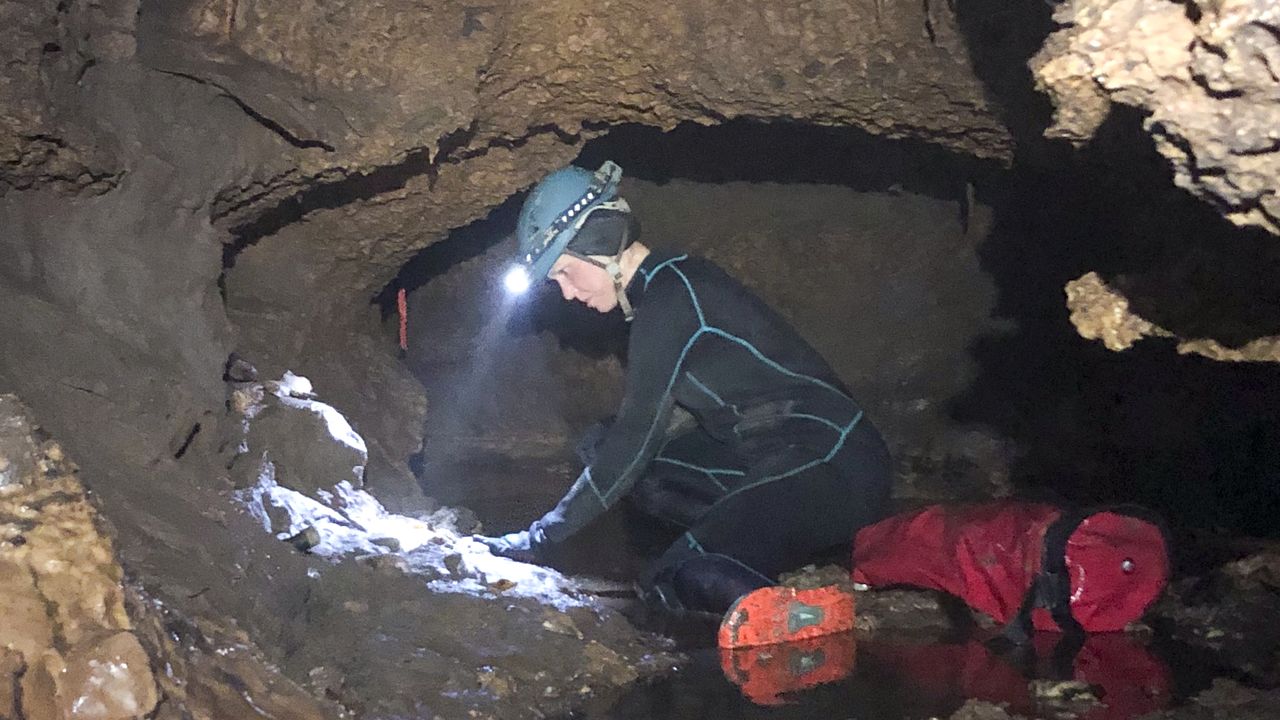
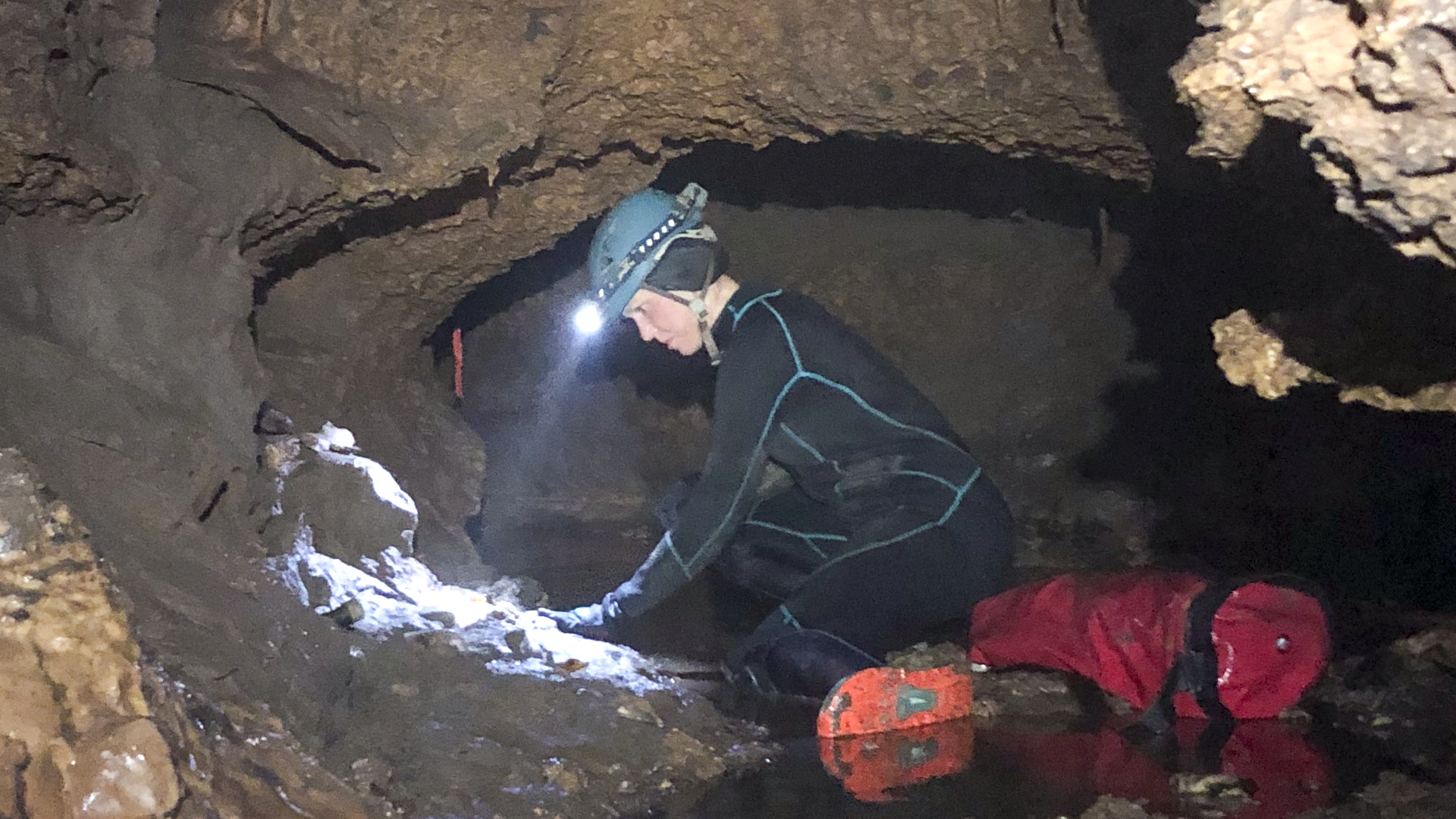
 Researchers discovered fossils of an ancient armadillo-like ancestor and giant tortoise in a cave in Texas. (Image credit: John A. Moretti) Share this article 0 Join the conversation Follow us Add us as a preferred source on Google Newsletter Sign up for the Live Science daily newsletter now
 Get the world’s most fascinating discoveries delivered straight to your inbox.
Become a Member in Seconds
Unlock instant access to exclusive member features.
Contact me with news and offers from other Future brands Receive email from us on behalf of our trusted partners or sponsors By submitting your information you agree to the Terms & Conditions and Privacy Policy and are aged 16 or over.You are now subscribed
Your newsletter sign-up was successful
Want to add more newsletters?
Join the club
Get full access to premium articles, exclusive features and a growing list of member rewards.
Explore An account already exists for this email address, please log in. Subscribe to our newsletterWhile exploring a cave in central Texas, scientists unearthed a long-lost ice-age ecosystem, including the remains of a giant tortoise and a lion-size armadillo relative, among a trove of fossils in an underground stream.
In a study published March 19 in the journal Quaternary Research, researchers say the cave may preserve the remains of animals that lived during a relatively warm period of the last ice age. If the findings are validated, the site would offer a rare look at an animal community that was missing from central Texas' fossil record.
Moretti and John Young, a local caver, were exploring Bender's Cave, near San Antonio, in 2023, when they came across the fossils. The cave is difficult to access and has a subterranean stream running through it, so it had largely been ignored by paleontologists. However, they suspected fossils were present, as amateur cavers had previously brought in their finds, Moretti said.
It was Moretti and Young who found the ice-age fossils simply lying in the mud.
"We have bags attached to our waists, and we're picking up fossils as we go," Moretti said. Over six trips between 2023 and 2024, Moretti and Young discovered fossils from 21 areas in the cave. Among the finds were a claw from a giant sloth (Megalonyx jeffersonii), mammoth teeth, and bones of camelids (Camelops), the long-legged ancient relatives of modern day llamas.
But what really intrigued them was the discovery of fossils of two ice-age beasts: a pampathere (Holmesina septentrionalis), a giant armadillo relative that lived during the middle to late Pleistocene (781,000 to 126,000 years ago) ; and an extinct genus of giant tortoise (Hesperotestudo).
Sign up for the Live Science daily newsletter nowContact me with news and offers from other Future brandsReceive email from us on behalf of our trusted partners or sponsorsThe discovery of these two fossilized animals puzzled Moretti and Young because these ice-age giants were not known to have lived in this area. For more than a century, researchers have studied ice-age fossil sites in central Texas and built a picture of the region during that time as a dry grassland dominated by grazing animals. According to Moretti, this climate would not have been suitable for the tortoise or the pampathere.
Moretti and Young suggested that the animals' remains washed into the cave system from the surface through sinkholes during floods and then settled on the streambed. If this is the case, the animals may have lived during a warmer interglacial period, roughly 100,000 years ago, when temperatures rose and animals that favored milder conditions moved into the region, the researchers proposed.
RELATED STORIES—Why did the last ice age end?
—Next ice age would hit Earth in 11,000 years if it weren't for climate change, scientists say
—Giant ice age landforms discovered deep beneath North Sea revealed in amazing detail
Moretti said they have not been able to accurately date the bones because the collagen proteins often used as the biomarker in fossils were completely eroded by the mineral-rich water. This water also contaminated many of the fossils, as the bones absorbed carbon and other minerals after being deposited. This means a test may measure this contamination rather than the fossils' true ages.
To overcome this challenge, the team is now trying to date the calcite crusts that formed on the bones after they entered the cave. Although these results won't provide exact dates for the fossils, they can set a minimum age for when they were deposited. With these dates, the researchers hope to narrow down whether the cave fossils represent a warmer interglacial chapter of Texas' history.
"We still don't know everything about the natural world," Moretti said. "There's still a lot to discover out there."
Article SourcesMoretti, J. A., & Young, J. (2026). Novel occurrences of Late Pleistocene megafauna from Bender's Cave on the Edwards Plateau of Texas may include evidence of the last interglacial. Quaternary Research, 1–27. https://doi.org/10.1017/qua.2025.10071
Think you know all about the ice age? Test your smarts with our mammoth quiz!
TOPICS Kenna Hughes-CastleberryContent Manager, Live Science
Kenna Hughes-Castleberry is the Content Manager at Live Science. Formerly, she was the Content Manager at Space.com and before that the Science Communicator at JILA, a physics research institute. Kenna is also a book author, with her upcoming book 'Octopus X' scheduled for release in spring of 2027. Her beats include physics, health, environmental science, technology, AI, animal intelligence, corvids, and cephalopods.
View MoreYou must confirm your public display name before commenting
Please logout and then login again, you will then be prompted to enter your display name.
Logout LATEST ARTICLES 1Scientists have discovered an 'Achilles' heel' in deadly superbugs
- 2Snag this Paramount+ deal and get a bird's-eye view of the world with these amazing documentaries — but be quick, it ends today!
- 3Quantum computers need just 10,000 qubits — not the millions we assumed — to break the world's most secure encryption algorithms
- 4Artemis II timeline: 12 key steps that will take NASA astronauts to the moon and back
- 5Artemis II launch LIVE: NASA prepares for Wednesday launch of historic space mission