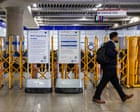
 TfL said that 60% of drivers worked during Tuesday’s strike action, a figure that suggests many RMT members also did not go on strike. Photograph: Dan Kitwood/Getty ImagesTfL said that 60% of drivers worked during Tuesday’s strike action, a figure that suggests many RMT members also did not go on strike. Photograph: Dan Kitwood/Getty ImagesLondon braces for second day of Tube strike disruption
TfL says 60% of drivers worked on first day of stoppage as RMT confirms second day of action will go ahead
A London Underground drivers’ strike will bring another day of transport disruption to the capital on Thursday, after the RMT union confirmed its action would go ahead.
Transport for London (TfL) urged the union to call off the strike, the second 24-hour stoppage this week in a dispute over the introduction of a four-day working week.
While passengers have been warned to check before they travel, with little or no service expected on some lines, TfL said that Tuesday’s strike did not close most of the network, after more drivers than expected reported for work.
The proposed change to the drivers’ working week has been strongly welcomed by the rival Aslef union, which represents just over half of Tube drivers in London, but blocked by the RMT.
TfL said that 60% of drivers worked on Tuesday, a figure that suggests many RMT members also did not go on strike.
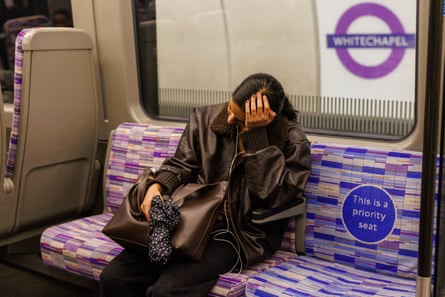 A tired commuter on the Elizabeth line during the first of two 24-hour strikes. Photograph: Dan Kitwood/Getty Images
The union has accused TfL of trying to force through working changes, although TfL has said the proposals are voluntary. No further talks have taken place since negotiations at Acas ended without resolution on Monday.
No service is expected on the Circle line, Piccadilly line and central sections of the Metropolitan and Central lines on Thursday, with other lines due to start later and finish earlier with less frequent services than usual.
However, other rail services including the Elizabeth line, London Overground, national rail and DLR services will run as normal. Buses will probably be crowded and slowed by more congested roads than usual.
A TfL spokesperson said: “We are grateful to our customers for their patience while they made their journeys on Tuesday in spite of the disruption on our network caused by the RMT’s industrial action.
“Oyster and contactless card taps were only down by around 10% across the whole day, showing that Londoners and visitors to the city were still able to travel despite the strike action.”
Contactless ticketing data showed that, while Tube journeys were down by 41%, passengers numbers were significantly higher than normal on buses, the Overground and Elizabeth line.
The spokesperson added: “We managed to run services on most lines, with the Jubilee line in particular running almost 90% of normally scheduled kilometres. We continue to urge the RMT to work with us to resolve their questions on the proposed four-day week.”
Services returned to normal without any residual impact from the strike on Wednesday morning, TfL said.
The RMT declined to comment. It has not scheduled any further strikes on the underground. Talks between the union and TfL are expected next week.
Explore more on these topicsShareReuse this content