 Image source, Getty ImagesByEmer MoreauBusiness reporter
- Published22 July 2026, 07:07 BST
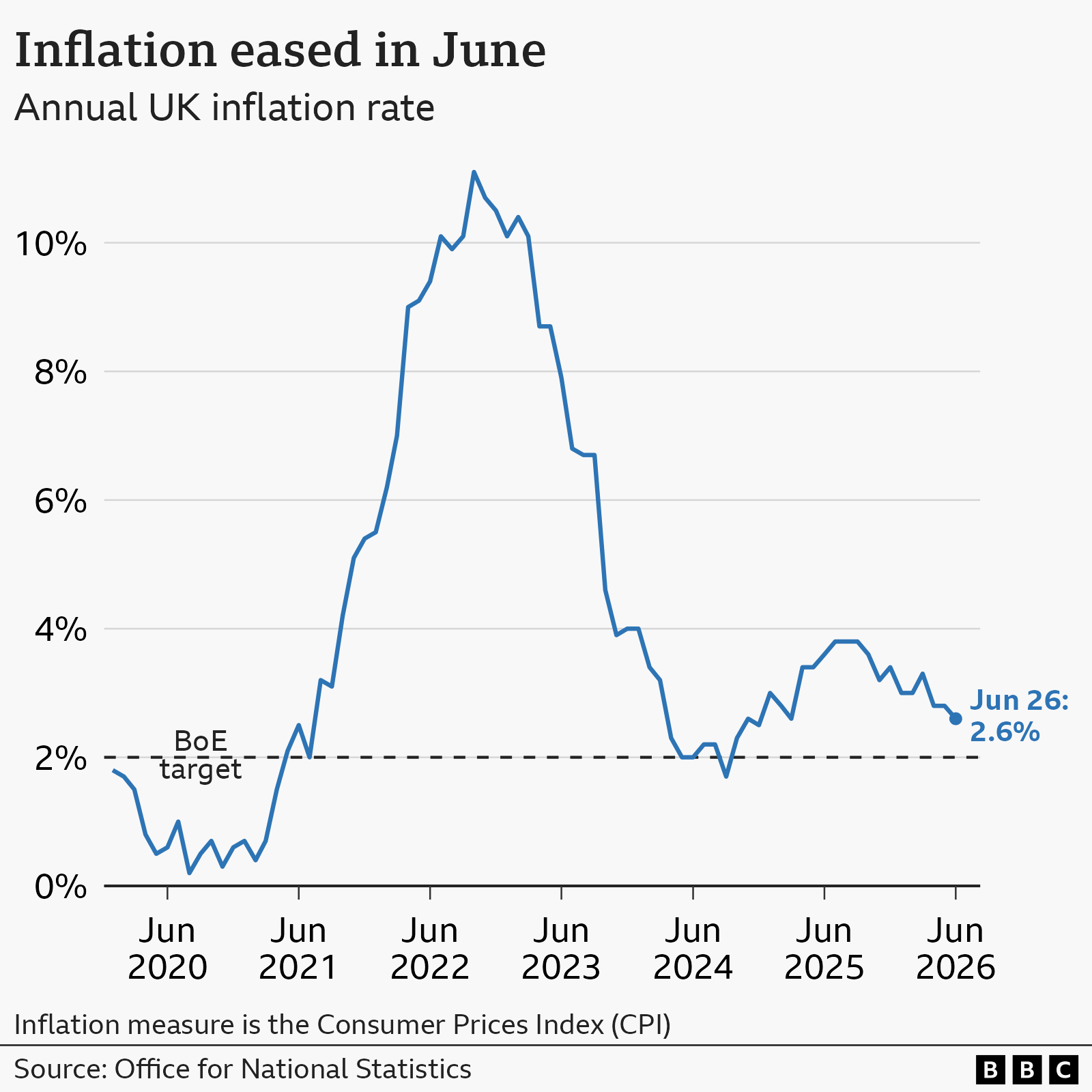
The UK rate of inflation has slowed to 2.6% in the year to June, driven by lower fuel and food prices, according to new figures.
The June figure was down from 2.8% in the year to May, the Office for National Statistics (ONS) said.
ONS chief economist Grant Fitzner said: "A fall in motor fuel prices, particularly diesel, helped ease inflation in June."
Food prices also fell, driven by cheaper goods such as chocolate, beef and margarine.
Start-of-summer sales with larger discounts than last year also drove the price of clothes down, Fitzner said.
Food and non-alcoholic beverage inflation fell by 0.2% month-to-month, with sugar, chocolate and confectionery seeing the largest drop in price.
Meat and vegetable prices rose in June but the increase was smaller than the same time last year. Prices of oils, fats and dairy fell in June, compared to a year previously.
Food inflation often has a lag of up to 13 months due to the supply chain, so any effects from the war in Iran could still be yet to come.
Fuel prices at the pump fell in June after the US and Iran agreed to halt military operations and allow the key Strait of Hormuz to re-open.
But the recent resumption of hostilities and a new jump in crude oil prices means inflation could spike again in the coming months.
New Prime Minister Andy Burnham has pledged to make the cost of living a priority for his government, and new Chancellor John Healey said the lower rate of inflation was "news families want to hear" but "there is much more to do".
The government announced on Wednesday morning that the bus fare cap in England will be brought back down to £2 in January.
That was after Burnham announced that VAT on domestic electricity bills would be scrapped for the rest of the year from October.
Healey said: "Both these changes are a win-win. They help keep inflation down, while helping people afford the essentials."
The latest inflation figure is still above the Bank of England's target of 2%, but Suren Thiru, chief economist at the Institute of Chartered Accountants in England and Wales, said a rate increase when the Bank meets next week is unlikely.
"Rate-setters may want to assess the impact of any measures announced by the new Prime Minister before deciding whether to tighten policy again," she said.
She added that rising inflation will "likely become a more notable economic headache" for Healey, "squeezing his fiscal headroom, raising borrowing costs, and increasing financial market volatility".
Yael Selfin, KPMG's chief economist, said the June figure is likely to be the lowest of the year.
Higher energy bills, brought about by a rise in Ofgem's price cap, will likely push inflation up again, she said.
"Although the impacts from the initial energy shock have so far been relatively limited, if energy prices remain high for longer, second-round effects risk feeding through into wages and more broadly across the economy."
Related topics
'I can't afford to turn the oven on': 7.4m households struggling to buy essentials
- Published7 hours ago

VAT to be cut from household electricity bills in October
- Published16 hours ago