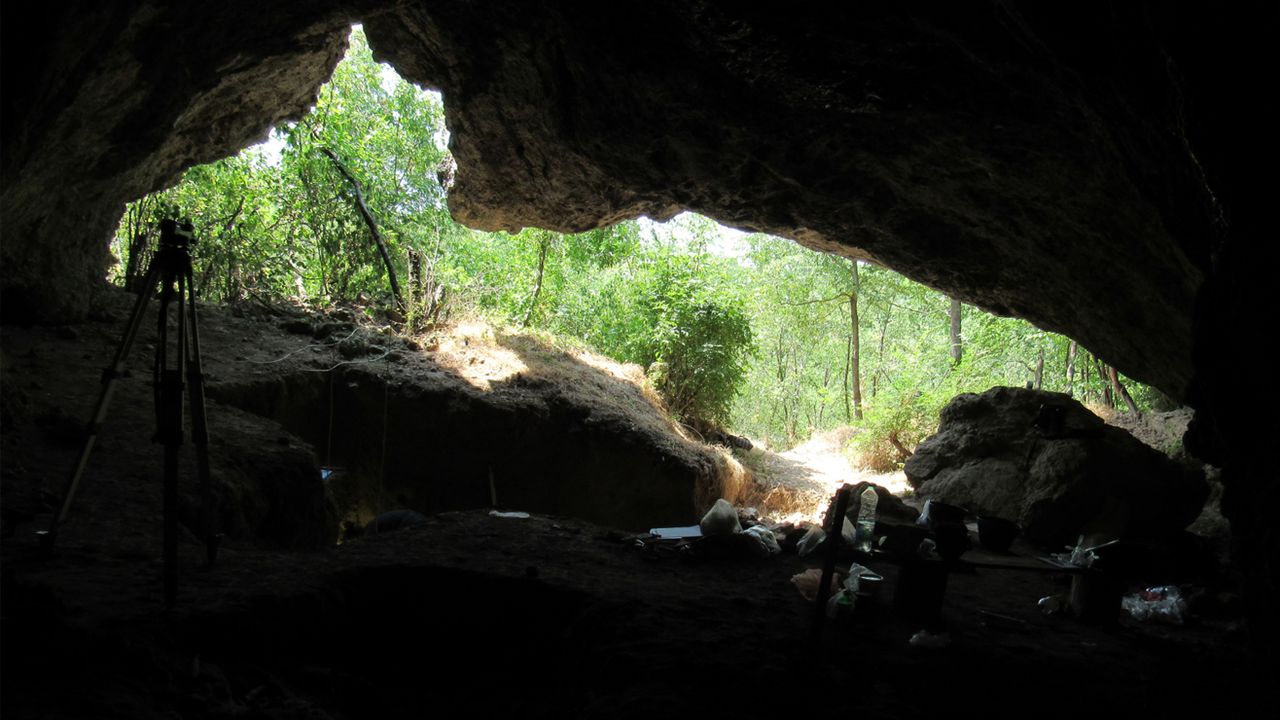
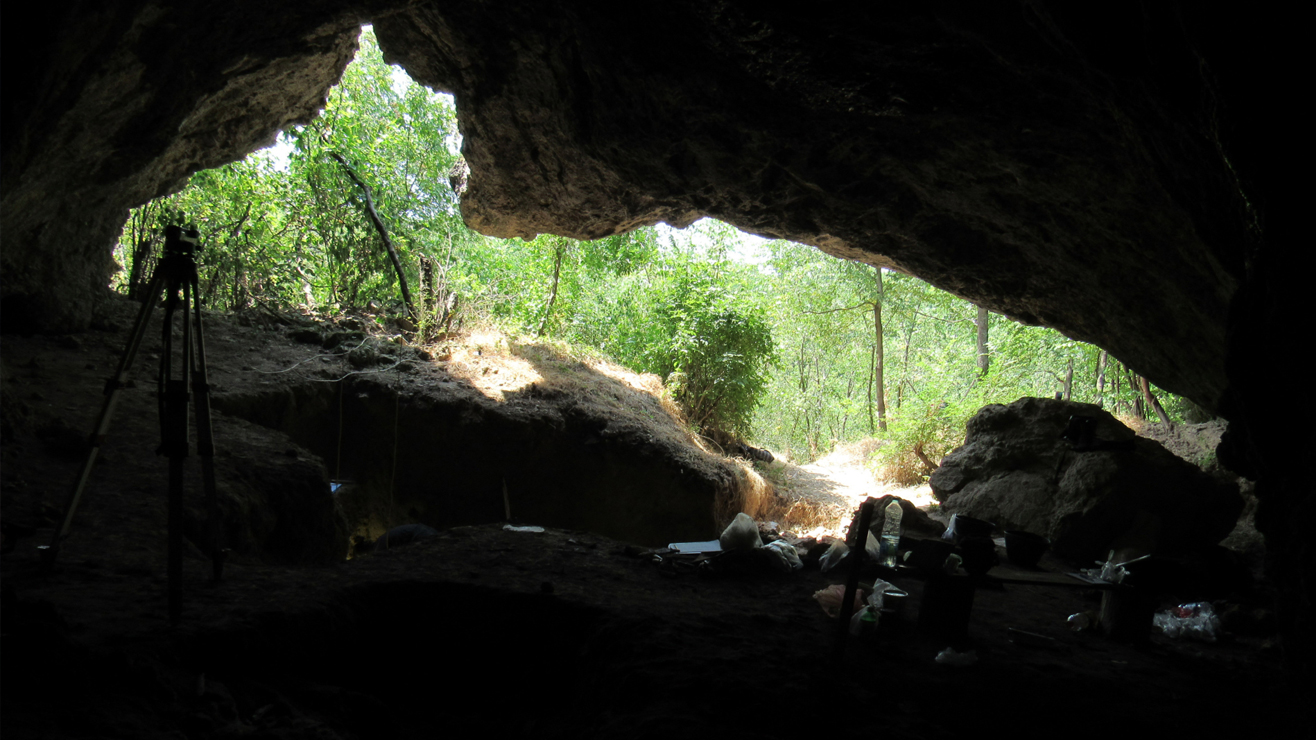
 Pešturina Cave in Serbia, where a Neanderthal tooth that was genetically analyzed in the new study was found. (Image credit: Luc Doyon and Dušan Mihailović.) Share this article 0 Join the conversation Follow us Add us as a preferred source on Google Newsletter Sign up for the Live Science daily newsletter now
 Get the world’s most fascinating discoveries delivered straight to your inbox.
Become a Member in Seconds
Unlock instant access to exclusive member features.
Contact me with news and offers from other Future brands Receive email from us on behalf of our trusted partners or sponsors By submitting your information you agree to the Terms & Conditions and Privacy Policy and are aged 16 or over.You are now subscribed
Your newsletter sign-up was successful
Want to add more newsletters?
Join the club
Get full access to premium articles, exclusive features and a growing list of member rewards.
Explore An account already exists for this email address, please log in. Subscribe to our newsletterBefore Neanderthals went extinct, they experienced a major upheaval that resulted in just one of their genetic lineages surviving in Europe and then expanding across the continent, a new study shows.
The findings, published March 23 in the journal PNAS, may shed light on what ultimately doomed the Neanderthals.
Article continues belowDNA recovered from Neanderthal fossils can shed light not just on their extinction but on their history in general. In the new study, researchers examined DNA from mitochondria in cells, which help generate energy for the body, and get passed down from mothers to offspring.
The scientists gathered 10 mitochondrial DNA sequences from Neanderthals excavated from six archaeological sites in Belgium, France, Germany and Serbia. They analyzed them alongside 49 Neanderthal mitochondrial DNA sequences released in previous research.
Neanderthals had experienced multiple glaciations before, but the last one proved harsh on their survival.
Cosimo Posth, paleogeneticist at the University of Tübingen in Germany
The team found that in Europe, where Neanderthals ultimately died out, several mitochondrial DNA lineages existed until about 65,000 years ago. After this point, these groups were replaced by a single Neanderthal mitochondrial genetic lineage originating from southwestern France. These "Late Neanderthals" proceeded to disperse across Europe.
"This tells us there was this major disruption in Neanderthal history," study senior author Cosimo Posth, a paleogeneticist at the University of Tübingen in Germany, told Live Science. "There was really a genetic transformation."
Sign up for the Live Science daily newsletter nowContact me with news and offers from other Future brandsReceive email from us on behalf of our trusted partners or sponsorsPosth noted that about 75,000 years ago, glaciers came to dominate Europe.
"We don't think our findings suggest that Neanderthals were migrating to the Mediterranean," he said. "We think Neanderthal groups in northern Europe perished, while a Neanderthal group that was already in southwestern France survived this climate change and then went on to expand across a broader region. Neanderthals had experienced multiple glaciations before, but the last one proved harsh on their survival."
The study also found that "there was a kind of genetic impoverishment among the Late Neanderthals," Posth said. "Since they appeared to emerge from this single group, their genetic diversity overall was reduced drastically compared to what came before — they were all extremely similar on a genetic level across Europe, from Spain to the Caucasus to northern Europe."
We've seen evidence that Neanderthal populations replaced each other, and this paper really creates a ground story as to why that might be — because Neanderthals went extinct in places all the time, and then other Neanderthal groups went in and recolonized the same places
Fernando Villanea, population geneticist at the University of Colorado Boulder
This low genetic diversity — which grew most pronounced about 42,000 years ago, shortly before Neanderthals generally died out — "might have played a role in their extinction," Posth noted. "We don't think there was a single reason the Neanderthals went extinct, but this lack of genetic diversity would have made them more predisposed to not really survive climatic changes and other disruptions."
Likewise, Neanderthal groups in the Altai Mountains of Siberia were more closely related to each other than to European Neanderthals, and these Siberian Neanderthals also had low genetic diversity and lived in small, isolated groups, another March 23 study published in the journal PNAS found.
RELATED STORIES—10 things we learned about Neanderthals in 2025
—Neanderthals cannibalized 'outsider' women and children 45,000 years ago at cave in Belgium
Despite this low genetic diversity, the Late Neanderthals in Europe appeared quite diverse across sites in terms of their artifacts and art. "So after the Neanderthals re-expanded across Europe, we think that Late Neanderthal groups were not highly connected with each other," Posth said. "This would have led to more inbred groups, explaining the low genetic diversity, but also more cultural and archaeological diversity, since these groups were isolated and so would have developed more specialized cultures."
"We've seen evidence that Neanderthal populations replaced each other, and this paper really creates a ground story as to why that might be — because Neanderthals went extinct in places all the time, and then other Neanderthal groups went in and recolonized the same places," Fernando Villanea, a population geneticist at the University of Colorado Boulder who was not involved in the study, told Live Science.
Future research could seek to test these findings by analyzing DNA from Neanderthal cell nuclei instead of their mitochondria, Posth said. However, this will be a major challenge, as DNA from nuclei is several hundred times less abundant than DNA from mitochondria in cells.
Article SourcesFotiadou, C. M., Pedersen, J. B., Rougier, H., Roksandic, M., Spyrou, M. A., Nägele, K., Reiter, E., Bocherens, H., Kandel, A. W., Haidle, M. N., Streicher, T. P., Conard, N. J., Schilt, F., Godinho, R. M., Uthmeier, T., Doyon, L., Semal, P., Krause, J., Barbieri, A., . . . Posth, C. (2026). Archaeogenetic insights into the demographic history of Late Neanderthals. Proceedings of the National Academy of Sciences, 123(13), e2520565123. https://doi.org/10.1073/pnas.2520565123
Neanderthal quiz: How much do you know about our closest relatives?
 Charles Q. ChoiLive Science ContributorCharles Q. Choi is a contributing writer for Live Science and Space.com. He covers all things human origins and astronomy as well as physics, animals and general science topics. Charles has a Master of Arts degree from the University of Missouri-Columbia, School of Journalism and a Bachelor of Arts degree from the University of South Florida. Charles has visited every continent on Earth, drinking rancid yak butter tea in Lhasa, snorkeling with sea lions in the Galapagos and even climbing an iceberg in Antarctica. View More
 You must confirm your public display name before commenting
Please logout and then login again, you will then be prompted to enter your display name.
Logout LATEST ARTICLES 1Astronauts will 'absolutely be test subjects': NASA's moon base dreams could have a human cost
- 22 Neanderthals present at same Siberian cave 10,000 years apart were distant relatives, 110,000-year-old bone reveals
- 318 million-year-old fossils of ape found in Africa, but in an unexpected place
- 4Astronauts may struggle to reproduce in outer space, study suggests — what does that mean for the future of space colonization?
- 5Brain aging results from a loss of control over how genes are regulated, mouse study suggests