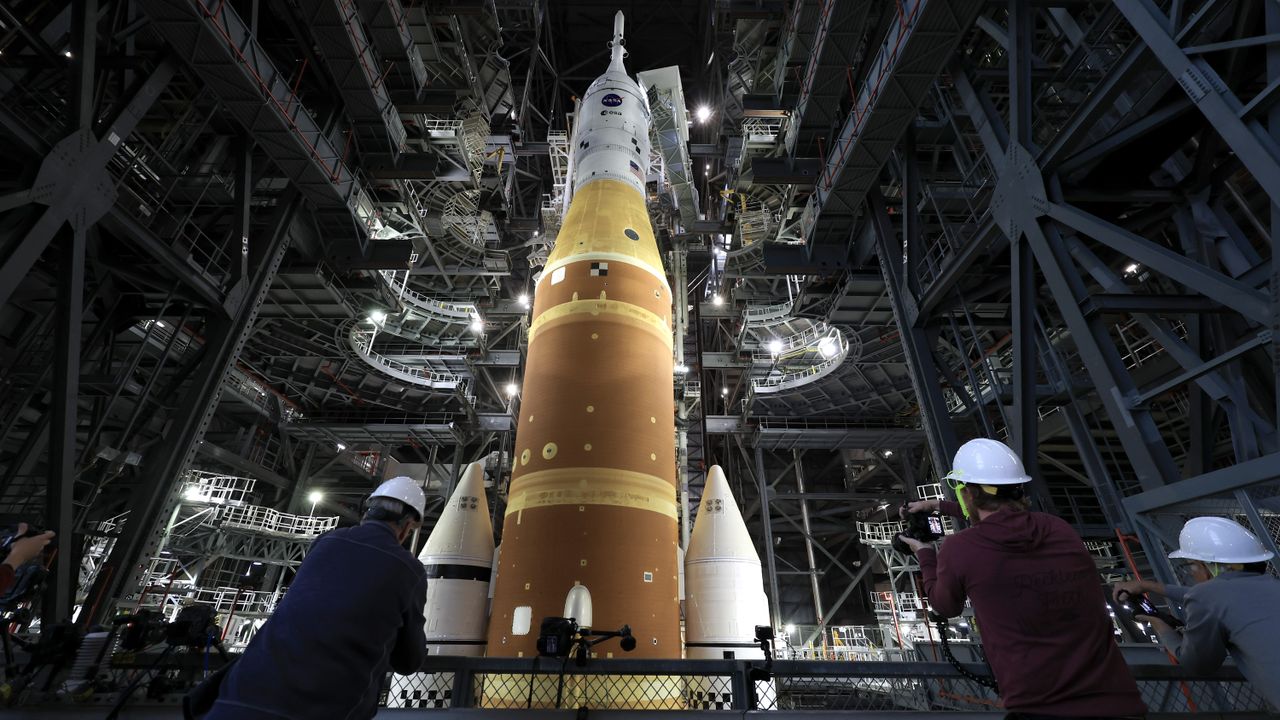
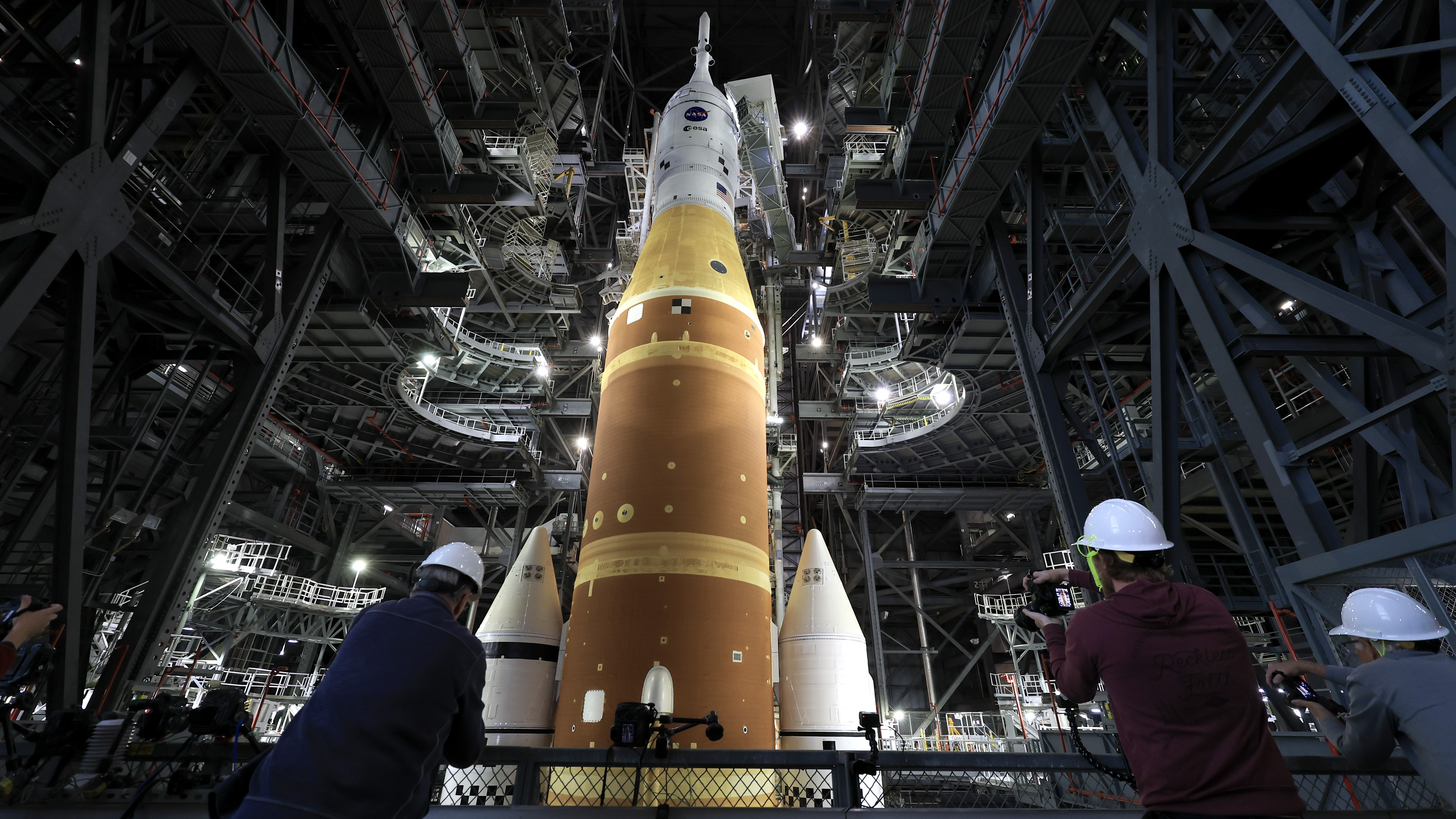
 Artemis II in the Vehicle Assembly Building at NASA’s Kennedy Space Center. (Image credit: Joe Raedle/Getty Images) Share this article 0 Join the conversation Follow us Add us as a preferred source on Google Newsletter Get the Live Science Newsletter
 Get the world’s most fascinating discoveries delivered straight to your inbox.
Become a Member in Seconds
Unlock instant access to exclusive member features.
Contact me with news and offers from other Future brands Receive email from us on behalf of our trusted partners or sponsors By submitting your information you agree to the Terms & Conditions and Privacy Policy and are aged 16 or over.You are now subscribed
Your newsletter sign-up was successful
Want to add more newsletters?
Join the club
Get full access to premium articles, exclusive features and a growing list of member rewards.
Explore An account already exists for this email address, please log in. Subscribe to our newsletterNASA's Artemis II moon rocket is back on the move, as the space agency prepares the spacecraft for a potential launch before its April deadline.
This is the second time that the 322-foot-tall (98 meters) Space Launch System and Orion capsule stack has rolled out to the launchpad this year, the first having taken place on Jan. 17. But following two wet dress rehearsals and two leaks, NASA decided to wheel the rocket back to the Vehicle Assembly Building for repairs.
Article continues belowEmbarking from the Vehicle Assembly Building to Launch Pad 39B at NASA's Kennedy Space Center in Florida, the 11 million-pound (5 million kilograms) stack is trundling along at a speed of about 1 mph (1.6 km/h along a 4-mile (6.4 kilometers) route.
The journey is set to take up to 12 hours, with the trip delayed for several hours due to high winds, according to NASA.
Once at the pad, the rocket will undergo a series of final tests, including a wet dress rehearsal to fill the rocket with hydrogen fuel and oxygen oxidizer. If all of these hurdles are cleared, NASA will announce a date within the April window, which includes April 1 to 6 and also April 30, for a launch attempt.
In 2024, the space agency set April 2026 as the furthest deadline for the launch of Artemis II, after which the mission will be considered delayed.
Sign up for the Live Science daily newsletter nowContact me with news and offers from other Future brandsReceive email from us on behalf of our trusted partners or sponsorsRELATED STORIES—Artemis II: NASA is preparing for a return to the moon, but why is it going back?
—Chinese astronauts describe moment a crack was discovered on Shenzhou-20 spacecraft
This isn't the first time an Artemis rocket has had issues. The SLS rocket for the Artemis I mission went back to the Vehicle Assembly Building more than once in 2022, before eventually taking off and completing its uncrewed test flight around the moon later that year.
These cumulative delays led NASA to announce a major overhaul of the Artemis program with the agency now aiming for annual launches, potentially dropping SpaceX and Boeing from its mission plans, and targeting two lunar landings in 2028.
NASA claims its return to the moon for the first time since the Apollo era will be a vital test of its systems before attempting a future crewed mission to Mars and beyond.
TOPICS Ben TurnerActing Trending News Editor
Ben Turner is a U.K. based writer and editor at Live Science. He covers physics and astronomy, tech and climate change. He graduated from University College London with a degree in particle physics before training as a journalist. When he's not writing, Ben enjoys reading literature, playing the guitar and embarrassing himself with chess.
View MoreYou must confirm your public display name before commenting
Please logout and then login again, you will then be prompted to enter your display name.
Logout LATEST ARTICLES 1Human-driven climate change is slowing Earth's rotation at a rate not seen in 3.6 million years
- 2A gene carried by 99% of humanity raises Alzheimer's risk dramatically. Could gene therapy correct it?
- 3Is the coming HIV pandemic inevitable?
- 4Live Science Today: Monte Verde controversy and heatwave lashes the West
- 5The first flying taxis could start operating in 2026 — will this new form of transport actually take off?