NASA's next-generation cosmic observatory — the Nancy Grace Roman Space Telescope — is set to launch this weekend on a potentially decade-long mission to hunt for distant exoplanets, map out the Milky Way and unravel some of the universe's biggest mysteries, such as the true nature of dark matter.
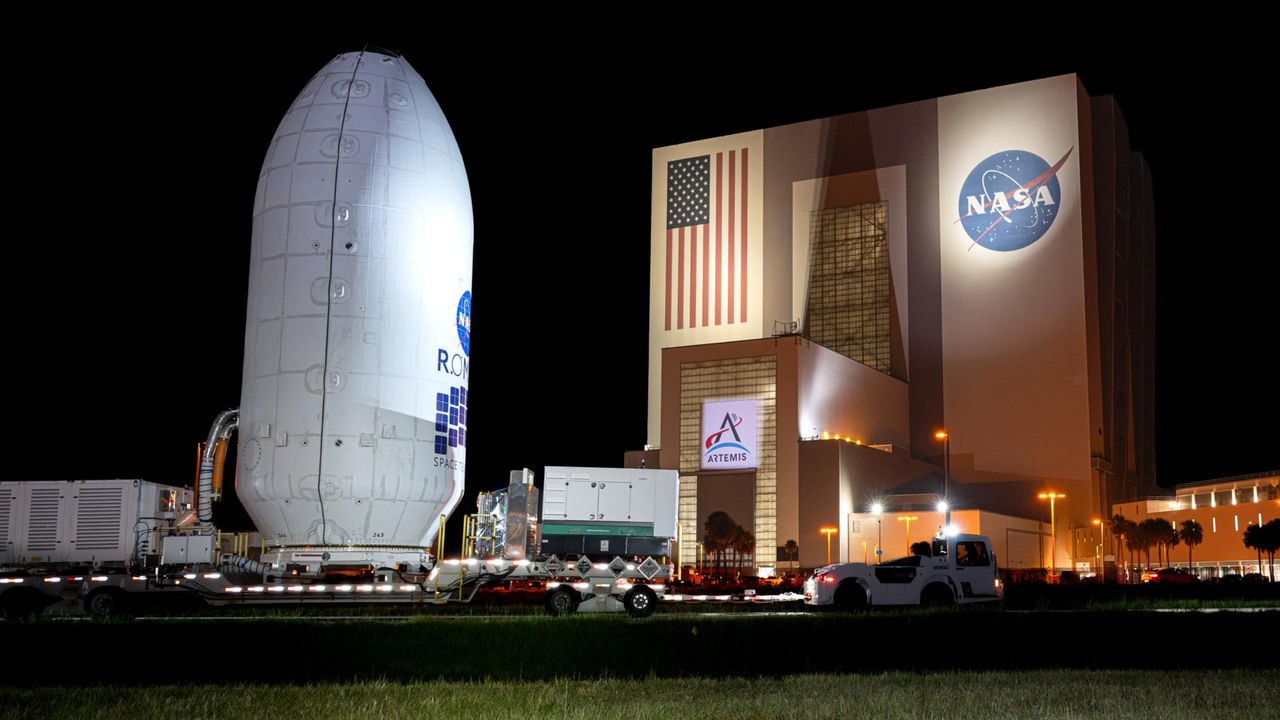
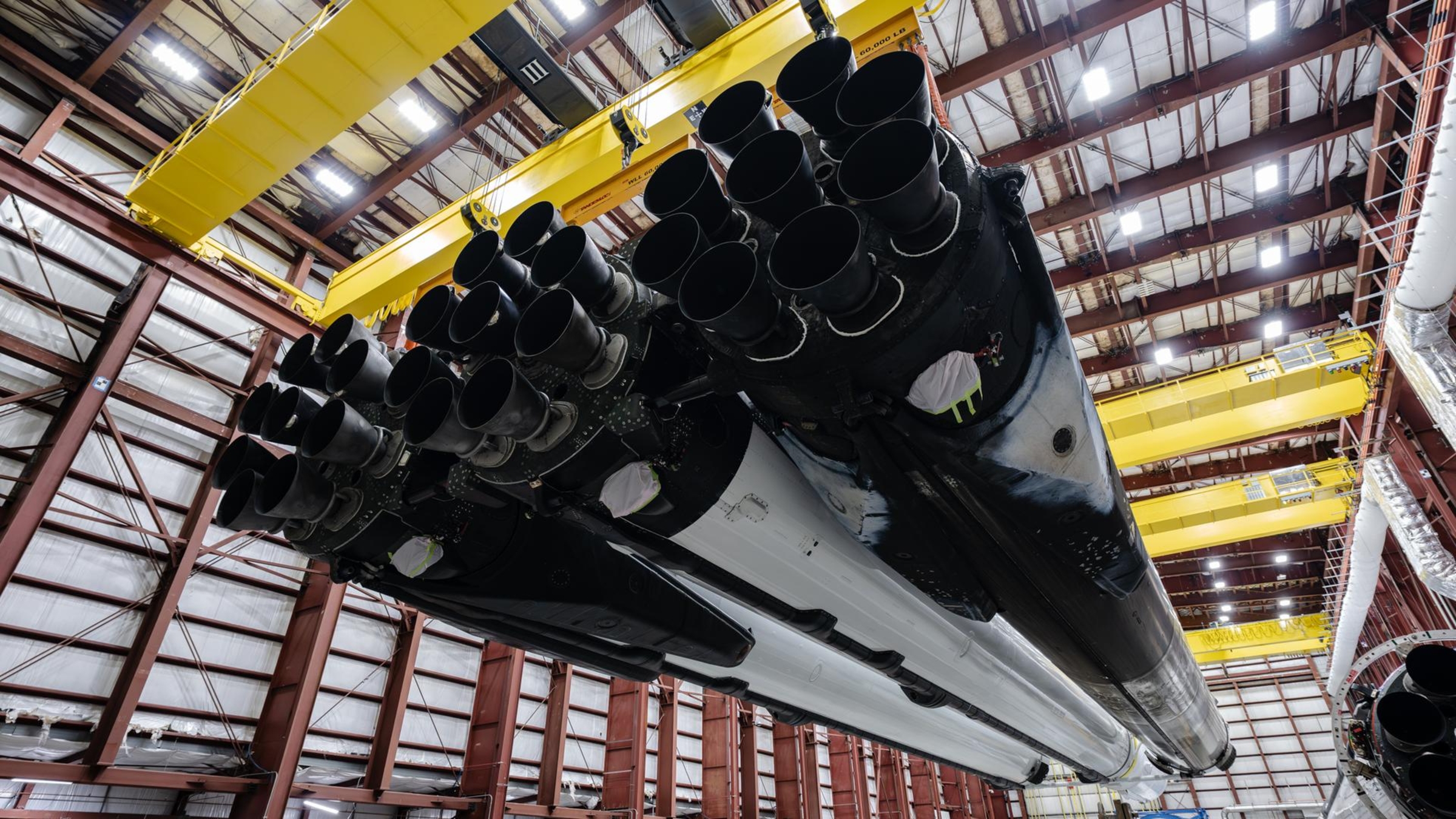
The Roman telescope and its payload are scheduled to lift off aboard a SpaceX Falcon Heavy rocket Sunday (Aug. 30) at 7:26 a.m. EDT from Launch Complex 39A at NASA's Kennedy Space Center in Florida, according to NASA. A few hours later, the telescope will be released from the rocket's second stage and be exposed to the vacuum of space for the first time.
But even if everything goes according to plan, we will still have to wait a while to get a glimpse of Roman's first groundbreaking images.
As of Thursday morning (Aug. 27), the National Weather Service forecasts a 50% chance of thunderstorms at Kennedy Space Center Sunday, so weather could delay the launch. If that happens, a second launch window is available Monday (Aug. 31) at 7:22 a.m. EDT, when there is a reduced risk of thunderstorms.
You can watch the event on a SpaceX livestream and stay up to date with last-minute developments and postlaunch news via a live blog from Live Science's sister site Space.com.
What is the Roman Space Telescope?
The Roman Space Telescope is NASA's latest flagship observatory. It follows the James Webb Space Telescope (JWST), which launched in 2021, and the Hubble Space Telescope, which has been in orbit since 1990. Rather than replacing those spacecraft, Roman will work alongside them to help scientists scour the skies like never before.
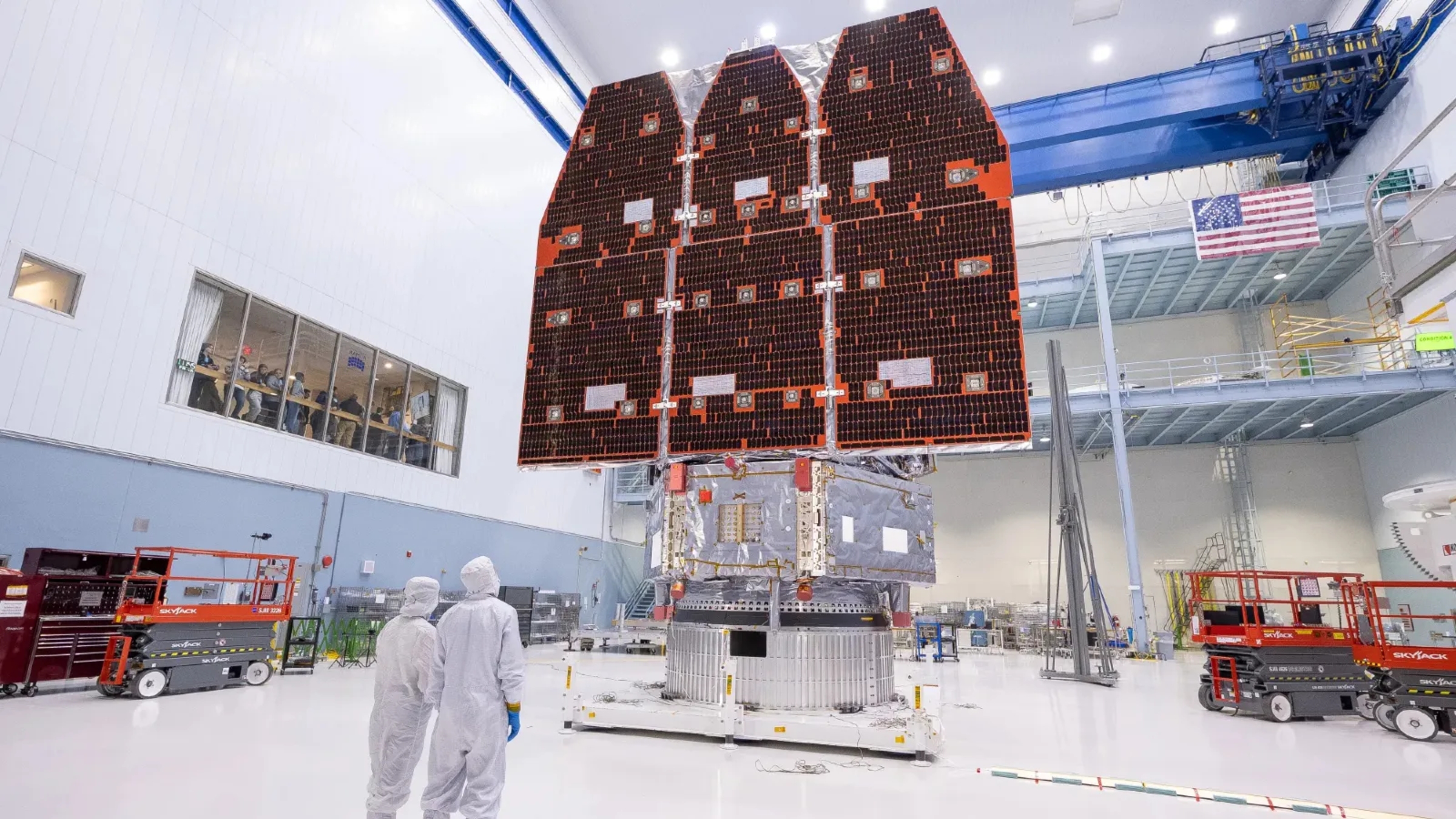
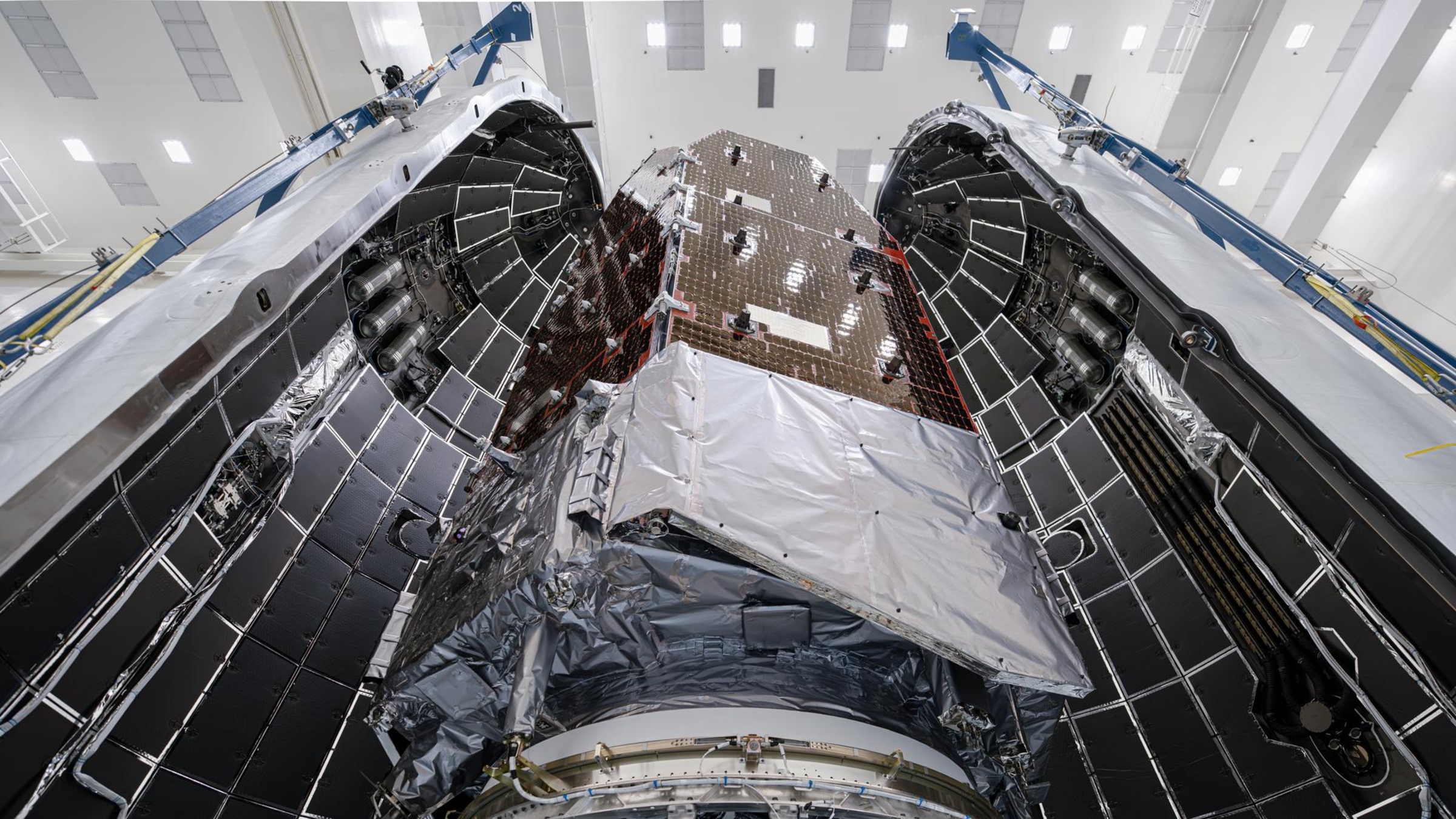
The observatory is named after pioneering scientist Nancy Grace Roman, who served as NASA's first chief astronomer between 1960 and 1979. It is approximately 42 feet (12.7 meters) tall and 14 feet (4.4 m) wide and weighs around 18,000 pounds (8,000 kilograms) — about the same as a fully grown Tyrannosaurus rex, according to a NASA fact sheet.
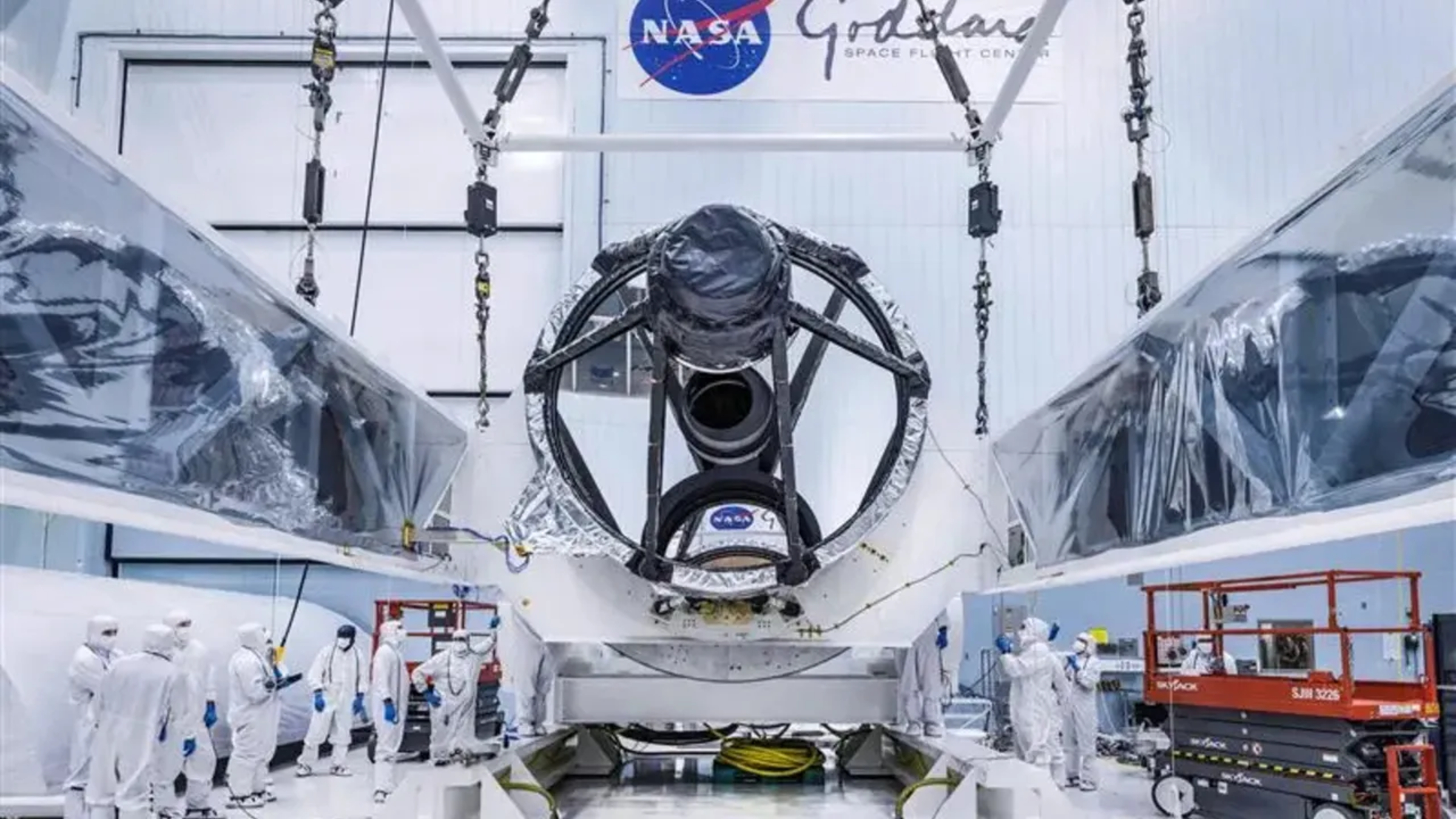
Roman was fully completed in December 2025, almost a decade after construction began and within its initial $4.3 billion budget (less than half what JWST cost). Since then, it has been moved more than 900 miles (1,450 kilometers) from Goddard Space Flight Center in Maryland and undergone a series of final checks in NASA's "clean rooms." Having initially been slated for a 2027 liftoff, the telescope is technically launching ahead of schedule.
Roman will eventually be stationed around 1 million miles (1.6 million km) from Earth at what scientists call a Lagrange point — a fixed point relative to our planet where the gravity of two objects cancels out. Its specific Lagrange point will be Sun-Earth L2, where JWST and the European Space Agency's Gaia and Euclid space telescopes already reside.
Roman's initial mission will last five years, but experts hope it could survive at least twice that long. Some space telescopes far outlast their initial missions; for example, Hubble is more than two decades past its original mission parameters, and NASA's recently doomed Swift Observatory lasted 10 times longer than predicted.
What makes Roman special?
Roman has two key instruments that set it apart from its predecessors. The first is its Wide Field Instrument, a 288-megapixel camera attached to a 7.9-foot (2.4 meters) mirror, which gives it a field of view 100,000 times greater than Hubble's. It will also see the cosmos in infrared light, similar to JWST. These combined capabilities will allow Roman to observe the cosmos like never before.
But the telescope's secret weapon is arguably its coronagraph, which can block out the light from distant stars, allowing Roman to see fainter objects, such as the exoplanets that orbit these stars. Until now, scientists' main way of finding alien worlds was to wait for them to pass in front of, or transit, their home star, but Roman will be able to directly image exoplanets at almost any time in their orbital cycles. (Exoplanets remain out of view when they are directly behind their home stars.)
One of the biggest and most exciting claims researchers have made about Roman is that it could help reveal up to 100,000 exoplanets. Such discoveries would revolutionize how we study alien worlds, especially considering that we have uncovered over 6,000 exoplanets since the first one was spotted in 1992.
However, the telescope will also conduct long-term surveys that will help astronomers accurately map the Milky Way and find extremely distant galaxies, potentially helping scientists solve the mysteries of dark matter and dark energy that currently underpin a "cosmological crisis" surrounding the universe's expansion. And as with any new space telescope, scientists will likely find novel ways of using Roman once it is in operation.
"The mission will offer practically limitless opportunities for astronomers to conduct a broad range of additional science," NASA representatives wrote in the fact sheet. "From objects in our outer solar system and exploding stars to growing black holes and galaxies by the billions, very little will be beyond Roman's reach."
The spacecraft will beam roughly 1.4 terabytes of data — roughly 10 times the storage capacity of an average smartphone — to ground stations across Earth every day, according to the fact sheet.
When will we see Roman's first photos?
Roman's first snaps are arguably the most anticipated astronomical images since the debut photos from the ground-based Vera C. Rubin Observatory, which were released in June 2025.
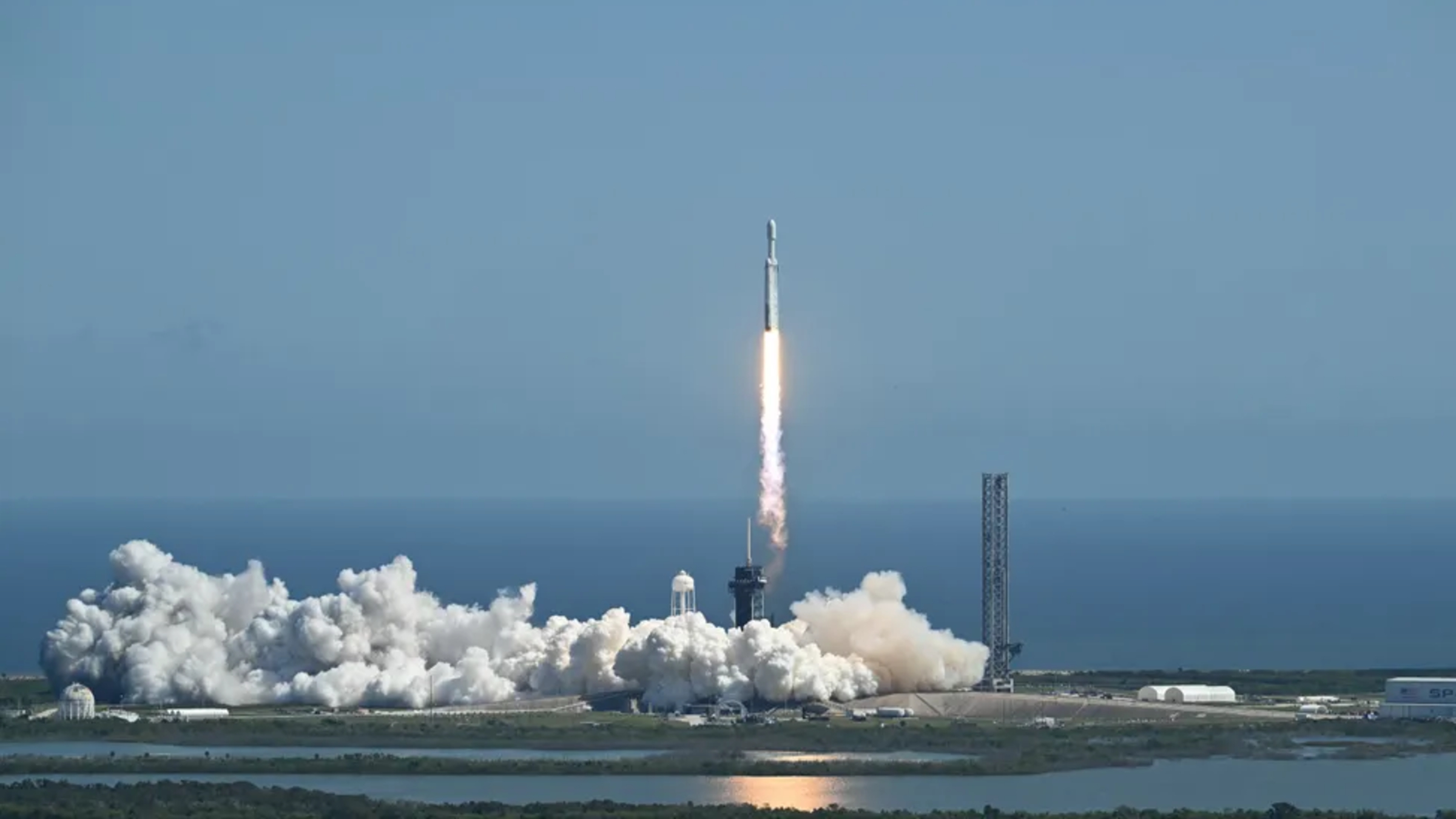
But first, Roman has to travel to its Lagrange point, which is roughly four times farther away than the moon. This could take several weeks, although no exact timeline has been provided.
RELATED STORIES- 'Astonishing': James Webb telescope spots the most chemically primitive galaxy in the ancient universe
- 48 jaw-dropping James Webb Space Telescope photos
- James Webb telescope's largest-ever map of the universe unmasks hidden corners
Once Roman is in position, there will be a roughly 90-day commissioning period, during which the telescope will fully power up its instruments and run a series of diagnostic tests to ensure everything is in order before its mission truly begins.
There is, therefore, a slim chance that we could see Rubin's first photos before the end of the year. However, NASA officials have tentatively predicted that the telescope will start snapping the stars in early 2027. It took JWST about seven months postlaunch to send its first full-color image to Earth.
NASA representatives have promised that "data from all of Roman's surveys will be made public as soon as it is processed, with no periods of exclusive access," so once the images are ready, everyone will be able to see them.