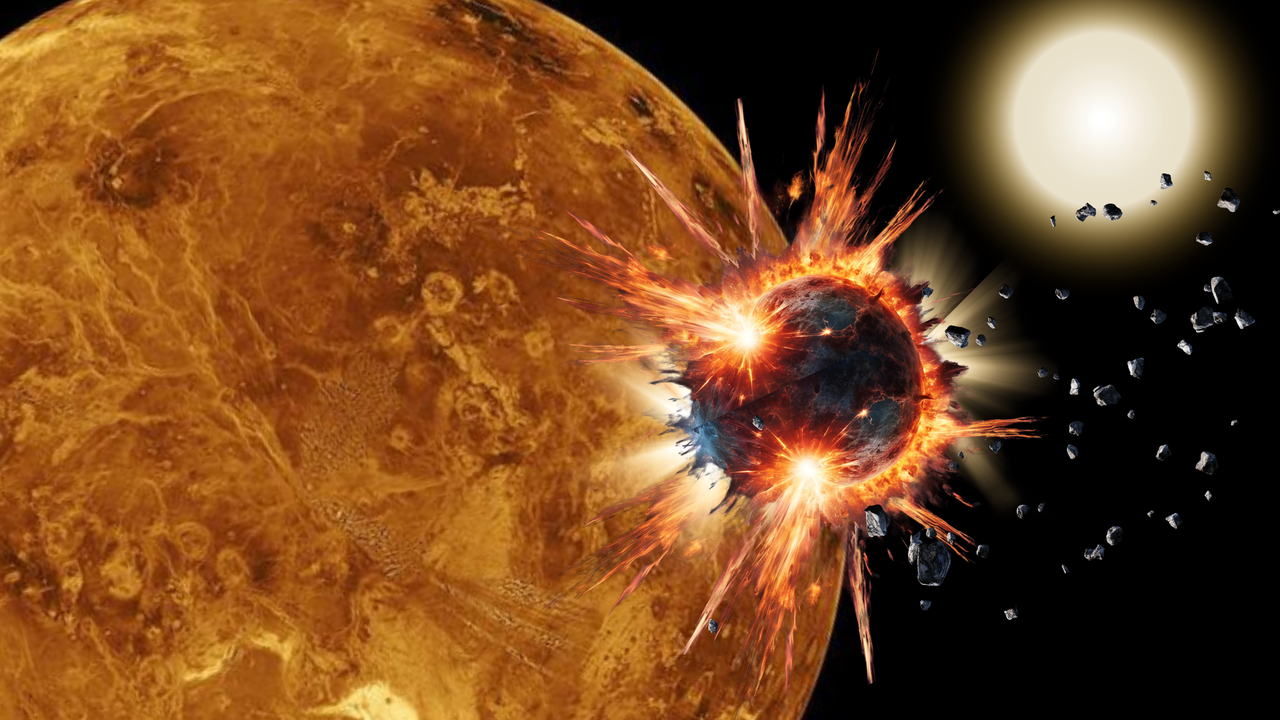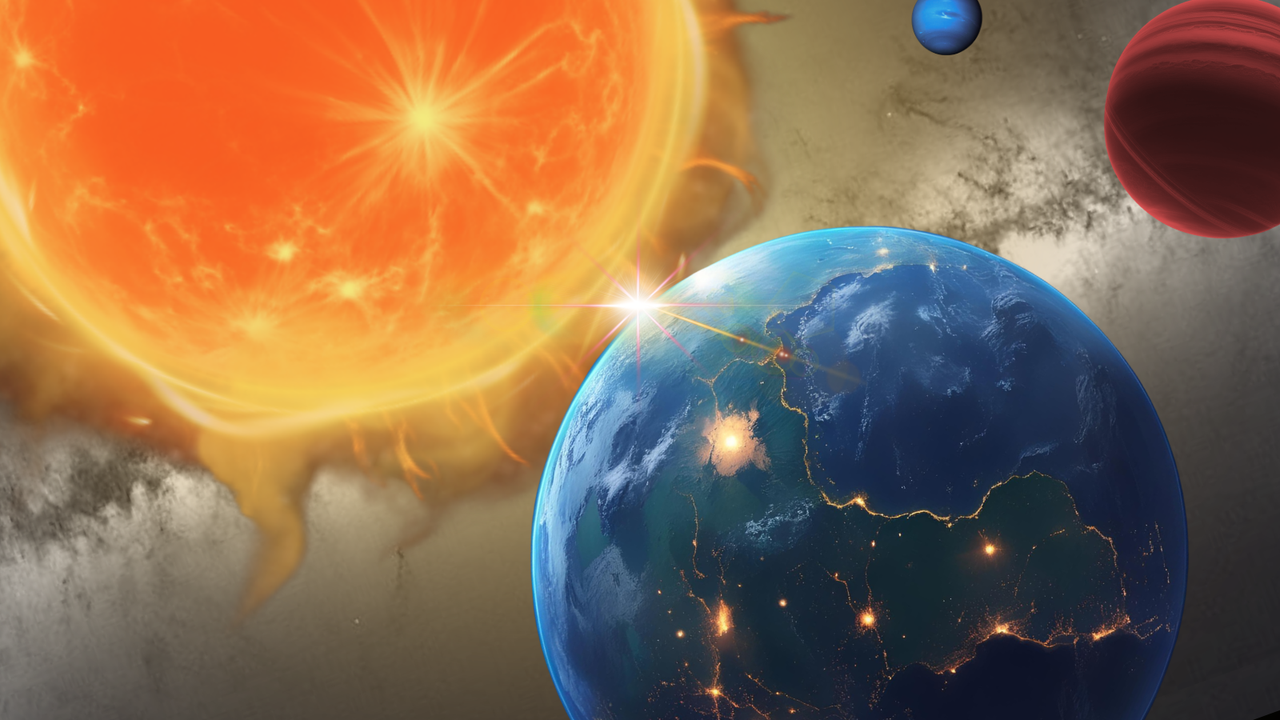
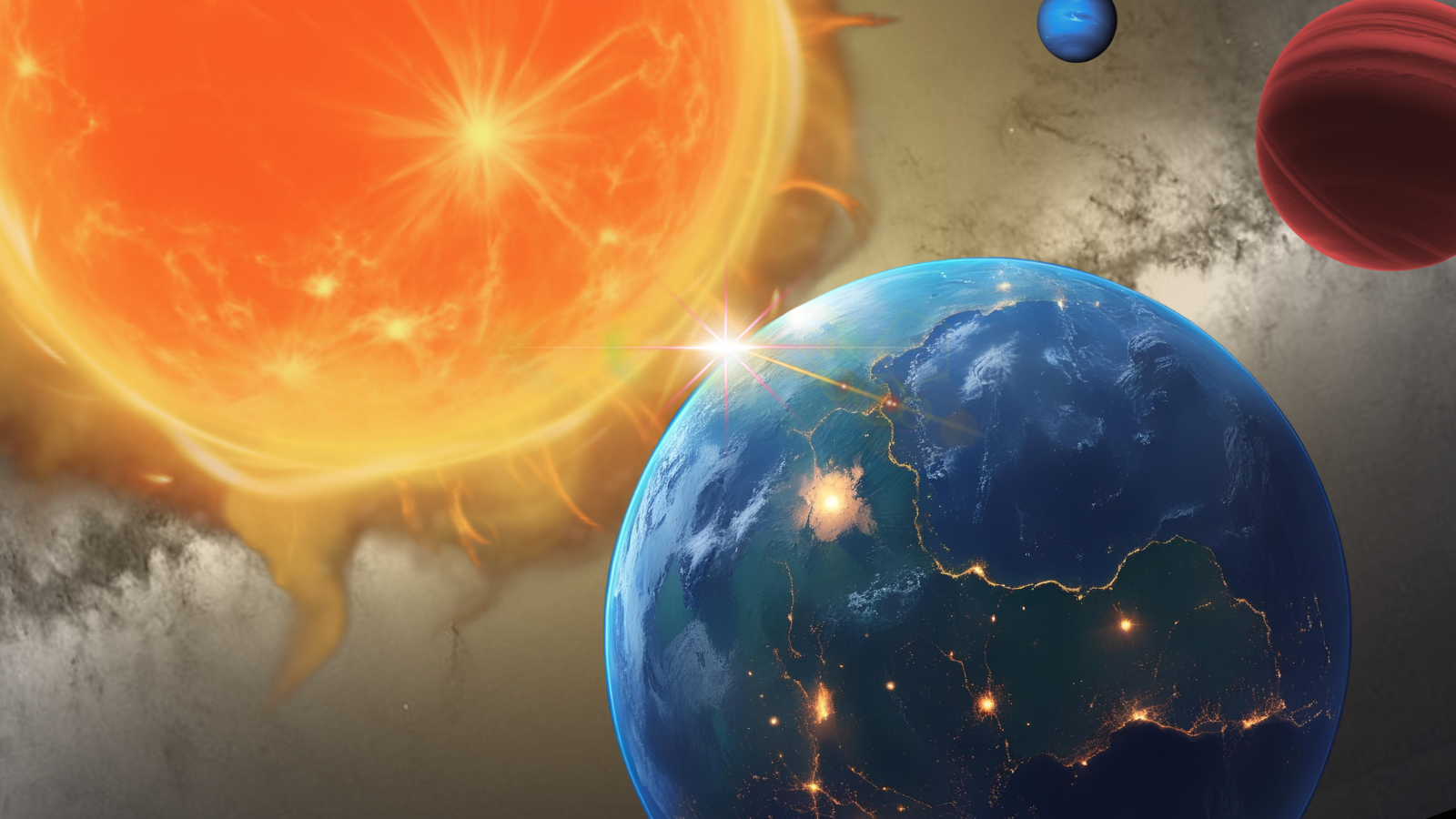
 An illustration of a super-Earth exoplanet orbiting its star with very different siblings (Image credit: Robert Lea (created with Canva)) Share this article 0 Join the conversation Follow us Add us as a preferred source on Google Newsletter Get the Space.com Newsletter
 Breaking space news, the latest updates on rocket launches, skywatching events and more!
Contact me with news and offers from other Future brands Receive email from us on behalf of our trusted partners or sponsors By submitting your information you agree to the Terms & Conditions and Privacy Policy and are aged 16 or over.You are now subscribed
Your newsletter sign-up was successful
Want to add more newsletters?
An account already exists for this email address, please log in. Subscribe to our newsletterUsing NASA's exoplanet-hunting spacecraft TESS (Transiting Exoplanet Survey Satellite) and Antarctic Search for Transiting ExoPlanets (ASTEP) on the Antarctic Plateau, astronomers have discovered a rare and uniquely weird planetary system.
The extrasolar planets, or exoplanets, that swirl around the star TOI-201 have orbits that are changing so rapidly that astronomers can see the changes in real time. The behavior of the system, located around 370 light-years from Earth, is something scientists have never seen before.
"Most planetary systems appear as 'peas in a pod,' meaning the planets have a similar range of parameters and share a similar orbital plane," team member Amaury Triaud, from the University of Birmingham in the U.K., said in a statement. "This is not the case in the TOI-201 system, which contains three orbiting objects very distinct from one another, and which interact gravitationally."
The team's results were published on April 15 in the journal Science.
This planetary system is going through changes
Changes to planetary systems and shifting orbits aren't unique to TOI-201, but these transformations usually occur on timescales of millions and even billions of years. TOI-201 is different because of the highly flattened or elliptical and tilted orbit of the outer planet, which gravitationally pulls on the inner worlds. This causes shifts in the orientation of the inner planets' orbits, and changes to the timing of their "transits," the times in which a planet directly crosses the face of its parent star. The situation is so extreme that in around 200 years, the planets won't line up in front of their star at all.
"In the solar system, almost all planets are coplanar, but here, this is not the case and each planet is different," Tristan Guillot, an astronomer at the Observatoire de la Côte d’Azur, said. "This points to some active orbital reorganisation within the system, providing us a glimpse of what happens shortly after planet formation." Guillot is a lead researcher in the ASTEP project, an observatory at Antarctica's Concordia Station, which sits atop a 2-mile (3.2 kilometer) deep glacier in one of the world's most isolated environments and takes advantage of the long polar nights to observe other planetary systems.
Get the Space.com NewsletterContact me with news and offers from other Future brandsReceive email from us on behalf of our trusted partners or sponsors 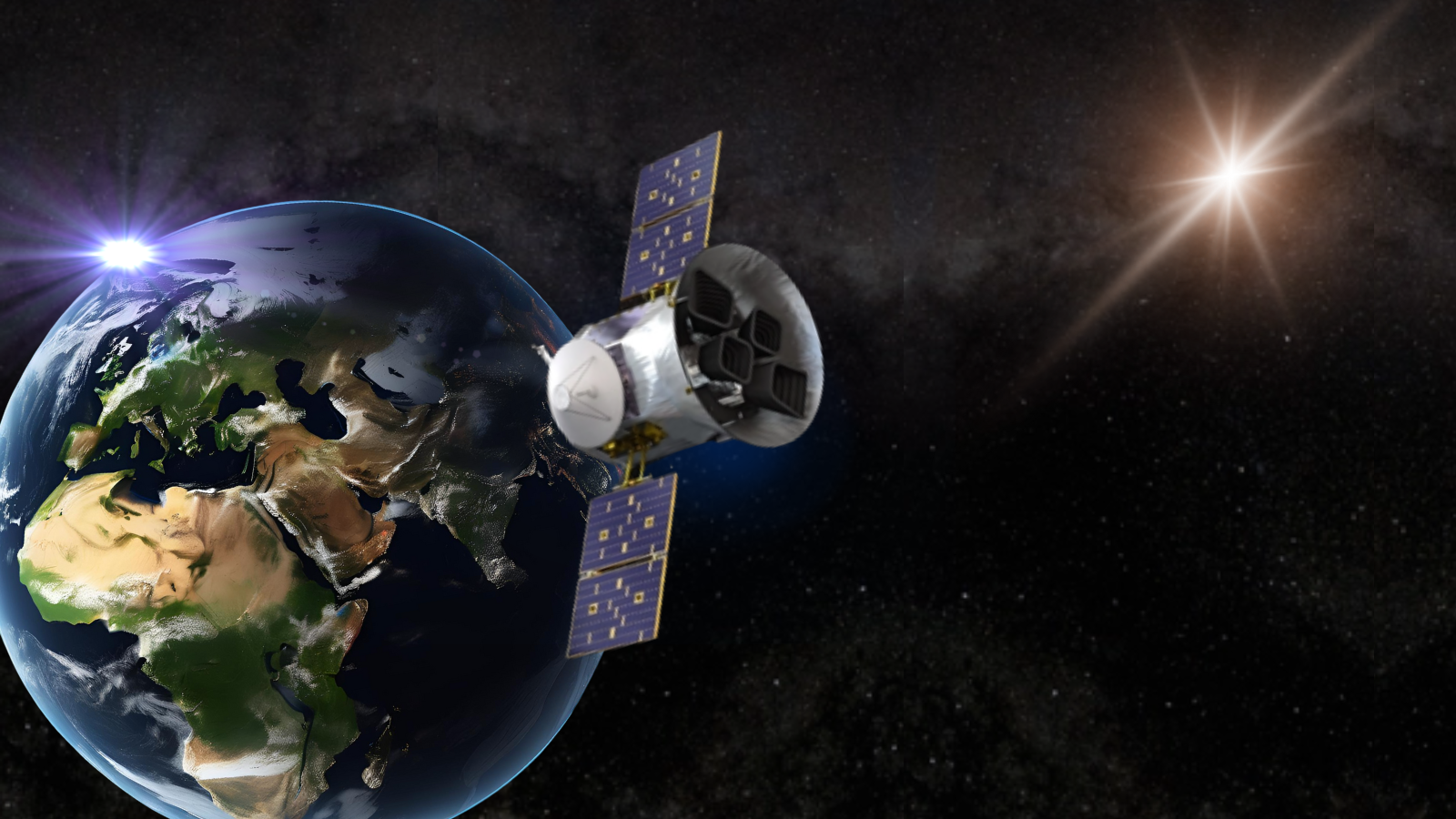
"The goal was to characterize the TOI-201 planetary system to understand not just what planets are there, but how they interact with each other dynamically," research team leader Ismael Mireles, a PhD candidate at the University of New Mexico, said. "This helps scientists understand how planetary systems like our own solar system form and evolve over time."
TESS spotted a rare transit by the outer planet as telescopes across the globe saw the gravity of this object tugging on TOI-201. Astronomers then noticed delays in the transit of TOI-201b.
"Usually, planets are like metronomes with each transit in front of the star happening exactly one orbital period after another. However, we were following TOI-201b, and suddenly the planet started transiting about half an hour late," Triaud said. "This sudden jump was very surprising, and we reported our observations. Other astronomers around the globe noticed intriguing signals too, and by working together, the team could start to understand this system.
"This discovery was enabled by having a telescope in Antarctica. Whilst the logistics involved are difficult, its unique situation and its access to optimal astronomical conditions are key to studying exoplanetary systems with long orbital periods such as TOI-201."
 Robert LeaSenior Writer
Robert Lea is a science journalist in the U.K. whose articles have been published in Physics World, New Scientist, Astronomy Magazine, All About Space, Newsweek and ZME Science. He also writes about science communication for Elsevier and the European Journal of Physics. Rob holds a bachelor of science degree in physics and astronomy from the U.K.’s Open University. Follow him on Twitter @sciencef1rst.
View MoreYou must confirm your public display name before commenting
Please logout and then login again, you will then be prompted to enter your display name.
Logout MORE FROM SPACE... 1Nebula sparkles in new Hubble snapshot | Space photo of the day for April 23, 2026
- 2Japan's audacious sample-return mission to the Mars moon Phobos has made it to the launch pad
- 3Our recommended choice as the best beginner mirrorless camera has $400 off, and has just hit its best price of the year at Best Buy
- 4Making contact with ET? Aliens may already know we're here
- 5'That's just not a winning strategy': Congress objects (again) to Trump's planned NASA budget cuts