 Image source, Getty ImagesByNick TriggleHealth correspondent
- Published22 minutes ago
The NHS must prepare for the effects of heatwaves each year in the same way that it plans for cold weather in the winter, the health secretary has said.
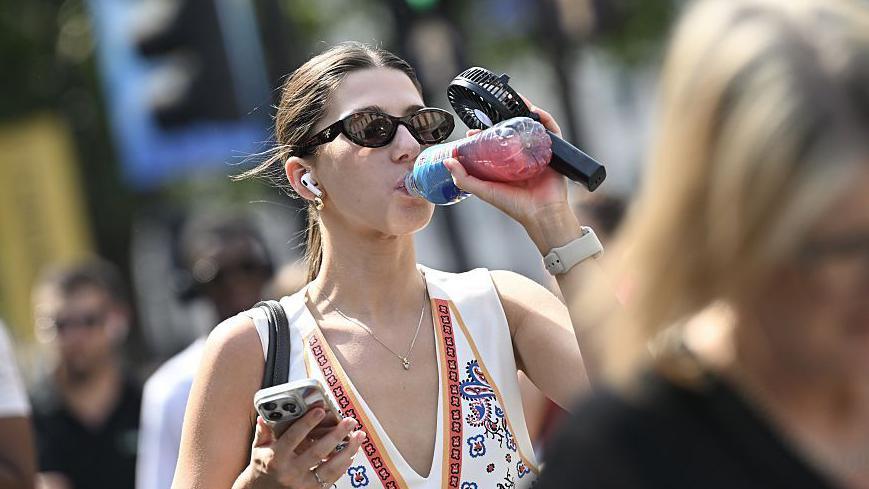
Yvette Cooper said there had been a "big increase" in people attending A&Es because of the effect of hot weather this summer. Meanwhile, some hospitals have reported disruption due to key equipment failing in the heat.
In an interview with LBC Radio, Cooper called on people to look out for the elderly and other vulnerable people as well as urging better planning by the NHS.
The UK registered its 34th day of temperatures reaching 30C (86F) or higher in a calendar year on Tuesday, equalling the record set in 1995.
Forecasts suggest that this record is likely to be beaten as early as next week, with some suggesting the potential for a sixth heatwave to develop. Yellow heat warnings are already in place in some areas.
Every year the NHS sets out detailed plans for winter, including measures to cope with increases in patients.
What does hot weather do to the body?
- Published22 June
What to do if you think someone has heat exhaustion or heatstroke
- Published22 June
How do heat health alerts work?
- Published22 June
Speaking about the recent heatwaves, England's health secretary, who also gave an interview to the Guardian newspaper on the topic, said: "I spoke to A&E staff who were telling me that they've had a big increase in patients coming into A&E linked to the heat in a way that you would normally only see in the winter.
"So I've been clear: the NHS has to make sure we are preparing for summer pressures now in the same way we prepare for winter.
"What it means is making sure that you've got plans in place to respond to higher numbers of people coming in to A&E, for example, who are vulnerable because of the heat, and that you've got the arrangements in place to make sure people can then be returned from hospital as swiftly as possible.
"But it also needs much stronger prevention - we know that it's the elderly and vulnerable who are at risk when you have these heatwaves."
As well as reports of a surge of patients being brought in for heat-related conditions, hospitals have reported problems with equipment, including scanners and IT systems, and difficult working conditions for staff, particularly at some of the older sites.
Alongside the risk of dehydration and heatstroke, a bout of extreme heat raises the chances of complications from chronic conditions like advanced heart, kidney and respiratory failure.
In a preliminary assessment last month, the UK Health Security Agency said there were an estimated 2,877 heat-related deaths during the May and June heatwaves, almost double the figure for the whole of last year.
And it said that it was "likely that 2026 could see the highest number of heat-associated deaths on record", surpassing the number in 2022 when the agency started studying them.
Related topics
What does hot weather do to the body?
- Published22 June
What to do if you think someone has heat exhaustion or heatstroke
- Published22 June

How do heat health alerts work?
- Published22 June