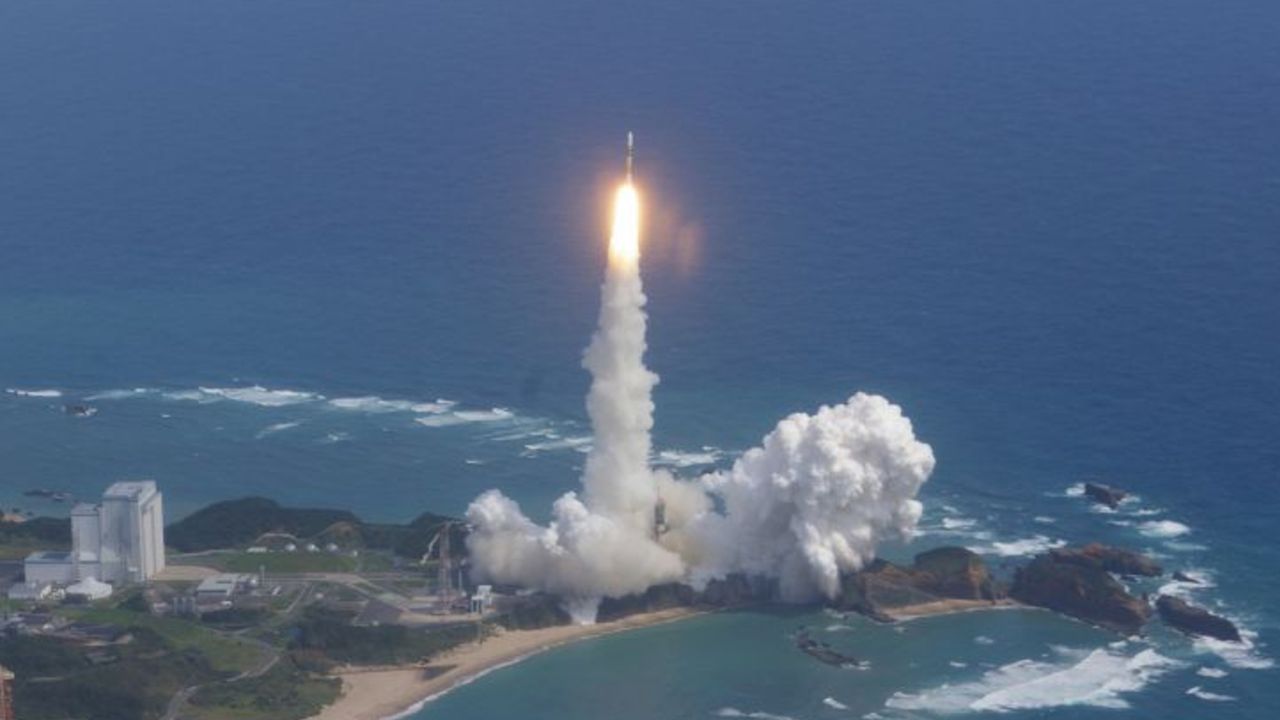
On Sept. 13, 2007, Japan launched the Kaguya spacecraft on a mission to the moon. Formally known as SELENE, which is short for SELenological and ENgineering Explorer, it was Japan's second moon mission.
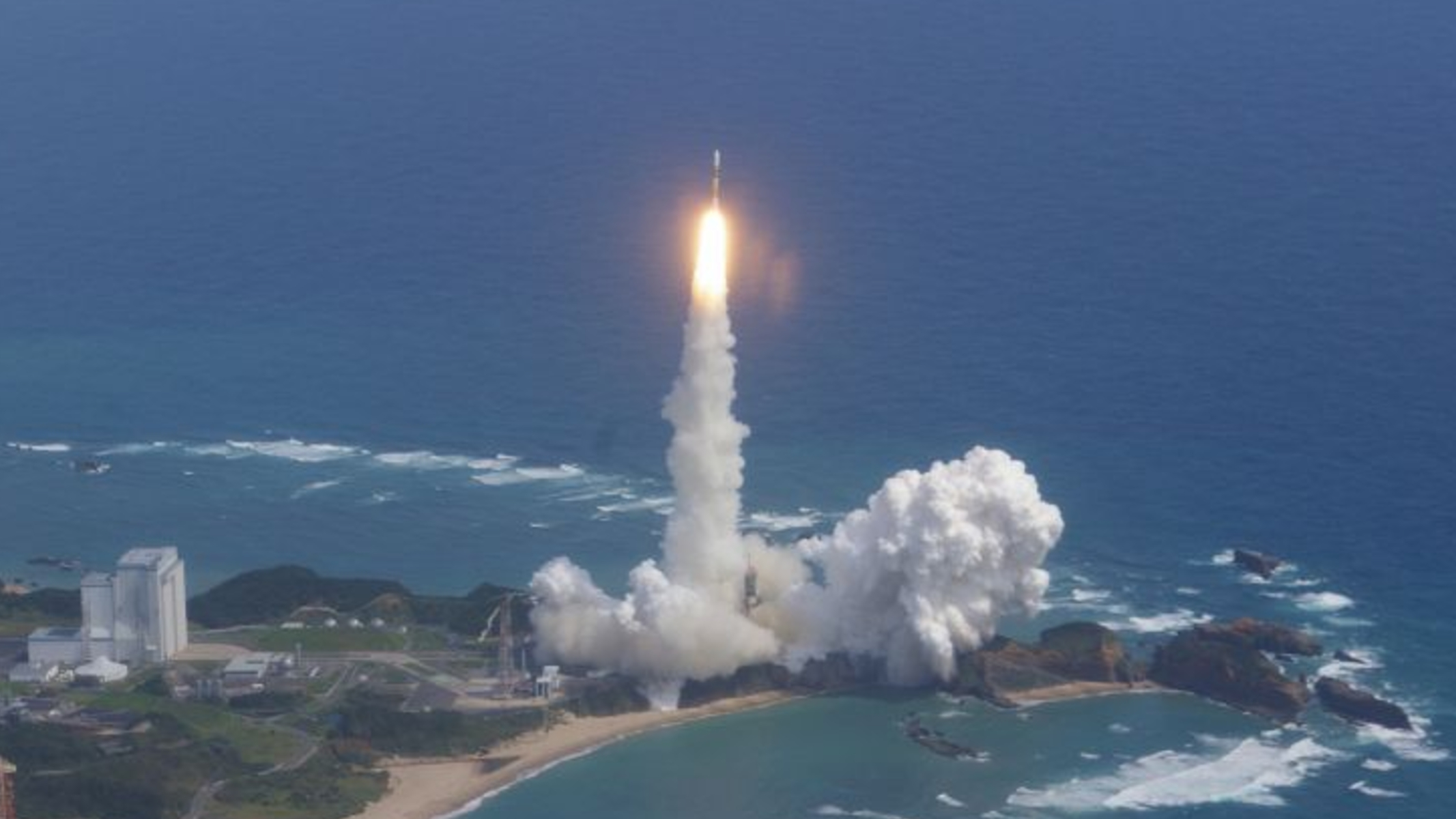
Kaguya launched from Tanegashima Space Center on a Japanese H-IIA rocket and looped around the Earth twice before heading to the moon. NOTE: While the launch occurred on Sept. 13 in the evening Eastern Time, it was actually 10:31 a.m. on Sept. 14 at the launch site. The spacecraft carried 14 science instruments and two tiny microsatellites to map the moon's surface and study its gravitational field.
After a 20-day journey, Kaguya arrived at the moon. The mission consisted of three spacecraft: a main orbiter, a small communications satellite, and a third small satellite to map the moon's gravitational field. After about a year of lunar observations, the mission ended with a planned crash landing on the lunar surface.
Why it mattered
The Kaguya moon mission was actually the second lunar probe launched by Japan, but it was the country's first spacecraft to actually orbit the moon. (Japan's Hiten spacecraft launched in 1990, but it flew in a highly elliptical orbit around Earth that allowed it to make 10 flybys of the moon before crashing into the lunar surface in 1993. It also released a small probe called Hagoromo near the moon.)
But while the Hiten and Hagoromo missions were designed to test technology for a future moon mission, Kaguya put all that tech into practice. The probe was renamed after the moon princess Kaguya-hime from a Japanese folktale shortly after launch as a result of a public poll. The two small satellites it carried were named Okina (a relay satellite) and Ouna (a radio source experiment).
While Kaguya carried an intricate set of science instruments, it was the views from its two primary high-definition cameras that wowed the public. With them, Kaguya captured the first-ever HD video and images of the moon, including spectacular new videos of Earthrise (the Earth rising over the moon) - something not seen since NASA's Apollo missions.
The spacecraft also created an complete topographical map of the moon, detected gravity anomalies on the near and far side of the moon and captured the first optical observations of the permanently shadowed interior of Shackleton Crater near the moon's south pole, according to a NASA review.
Kaguya completed its primary mission in October 2008 and JAXA mission planners had hoped to extend its moon flight through early 2009, but a faulty reaction wheel forced them to call off the extended mission early. They ultimately directed Kaguya to crash into the moon on Feb. 12, 2009, with the impact occurring near Gill Crater.
Want more space history? Check out our full On This Day In Space Story archive and watch our On This Day In Space videos on YouTube.