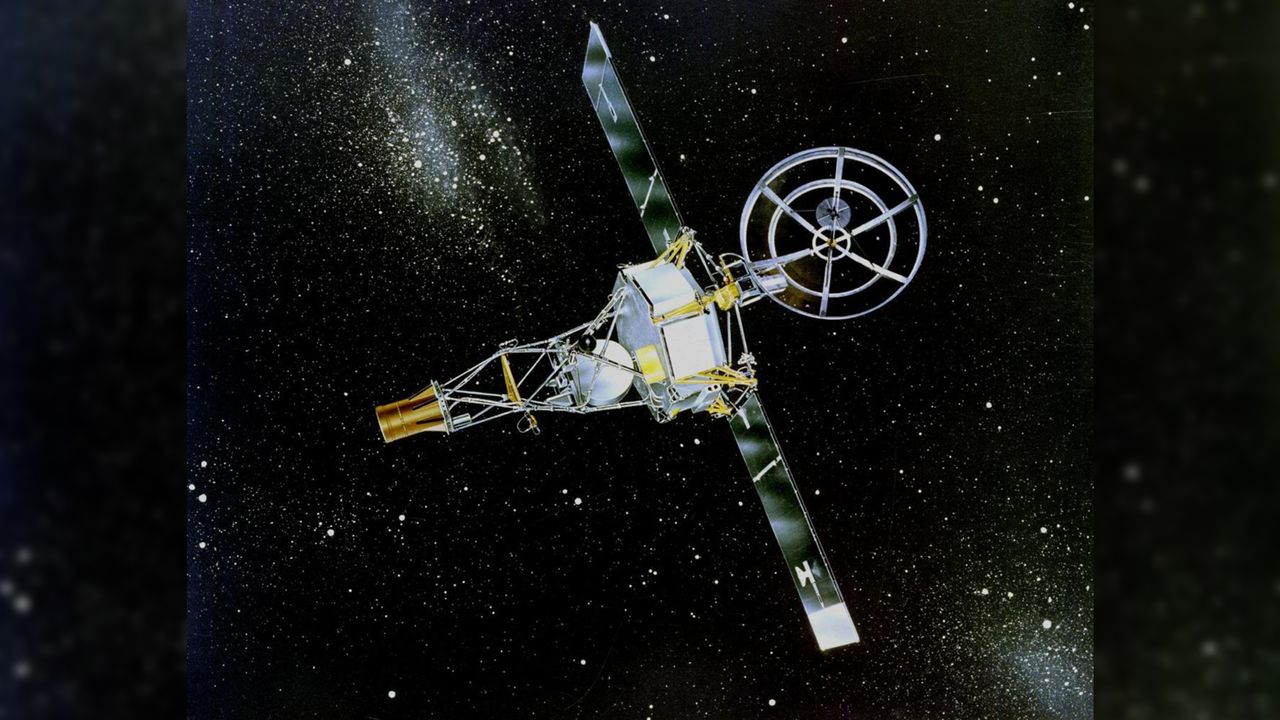
On Sept. 4, 1962, NASA's Mariner 2 spacecraft performed the first-ever rocket maneuver in deep space as it did a quick mid-course correction on its way to Venus. It had launched just eight days earlier and needed to burn its engines to ensure that its trajectory would take it to Venus.
The midcourse maneuver was necessary because the Atlas-Agena rocket that launched Mariner 2 didn't launch with enough accuracy to get the trajectory right in one shot. When it was about 1.5 million miles (2.4 million km) from Earth, it fired its engines to help steer it in the right direction.
The entire maneuver required five separate commands sent from mission control, telling the spacecraft to roll, pitch, turn and burn its motor. One hundred days later, Mariner 2 flew by Venus and became the first spacecraft to successfully fly by another planet.
Why it mattered
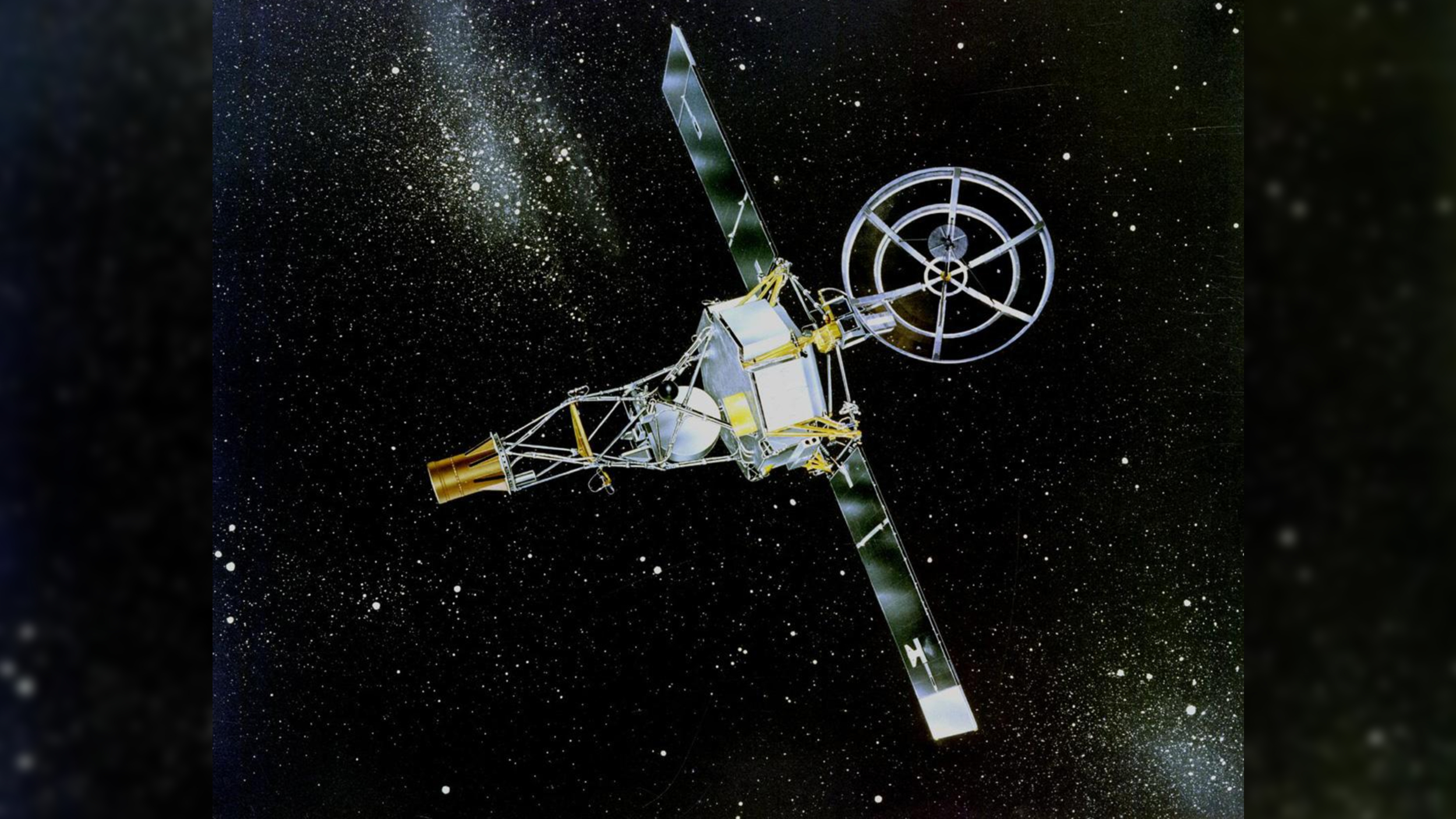
Tweaking a spacecraft's course in deep space seems a bit routine these days (NASA's newly launched Roman Space Telescope just performed such a feat this week), but in 1962 -- when reaching another planet with a probe was still the stuff of fiction -- it was far from a safe bet.
Mariner 2 launched in Aug. 27, 1962 on what would eventually be the first successful misson to another world. But as stated above, the launch wasn't accurate enough to place Mariner 2 on a direct course for Venus.
That's where the mid-course correction came in. The mission team designed a short engine burn that directed Mariner 2 to roll itself about 9.33 degrees, pitch its nose around 139.83 degrees so that it could turn its rocket engine to face forward, firing the engine, as Time Magazine recounted. The entire process took up to 36 minutes.
Without the mid-course correction, Mariner 2 would have missed Venus entirely. After launch, Mariner 2 was on a heading that would carry it only within 238,600 miles (384,000 kilometers) of the planet's center, then speed on by, according to NASA's official Mariner 2 report. After the course correction, Mariner 2 was on a path to fly by at a much closer distance of 21,607 miles (34,773 km).
Today, such mid-course corrections are a regular part of space mission planning, though they are still critical moments since a mission's success can hinge on their results. In the decades since Mariner 2, space mission designers have achieved amazing feats in mid-course changes, including the now familar gravity assist flybys that allowed NASA to send Voyager 2 on its Grand Tour of Jupiter, Saturn, Uranus and Neptune. Many other missions have achieved such feats.
Even this week, on Sept. 3, 2026, the BepiColombo mission to Mercury performed its own mid-course event, with the mission's Mercury Transfer Module releasing its two spacecraft (one each for Europe and Japan) to begin their arrival at Mercury. The event came eight years after launch and followed a series of maneuvers, including nine planetary flybys to reach the planet.
Want more space history? Check out our full On This Day In Space Story archive and watch our On This Day In Space videos on YouTube.