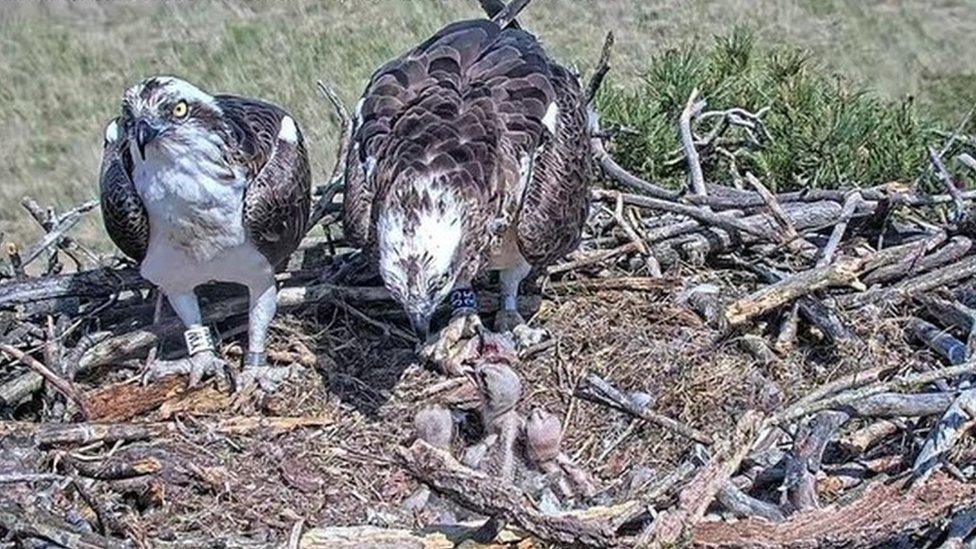
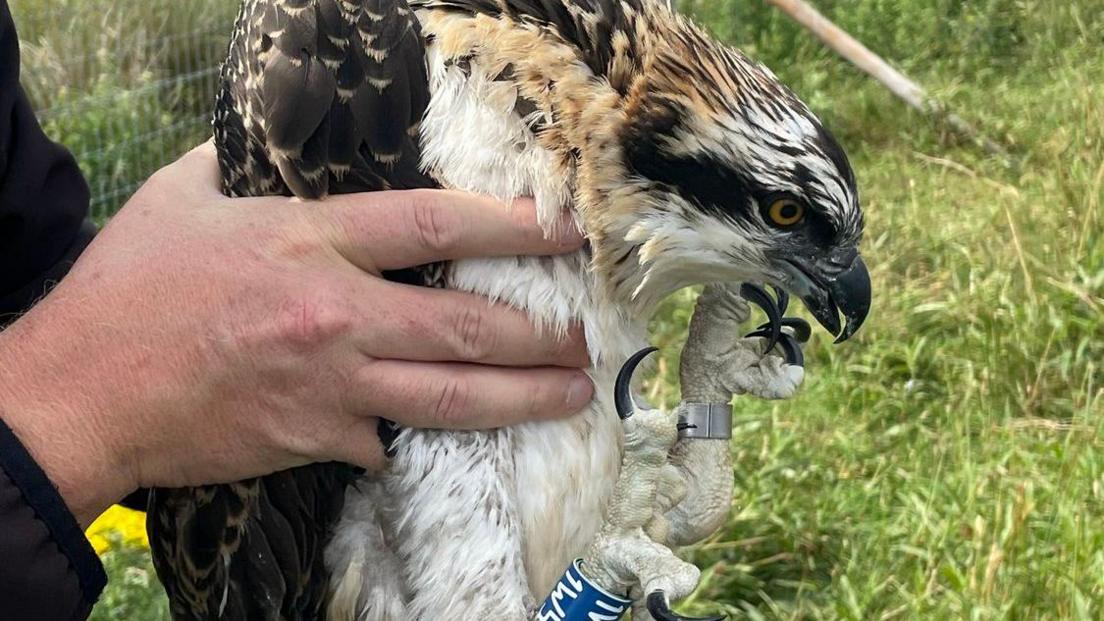
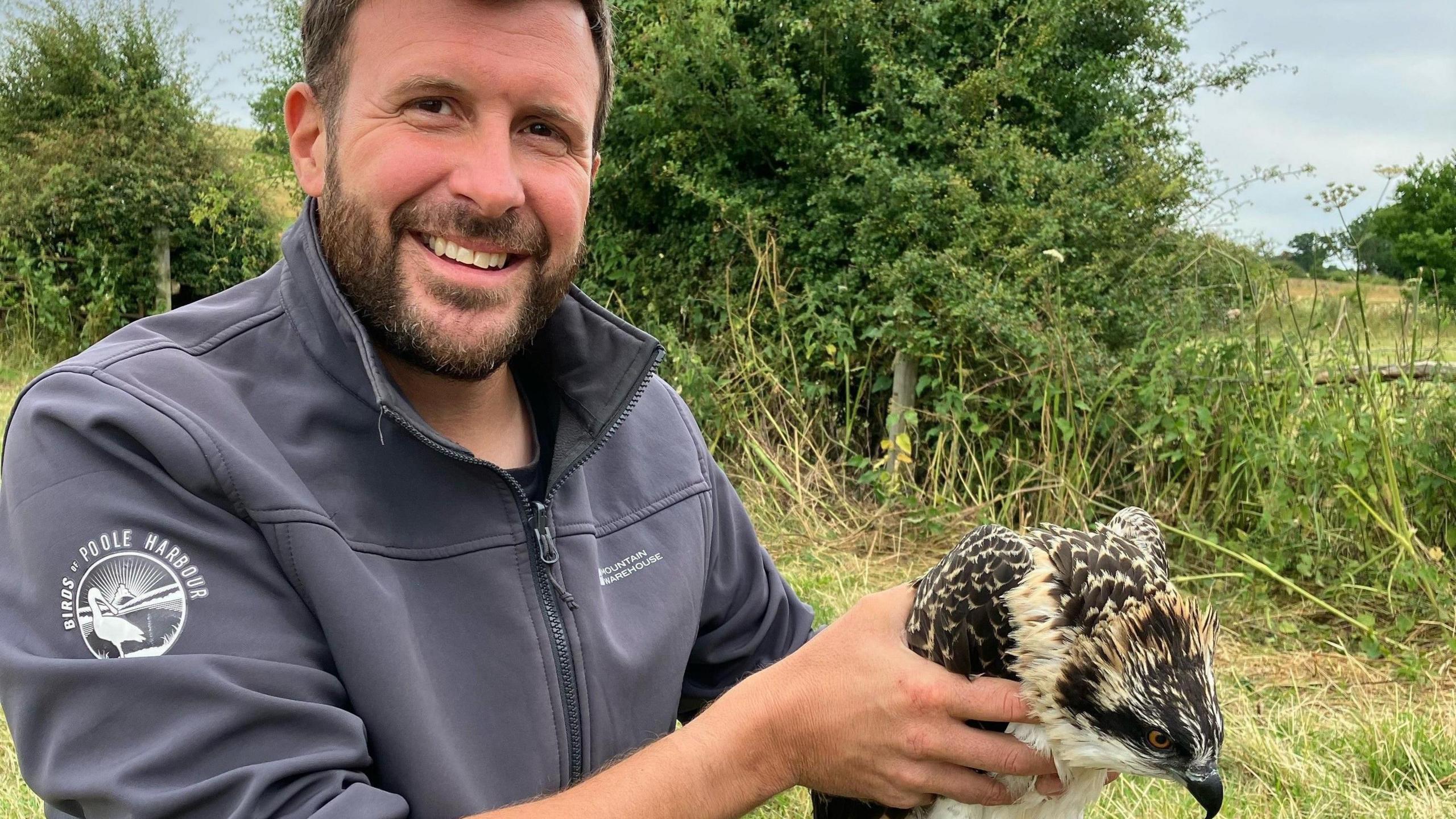
 Image source, Mhairi Maclauchlan/RSPBImage caption,
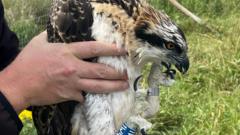
 The chicks have all been ringed, like their parent, so their future movements can be tracked
- Published52 minutes ago
The RSPB is celebrating conservation success after ospreys bred at one of the bird charity's nature reserves in England for the first time.
A pair of the rare birds of prey successfully hatched three chicks at Campfield Marsh, a wetland on the shores of Solway Firth, in Cumbria, it said.
The reserve has an osprey platform to attract the raptors and the adults who have nested there are also believed to be first-time parents. The female is unringed while the male was ringed in Dumfries in 2021.
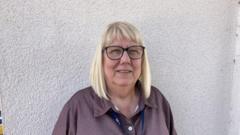
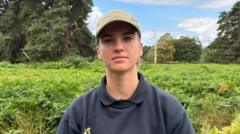
Site manager Mhairi Maclauchlan said staff had been "on tenterhooks" until the chicks hatched and very relieved when they did.
Ospreys are migratory birds which journey from wintering grounds in west Africa to Europe in the spring to breed.
The chicks have now been ringed and are expected to fledge in August, but are likely to remain in the area learning to fish and fend for themselves before starting the weeks-long migration to Africa from September.
The rings will allow the chicks' future movements to be recorded and monitored.
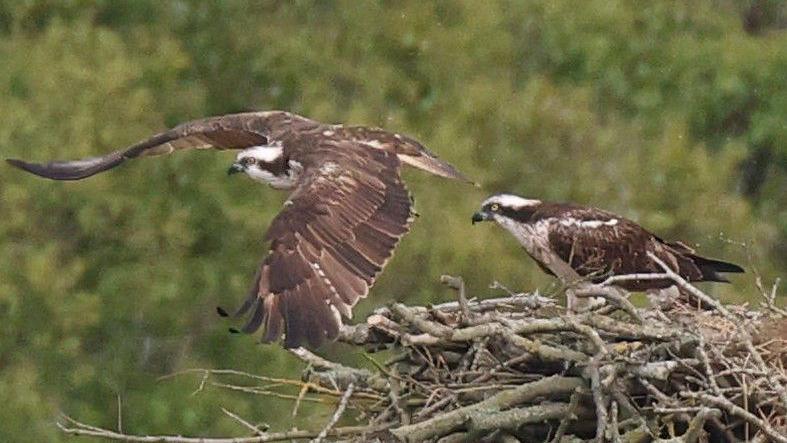 Image source, Jeff Teasdale/RSPBImage caption,
 Campfield Marsh has a platform to attract ospreys
Maclauchlan said: "We were on tenterhooks after the eggs were laid and throughout the incubation period until they hatched.
"There was a huge collective sigh of relief when they did."
The species were persecuted to extinction as a breeding bird in the early 20th Century but returned to Scotland in the 1950s and have now recolonised other parts of the UK.
"Osprey parents are surprisingly tender despite their large size and sharp talons," Maclauchlan said.
"They can also offer good comedic value with nest tidying exploits and antics.
"Ospreys are frequently site- and partner-faithful, so we're hoping to see more of them and their offspring in the future."
The eggs were laid between 30 April and 6 May and, once the chicks hatched in June, a local primary school helped name them Ash, Bowness Bobbi and Beau.
Follow BBC Cumbria on X, external, Facebook, external, Nextdoor and Instagram, external and listen to Radio Cumbria on BBC Sounds.
Get in touch
Do you have a story suggestion for BBC Cumbria?
Contact formContact formRelated topics
Related stories
Osprey fledglings see forest approach milestone
- Published26 July
First of four juvenile ospreys takes flight
- Published15 July
How ospreys were 'tricked' into breeding in Dorset
- Published2 May
Osprey chicks hatch for 10th year running
- Published4 June 2023