
 Getty Images
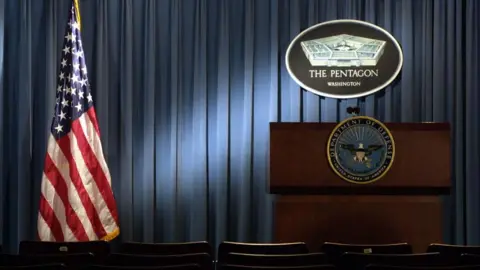
A federal judge has blocked the Department of Defense's policy on how journalists access the Pentagon, finding that it violates the First and Fifth Amendments of the US Constitution.
District Judge Paul L Friedman ruled in favour of The New York Times, which had sued the department after it enacted strict controls limiting information reporters can gather and publish from the Pentagon.
Many media outlets - including CBS News, ABC News, NBC News, CNN, Fox News and BBC News - chose not to sign the policy and had their access revoked.
The ruling halts parts of the policy, but kept some restrictions in place. The Pentagon said it disagree with the ruling and would pursue an appeal.
The policy, which was implemented in October, required Pentagon reporters to sign a document agreeing that any information gathered must be approved before it is released, even if it is unclassified.
Those who did not sign were barred from daily access to the building. After most major media outlets declined to sign, the Pentagon press corps became primarily conservative media outlets, like the One America News Network, that had agreed to sign.
Friedman struck down on of the restrictions, which indicated that reporters who "solicit" sensitive information could be barred from the building over security risks.
"To state the obvious, obtaining and attempting to obtain information is what journalists do," Friedman wrote in his ruling.
"Under the Policy's terms, then, essential journalistic practices that the plaintiffs and others engage in every day - such as asking questions of Department employees - could trigger a determination by the Department that a journalist poses a security or safety risk," the ruling continued.
He said the policy is so "vague" that it does not provide a reasonable person enough information to know if they are violating it or not.
Friedman also blocked a part of the policy that said access to the Pentagon is a "privilege" not a "right", saying the Pentagon cannot deny access "unreasonably or on the basis of viewpoint".
Friedman did not strike down the policy requiring reporters to have an escort when accessing some parts of the building.
In response to Friedman's ruling, Pentagon spokesman Sean Parnell wrote on X: "We disagree with the decision and are pursuing an immediate appeal."
When it enacted the policy, the Pentagon argued that it was trying to protect national security and prevent defence department employees from illegally leaking sensitive information. It argued that the policy does not require journalists to clear stories with the military.
The Pentagon Press Association (PPA), a professional organisation that represents the interests of defence reporters, had argued that the policy would stop journalists from speaking with sources without government permission, the BBC's US partner CBS News reported.
Following Friday's ruling, the PPA said in a statement to CBS News that it "celebrates the decision by a federal judge today that the Pentagon's press credentialling policy violated the US Constitution".
The organisation also called for the "immediate reinstatement of the credentials of all PPA members".